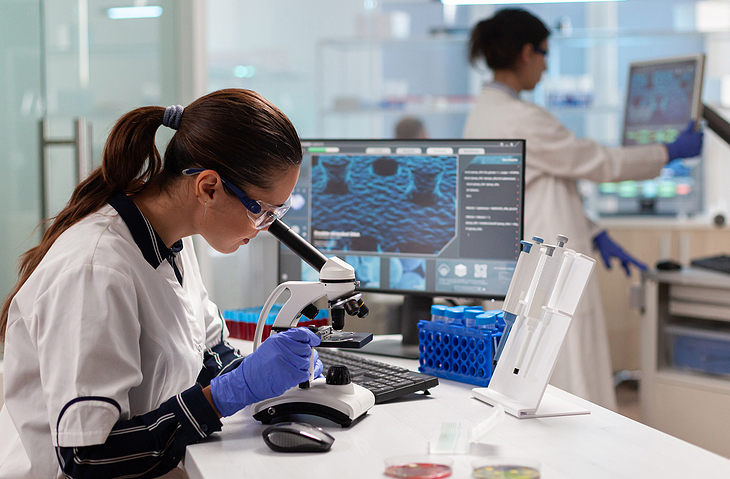
Biological scientists study living organisms and their relationship to the environment. They perform research to gain a better understanding of fundamental life processes and apply that understanding to developing new products or processes. Research can be broken down into two categories: basic and applied. Basic research is conducted without any intended aim; the goal is simply to expand on human knowledge. Applied research is directed towards solving a particular problem. Most biological scientists specialize in one area of biology, such as zoology (the study of animals) or microbiology (the study of microscopic organisms).
Basic research in biological sciences advances our knowledge of living organisms so that we can develop solutions to human health problems and improve the natural environment. These biological scientists mostly work in government, university, or private industry laboratories, often exploring new areas of research. Many expand on specialized research they started in graduate school.
Many biological scientists involved in basic research must submit grant proposals to obtain funding for their projects. Colleges and universities, private foundations, and Federal Government agencies, such as the National Institutes of Health and the National Science Foundation, contribute to the support of scientists whose research proposals are determined to be financially feasible and to have the potential to advance new ideas or processes.
Biological scientists who work in applied research or product development apply knowledge gained through basic research to develop new drugs, treatments, and medical diagnostic tests; increase crop yields; and develop new biofuels. They usually have less freedom than basic researchers do to choose the emphasis of their research, and they spend more time working on marketable treatments to meet the business goals of their employers. Biological scientists doing applied research and product development often work in teams, interacting with engineers, scientists of other disciplines, business managers, and technicians. Those working in private industry may be required to describe their research plans or results to nonscientists who are in a position to veto or approve their ideas. These scientists must consider the business effects of their work. Some biological scientists also work with customers or suppliers and manage budgets.
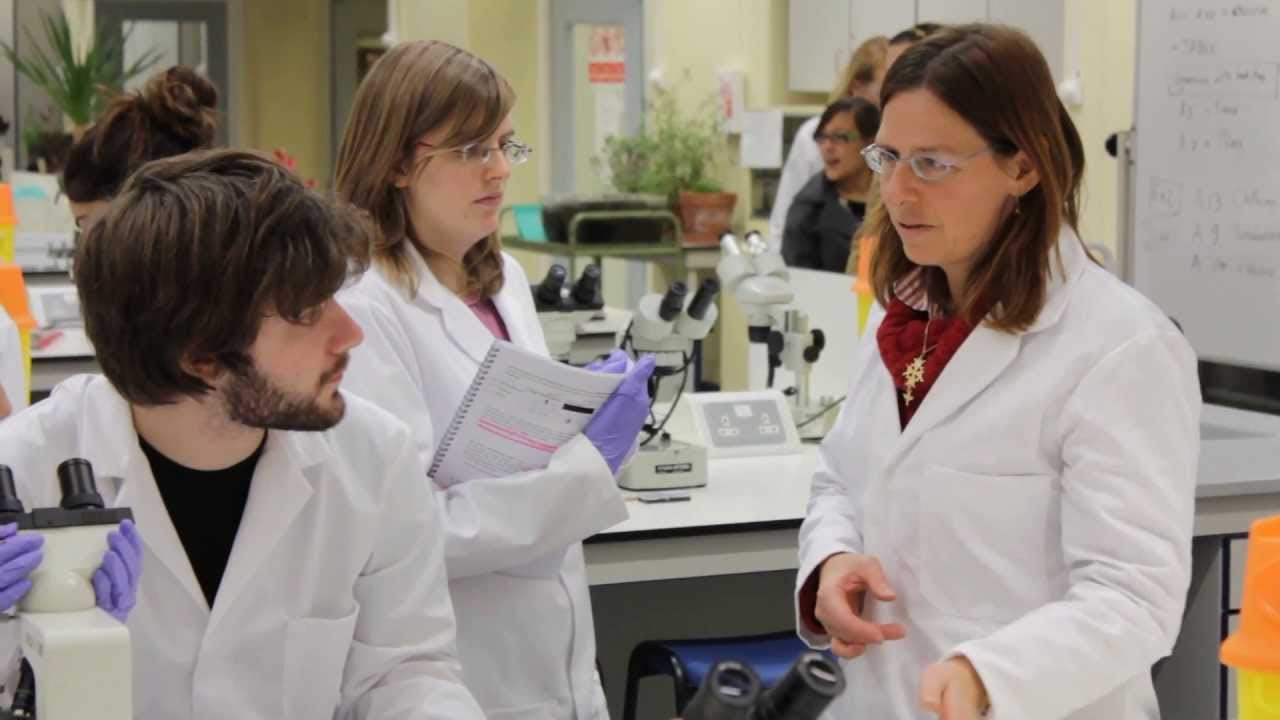
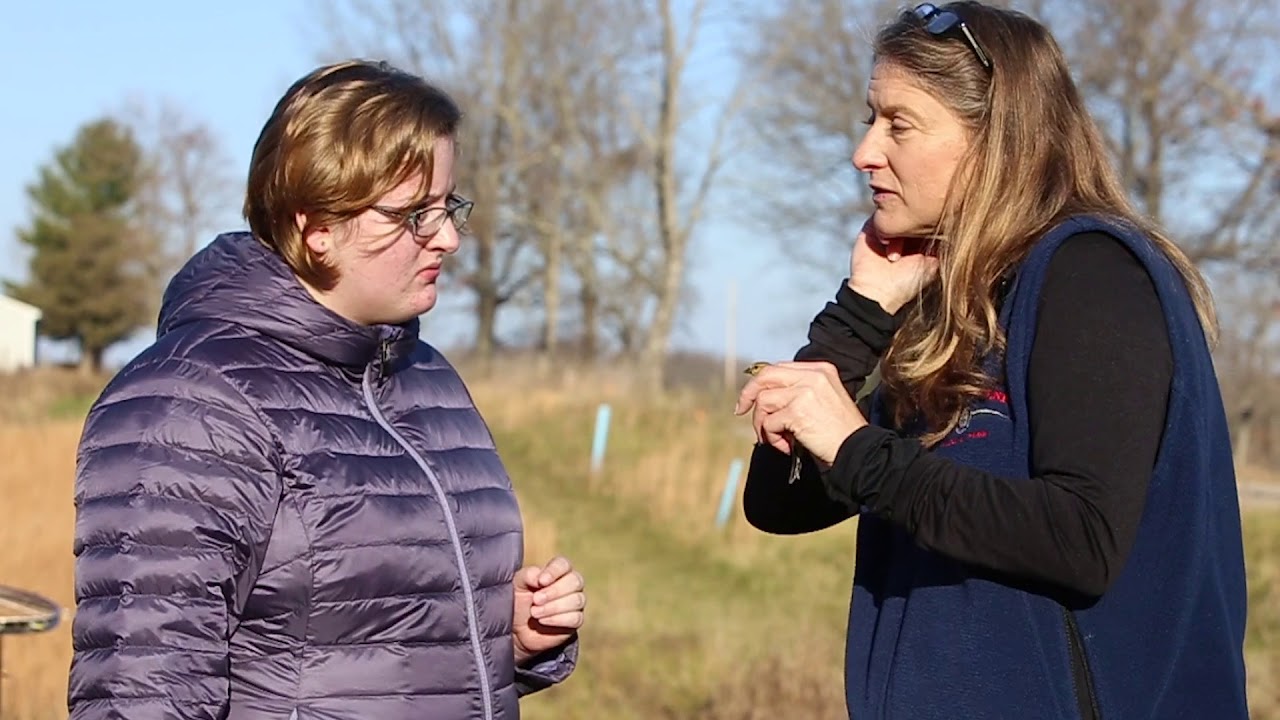
Scientists usually conduct research in laboratories using a wide variety of other equipment. Some conduct experiments involving animals or plants. This is particularly true of botanists, physiologists, and zoologists. Some biological research also takes place outside the laboratory. For example, a botanist might do field research in tropical rain forests to see which plants grow there, or an ecologist might study how a forest area recovers after a fire. Some marine biologists also work outdoors, often on research vessels from which they study fish, plankton, or other marine organisms.
Swift advances in knowledge of genetics and organic molecules spurred growth in the field of biotechnology, transforming the industries in which biological scientists work. Biological scientists can now manipulate the genetic material of animals and plants, attempting to make organisms more productive or resistant to disease. Those working on various genome (chromosomes with their associated genes) projects isolate genes and determine their function. This work continues to lead to the discovery of genes associated with specific diseases and inherited health risks, such as sickle cell anemia. Advances in biotechnology have created research opportunities in almost all areas of biology, with commercial applications in areas such as medicine, agriculture, and environmental remediation.
Most biological scientists specialize in the study of a certain type of organism or in a specific activity, although recent advances have blurred some traditional classifications.
Aquatic biologists study micro-organisms, plants, and animals living in water. Marine biologists study salt water organisms, and limnologists study fresh water organisms. Much of the work of marine biology centers on molecular biology, the study of the biochemical processes that take place inside living cells. Marine biologists are sometimes called oceanographers, a broader field that also includes the study of the physical characteristics of oceans and the ocean floor.
Biochemists study the chemical composition of living things. They analyze the complex chemical combinations and reactions involved in metabolism, reproduction, and growth. Biochemists do most of their work in biotechnology, which involves understanding the complex chemistry of life.
Biophysicists study how physics, such as electrical and mechanical energy, relates to living cells and organisms. They perform research in fields such as neuroscience or bioinformatics (the use of computers to process biological information, usually at the molecular level).
Microbiologists investigate the growth and characteristics of microscopic organisms such as bacteria, algae, or fungi. Most microbiologists specialize in environmental, food, agricultural, or industrial microbiology; virology (the study of viruses); immunology (the study of mechanisms that fight infections); or bioinformatics. Many microbiologists use biotechnology to advance knowledge of cell reproduction and human disease.
Physiologists study life functions of plants and animals, both in the whole organism and at the cellular or molecular level, under normal and abnormal conditions. Physiologists often specialize in functions such as growth, reproduction, photosynthesis, respiration, or movement, or in the physiology of a certain area or system of the organism.
Botanists study plants and their environments. Some study all aspects of plant life, including algae, fungi, lichens, mosses, ferns, conifers, and flowering plants; others specialize in areas such as identification and classification of plants, the structure and function of plant parts, the biochemistry of plant processes, the causes and cures of plant diseases, the interaction of plants with other organisms and the environment, and the geological record of plants.
Zoologists and wildlife biologists study animals and wildlife—their origin, behavior, diseases, and life processes. Some experiment with live animals in controlled or natural surroundings, while others dissect dead animals to study their structure. Zoologists and wildlife biologists also may collect and analyze biological data to determine the environmental effects of current and potential uses of land and water areas. Zoologists are usually identified by the animal group they study—ornithologists study birds, for example, mammalogists study mammals, herpetologists study reptiles, and ichthyologists study fish.
Ecologists investigate the relationships among organisms and between organisms and their environments. They examine the effects of population size, pollutants, rainfall, temperature, and altitude. Using knowledge of various scientific disciplines, ecologists may collect, study, and report data on the quality of air, food, soil, and water.
Work Environment
Most biologists spend their time in laboratories conducting research and in offices writing up results and keeping up with the latest research discoveries. Some biological scientists, particularly botanists, ecologists, and zoologists, do field studies that involve strenuous physical activity and primitive living conditions for extended periods of time. Biological scientists in the field may work in warm or cold climates, in all kinds of weather. Biological scientists usually are not exposed to unsafe or unhealthy conditions. Those who work with dangerous organisms or toxic substances in the laboratory must follow strict safety procedures to avoid contamination. Many biological scientists, particularly those employed in academic settings, depend on grant money to support their research. They may be under pressure to meet deadlines and to conform to rigid grant-writing specifications when preparing proposals to seek new or extended funding. Biological scientists typically work regular hours. While the 40-hour workweek is common, some biological scientists work longer hours. Some researchers may be required to work odd hours in laboratories or other locations (especially while in the field), depending on the nature of their research.
Education & Training Required
A Ph.D. is usually necessary for independent research, particularly in academia, as well as for advancement to administrative positions. A bachelor’s or master's degree is sufficient for some jobs in applied research, product development, management, or inspection; it also may be sufficient to work as a research technician or a teacher. Many with a bachelor's degree in biology enter medical, dental, veterinary, or other health profession schools, or find jobs as high school science teachers.
In addition to required courses in chemistry and biology, undergraduate biological science majors usually study allied disciplines such as mathematics, physics, engineering, and computer science. Computer courses are beneficial for modeling and simulating biological processes, operating some laboratory equipment, and performing research in the emerging field of bioinformatics. Those interested in studying the environment also should take courses in environmental studies and become familiar with applicable legislation and regulations.
Most colleges and universities offer bachelor's degrees in biological science, and many offer advanced degrees. Advanced degree programs often emphasize a subfield, such as microbiology or botany, but not all universities offer curricula in all subfields. Larger universities frequently have separate departments specializing in different areas of biological science. For example, a program in botany might cover agronomy, horticulture, or plant pathology. Advanced degree programs typically include classroom and fieldwork, laboratory research, and a thesis or dissertation. A master’s degree generally takes 2 years, and a doctoral degree 5-6 years of full-time study.
Biological scientists with a Ph.D. often take temporary postdoctoral positions that provide specialized research experience. Postdoctoral positions may offer the opportunity to publish research findings. A solid record of published research is essential in obtaining a permanent position performing basic research, especially for those seeking a permanent college or university faculty position.
Other Skills Required
Biological scientists should be able to work independently or as part of a team and be able to communicate clearly and concisely, both orally and in writing. Those in private industry, especially those who aspire to management or administrative positions, should possess strong business and communication skills and be familiar with regulatory issues and marketing and management techniques. Those doing field research in remote areas must have physical stamina. Biological scientists also must have patience and self-discipline to conduct long and detailed research projects.
How to Advance
As they gain experience, biological scientists typically gain greater control over their research and may advance to become lead researchers directing a team of scientists and technicians. Some work as consultants to businesses or to government agencies. However, those dependent on research grants are still constrained by funding agencies, and may spend much of their time writing grant proposals. Others choose to move into managerial positions and become natural science managers. They may plan and administer programs for testing foods and drugs, for example, or direct activities at zoos or botanical gardens. Those who pursue management careers spend much of their time preparing budgets and schedules. Some leave biology for nontechnical managerial, administrative, or sales jobs.
Job Outlook
Employment of biological scientists is expected to increase much faster than the average for all occupations although there will continue to be competition for some basic research positions.
Earnings
Median annual wages of biochemists and biophysicists is $102,840. The middle 50 percent earned between $79,260 and $128,950. The lowest 10 percent earned less than $64,320, and the highest 10 percent earned more than $159,440.
Median annual wages of biochemists and biophysicists employed in scientific research and development services is $105,870.
Median annual wages of microbiologists is $84,350. The middle 50 percent earned between $68,330 and $107,040. The lowest 10 percent earned less than $58,240, and the highest 10 percent earned more than $131,300.
Median annual wages of zoologists and wildlife biologists is $75,290. The middle 50 percent earned between $63,060 and $90,500. The lowest 10 percent earned less than $53,550, and the highest 10 percent earned more than $110,850.
In the Federal Government, microbiologists earned an average annual salary of $117,264; ecologists, $104,283; physiologists, $129,323; geneticists, $119,752; zoologists, $136,908; and botanists, $92,792.