Choosing an anatomy college major means studying the structure of the human body in unusually close detail, and deciding how that knowledge will support your future career. You may spend hours in biology laboratories, learn medical terminology, analyze cadavers or anatomical models, and build a foundation for graduate or professional school. The major can be fascinating and practical, but it isn't automatically the best choice for every student interested in health care.
This review explains what you'll study, how demanding the coursework can be, which careers are realistic, and what you can expect financially. Because colleges use different names and requirements, such as anatomy, human anatomy, anatomy and cell biology, or anatomical sciences, you should compare individual programs rather than relying on the major title alone. You'll also see how anatomy compares with biology, kinesiology, and health sciences so you can judge whether it fits your interests, academic strengths, and long-term plans.
Anatomy Major At a Glance
An anatomy college major focuses on the structure of living organisms, especially the human body. You'll examine how organs, tissues, cells, and body systems are arranged and how their structure supports normal function. Most programs combine lectures, laboratory work, biological sciences, and some chemistry or physics.
The degree is commonly offered as a Bachelor of Science, although some schools place anatomy within a broader biology or health-sciences department. Depending on the college, you may earn a degree in human anatomy, anatomical sciences, anatomy and physiology, or a related field.
| Category | What you can generally expect |
|---|---|
| Typical degree | Bachelor of Science |
| Common length | Four years full time |
| Core subjects | Anatomy, physiology, biology, chemistry, cell biology, histology |
| Learning methods | Lectures, laboratory investigations, models, microscopy, dissection |
| Best preparation for | Health professions, research, education, laboratory work |
| Main challenge | The major can be specialized without leading directly to one licensed job |
You should view anatomy as a foundation rather than a guaranteed occupation. It can prepare you for medical, dental, physical therapy, occupational therapy, physician assistant, nursing, research, or teaching pathways. But, many of those careers require additional degrees, clinical training, licenses, or certification after college.
That distinction matters when you compare tuition and time investment with your intended career. If you want to become a physician, for example, anatomy can satisfy useful prerequisites and strengthen your scientific background, but it does not replace medical school.
What Students Study in an Anatomy Degree
Your first year will usually resemble the beginning of a biology or health-sciences degree. You may take general biology, general and organic chemistry, mathematics, statistics, writing, and introductory psychology. These courses establish the scientific vocabulary and problem-solving skills you'll need for advanced anatomy.
By your second and third years, the curriculum typically becomes more specialized. Core courses may include:
- Human anatomy: The gross structure of the body, including bones, muscles, nerves, blood vessels, and organs.
- Human physiology: How body systems function and interact.
- Cell biology: Cell structure, signaling, division, and specialization.
- Histology: The microscopic structure of tissues.
- Embryology or developmental biology: How the body forms before birth.
- Neuroanatomy: The brain, spinal cord, peripheral nerves, and sensory systems.
- Biochemistry: The chemical processes underlying life.
- Pathophysiology: How disease changes normal structure and function.
- Kinesiology or biomechanics: How anatomy relates to movement, often included in applied programs.
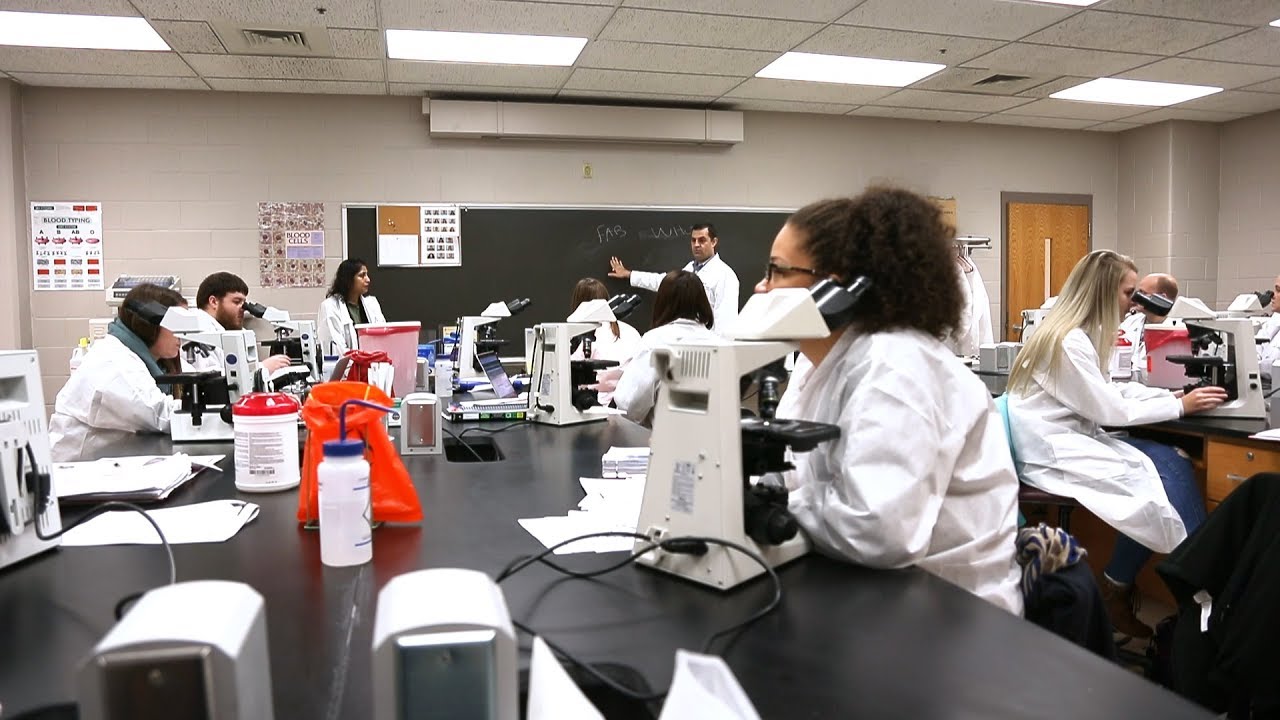
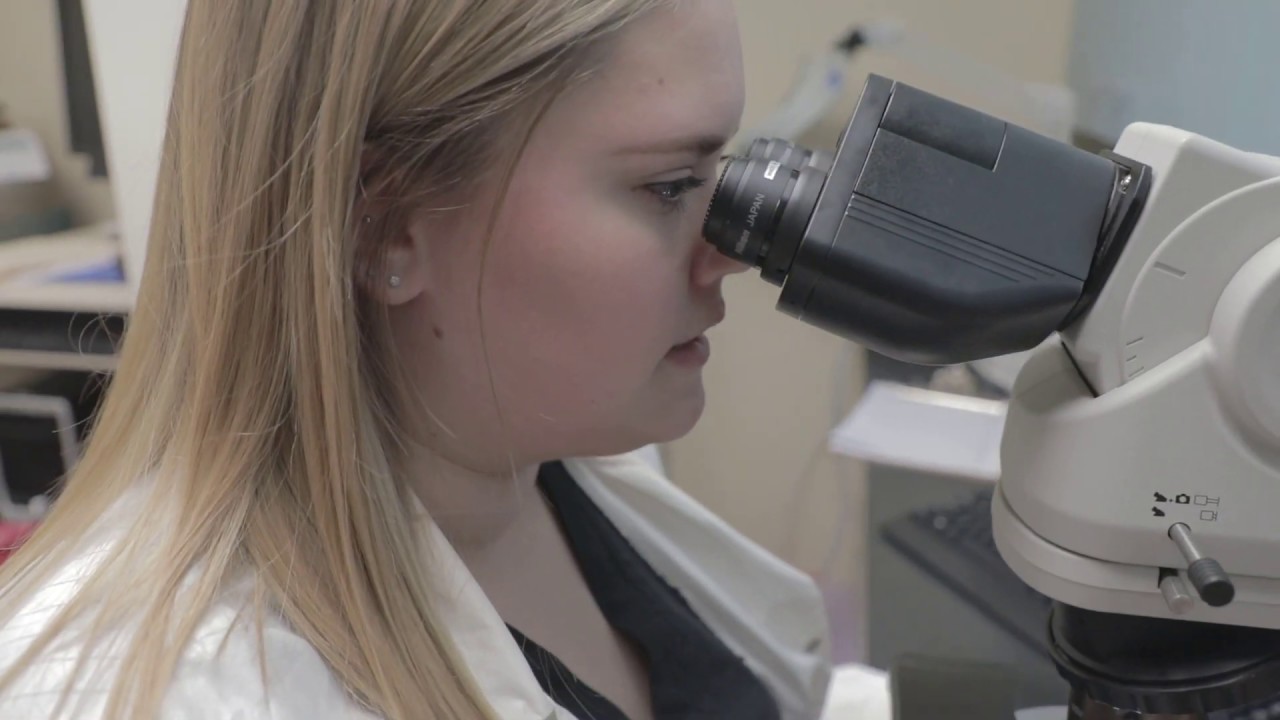
Laboratory classes may involve dissection, microscopy, imaging, three-dimensional models, computer-based anatomy platforms, and demonstrations using preserved specimens. Some universities provide access to a cadaver laboratory: others use virtual tools or prosections, in which specimens have already been dissected.
Upper-level electives can make your degree more personal. You might study forensic anatomy, radiographic anatomy, anatomy education, reproductive biology, sports medicine, or comparative anatomy. Look closely at elective choices: they often reveal whether a program is designed primarily for pre-health students, researchers, educators, or allied-health professionals.
You'll also need general education courses and may complete an independent research project, internship, senior seminar, or teaching practicum. Review the prerequisite map early. A single missed chemistry or physics course can delay your graduation or make it harder to apply to professional school on schedule.
How to Evaluate an Anatomy College Major
A program's title tells you less than its curriculum, facilities, and graduate outcomes. Before applying, compare at least three colleges using the same questions.
1. Does the curriculum match your destination?
If you're considering medical, dental, physician assistant, physical therapy, or occupational therapy school, compare the major's required courses with typical prerequisites for those programs. Anatomy departments don't always require every course you'll need, such as physics, statistics, microbiology, or a second semester of organic chemistry. You may need to add them as electives.
2. How much hands-on laboratory experience will you receive?
Ask whether students dissect human cadavers, work with prosections, use microscopy, or rely mostly on software. None of these options is automatically superior, but they provide different experiences. A cadaver lab can build spatial understanding and professional comfort: digital tools make it easier to review structures repeatedly.
3. What support and access do students get?
Check class sizes, faculty office hours, tutoring, advising, and access to laboratory equipment. A famous university with huge introductory classes may offer less personal attention than a smaller program with excellent advising.
4. What do graduates do afterward?
Request information about graduate-school placement, internships, research participation, and employment. Treat impressive-sounding claims carefully if the school doesn't distinguish between students who completed the degree and those who later earned professional credentials.
5. What will it cost?
Compare net price, not just advertised tuition, using each college's financial-aid estimate. Search for institutional scholarships and external awards through resources such as StudentScholarships.org. Also budget for lab fees, transportation, equipment, application fees, and possible fifth-year coursework.
The strongest program is the one that combines suitable prerequisites, meaningful laboratory training, reliable advising, manageable cost, and opportunities connected to your goals.
Academic Workload, Laboratory Training, and Learning Experience
Anatomy is a detail-heavy major. You won't simply memorize a diagram once and move on: you'll repeatedly identify structures from different angles, connect them to function, and apply the information to clinical or research situations. Terms that seem similar, such as artery and arteriole, or tendon and ligament, must become precise distinctions.
Expect a mix of memorization and reasoning. Flashcards can help you learn names, but exams may ask you to identify a structure on a specimen, predict the effect of an injury, interpret an image, or explain how several systems interact. Regular study usually works better than last-minute cramming.
Laboratory work adds another layer. You may prepare slides, use a microscope, document observations, complete dissection guides, or collaborate with a small group. Cadaver-based courses require professionalism and emotional maturity. Some students find the experience deeply meaningful: others discover that they are uncomfortable with dissection or preserved specimens. If possible, ask current students about the laboratory environment before enrolling.
A realistic weekly schedule might include several hours of lectures, one or two longer laboratory sessions, and substantial independent review. The exact workload depends on your college and course combination, but anatomy can become especially demanding when paired with organic chemistry, physics, or physiology.
Your learning experience will also depend on teaching quality. Strong instructors explain three-dimensional relationships rather than merely displaying labeled slides. Good programs provide models, imaging resources, practice quizzes, and opportunities to ask questions. If you learn best by drawing, manipulating models, or explaining concepts aloud, anatomy can reward those habits, but you'll need to build them into your routine.
Why Major in Anatomy? Key Benefits and Limitations
Why major in anatomy? For many students, the answer is a combination of curiosity and career preparation. You gain a detailed understanding of the human body while developing scientific habits that transfer to clinical, educational, and research settings.
Benefits
- Strong health-science foundation: Anatomy supports later study in medicine, dentistry, physical therapy, occupational therapy, nursing, and other professions.
- Hands-on learning: Laboratory work can make abstract biology tangible and memorable.
- Useful communication skills: Explaining structures and processes helps prepare you for patient education, teaching, and teamwork.
- Research exposure: You may study tissue, development, movement, neuroscience, imaging, or disease mechanisms.
- Focused academic identity: If human structure genuinely interests you, specialized courses can feel more motivating than a broad biology degree.
Limitations
The major may not qualify you for a clearly defined entry-level profession by itself. Employers may prefer applicants with laboratory certifications, clinical credentials, teaching qualifications, or additional technical skills. You'll need to plan beyond graduation rather than assuming the bachelor's degree is the endpoint.
Anatomy also tends to emphasize structure more than direct patient care. If you want daily interaction with patients, a nursing, respiratory therapy, radiologic technology, or other professionally accredited program may offer a more direct route. If you prefer genetics, ecology, or laboratory experimentation, biology may provide broader options.
Finally, anatomy coursework can be intense without guaranteeing a high salary. The return on your degree depends heavily on what you do next. A student who uses the major to enter an in-demand professional program may benefit greatly: a student who graduates without internships, technical skills, or a career plan may face a less obvious job search.
Job Opportunities for Anatomy Majors
Job Opportunities for Anatomy Majors vary according to your experience and whether you continue into graduate or professional school. With a bachelor's degree, you may qualify for entry-level roles in research, education, health care support, laboratories, or scientific administration.
Possible options include:
| Role or direction | Typical additional preparation |
|---|---|
| Research assistant | Laboratory experience: sometimes a specialized certificate or master's degree |
| Laboratory or clinical support technician | Employer training, certification, or relevant laboratory coursework |
| Anatomy teaching assistant | Strong academic record: graduate study may be preferred |
| Medical scribe or clinical coordinator | Employer training: clinical exposure is valuable |
| Pharmaceutical or medical-device representative | Communication, sales, and product knowledge |
| Health-science content developer | Writing, instructional design, or digital-media skills |
| Museum, education, or outreach assistant | Public communication and teaching experience |
| Graduate researcher | Master's or doctoral degree |
Some graduates work in university laboratories, hospitals, biotechnology companies, medical-device firms, or nonprofit organizations. Others use anatomy as preparation for a licensed occupation. That second category includes physicians, dentists, physical therapists, occupational therapists, physician assistants, chiropractors, speech-language pathologists, and educators, but each path has separate admission and licensing requirements.
To improve your immediate employability, add experience employers can see. An internship, faculty research position, statistics course, scientific writing portfolio, laboratory technique, or proficiency with imaging and data software can distinguish you from applicants who have only completed classroom requirements.
You should also search job postings before your final year. Look at the credentials employers actually request. If most positions require a certification or master's degree, that information can prevent an unpleasant surprise after graduation.
Expected Starting Salary in the US for Anatomy Majors
The Expected starting Salary in the US for Anatomy Majors is difficult to state as one reliable number because "anatomy major" is an educational label, not a single occupation. Your pay will depend on the job title, location, industry, experience, and credentials you bring after graduation.
For example, a new graduate hired as a research assistant may earn considerably less than someone who enters medical-device sales or a specialized laboratory position. A graduate who continues into a licensed profession may eventually earn far more, but that income should not be described as the starting salary for the bachelor's degree itself.
Use the U.S. Bureau of Labor Statistics Occupational Outlook Handbook to research the occupation, not merely the major, that interests you. Relevant categories may include biological technicians, medical assistants, clinical laboratory technologists, postsecondary teachers, and various health-profession roles. BLS wage figures are occupation-specific and often report median pay rather than first-year earnings, so interpret them carefully.
| What affects your first salary | Why it matters |
|---|---|
| Job title | Different anatomy-related roles have very different pay scales |
| Degree level | Research and teaching roles may require graduate education |
| Certification | Credentials can expand access to technical or clinical jobs |
| Geographic location | Wages and living costs vary substantially by region |
| Experience | Internships and laboratory work can improve your starting position |
| Industry | Biotechnology, health care, education, and sales use different pay models |
The practical takeaway is to make a career-specific salary plan. Identify two or three target occupations, check their entry requirements and local wages, and calculate your likely debt. Don't choose the major based on a broad salary promise that no source can substantiate.
Graduate School and Professional Pathways
Anatomy can be an effective launchpad for graduate and professional education, particularly when you plan your prerequisites from the first semester. Common pathways include medical school, dental school, physical therapy, occupational therapy, physician assistant programs, nursing, public health, biomedical research, and anatomy education.
For professional school, admissions committees usually evaluate more than your major. They consider prerequisite courses, GPA, entrance-exam performance where applicable, clinical or service experience, recommendation letters, research, and evidence that you understand the profession. Anatomy may help you master body structure, but you still need to satisfy every program's specific requirements.
A master's degree can lead to more advanced research, laboratory, educational, or health-science work. A doctoral degree may prepare you for independent research, university teaching, or specialized biomedical careers. If teaching anatomy is your goal, investigate whether you need a graduate degree, teaching credential, or both.
Build your pathway deliberately:
- Meet with a pre-professional or departmental adviser during your first year.
- Compare prerequisites at several target schools rather than assuming they are identical.
- Keep records of laboratory, volunteer, clinical, and research hours.
- Seek faculty mentorship early: strong recommendations are built over time.
- Protect your GPA by balancing difficult laboratory courses across semesters.
- Calculate application costs, exam fees, relocation expenses, and future borrowing.
Your major should leave room for the courses and experiences your next program requires. A degree that sounds ideal but forces you to take many extra classes may be less efficient than a broader major with an anatomy concentration.
Anatomy Compared With Related College Majors
Anatomy overlaps with several popular majors, but the differences can shape your coursework and career options.
| Major | Main emphasis | Often a good fit if you want to… |
|---|---|---|
| Anatomy | Human structure and spatial relationships | Study the body in detail or prepare for health professions |
| Biology | Broad life science, from cells to ecosystems | Keep research and graduate options wide |
| Physiology | How biological systems function | Explore body processes, exercise, or biomedical science |
| Kinesiology | Movement, exercise, and physical performance | Work toward rehabilitation, fitness, or sports-related fields |
| Health sciences | Health care systems and applied science | Prepare for varied clinical or public-health pathways |
| Neuroscience | Brain, nervous system, behavior, and cognition | Focus on neural research or neurological health |
Choose anatomy if you enjoy structure, visual-spatial learning, dissection, and detailed identification. Choose biology if you want maximum flexibility across organisms and scientific subfields. Kinesiology may be more suitable if your interest centers on movement and rehabilitation. Health sciences can be better if you want a broader mix of clinical, public-health, and administrative topics.
There is no universally superior major for medical or other professional school. Admissions committees generally care about academic performance, required prerequisites, testing, experience, and fit, not whether your degree title sounds the most medical. The best major is one in which you can perform strongly while developing relevant skills and maintaining genuine interest.
Compare required courses side by side. One college's anatomy major may be heavily research-based, while another may function almost like a pre-physical-therapy curriculum. That difference matters more than the label.
Frequently Asked Questions about Anatomy College Major
What does an anatomy college major typically involve?
An anatomy major focuses on the detailed study of human body structure, including organs, tissues, and cells, through lectures, lab work, dissections, and microscopy, preparing students mainly for health professions, research, or education.
How can majoring in anatomy prepare me for a career in healthcare?
Majoring in anatomy builds a strong foundation in human body structure and scientific principles useful for advanced study in medicine, dentistry, physical therapy, nursing, and other health fields, though additional clinical training or degrees are usually required.
What are the typical courses and learning methods in an anatomy degree program?
Students study human anatomy, physiology, cell biology, histology, embryology, neuroanatomy, and biochemistry, learning through lectures, lab investigations, cadaver dissection or virtual tools, microscopy, and anatomical models.
Is an anatomy major the same as a biology or kinesiology major?
No. Anatomy focuses on human body structure and spatial relationships, biology covers a broad range of life sciences, and kinesiology emphasizes movement and exercise, so each aligns with different career interests and academic focuses.
What types of jobs can I get with a bachelor’s degree in anatomy?
Entry-level roles include research assistant, laboratory technician, teaching assistant, medical scribe, pharmaceutical representative, or health education assistant, often requiring internships, certifications, or further graduate study for advancement.
How much can I expect to earn starting with an anatomy degree?
Starting salaries vary widely depending on job type, location, and credentials; research assistants may earn modest wages, while those entering medical device sales or licensed professions generally earn higher incomes after further training.