If you've ever wondered why wolves hunt in packs, how dogs learn, or what causes birds to migrate thousands of miles, an animal behavior and ethology college major could turn that curiosity into a practical academic path. This field combines biology, psychology, ecology, neuroscience, and research methods to explain how animals behave and why those behaviors evolved.
An animal behavior degree can prepare you for work with wildlife, companion animals, conservation organizations, laboratories, zoos, farms, and educational institutions. But, it isn't always a direct route to a single job title. Your career options, and earning potential, depend heavily on your laboratory experience, internships, technical skills, graduate education, and choice of specialization.
This review examines what you'll study, how to evaluate programs, the skills you'll build, job opportunities, expected starting salary in the US, and how this major compares with related degrees. It's designed to help you decide whether animal behavior and ethology is a smart fit for your interests and long-term goals.
Animal Behavior and Ethology Major At a Glance
An animal behavior and ethology major focuses on the scientific study of how animals interact with one another, their environments, and humans. Ethology traditionally emphasizes animal behavior in natural settings, while animal behavior programs may also include laboratory research, animal psychology, neuroscience, genetics, and applied training.
Most programs are interdisciplinary. You may take biology and chemistry alongside psychology, statistics, ecology, and conservation courses. Some colleges offer animal behavior as a standalone major: others provide it as a concentration within biology, zoology, wildlife science, or psychology.
| Category | What you can generally expect |
|---|---|
| Typical degree | Bachelor of Science or Bachelor of Arts |
| Common length | Four years full time |
| Core subjects | Biology, ecology, evolution, psychology, statistics, research methods |
| Learning formats | Lectures, laboratories, fieldwork, internships, independent research |
| Strongest fit | Students who enjoy science, observation, animals, and evidence-based problem-solving |
| Graduate school relevance | High for research, advanced conservation, veterinary, and academic careers |
You should also understand the boundary of the degree. It isn't primarily a hands-on animal-care certification, and it doesn't automatically qualify you as a veterinarian, veterinary behaviorist, wildlife biologist, or certified professional dog trainer. Those careers require additional education, supervised experience, licensing, or professional credentials.
The major's flexibility is both its advantage and its challenge. You can shape it toward conservation, animal cognition, domestic animal behavior, marine science, or laboratory research, but you'll need to make those choices deliberately.
What Students Study in an Animal Behavior and Ethology Program
Your first year or two will usually establish a foundation in the natural sciences. Introductory biology, chemistry, algebra or calculus, and sometimes physics help you understand physiology, energy use, genetics, and the physical processes underlying behavior. General education courses round out the schedule.
As you progress, you'll encounter courses that ask more specific questions: How does behavior develop? How do animals communicate? Why do certain mating systems evolve? How do hormones and neural circuits influence decision-making? What role do habitat, predators, social groups, and climate play?
Common upper-level subjects include:
- Animal behavior and ethology: Behavioral observation, communication, social behavior, learning, reproduction, and adaptation.
- Evolution and ecology: Natural selection, population dynamics, species interactions, and environmental pressures.
- Comparative psychology: Learning, memory, cognition, motivation, and behavior across species.
- Neuroscience and physiology: Brain systems, sensory processing, hormones, and biological mechanisms.
- Animal welfare and ethics: Captivity, enrichment, humane treatment, research standards, and human-animal relationships.
- Statistics and research methods: Experimental design, data analysis, sampling, and scientific writing.
- Conservation biology: Threatened species, habitat management, human-wildlife conflict, and biodiversity.
The program's emphasis can vary considerably. One college may focus on wildlife and field ecology, while another may emphasize laboratory neuroscience or companion-animal behavior. Read the course catalog carefully rather than relying on the major's title alone.
You should also look for electives that support your target career. A student interested in shelter behavior might prioritize learning theory and animal welfare. Someone interested in conservation may need geographic information systems, population ecology, and environmental policy. If you're considering veterinary school, chemistry, physics, anatomy, and prerequisite planning become especially important.
How to Evaluate an Animal Behavior and Ethology College Major
The best program isn't necessarily the one with the most appealing animal photos on its website. Evaluate what you'll actually study, who will teach you, and what opportunities you can access before graduation.
Start with the curriculum. Does the program require statistics, research methods, laboratory science, and biological foundations? A curriculum built mostly around general animal-care classes may be enjoyable but could leave you underprepared for graduate school or research employment.
Next, investigate faculty expertise. Professors who study birds, primates, marine mammals, cognition, welfare, or conservation can offer different research experiences. Review faculty pages and recent projects, then ask whether undergraduates can join a laboratory or field team. Undergraduate research often matters more than a polished program description.
Consider these practical questions:
- Are there on-campus animals, laboratories, field stations, or research collections?
- Can you earn credit for internships, independent study, or a senior thesis?
- Does the college have partnerships with zoos, aquariums, shelters, farms, parks, or conservation agencies?
- How accessible are professors and research supervisors?
- What percentage of students pursue graduate school, and where do graduates work?
- Are required courses offered regularly, or could scheduling delay graduation?
- What are the total tuition, housing, transportation, equipment, and fieldwork costs?
Location can matter. A coastal campus may provide marine research, while a rural college may offer wildlife fieldwork or agricultural animal experience. Urban programs may provide stronger access to shelters, zoos, museums, and public-health organizations.
Finally, compare financial aid and scholarship opportunities, not just advertised tuition. A lower-cost college where you can gain substantial research experience may deliver more value than a prestigious program where you graduate with significantly more debt. You can use scholarship search resources such as StudentScholarships.org to identify funding possibilities while comparing schools.
Coursework, Research, and Hands-On Learning
Animal behavior is learned most effectively when you move beyond lectures. A strong program should give you repeated opportunities to observe animals, formulate questions, collect evidence, and explain your conclusions.
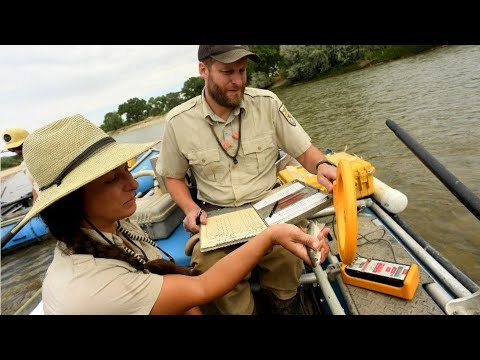
Fieldwork might involve recording bird calls, tracking mammals, monitoring primate groups, surveying pollinators, or studying behavior in a natural habitat. You may learn focal-animal sampling, scan sampling, behavioral ethograms, camera-trap deployment, and methods for minimizing observer bias. These techniques turn "watching animals" into reproducible science.
Laboratory experiences can be equally valuable. You might analyze learning behavior, examine hormonal influences, study sensory systems, or use computer tools to code video. Depending on the institution, you could work with insects, rodents, fish, birds, livestock, or noninvasive data from wildlife.
Look for a progression such as:
- Introductory laboratories in biology and chemistry
- A dedicated animal behavior or ecology course
- Research-methods and statistics training
- Faculty-supervised research or independent study
- Internship or field placement
- Senior thesis, capstone, or conference presentation
Hands-on animal contact is not always essential. Modern ethology increasingly uses remote cameras, acoustic monitoring, GPS tracking, environmental DNA, computational modeling, and automated video analysis. A program that teaches data tools may prepare you better than one that offers frequent but loosely structured animal handling.
You should ask about safety and ethics, too. Responsible programs explain institutional animal-care rules, field safety, biosecurity, permits, and humane observation. Experience should never come at the expense of animal welfare.
Internships can help translate academic work into employment. A shelter, zoo, wildlife rehabilitation center, government agency, or research laboratory can show you what the daily job actually involves, and whether you enjoy the less glamorous parts, such as cleaning enclosures, entering data, writing reports, or working outdoors in difficult weather.
Skills Developed and Academic Challenges
By graduation, you should develop more than knowledge about animals. The most transferable skills come from investigating behavior scientifically.
You'll practice observing carefully without jumping to conclusions, designing studies, analyzing imperfect data, writing technical reports, presenting findings, and collaborating with people from different disciplines. Depending on your electives, you may also learn R or Python, geographic information systems, laboratory procedures, behavioral coding software, and scientific literature review.
Those skills can transfer to conservation, environmental consulting, public policy, animal welfare, data analysis, education, and research coordination. Employers often value the ability to manage evidence and communicate clearly as much as they value species-specific knowledge.
The major can be academically demanding. Biology and chemistry may be prerequisites for advanced courses, and statistics is difficult for students who expect the degree to be mostly observational. Field research can involve long hours, insects, mud, heat, early mornings, or unpredictable animals. Laboratory work may be repetitive, and results may not support your original hypothesis.
You can prepare by building a strong science foundation before college, taking statistics seriously, and seeking help early. Keep a record of your field, lab, software, and research experience: these details will strengthen internship and job applications.
One important challenge is emotional. Animal-care and conservation work can expose you to injury, neglect, habitat destruction, euthanasia, and species decline. The field is rewarding, but idealism alone won't protect you from burnout. Programs that include animal welfare, professional ethics, and realistic career advising are especially valuable.
Why Major in Animal Behavior and Ethology?
Why Major in Animal Behavior and Ethology? The strongest reason is that the field lets you connect genuine interest in animals with rigorous science. If you want to understand behavior rather than simply spend time around animals, the major can be a compelling fit.
You may enjoy the degree if you're motivated by questions such as:
- How do animals learn, communicate, cooperate, or compete?
- How can behavior inform conservation and animal welfare?
- How do genetics, environment, development, and experience interact?
- How can human behavior change to reduce conflict with wildlife?
The major also gives you room to explore. You can begin with a broad interest in animals and later specialize in cognition, wildlife, marine organisms, domestic species, neuroscience, or conservation. That flexibility is useful if you're not yet certain which species or setting you prefer.
Another benefit is the chance to combine scientific and practical work. Your studies may lead from a research paper on social learning to an internship at a zoo, shelter, or conservation nonprofit. That variety keeps the subject intellectually lively.
Still, you shouldn't choose the major solely because you love animals. Many animal-related jobs are competitive, modestly paid at entry level, physically demanding, or dependent on graduate education. If your main goal is to diagnose and treat animals, biology or animal science may offer clearer preparation for veterinary school. If you want to train pets professionally, a behavior major can help, but supervised training experience and industry credentials will also matter.
Choose this major when you're comfortable with science, statistics, ambiguity, and patient skill-building, not just when you enjoy cute animal videos.
Job Opportunities for Animal Behavior and Ethology Majors
Job Opportunities for Animal Behavior and Ethology Majors span animal care, research, conservation, education, and general science-support roles. Your bachelor's degree may qualify you for entry-level work, but many specialized positions require experience or graduate training.
Possible paths include:
| Career direction | Example entry-level roles | Additional preparation often helpful |
|---|---|---|
| Zoos and aquariums | Animal care assistant, keeper aide, education assistant | Husbandry experience, internships, specialized training |
| Shelters and welfare | Behavior assistant, adoption counselor, enrichment coordinator | Shelter experience, behavior coursework, professional certificates |
| Wildlife and conservation | Field technician, wildlife technician, monitoring assistant | Field methods, GIS, permits, seasonal flexibility |
| Research | Research assistant, laboratory technician, behavioral coder | Statistics, laboratory methods, undergraduate research |
| Agriculture | Livestock behavior or welfare technician | Animal science, husbandry, welfare standards |
| Education | Nature educator, museum assistant, outreach coordinator | Public speaking, teaching, interpretation |
| Companion-animal services | Trainer assistant, behavior consultant assistant | Supervised practice and recognized credentials |
Government agencies, universities, nonprofits, private laboratories, farms, museums, and environmental consulting firms may all employ graduates. Some roles are seasonal or grant-funded, so you may need geographic flexibility early in your career.
Graduate school becomes more important if you want to become an independent researcher, professor, advanced wildlife biologist, animal behaviorist, or specialist in cognition or neuroscience. A master's degree can improve access to supervisory and technical roles: a PhD is usually expected for leading academic research.
You should build employability while enrolled. Join a research lab, complete an internship, learn statistical software, develop professional references, and create a record of measurable contributions. "Worked with animals" is less persuasive on a résumé than "collected and analyzed 400 behavioral observations using standardized sampling methods."
Expected Starting Salary in the US for Animal Behavior and Ethology Majors
The Expected starting Salary in the US for Animal Behavior and Ethology Majors varies widely because the major leads to many occupations rather than one regulated profession. A realistic broad estimate for bachelor's-level entry roles is roughly $35,000 to $55,000 per year, with location, employer, experience, and job type creating substantial differences.
Animal-care, shelter, seasonal field, and nonprofit roles may begin near the lower end. Laboratory technicians, government positions, specialized research assistants, and jobs in high-cost metropolitan areas may start higher. Overtime, housing support, seasonal stipends, union coverage, or benefits can also change the practical value of an offer.
| Early-career path | Approximate US starting range* | Main factors affecting pay |
|---|---|---|
| Shelter or animal-care assistant | $30,000–$45,000 | Region, organization size, supervisory duties |
| Wildlife or field technician | $35,000–$50,000 | Seasonality, travel, technical skills, agency |
| Research or laboratory assistant | $38,000–$55,000 | Degree, methods, software, funding source |
| Zoo or aquarium entry role | $32,000–$48,000 | Facility, husbandry experience, location |
| Government or environmental technician | $40,000–$60,000 | Agency, classification, geography |
These are planning estimates, not guaranteed offers. Check current federal, state, and employer-specific data before making financial decisions.
Salary growth is usually stronger when you add scarce skills: GIS, quantitative analysis, laboratory techniques, grant administration, project management, or specialized animal welfare knowledge. Graduate education may increase long-term opportunities, but it also adds tuition and time costs. Don't assume an advanced degree automatically produces a high salary: compare likely earnings with debt, funding, and the careers you actually want.
Your first job should be evaluated on more than pay. Supervision, training, benefits, advancement, research access, and geographic stability can make a slightly lower offer the better career investment.
Comparison With Related College Majors and Career Paths
Animal behavior and ethology overlaps with several majors, but each emphasizes a different question or career outcome. Comparing them can prevent you from choosing a degree based only on its title.
| Major | Primary emphasis | Often a stronger choice if you want to… |
|---|---|---|
| Animal behavior and ethology | Behavior, evolution, cognition, and observation | Study why animals behave as they do across settings |
| Biology | Broad life-science foundations | Keep options open for research, health, or graduate school |
| Zoology | Animal biology and classification | Study animal anatomy, physiology, or diversity |
| Wildlife biology | Wild populations and ecosystems | Manage species, habitats, and conservation programs |
| Animal science | Livestock, production, health, and management | Work with agricultural or domestic production animals |
| Psychology | Behavior and mental processes, usually in humans | Pursue counseling, human research, or behavioral science |
| Veterinary science pathway | Animal health and medicine | Prepare for veterinary school and clinical practice |
A biology major may be more flexible if you're undecided or planning professional school. Wildlife biology may provide more direct preparation for field management. Animal science may better fit livestock, equine, or agricultural careers. Psychology may be preferable if your real interest is human behavior, even if you also enjoy animals.
You can often combine these interests through a major, minor, certificate, or carefully selected electives. For example, an animal behavior major with a GIS minor could be powerful for conservation, while a biology major with animal behavior research may prepare you equally well for graduate study.
The decisive factor is not which label sounds most exciting. It's whether the required courses, faculty projects, internships, and alumni outcomes match your intended destination. Compare four-year course plans and job postings for the roles you want. If those postings repeatedly request statistics, GIS, husbandry, coding, or graduate credentials, choose a program that helps you acquire them.
Animal Behavior and Ethology College Major FAQs
What is an animal behavior and ethology college major?
An animal behavior and ethology major studies how animals interact with each other, their environment, and humans, combining biology, psychology, ecology, and neuroscience to understand animal behavior and its evolution.
What core subjects are typically included in an animal behavior and ethology program?
Students usually study biology, ecology, evolution, psychology, statistics, research methods, conservation biology, and ethics related to animal welfare and behavior.
What career opportunities are available for graduates with a degree in animal behavior and ethology?
Graduates can work in wildlife conservation, zoological parks, shelters, research labs, agriculture, education, and government agencies, with roles such as research assistant, field technician, animal care aide, and education coordinator.
How important is graduate education in advancing a career in animal behavior and ethology?
Graduate education is often important for specialized or leadership roles, such as independent research, advanced wildlife biology, or academic positions; a master's or PhD usually improves career prospects.
Can an animal behavior and ethology degree qualify me to become a veterinarian or professional animal trainer?
No, this degree does not automatically qualify you to be a veterinarian or certified animal trainer. Those careers require additional professional education, supervised experience, and licensing.
What factors should I consider when choosing a college program in animal behavior and ethology?
Evaluate the curriculum rigor, faculty expertise, research and internship opportunities, course availability, program costs, and how well the program's focus aligns with your career goals.