Cells are tiny, but a cell biology major can open doors to some of the biggest questions in science: How does cancer begin? Why do diseases spread? How can damaged tissues be repaired? If you're considering this major, you'll study the machinery of life at a level that connects biology, chemistry, genetics, medicine, and biotechnology.
This review explains what a cell biology degree involves, how demanding the coursework can be, what you'll do in laboratory settings, and where the degree may lead after graduation. It also examines job opportunities for cell biology majors, expected starting salary in the US for cell biology majors, and how the major compares with biochemistry, biology, and microbiology.
Because cell biology is often a pathway rather than a professional license, your results will depend heavily on your choices: research experience, internships, technical skills, graduate education, and location all matter. Use this guide to decide whether the subject fits your interests, academic strengths, and long-term plans.
Cell Biology Major At A Glance: Focus, Degree Options, and Key Facts
A cell biology major focuses on how cells are structured, how they communicate, how they reproduce, and how they respond to their environment. You'll examine processes such as gene expression, protein production, cell division, metabolism, signaling, and programmed cell death. The subject sits at the intersection of molecular biology, genetics, physiology, chemistry, and medicine.
Most colleges offer cell biology as a bachelor's degree, concentration, or track within biology, molecular biology, or biomedical sciences. Common options include a Bachelor of Science (B.S.), which usually emphasizes laboratory science and quantitative coursework, and a Bachelor of Arts (B.A.), which may allow more electives in writing, policy, education, or the humanities. Program names vary, so read the required-course list rather than relying on the title alone.
| Key fact | What it means for you |
|---|---|
| Typical undergraduate length | Four years full time |
| Core emphasis | Cells, molecules, genetics, and laboratory methods |
| Common next steps | Research, biotechnology, clinical programs, or graduate school |
| Math and science level | Chemistry, statistics, and often calculus or physics |
| Best fit | Curious students who enjoy experiments and detailed problem-solving |
The major is not the same as medical school, and it doesn't automatically qualify you for clinical practice. Instead, it gives you a scientific foundation that can support medicine, dentistry, pharmacy, public health, teaching, research, and industry careers.
Cell Biology Curriculum And Core Coursework
Your first year or two will usually establish a broad science foundation. Expect general biology, general and organic chemistry, physics, calculus or applied math, and statistics. These courses can feel distant from cells at first, but they provide the tools you'll need to understand molecular reactions, energy transfer, experimental data, and physical forces inside cells.
Upper-level coursework becomes more specialized. You may take:
- Cell biology and molecular biology
- Genetics and genomics
- Biochemistry
- Microbiology or immunology
- Developmental biology
- Physiology
- Bioinformatics or computational biology
- Cancer biology, neuroscience, or biotechnology electives
- Laboratory methods and scientific communication
A strong program should teach more than textbook vocabulary. You should learn how to use microscopes, maintain cell cultures, extract and analyze DNA, run gels, perform polymerase chain reaction (PCR), interpret western blots, and evaluate results statistically. Some colleges also introduce flow cytometry, fluorescence imaging, CRISPR-based methods, or next-generation sequencing.
Look closely at the capstone experience. A senior thesis, independent research project, or substantial laboratory course can make your education more valuable to employers and graduate programs. Also check whether labs are hands-on or primarily demonstrations. Two programs with nearly identical names may offer very different amounts of practical training.
Evaluation Criteria: Academic Rigor, Skills, Cost, And Career Value
To evaluate a cell biology major fairly, you should consider four dimensions rather than asking whether it is simply "good" or "bad."
Academic rigor: The major is demanding because several difficult subjects overlap. You'll need to understand concepts, memorize terminology, troubleshoot experiments, and analyze imperfect data. Chemistry and quantitative courses can be early pressure points. The workload is manageable for many students, but it rewards steady study more than last-minute cramming.
Transferable skills: You can develop experimental design, data analysis, technical writing, documentation, teamwork, and evidence-based reasoning. These skills are useful well beyond a laboratory, including regulatory affairs, scientific sales, public health, and education.
Cost and return: Tuition, fees, housing, and foregone income should be compared with likely outcomes. A bachelor's degree may lead to entry-level laboratory work, but higher-paying or independent research roles often require a master's, doctorate, professional degree, or several years of experience. Use your college's career-outcome reports and the U.S. Bureau of Labor Statistics Occupational Outlook Handbook instead of relying on salary claims from a university brochure.
Career value: The degree is most valuable when paired with research, internships, computing, or a clear professional plan. It is less efficient if you want a job immediately after graduation but avoid laboratory experience and technical electives.
Why Major In Cell Biology? Benefits, Research, And Personal Fit
Why major in cell biology? For many students, the answer is intellectual range. You can study an entire organism by starting with its smallest living units. A change in one receptor, gene, or signaling pathway can help explain infertility, diabetes, infection, cancer, or neurological disease. That connection between basic science and human health gives the major a strong sense of purpose.
Research is another major benefit. Undergraduate cell biology students may investigate drug resistance, stem cells, tissue development, host-pathogen interactions, or cellular aging. You don't need to discover a cure to gain value from research. Learning how to form a question, control variables, record procedures, and accept an unexpected result is excellent preparation for scientific and non-scientific work alike.
The major may fit you if you:
- Enjoy asking "why" and testing possible explanations
- Can tolerate repetition and careful documentation
- Like biology but also don't mind chemistry and statistics
- Want flexibility among health, research, biotechnology, and education
- Are willing to build experience outside the classroom
It may be a poor fit if you strongly dislike laboratory work, want a guaranteed profession after four years, or prefer large-scale ecology, organisms, or fieldwork. Before committing, ask to speak with current majors and sit in on a laboratory class. Your day-to-day experience matters more than the major's impressive-sounding course titles.
Student Experience: Labs, Research Opportunities, And Workload
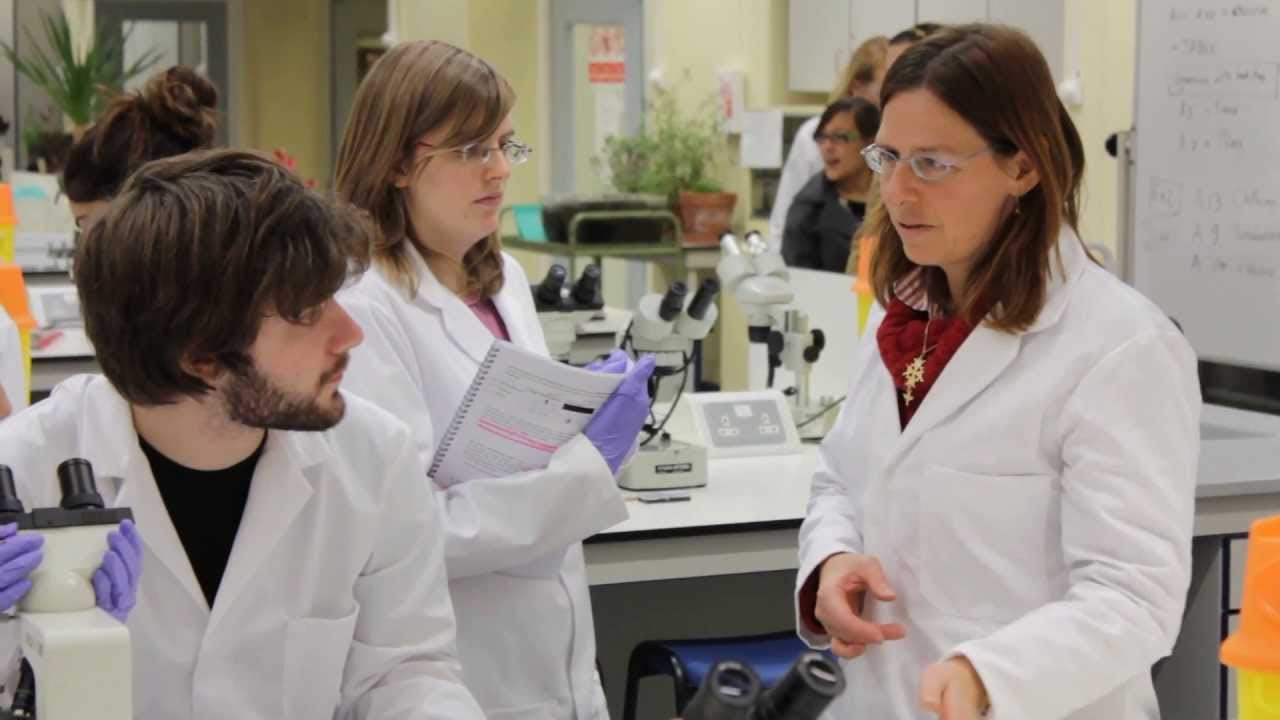
Your student experience will vary by college, but expect a combination of lectures, problem sets, laboratory reports, exams, and group projects. A three-hour lab may take much longer once you include preparation, data analysis, and writing. Experiments also fail. A contaminated culture, unclear gel, or contradictory result is frustrating, but troubleshooting is part of authentic science, not evidence that you're bad at it.
The strongest opportunity is usually joining a faculty research lab. Start by reading professors' research pages and sending a short, specific email that explains your interests, relevant coursework, and availability. Some positions are unpaid, while others are supported through work-study, summer programs, departmental grants, or scholarships. Ask about training, expected hours, authorship, and whether you'll perform experiments or mainly handle routine tasks.
You should also investigate:
- Paid summer research and internship programs
- Honors theses and independent-study credits
- Undergraduate research conferences
- Biotechnology or pharmaceutical internships
- Peer tutoring and laboratory teaching assistant roles
- Career services and alumni connections
Time management becomes important when lab deadlines overlap with chemistry or statistics exams. Plan for regular weekly study instead of treating the major as a series of cramming sessions. A manageable course load plus meaningful research is often more beneficial than taking every advanced class at once.
Job Opportunities For Cell Biology Majors
Job opportunities for cell biology majors exist in universities, hospitals, biotechnology companies, pharmaceutical firms, government laboratories, food and agricultural organizations, and environmental testing facilities. With a bachelor's degree, common titles include research assistant, laboratory technician, quality-control analyst, process-development assistant, clinical research coordinator, and manufacturing associate.
Your actual eligibility will depend on the employer and your technical experience. A student who has used mammalian cell culture, microscopy, PCR, ELISA, or data-analysis software may be more competitive than a student with higher grades but no lab practice. Regulatory documentation, laboratory information systems, and good manufacturing practice (GMP) knowledge can also help in industry.
Possible directions include:
| Career direction | Typical additional preparation |
|---|---|
| Academic or industry research | Bachelor's for support roles: graduate degree for independent work |
| Biotechnology manufacturing | Cell culture, quality systems, and process skills |
| Clinical research | Research regulations and coordination experience |
| Medicine, dentistry, or pharmacy | Required prerequisite courses and professional school |
| Genetic counseling | Specialized graduate program |
| Public health or epidemiology | Public-health coursework or graduate degree |
| Teaching | Education credentials, depending on your state |
The degree can also support careers in scientific communication, technical sales, patent support, and regulatory affairs. But, you should not assume a cell biology major alone guarantees a job in pharmaceutical research. Build a portfolio of techniques, projects, presentations, and professional references while you are in college.
Expected Starting Salary In The US For Cell Biology Majors
The expected starting salary in the US for cell biology majors varies substantially because "cell biology major" is an educational category, not a single occupation. Your first job title, region, employer type, degree level, and laboratory skills matter more than the major's name.
For many bachelor's-level graduates entering laboratory technician, research assistant, quality-control, or clinical research roles, a practical planning range is roughly $40,000 to $65,000 per year. Biotech hubs and specialized manufacturing roles may offer more, while academic laboratories, smaller markets, and temporary positions may offer less. Treat this as a broad estimate, not a promise. Offers can differ by thousands of dollars for similar work.
Graduate or professional education changes the picture. A master's may improve access to specialized industry roles, while doctoral and professional degrees can qualify you for careers with substantially higher long-term earnings. National occupational data is more reliable when matched to a specific occupation, such as biological technician or medical scientist: consult BLS wage and employment information for current figures.
When comparing offers, evaluate the complete package:
- Base pay and overtime eligibility
- Health insurance and retirement benefits
- Relocation assistance
- Training and tuition support
- Promotion pathways
- Contract status and job stability
A lower first salary may be worthwhile if the position provides sophisticated training or funds further education. Conversely, a slightly higher offer with repetitive work and no development may limit your next move.
Cell Biology Compared With Related College Majors
Cell biology overlaps with several majors, but the emphasis can feel different. Comparing course requirements and outcomes can prevent you from choosing based on a title alone.
| Major | Main emphasis | Often best for students who want to… |
|---|---|---|
| Cell biology | Cellular structure, signaling, genetics, and laboratory research | Study disease mechanisms and modern biomedical science |
| General biology | Broad coverage from molecules to ecosystems | Keep options open across biological fields |
| Molecular biology | Genes, proteins, and molecular interactions | Focus closely on DNA, RNA, and gene regulation |
| Biochemistry | Chemical reactions and biomolecules | Combine biology with intensive chemistry |
| Microbiology | Microorganisms and host interactions | Study bacteria, viruses, fungi, or infectious disease |
| Biomedical sciences | Human disease and preclinical applications | Prepare for health professions or biomedical research |
Cell biology may be more focused than general biology but broader than a narrowly molecular program. Biochemistry may involve more chemistry and quantitative analysis. Microbiology can include cellular work but centers on organisms such as bacteria and viruses. Biomedical sciences may align more visibly with medical-school prerequisites, although medical schools accept many different majors.
Your best choice depends on faculty strengths, available labs, class size, cost, and your intended career. If two schools offer similar subjects, choose the one where you can realistically conduct research, graduate with manageable debt, and receive advising. A slightly less famous college with excellent undergraduate access can be more useful than a prestigious program where you never enter a lab.
Pros And Cons Of A Cell Biology Major
A balanced decision requires looking at both the scientific appeal and the practical trade-offs.
Pros
- You study a subject directly connected to medicine, disease, and biotechnology.
- Laboratory and analytical skills transfer to multiple industries.
- Research experience can prepare you for graduate or professional school.
- You have room to explore genetics, immunology, cancer, development, or bioinformatics.
- The major can support meaningful work even if you later change fields.
- Undergraduate research, internships, and scholarships can strengthen your résumé.
Cons
- Advanced coursework is demanding and often chemistry-heavy.
- A bachelor's degree may lead mainly to support-level laboratory roles.
- Research careers frequently require graduate education.
- Entry-level work can involve repetitive procedures, strict protocols, and modest pay.
- Results are not always predictable, and experiments can require long hours.
- Career outcomes vary widely by location and by the experience you build.
The central trade-off is flexibility versus certainty. Cell biology gives you a strong platform, but it doesn't prescribe one occupation. You must actively shape the degree through electives, internships, networking, and, in many cases, further education. If you want a clearly licensed career after completing a bachelor's degree, nursing, engineering, or medical technology may offer a more direct route. If you enjoy discovery and can tolerate a longer training path, cell biology may be a better match.
Frequently Asked Questions About Cell Biology College Major
What does a cell biology major study in college?
A cell biology major focuses on the structure, function, reproduction, and communication of cells. Coursework includes cell and molecular biology, genetics, biochemistry, microbiology, physiology, and biotechnology, often with extensive laboratory training.
How demanding is the coursework for a cell biology major?
The major is academically rigorous, requiring strong foundation in chemistry, biology, statistics, and sometimes calculus or physics. It involves memorization, experimental troubleshooting, data analysis, and technical writing, rewarding steady study rather than last-minute cramming.
What are common career paths for graduates with a cell biology degree?
Graduates can work as research assistants, laboratory technicians, clinical research coordinators, or quality-control analysts in universities, hospitals, biotech firms, and government labs. Many pursue graduate or professional education for advanced roles in research, medicine, or biotechnology.
How does a cell biology major differ from general biology or biochemistry?
Cell biology is more focused on cellular structures, signaling, and genetics with laboratory research, while general biology covers a broad range from molecules to ecosystems. Biochemistry emphasizes chemical reactions and biomolecules with more intensive chemistry coursework.
What practical skills will I gain from a cell biology major?
You will learn laboratory techniques like microscopy, cell culture, DNA extraction, PCR, and data analysis. Skills also include experimental design, technical writing, teamwork, and evidence-based reasoning, which are valuable beyond laboratory work in various scientific careers.
What is the expected starting salary for cell biology majors in the US?
Starting salaries typically range from $40,000 to $65,000 annually for bachelor's degree holders in entry-level lab roles, but can vary widely based on job title, location, employer, and technical experience. Further education can lead to higher earning potential.