

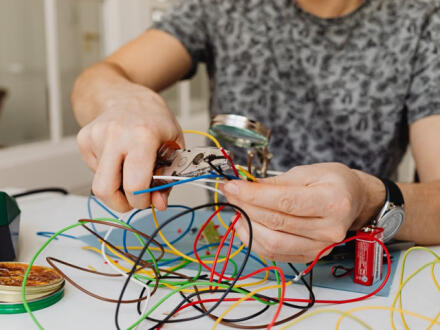
Training for motor systems work can lead to solid pay, but the cost of tuition, tools, books, lab fees, and transportation adds up fast. A student in Florida can easily face $1,200 to $3,800 in yearly out-of-pocket costs even in a shorter technical program, especially once safety gear, multimeters, and work boots hit the list.
That's where Florida Electrical Motor Systems Technician Scholarships matter. They can reduce tuition, cover program supplies, and make it easier to stay enrolled long enough to finish a certificate, diploma, or degree. For students who want hands-on careers, even a $500 award can pay for textbooks, a tool kit, or several weeks of fuel to get to class and job training.
This guide breaks down 8 Florida Electrical Motor Systems Technician Scholarships paths that students should pay attention to. It covers high school seniors, freshmen, technical students, university students in related majors, association awards, employer-backed aid, local community scholarships, and broader merit or need-based options that still fit this career path.
The goal is simple: help students find money that matches where they are right now. Instead of chasing random scholarships, they can focus on awards that make sense for electrical, industrial, maintenance, and motor systems training in Florida.
1. Florida Electrical Motor Systems Technician Scholarships For High School Students
Students do not have to wait until college starts to look for funding. Florida Electrical Motor Systems Technician Scholarships for High School Students often reward early planning, strong attendance, career interest, and technical coursework.
A high school senior who wants to work with motors, drives, controls, or industrial maintenance should start with programs tied to construction, skilled trades, utilities, and applied technology. Many local scholarships range from $500 to $2,500, which can cover enrollment deposits, first-term books, or starter tools.
Florida students should also look at trade-adjacent awards on scholarship platforms. For example, programs like the Florida Transportation Builder's scholarship can fit students entering hands-on technical fields, even if the title is broader than electrical motor systems.
Good high school candidates usually show three things:
- A clear career plan tied to electrical or mechanical systems
- Documented hands-on experience, such as shop class or part-time work
- Reliable academics, often a GPA of 2.5 or higher
A concrete example helps. A student who completed 120 classroom hours in industrial arts and logged 40 volunteer hours helping with equipment maintenance at a school theater can look stronger than a student who submits only a generic essay.
Best Ways To Qualify Before Graduation
The best move is to build a simple record before senior year ends. That means saving transcripts, asking for recommendation letters early, and writing down all technical activities.
Students improve their odds when they have:
- 1 resume with classes, certifications, clubs, and work history
- 2 recommendation letters, ideally from a shop teacher and employer
- 1 short essay that explains why motor systems work fits their goals
- Proof of participation in CTE, SkillsUSA, robotics, or maintenance projects
Even small signals count. If a student repaired 3 electric fan motors, rewired a practice control panel, or completed OSHA-style safety training, that gives scholarship reviewers real evidence. And if they use a matching platform such as StudentScholarships.org, they can sort through options faster instead of missing deadlines buried on separate school sites.
2. Florida Electrical Motor Systems Technician Scholarships For First-Year Students
Freshmen often miss strong scholarship options because they assume aid is only for high school seniors. That's a mistake. Florida Electrical Motor Systems Technician Scholarships for first-year students are common in career education, especially after a student has picked a program and started earning grades.
First-year applicants can show something seniors often cannot: actual postsecondary performance. A first semester GPA, instructor feedback, attendance records, and lab performance all make an application more credible.
Many schools and scholarship committees pay attention to early persistence. That matters because technical programs can lose a chunk of students after the first term. In some career-track programs nationwide, retention gaps can exceed 10 percentage points between first-term entrants and second-term returners. Scholarship providers like students who show they are still in it.
A smart place to look is industry-focused scholarship directories, including the Alltricity scholarship listing, which can be relevant for students on electrical pathways. Even when a scholarship is not labeled "motor systems," overlap in electrical training can make it a fit.
What Freshmen Should Prepare Before Applying
First-year students should treat scholarship prep like a lab check. Every item needs to be ready before the deadline.
They should gather:
- An updated transcript with first-term grades
- A program schedule showing electrical, controls, or maintenance courses
- A short budget, such as $640 for books, $220 for boots, and $180 for tools
- An instructor letter with specific lab examples
- A resume with work, volunteer, and technical experience
A strong application sounds concrete. "They completed 18 lab assignments, scored 92% in motor controls, and never missed an 8:00 a.m. lab" works far better than "they are a hard worker."
Freshmen should also keep filing for broad campus aid. A university or college financial aid office may package grants, work-study, loans, and departmental awards together: the student aid office at UCF shows how schools bundle different payment options in one place.
3. Florida Electrical Motor Systems Technician Scholarships For College Students In Technical And Trade Programs
This is the most direct category for many applicants. Florida Electrical Motor Systems Technician Scholarships for College often fit students in certificate and A.S. programs tied to industrial maintenance, electrical technology, mechatronics, HVAC controls, or motor repair.
Technical and trade students should focus on awards that value hands-on career outcomes. Reviewers often care less about polished campus leadership and more about whether the student can finish training, show up reliably, and work safely around equipment.
In Florida, tuition at public colleges may look manageable on paper, but program extras can push costs higher. A student might pay $900 for tuition, then another $350 for books, $275 for tools, and $160 for testing or lab fees in one term.
Trade students should search by related fields, not only exact job titles. Scholarships tied to refrigeration, electrical work, transportation, maintenance, or technicians may still apply. The Taylor Refrigeration scholarship is one example of a Florida-based award that aligns with technical training and equipment-focused careers.
Students in these programs usually stand out when they can prove:
- Completion of core lab courses
- A record of safe shop behavior
- Part-time work or internships in maintenance or repair
- A realistic plan to move into field service, plant maintenance, or motor controls
A useful example: a student in an industrial systems program who rebuilt 2 single-phase motors, diagnosed a failed capacitor bank, and logged 36 hours in a maintenance internship gives reviewers a clear picture. That specificity often beats a generic essay by a mile.
4. Florida Electrical Motor Systems Technician Scholarships For University Students In Related Engineering Pathways
Not every future motor systems technician starts in a trade-only track. Some students enter engineering technology, electrical engineering, mechanical engineering, or industrial engineering and still plan to work close to motors, drives, automation, or rotating equipment. That makes Florida Electrical Motor Systems Technician Scholarships for University worth watching too.
University students can make a strong case when their coursework connects to real equipment. Classes like circuits, power systems, controls, instrumentation, thermodynamics, and machine design all support work around motors and industrial systems.
This path can cost more. At a four-year school, annual direct and indirect expenses can climb into the thousands of dollars above tuition alone, especially once housing and transport are added. So even a departmental award of $1,500 can matter.
Students should also scan scholarships from electrical associations. The NEMA-related scholarship page is a good example of how broader electrical industry awards can overlap with motor systems interests.
How To Connect Electrical Motor Systems Training To Broader Degree Programs
The key is to explain the connection in plain language. A scholarship committee needs to see how a broader degree leads to motor systems work.
Students can frame that link like this:
- Electrical engineering supports motor controls, drives, and power distribution
- Mechanical engineering supports rotating equipment, shafts, bearings, and failure analysis
- Engineering technology supports troubleshooting, installation, and field testing
- Industrial engineering supports plant systems, maintenance flow, and equipment uptime
A solid application might say a student completed 9 credit hours in circuits and controls, used a variable frequency drive in a lab project, and wants to improve pump motor efficiency in municipal facilities. That sounds focused. It also shows that university study is not abstract: it connects to actual machines, noise, heat, vibration, and field work.
5. Florida Electrical Motor Systems Technician Association Scholarships And Industry-Sponsored Awards
Association and industry-backed awards are often some of the best fits for this field. They tend to favor students who are entering practical technical work, and they often understand what tool costs, certification fees, and lab expenses really look like.
Florida Electrical Motor Systems Technician Association Scholarships may come from electrical groups, contractor associations, power organizations, manufacturing groups, and trade foundations. Amounts vary, but awards of $1,000 to $5,000 are common in industry-sponsored programs.
These scholarships also have one extra benefit: they can put a student closer to employers. An association award may come with conference exposure, directory placement, or contact with contractors and suppliers. For a student seeking an apprenticeship or first job, that network can be worth as much as the check.
Examples of adjacent industry pages include the Mountain View Electrical award and the AMEA scholarship page. They are not Florida-only, but they show how utility and electrical groups support technician pipelines.
Where To Find Association-Based Opportunities In Florida
Students should not search only for the exact phrase "motor systems technician scholarship." That phrase is too narrow, and it hides good options.
Better search buckets include:
- Electrical contractor associations
- Manufacturing and motor repair groups
- Utility and public power organizations
- HVAC and refrigeration associations
- Industrial maintenance societies
A student can build a spreadsheet with 4 columns: organization, award amount, deadline, and required materials. In 30 minutes, they can turn a messy search into a usable list. That simple step prevents missed deadlines and helps them compare whether an award wants GPA, residency, program enrollment, or letters from industry supervisors.
6. Employer, Apprenticeship, And Workforce Scholarships For Future Motor Systems Technicians
Some of the best funding does not come from a classic scholarship office at all. It comes from employers, unions, apprenticeships, local workforce boards, and training partnerships that need more skilled technicians in the pipeline.
For a future motor systems technician, this category matters because employers often pay for the exact things students need most:
- Tuition reimbursement
- Books and lab fees
- Tools and safety gear
- Certification exams
- Paid training hours
That last one is huge. A paid apprenticeship earning even $16 per hour for 20 hours each week brings in about $320 weekly before taxes, which can reduce the need for loans.
Students should ask local employers direct questions. Do they sponsor entry-level trainees? Do they reimburse for electrical technology classes? Do they pay more after a controls or maintenance certificate?
Trade-adjacent technician awards can also point students toward employer-supported pathways. The automotive technician scholarship is not the same trade, but it shows how industry partners back students who plan to work with equipment, diagnostics, and repair.
A strong applicant in this category often has a practical story: they worked 18 hours per week in maintenance, replaced contactors under supervision, and want scholarship help to finish the electrical side of their training. That kind of application feels real. And employers tend to like real.
7. Local Florida Scholarships From Schools, Foundations, And Community Organizations
Local awards are less flashy than national scholarships, but they are often easier to win. The applicant pool might be 40 students instead of 4,000, and that changes the odds fast.
For Florida students, local money can come from:
- State colleges and technical colleges
- Community foundations
- County education funds
- Civic groups and chambers of commerce
- Regional trade associations
These programs may not say "electrical motor systems technician" in the title. But if they support students entering skilled trades, engineering technology, public infrastructure, or technical college, they can still fit well.
Examples from the broader Florida scholarship space include the Florida Stormwater scholarship and the Asphalt Contractors award. Both show a pattern students should copy: local industry groups often fund careers tied to infrastructure, field work, equipment, and technical skill.
Students should search close to home first. A county foundation may offer $750 awards that go unclaimed because students only search national databases.
A useful tactic is to contact 3 people at once: a financial aid counselor, a program advisor, and a local foundation office. In one afternoon, a student can uncover deadlines, stackable aid rules, and department awards that never show up in a basic Google search.
8. Merit-, Need-, And Career-Focused Scholarships That Fit Electrical Motor Systems Students
Not every good scholarship is trade-specific. Some of the most useful awards are broader merit, need-based, demographic, or career-interest scholarships that still work for electrical and motor systems students.
This category matters because stacking aid is often the smartest move. A student might combine a $1,200 local scholarship, a $900 need-based grant, and a $500 department award to cover most direct program costs.
Students should think in three buckets:
- Merit-based, usually tied to GPA, attendance, or achievement
- Need-based, usually tied to family income or aid forms
- Career-focused, tied to technical education, workforce demand, or industry goals
Broader scholarship pages can help students spot patterns outside one major. For instance, the Florida State Golf Association scholarships and the Florida Minority Teacher Education scholarship show how organizations set clear eligibility rules, deadlines, and selection factors. Motor systems students should read those structures closely, then apply the same logic to technical awards.
A strong strategy is to submit 10 well-matched applications instead of 30 random ones. If each application takes 45 minutes, that saves more than 15 hours while often improving quality.
Career-focused students should also mention labor-market value. The U.S. Bureau of Labor Statistics lists median annual pay above $60,000 for several electrical and industrial repair roles, which helps explain why scholarship committees view this training as a solid investment.
Florida Electrical Motor Systems Technician Scholarships FAQs
What types of scholarships are available for high school students interested in electrical motor systems in Florida?
High school students can find scholarships rewarding career interest, technical coursework, and hands-on experience in electrical motor systems. Awards often range from $500 to $2,500 and can cover enrollment deposits, tools, and textbooks. Programs like the Florida Transportation Builder’s Association Scholarship are also relevant for trade-adjacent fields.
How can first-year students applying for electrical motor systems scholarships improve their chances in Florida?
Florida freshmen should submit updated transcripts, instructor letters with lab examples, and a resume showing technical experience. Demonstrating early academic performance in electrical or controls courses and detailing budget needs for tools and supplies strengthens applications.
Are there scholarships for college students in technical or trade programs for motor systems in Florida?
Yes, many scholarships target students in certificates or A.S. programs related to industrial maintenance, electrical technology, or motor repair. Awards like the Florida’s Taylor Refrigeration Scholarship support hands-on career outcomes including tool costs and lab expenses.
What opportunities exist for university students pursuing engineering degrees related to motor systems in Florida?
University students in electrical, mechanical, industrial, or engineering technology fields can apply for scholarships by highlighting relevant coursework such as circuits and controls. Industry awards like the National Electrical Manufacturers Association Educational Scholarships align with motor systems interests and support broader degree paths.
How do association and industry-sponsored scholarships benefit future electrical motor systems technicians in Florida?
Industry-backed awards often provide $1,000 to $5,000 and connect students to employers and apprenticeship networks. Scholarships from electrical contractors, manufacturing groups, and trade foundations enhance career pipelines and help cover certification and tool costs, as seen in the Mountain View Electrical Association Scholarships.
What are some strategies to find local scholarships for electrical motor systems training in Florida?
Students should contact financial aid counselors, program advisors, and community foundation offices to uncover local scholarship options. Smaller applicant pools increase chances, and local funds may include awards from civic groups, technical colleges, or trade associations like the Florida Stormwater Association Scholarship.







