

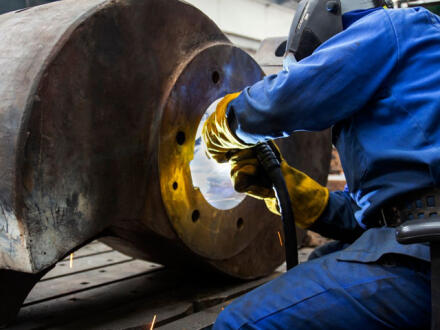
Paying for welding school in Florida can feel heavier than a steel plate. Tuition, lab fees, PPE, books, certification tests, and gas money add up fast. A basic starter kit with a helmet, jacket, gloves, and boots can easily run $350 to $900, and that's before program costs.
That's why Florida welding scholarships matter. The right award can cover a chunk of tuition, offset supply costs, or make it possible for a student to start training without taking on extra debt. For students in high school, first-year technical programs, college certificate tracks, or even university paths tied to welding and fabrication, there are more options than most families realize.
This list focuses on seven scholarship lanes that Florida students should prioritize. Some are statewide. Some are tied to welding associations. Others come from local schools, community groups, and employers that need skilled workers badly enough to help pay for training.
The short version: students usually get the best results when they apply across multiple categories, not just one. A senior in Jacksonville, for example, might qualify for a statewide trade scholarship, a local employer award, and a school-based grant all at once. That stack can mean the difference between waiting a semester and starting on time.
The sections below break down where each type of aid fits, who usually qualifies, and how students can improve their odds without making the process feel like a second job.
1. Statewide Welding Scholarships That Offer The Broadest Florida Opportunities
The best place to start is often the broadest pool. Statewide Florida welding scholarships tend to accept students from multiple counties, schools, and program types, which gives applicants more room to qualify.
A strong example is the national welding award page. Awards tied to large welding groups often support students entering certificate, diploma, or degree programs connected to welding technology. Another useful option is the technical memorial award, which can fit students pursuing hands-on training rather than a traditional four-year route.
Why start here?
- Larger applicant pools often come with multiple awards
- Wider eligibility rules can include technical colleges and trade schools
- More flexible use of funds may cover tuition, books, and equipment
The practical payoff is real. If a student earns $1,500 from one statewide scholarship and saves $600 on tools through school aid, that can wipe out a large share of first-term out-of-pocket costs at many public technical programs.
Students should also use free scholarship-match tools to widen the search. On platforms like StudentScholarships.org, a welder-in-training can often find related trade awards in under 2 minutes, which matters when deadlines pile up.
Who Can Apply And What Programs Usually Qualify
Eligibility varies, but statewide programs usually look for a few common things: Florida residency, enrollment in an approved school, and a program that clearly connects to welding, fabrication, industrial maintenance, pipefitting, or related skilled trades.
Programs that often qualify include:
- Career and technical education certificates
- Associate degrees in welding technology
- Industrial manufacturing programs
- Mechanical or construction tracks with strong welding content
A student does not always need a perfect GPA. In trade scholarships, committees often care more about attendance, instructor recommendations, safety habits, and a clear career goal. A senior with a 3.0 GPA, 120 volunteer hours, and a welding teacher who can speak to shop performance may beat a higher-GPA student with no trade experience.
One smart move is to read program descriptions line by line. If a scholarship says "welding or related technical field," that can open the door for students in fabrication, diesel, HVAC, or construction systems that use welding skills regularly.
2. Florida Welding Scholarships For High School Students Starting Early
Florida Welding Scholarships for High School Students can be easier to win than students expect, especially for seniors who already have CTE coursework, shop hours, or dual enrollment credits.
Starting early matters because deadlines often hit before graduation. A student who begins in September can gather transcripts, recommendation letters, and proof of program interest without rushing. That alone can raise application quality by a lot.
Some Florida-based awards are not welding-only, but they still fit future welders. The South Florida Fair scholarship page is one example of local scholarship aid that may support students headed into workforce-focused education. The Florida transportation builders award also deserves attention because construction and infrastructure employers value welding-adjacent skills on roads, bridges, and heavy projects.
A high school applicant becomes stronger with proof like this:
- 2 or more welding classes completed
- 1 teacher recommendation from a shop instructor
- 1 resume showing part-time work, FFA, SkillsUSA, or volunteer service
- A short essay that names a job goal, such as structural welder or pipe welder
Concrete example: a senior who has earned 6 dual enrollment credits, passed a basic welding course, and logged 40 hours helping with school fabrication projects already has more usable material than most first-time applicants realize.
Best Fits For Seniors, Career Academy Students, And Dual Enrollment Applicants
Seniors in career academies and dual enrollment tracks often have an edge because they can show momentum. Scholarship committees like signs that a student will actually finish training, not just "try it out."
That proof can come from:
- OSHA or safety training completion
- Industry certifications earned in school
- Documented shop projects, such as a trailer repair or gate build
- Attendance records in hands-on classes
For students who need a wider net, awards outside strict welding labels still count. A future welder attending a Florida public college may also find campus aid through offices like UCF financial assistance, where broader institutional scholarships sometimes pair with trade-related study plans.
A strong application also sounds specific. "They want a stable career" is weak. "They plan to complete a welding technology certificate, test for structural welding, and work in marine fabrication near Tampa" is much better. That level of detail tells a reviewer the student has done the assignments.
3. Florida Welding Scholarships For First-Year Students Entering Technical Or College Programs
Florida Welding Scholarships for first-year students are especially important because the first term is usually the most expensive. New students often pay application fees, tuition deposits, lab charges, books, and equipment all at once.
A first-year student might face costs like these in the first semester alone:
- Tuition and fees: $1,800 to $4,200
- PPE and tools: $350 to $900
- Books and supplies: $150 to $400
- Certification or testing fees: $100 to $300
That front-loaded cost is why new students should apply beyond one welding-specific award. The JFLF welding awards page is worth prioritizing because it focuses on welding education. Students entering schools such as Northwest Florida State College should also compare institutional aid, emergency grants, and trade program support from the school itself.
This category works well for students coming from several routes:
- Recent high school graduates
- GED earners
- Adults changing careers
- Students transferring from general education into trades
One common mistake is waiting for a school acceptance letter before starting scholarship work. That can cost weeks. Many applications allow students to apply while admission is pending, as long as they name the intended program.
How To Stand Out If You Have Limited Postsecondary Experience
A first-year applicant does not need a long college resume. They need evidence that they will show up, work safely, and finish training.
Useful proof includes:
- A personal statement with a clear job target
- A supervisor note from part-time work
- Photos or descriptions of hands-on projects
- Evidence of consistent attendance or punctuality
For example, a student who worked 18 hours per week at an auto shop and helped with exhaust repairs can frame that as real preparation for metalwork and fabrication. Another student might describe building a 12-foot farm gate with a family member. That's memorable, and it shows applied skill.
Students with limited experience should also keep essays concrete. A sharp essay might mention that local employers need welders who can read blueprints, pass bend tests, and work in heat. Details like those sound much more credible than broad claims about "loving to work with their hands."
4. Florida Welding Scholarships For College Students In Certificate And Degree Tracks
Once a student is already enrolled, Florida Welding Scholarships for College can become more targeted. At that stage, committees can review actual postsecondary grades, shop performance, attendance, and instructor feedback.
This is where many students get more competitive. A college student who has completed 12 credit hours with a 3.2 GPA and no safety violations gives a reviewer hard evidence, not just potential. That matters.
Women entering welding or industrial gas fields should pay attention to the women in gases and welding award. It can be a strong fit for students in programs where welding, manufacturing, and industrial systems overlap. Students in Southwest Florida should also keep campus-based aid in mind at schools such as Florida SouthWestern State College, where broader financial aid structures may support technical learners.
College students should usually apply in three buckets:
- Program-specific welding scholarships
- General trade or technical scholarships
- School-based aid through the financial aid office or foundation
The best applications often include numbers. Instead of saying they are doing well, a student can say they completed 3 welding labs, maintained 95% attendance, and earned an A in blueprint reading. That makes the file easier to score.
Another edge comes from instructor relationships. A welding faculty member who can write that a student produces clean beads, follows PPE rules, and helps classmates troubleshoot fit-up issues gives the committee a vivid picture. That's much stronger than a generic character note.
5. Florida Welding Scholarships For University Students Pursuing Related Skilled Trades Paths
At first glance, university and welding may sound like an odd mix. But Florida Welding Scholarships for University students can make sense when the student is aiming for a welding-adjacent career instead of a shop-floor role alone.
Examples include:
- Construction management
- Mechanical engineering technology
- Manufacturing engineering
- Industrial design and materials work
- Facilities or infrastructure planning
A university student studying these fields may still have a strong case for trade-related aid if the coursework connects to fabrication, metals, infrastructure, or industrial systems. The Florida Collaboratory scholarship page is the kind of broader Florida award that may fit students in technical, applied, or workforce-oriented study paths. Students considering engineering-heavy options can also compare programs at Florida Polytechnic University, where advanced manufacturing and systems-focused study can align with welding-adjacent goals.
Here, specificity matters even more. If a student wants to design welded structures, inspect fabricated assemblies, or manage industrial buildouts, they should say so directly. A clear route from education to job title helps scholarship reviewers connect the dots.
When A University Route Makes Sense For Welding-Adjacent Careers
A university route makes sense when the student wants to move beyond hands-on welding into supervision, design, testing, or project leadership. That doesn't make one path better. It just changes the target.
For example, a student may start with welding experience and later pursue:
- Welding engineering support
- Quality assurance and inspection
- Construction project management
- Materials testing
- Manufacturing process planning
The wage upside can be meaningful. The U.S. Bureau of Labor Statistics reports that construction managers earn well above typical welder pay, while welders still hold strong value in field, shop, and pipe work. A student who understands both fabrication and project planning can become unusually useful on real job sites.
That hybrid skill set also helps with scholarship essays. A reviewer can picture how someone who has run a torch, read drawings, and studied systems might lead crews or coordinate fabrication schedules later on.
6. Florida Welding Association Scholarships And Trade Organization Awards To Prioritize
If a student wants the most relevant scholarship lane, Florida Welding Association Scholarships and national trade-organization awards belong near the top of the list. These groups already understand what welding training costs and what employers need.
That matters because the application review is often more practical. Instead of only asking about GPA, trade groups may care about skill growth, certification goals, and whether a student plans to work in the industry after school.
Priority targets often include:
- AWS-related scholarship programs
- Foundation awards tied to fabrication or manufacturing
- Industry-sponsored scholarships for women in welding
- Memorial awards funded by trade donors
The Donald F. Hastings award page is a useful example of a trade-connected opportunity to keep on the radar. Students should also compare school and association support side by side, because one award of $1,000 plus a second award of $750 can cover more than one larger but harder-to-win scholarship.
A good rule is simple: apply where the reviewers already speak the language of welding. If the committee understands MIG, TIG, stick, blueprint reading, and weld testing, a strong technical applicant may stand out faster.
Another practical angle is timing. Trade organizations may publish annual windows that open earlier than campus aid. Students who build a spreadsheet with deadline, award amount, essay prompt, and documents needed can often submit 5 to 8 strong applications without chaos.
7. Local School, Community, And Employer-Sponsored Welding Aid Across Florida
This last category gets overlooked, and that's a mistake. Local awards often have smaller applicant pools, which can improve the odds a lot.
A welding student in one county may only compete against 40 to 120 applicants for a community award, while a large statewide scholarship can draw several hundred or more. Even if the local prize is $500 to $2,000, that money can still cover books, gas, test fees, or a major chunk of tuition.
Good sources include:
- School foundations
- County fair scholarships
- Chambers of commerce
- Rotary and civic clubs
- Construction, HVAC, marine, and fabrication employers
- Veteran and service organizations
Local employer support can also connect directly to hiring. The Taylor refrigeration award page shows how industry-backed aid can support technical education in Florida. A broader community option like the American Legion Florida scholarship page can also fit students whose goals line up with workforce training, service, or local involvement.
Students should ask three direct questions at every school office:
- Does the foundation have trade scholarships?
- Which local employers sponsor students?
- Are instructors aware of small awards not posted online?
That last question matters more than people think. Some of the best opportunities come from a shop instructor who knows a local fabricator is willing to fund one or two students per term.
A concrete example: a student who wins $800 from a civic club, $1,200 from a school foundation, and $500 from a local contractor has stacked $2,500 without relying on one highly competitive national award.
Florida Welding Scholarships FAQs
What types of welding scholarships are available for students in Florida?
Florida offers several welding scholarships including statewide awards, association-based scholarships, local community grants, and school-specific aid targeting high school students, technical college entrants, and university students in welding-related fields.
Who is eligible for statewide welding scholarships in Florida?
Statewide welding scholarships generally require Florida residency, enrollment in approved programs like welding technology certificates or associate degrees, and a connection to welding, fabrication, or related skilled trades. GPA is often less critical than attendance and career focus.
How can high school students improve their chances of winning Florida welding scholarships?
High school students improve eligibility by completing multiple welding classes, obtaining recommendations from shop instructors, demonstrating involvement in related activities like SkillsUSA, and articulating clear welding career goals in their applications.
What financial challenges do first-year welding students in Florida face and how do scholarships help?
First-year welding students often face upfront costs including tuition ($1,800 to $4,200), PPE ($350 to $900), books, and certification fees. Scholarships can significantly offset these expenses, making training more accessible without extra debt.
Are there welding scholarships for university students pursuing welding-adjacent careers in Florida?
Yes, students studying construction management, mechanical engineering technology, or manufacturing who focus on welding-related topics can qualify for specialized Florida scholarships that support welding-adjacent skilled trade paths.
Where can Florida welding students find reputable scholarship applications?
Students can find trusted scholarship applications such as the American Welding Society National Scholarships, JFLF’s Welding Awards Program, and local aid like the Florida Transportation Builder’s Association Scholarship.







