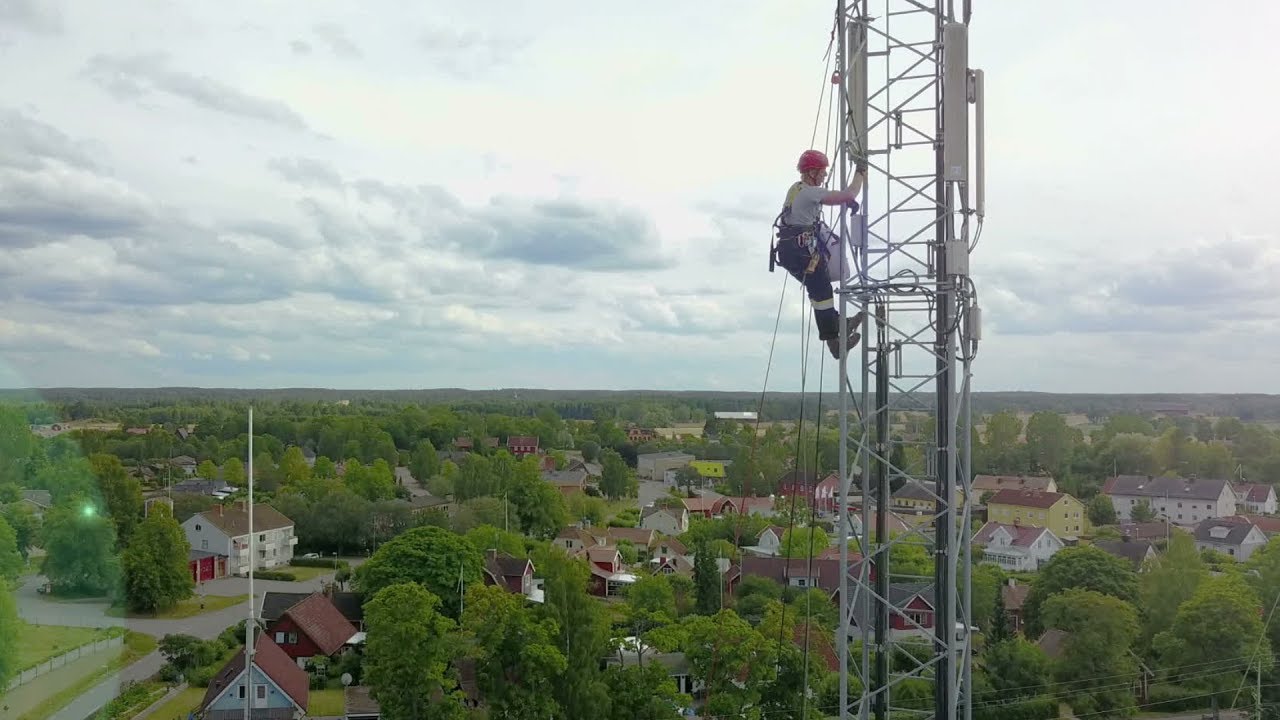
A communication technician turns invisible signals into working connections. From fiber-optic networks and wireless systems to broadcast equipment and business communications, these professionals install, test, troubleshoot, and maintain the technology people rely on every day. If you prefer practical problem-solving to lecture-heavy study, this career path may deserve a closer look.
There is one important distinction, though: communication technician is not a single standardized college major across the United States. Schools may use related names such as communications technology, telecommunications, electronics technology, broadcast technology, information technology, or network systems. The exact curriculum and career outcome can hence vary substantially.
This review explains what you may study, how to evaluate programs, what hands-on training looks like, and how the major compares with related degrees. It also examines job opportunities and the expected starting salary in the US for communication technician majors. Salary figures are occupation-based estimates rather than guarantees for a specific school or job title. Your results will depend on location, certifications, experience, industry, and the type of communication systems you work with.
Communication Technician Major At A Glance
A communication technician program typically prepares you to work with the hardware, cabling, software, and diagnostic tools behind voice, data, video, and wireless communication. You may learn to install systems, read technical drawings, configure equipment, test performance, document work, and repair faults safely.
Most programs are offered as certificates, diplomas, or associate degrees rather than traditional four-year majors. A two-year associate program can be a practical route into entry-level technical work, while a bachelor's degree may provide broader preparation for network engineering, information systems, project management, or technical leadership.
| Category | What you can generally expect |
|---|---|
| Typical credentials | Certificate, diploma, A.A.S., or related bachelor's degree |
| Core areas | Electronics, networking, cabling, wireless systems, testing, safety |
| Learning style | Labs, equipment practice, troubleshooting, and technical theory |
| Common employers | Telecom companies, contractors, broadcasters, manufacturers, utilities, IT departments |
| Entry-level roles | Field technician, telecommunications technician, cable technician, network support technician |
| Best fit | Students who enjoy hands-on technology and structured problem-solving |
The biggest planning issue is program naming. Before applying, read the course catalog rather than relying on the title alone. One school's "communications technology" program may focus on broadcast production: another may emphasize telecommunications infrastructure. Those are related but not identical career paths.
What You Study In A Communication Technician Program
Your courses will usually combine electrical fundamentals with communication-system applications. The goal is not simply to memorize equipment names. You need to understand why a system works, how to measure it, and how to isolate a failure when it does not.
Common technical subjects
A well-rounded program may include:
- DC and AC circuits: Voltage, current, resistance, power, circuit analysis, and safe measurement.
- Digital electronics: Logic gates, digital signals, microprocessors, and basic control systems.
- Telecommunications: Voice, data, transmission media, switching, signal flow, and service networks.
- Networking: Ethernet, IP addressing, routers, switches, wireless access points, and network security basics.
- Fiber optics and structured cabling: Termination, splicing concepts, cable testing, labeling, and standards.
- Radio-frequency and wireless systems: Antennas, propagation, interference, cellular concepts, and wireless troubleshooting.
- Technical math: Algebra, measurements, formulas, and sometimes trigonometry.
- Safety and compliance: Electrical safety, workplace procedures, ladder and lift safety, grounding, and documentation.
You may also study customer service, technical writing, project estimating, and computer-aided design. These subjects can look less exciting than a lab, but they matter in the field. A technician who cannot explain a repair, complete a work order, or communicate with a frustrated customer will struggle even with excellent technical skills.
Course titles can hide meaningful differences. If you want telecom infrastructure, look for fiber, outside-plant systems, wireless, and network courses. If you want broadcasting, search for audio, video, studio systems, production engineering, and transmission. Match the syllabus to the job you actually want.
How Communication Technician Programs Are Evaluated
You should evaluate a communication technician program by its outcomes and equipment, not just its marketing language. A modern-looking website cannot tell you whether students spend meaningful time diagnosing real systems.
Start with accreditation and institutional quality. Regional or national accreditation can affect transfer options, financial aid, and employer confidence, although accreditation alone does not prove that a technical curriculum is strong. Ask whether the specific program has an industry-recognized approval or advisory board when applicable.
Then investigate these practical measures:
- Curriculum relevance: Are courses updated for fiber, IP networking, wireless systems, cybersecurity awareness, and current test equipment?
- Lab access: How many hours do students spend using oscilloscopes, multimeters, cable testers, fusion splicers, network analyzers, routers, or radio equipment?
- Instructor experience: Do faculty have recent field experience, industry certifications, or employer connections?
- Completion and placement data: Can the school provide graduation, job placement, transfer, and certification results? Treat vague claims cautiously.
- Employer relationships: Look for internships, apprenticeships, advisory committees, site visits, and hiring partnerships.
- Total cost: Include tuition, tools, safety gear, certification exams, transportation, and lost work hours.
- Transferability: Confirm whether credits apply to a bachelor's degree if you may continue your education.
Ask to tour a lab and speak with current students. You are trying to answer a simple question: will this program leave you capable of performing supervised field work on day one, or mainly familiar with textbook vocabulary? A strong program should show evidence, not just promise employability.
Hands-On Training, Technology, And Student Experience
Hands-on training is the major's strongest selling point. In a good lab, you might terminate copper cable, inspect fiber connections, build a small local network, configure a switch, test signal loss, identify interference, or troubleshoot a simulated outage. You learn by making mistakes in a controlled environment before those mistakes affect a paying customer.
Expect the work to be methodical. Technicians follow diagrams, label cables, record test results, observe safety procedures, and retest after making a repair. The glamorous part is finding the fault: the professional part is documenting exactly what you did.
What student life can really involve
The program may be more physically demanding than students expect. Depending on the specialty, you could spend time standing, kneeling, climbing, lifting equipment, working in tight spaces, or traveling to job sites. Outdoor telecom work can involve heat, cold, noise, and changing conditions. Broadcast and data-center work may involve irregular schedules or urgent maintenance windows.
Technology also changes quickly. A school cannot teach every platform you will encounter, so look for programs that teach transferable skills: signal measurement, network architecture, standards, troubleshooting logic, and documentation. Vendor-specific training is useful, but fundamentals protect you when the equipment changes.
You should also ask about class size and lab availability. A lab with excellent equipment is less valuable if twenty students share one tester. Find out whether you can practice individually, whether equipment is current, and whether evening access is available if you work while enrolled.
Career Readiness And Job Opportunities For Communication Technician Majors
Job opportunities for communication technician majors are spread across telecommunications, enterprise IT, cable and broadband, security systems, broadcast operations, manufacturing, utilities, transportation, and government. Your first job may not contain the word "communications" at all. Titles such as network technician, low-voltage technician, field service technician, installer, systems support technician, or electronics technician can describe similar skills.
Typical responsibilities include installing equipment, pulling and terminating cable, testing signal quality, replacing components, configuring basic network devices, responding to service calls, and keeping accurate records. With experience, you may move into lead technician, network administrator, systems specialist, estimator, project coordinator, or technical sales roles.
The employment outlook depends on the occupation you target. The U.S. Bureau of Labor Statistics telecommunications technicians page provides occupation-specific projections and wage data. BLS also distinguishes telecommunications line installers from equipment installers, electrical and electronics installers, and computer support specialists. Those distinctions matter because automation, broadband expansion, wireless upgrades, and employer demand affect each group differently.
Certifications can improve your starting position, but they are not a substitute for practical ability. Depending on your direction, employers may value credentials related to fiber optics, networking, structured cabling, wireless systems, or safety. A driver's license, clean work record, communication skills, and willingness to travel can also matter in field roles.
Build a portfolio while you study. Document a network you designed, a troubleshooting process, a fiber or copper testing exercise, or a capstone installation. Keep diagrams and explanations, not confidential employer data. That evidence gives you something stronger than "I completed the class" during an interview.
Expected Starting Salary In The US For Communication Technician Majors
The expected starting salary in the US for communication technician majors varies too widely for one honest number. The phrase covers several occupations, and a field technician in a high-cost metro area may earn differently from a broadcast technician, rural installer, or entry-level network support employee.
For the most reliable estimate, compare your target job title with current data from the BLS Occupational Employment and Wage Statistics and live postings in the cities where you want to work. BLS wage tables generally describe occupation-wide percentiles, not "new graduate salary," so entry-level pay is often best approximated by examining the lower wage percentiles and actual employer listings.
| Factor | Why it changes starting pay |
|---|---|
| Specialty | Fiber, wireless, data centers, broadcast, and security work have different demand |
| Location | Metro labor markets and cost of living influence wage offers |
| Credentials | Certifications can help demonstrate readiness |
| Experience | Internships, military training, and relevant projects may count |
| Work conditions | Travel, overnight maintenance, overtime, and hazardous work can raise total compensation |
| Employer type | Contractors, carriers, utilities, hospitals, and manufacturers use different pay structures |
Separate base salary from total compensation. Overtime, shift premiums, mileage, per diem, health insurance, retirement contributions, and tool allowances can materially change the offer. Conversely, a higher hourly wage may come with unpredictable schedules or extensive travel.
When comparing offers, ask about paid training, probationary pay, on-call expectations, advancement milestones, and reimbursement for certifications. A modest first offer with a clear path to senior technician may be better than a slightly higher wage with no training or progression. Use salary data as a planning tool, not a promise.
Why Major In Communication Technician? Benefits And Drawbacks
The answer to why major in communication technician usually comes down to learning style and career priorities. This path can be a smart choice if you want a relatively direct route into technical work and prefer building or fixing systems to writing long academic papers.
Benefits
- Practical training: Labs develop skills you can demonstrate to employers.
- Shorter time to employment: Certificates and associate degrees may take less time than a bachelor's degree.
- Multiple industries: Communication infrastructure supports business, healthcare, government, education, entertainment, and utilities.
- Tangible problem-solving: You can often see, measure, and verify the result of your work.
- Stackable education: Certifications and later degrees can build on your initial training.
- Technology exposure: You gain a foundation in networking, electronics, cabling, and wireless systems.
Drawbacks
- Program inconsistency: The same title may lead to very different coursework and jobs.
- Physical and schedule demands: Field work may involve travel, weather, climbing, or on-call shifts.
- Rapid obsolescence: You must keep learning as standards and equipment change.
- Limited transferability in some programs: Certain technical credits may not transfer cleanly to a four-year degree.
- Starting pay is uneven: The credential alone does not guarantee a high salary.
- Less flexibility than a broad degree: A narrowly designed program may require additional study if you later change fields.
The major is strongest when paired with a plan. Choose a specialty, identify entry-level job postings, and work backward to the skills employers request. If you dislike physical work, customer interaction, troubleshooting, or continuing education, the field may become frustrating quickly.
Communication Technician Major Compared With Related Degrees
Communication technician programs overlap with several majors, but the differences affect your daily work and long-term options. Compare curricula, not labels.
| Program | Main emphasis | Typical advantage | Possible limitation |
|---|---|---|---|
| Communication technician or communications technology | Installation, testing, electronics, telecom, and practical systems | Direct hands-on preparation | Program titles and depth vary widely |
| Information technology | Networks, operating systems, support, and infrastructure | Broader office and enterprise IT options | May offer less cabling or electronics practice |
| Electrical engineering technology | Applied circuits, controls, electronics, and design | Stronger technical depth for equipment and systems | Often more math and theory |
| Computer engineering or electrical engineering | Engineering design, mathematics, hardware, and theory | Strong preparation for engineering roles and graduate study | Longer, more demanding route: less focused on field installation |
| Electronics technology | Components, instrumentation, repair, and embedded systems | Useful for equipment and manufacturing work | May not cover modern networks deeply |
| Broadcast or media technology | Audio, video, studio, and transmission systems | Best fit for media production environments | Narrower employer market in some regions |
| Computer science | Programming, algorithms, and software systems | Broad software and computing opportunities | Usually little physical infrastructure training |
Choose communication technician education if you want to install, maintain, and troubleshoot systems. Choose IT if you want user support, systems administration, or cloud-oriented work. Consider engineering technology if you want applied design and a stronger path into technical engineering roles. Computer science is usually the better fit for software development.
You can also combine paths. An associate degree in communications technology followed by certifications or a bachelor's in IT may create more flexibility than either credential alone. Before enrolling, ask whether the school has articulation agreements and whether its labs support the direction you may pursue later.
Who Should Choose This College Major?
You may be a strong candidate for a communication technician major if you enjoy taking systems apart, carefully, not destructively, and figuring out how the pieces interact. Curiosity helps, but patience matters just as much. Troubleshooting is rarely a dramatic eureka moment: it is often a sequence of measurements that eliminates one possibility at a time.
This major can suit you if you:
- Like hands-on work and learning through practice.
- Can follow safety rules and technical procedures consistently.
- Enjoy electronics, networking, tools, or how signals move.
- Are comfortable asking questions and explaining technical issues clearly.
- Want an applied credential that may lead to work in two years or less.
- Can accept continued training as technology evolves.
- Are open to field work, travel, customer contact, or variable schedules.
You should investigate alternatives if you strongly prefer remote, purely computer-based work, dislike physical tasks, or want a career centered on programming, research, or abstract mathematics. That does not automatically rule out the field: many communication technicians later move toward network administration, design, or management. It simply means you should choose a program with a clear bridge to those options.
Before applying, complete three reality checks. Read twenty local job postings and list recurring requirements. Interview a technician or visit an employer if possible. Finally, compare the school's labs and graduate outcomes against those requirements. Your decision should be based on the workday you want, not just the program name.
Frequently Asked Questions about Communication Technician College Major
What does a communication technician study in college?
A communication technician studies electronics, networking, cabling, wireless systems, telecommunications, technical math, safety, and troubleshooting techniques to install, test, and maintain communication systems such as fiber optics and wireless networks.
How can I choose the right communication technician program?
Evaluate programs by checking accreditation, curriculum relevance, hands-on lab access, instructor experience, job placement data, employer partnerships, and costs. Tour labs and speak to students to ensure practical training matches your career goals.
What types of jobs can a communication technician college major lead to?
Graduates can work as field technicians, telecommunications technicians, cable installers, network support technicians, or broadcast technicians in industries like telecom, IT, broadcasting, utilities, and manufacturing.
Is hands-on training important in a communication technician program?
Yes, hands-on training is crucial. It involves working directly with equipment to install cables, configure networks, troubleshoot outages, and measure signals, preparing students for real-world technical challenges.
How does a communication technician major compare to information technology or electrical engineering technology degrees?
Communication technician majors focus on hands-on installation and maintenance of communication systems, while IT majors emphasize networking and support, and electrical engineering technology provides deeper applied electronics and design skills.
What factors influence the starting salary for communication technicians in the US?
Starting salary depends on specialty, location, certifications, experience, work conditions, and employer type. Overtime, shift premiums, and benefits also impact total compensation beyond the base pay.