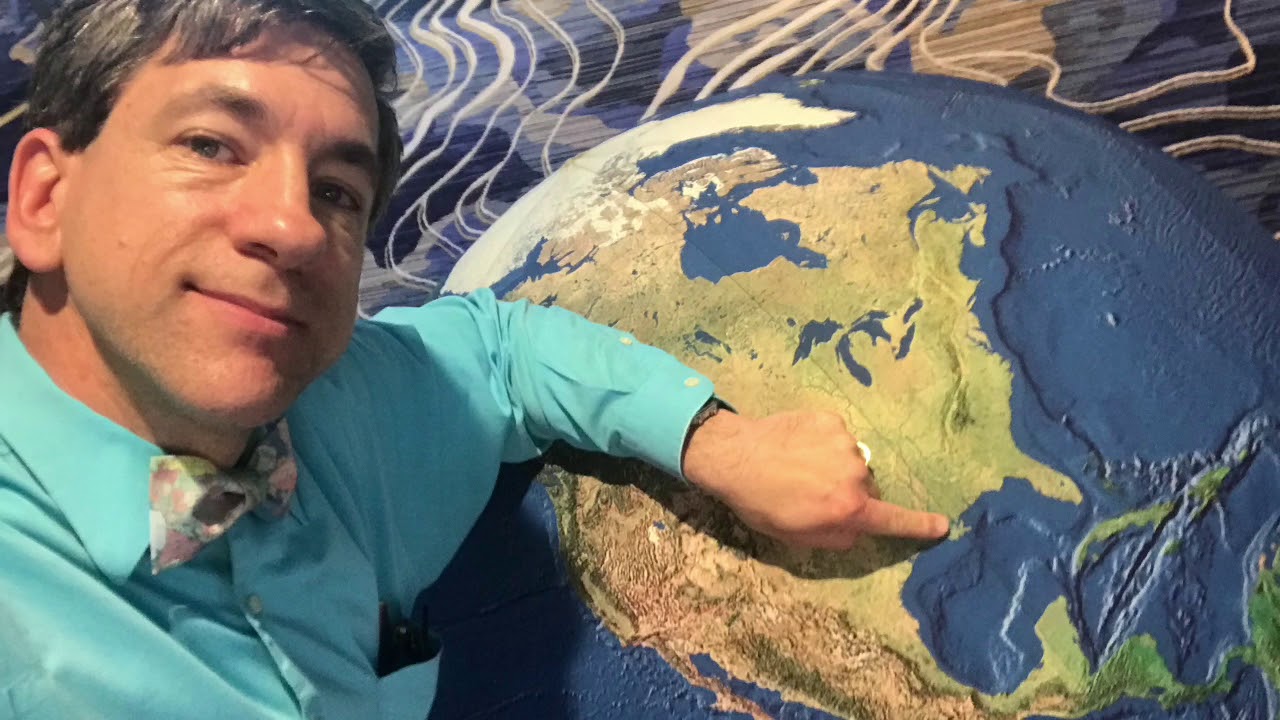
A geography college major is far more than memorizing capitals, reading maps, or studying physical landscapes. Today's geography programs combine environmental science, data analysis, technology, economics, urban planning, and social research. You may learn how climate change affects communities, how geographic information systems (GIS) map public health risks, or how population patterns influence housing and transportation.
That range is the major's greatest strength, and its biggest complication. Geography can prepare you for careers in technology, government, environmental consulting, planning, education, and research, but your results often depend on the specialization and technical skills you build alongside the degree. A student who graduates with GIS experience, an internship, and a clear professional direction may have substantially more options than someone who completes only the required courses.
This review examines what you study, the skills you gain, likely costs and challenges, job opportunities, expected starting salary in the US for geography majors, and how geography compares with related majors. The goal is practical: to help you decide whether this flexible, interdisciplinary degree fits your interests and career plans.
Geography Major At A Glance
A geography college major explores how people, places, environments, and systems interact. Most programs let you choose between a human geography emphasis, a physical geography emphasis, or a combination of both. Many also offer concentrations in GIS, environmental studies, urban planning, regional development, or geospatial science.
| Category | What you can generally expect |
|---|---|
| Typical degree | Bachelor of Arts (B.A.) or Bachelor of Science (B.S.) |
| Usual completion time | About four years full time |
| Core subjects | Physical geography, human geography, cartography, statistics, research methods |
| Common technical tool | Geographic information systems (GIS) |
| Frequent electives | Climate, urban studies, remote sensing, economic geography, sustainability |
| Work settings | Government, consulting, schools, nonprofits, technology, research |
| Best advantage | Broad perspective paired with location-based analysis |
| Main caution | You may need specialization, internships, or graduate study for stronger career positioning |
A B.A. often emphasizes culture, society, policy, and qualitative research. A B.S. may include more mathematics, physical science, programming, and geospatial technology. The distinction varies by college, so you should compare course catalogs rather than relying on the degree title alone.
Geography is also a relatively customizable major. You can pair it with computer science, environmental science, public policy, business, or education. That flexibility is valuable if you're interested in several fields, but it means you must take responsibility for building a coherent academic plan.
What Do Geography Majors Study?
Your first courses typically introduce Earth's physical systems and the ways people organize space. You may study weather and climate, landforms, ecosystems, population change, migration, cities, agriculture, globalization, and cultural landscapes. Rather than treating these as isolated topics, geography asks how they connect.
For example, a course on urban geography might examine why housing costs rise in some neighborhoods, how transportation shapes employment access, and whether zoning policies contribute to segregation. A physical geography course could investigate watersheds, erosion, natural hazards, or the effects of changing temperatures on ecosystems.
Technical and research coursework
Many modern programs include practical training in:
- GIS: Creating and analyzing digital maps using spatial data.
- Remote sensing: Interpreting satellite or aerial imagery.
- Cartography: Designing maps that communicate information accurately and clearly.
- Statistics: Finding patterns, testing relationships, and evaluating uncertainty.
- Field methods: Collecting observations, environmental measurements, interviews, or survey data.
- Database and data skills: Organizing location-based information for analysis.
- Programming: Using tools such as Python or R in more technical programs.
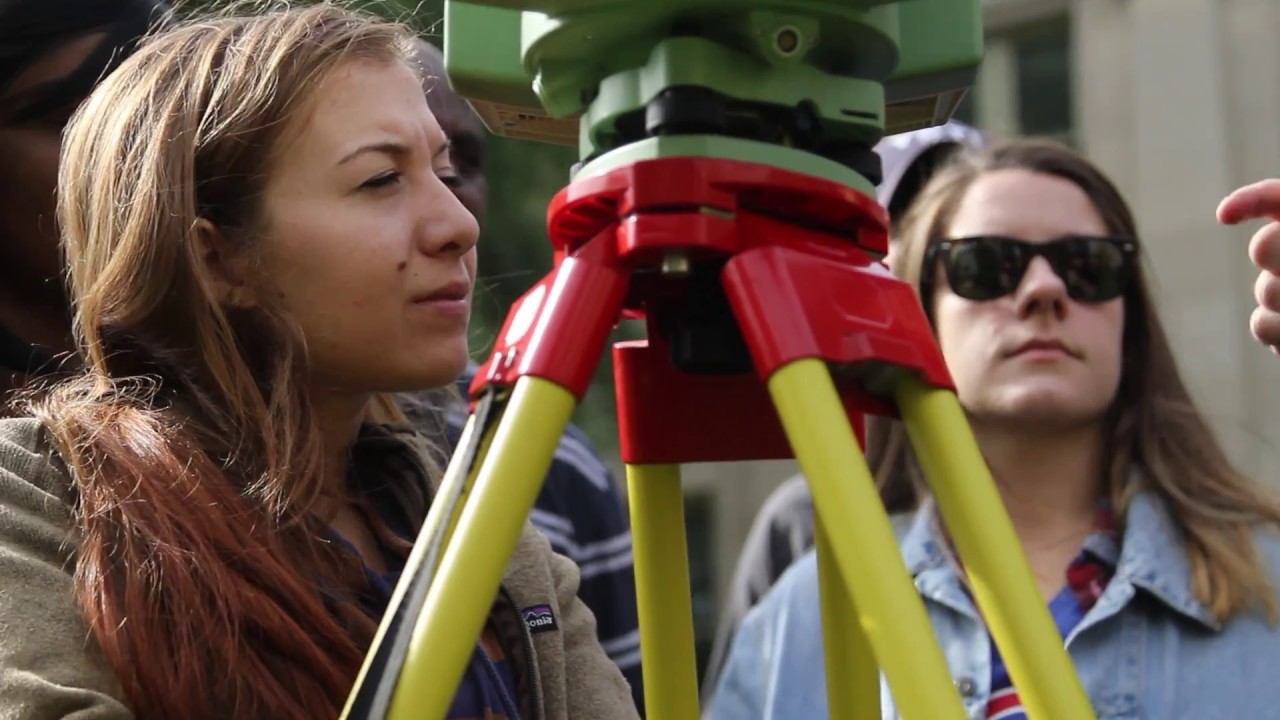
You may also complete a research project, internship, field course, or senior thesis. Fieldwork can be a memorable part of the major, whether you're measuring stream conditions, documenting land use, interviewing residents, or mapping accessibility.
Course requirements vary widely. One college may treat GIS as an elective, while another builds several GIS and data courses into the core. Before enrolling, review the required courses, available concentrations, software access, field opportunities, and faculty research areas. Those details reveal what your geography degree will actually prepare you to do.
Evaluation Criteria: Academic Value, Skills, Cost, and Career Potential
To evaluate a geography college major fairly, you should look beyond whether the subject sounds interesting. The degree's value depends on what you learn, how much it costs, and how effectively you connect classroom work to an occupation.
Academic value: Geography gives you a systems-level way to understand environmental and social problems. You'll practice asking where something happens, why it happens there, who is affected, and how conditions change over time. That framework is useful in an era of climate risk, migration, infrastructure needs, and location-based technology.
Skills: The strongest programs develop both communication and analysis. You may graduate able to interpret maps, manage datasets, conduct research, write reports, present findings, and explain complex patterns to nonexperts. GIS and statistics can make these abilities more visible to employers.
Cost: Geography is usually priced like other majors at the same institution: the subject itself rarely determines tuition. But, programs may involve software, field trips, equipment, travel, or unpaid internships. Check whether your college provides GIS software and whether experiential courses carry additional fees. Compare total net price, not just advertised tuition, using financial aid and scholarship information.
Career potential: Geography offers broad preparation rather than one guaranteed job. That flexibility can be an advantage, but you'll need to market yourself around a clear skill set. Employers generally respond more readily to "GIS technician who maps infrastructure data" or "environmental analyst with field and statistics experience" than to the major title alone.
A sensible evaluation asks: What technical courses are required? Where do graduates work? Are internships available? What are the placement outcomes? Can you afford the degree without excessive debt? These answers matter more than rankings alone.
Why Major In Geography? Key Benefits And Transferable Skills
If you're asking Why major in geography, start with the major's unusual combination of breadth and application. You can study global issues while learning tools that apply to a specific workplace. That balance is increasingly useful when organizations need people who understand both data and real-world context.
Benefits you may gain
- A multidisciplinary foundation: Geography overlaps with environmental science, sociology, economics, political science, geology, public health, and computer science.
- Practical technology experience: GIS, spatial databases, satellite imagery, and visualization can support entry-level work in several industries.
- Problem-solving with context: You learn that a technical solution may affect communities differently depending on history, income, culture, or access.
- Strong communication practice: Maps and visualizations require you to simplify information without distorting it.
- Multiple specialization routes: You can move toward conservation, planning, emergency management, transportation, business analysis, or education.
- Opportunities for applied learning: Fieldwork, community projects, internships, and research can produce a portfolio, not just a transcript.
The transferable skills are particularly valuable. You'll likely practice evaluating sources, organizing messy information, recognizing patterns, working independently, and presenting evidence. Those skills can travel with you if your first career plan changes.
Geography can also support civic and environmental goals. You might map food access, study wildfire exposure, assess pedestrian safety, or analyze coastal vulnerability. The work often makes abstract issues tangible: a map can show exactly which neighborhoods sit outside a bus route or face repeated flooding.
To capture these benefits, choose coursework deliberately. Pair a broad geography foundation with one marketable specialty and demonstrate it through a project, internship, certification, or student research role.
Challenges And Potential Drawbacks Of A Geography Degree
Geography is not automatically a high-paying or clearly structured career path. Its flexibility can create uncertainty if you graduate without a specialization. You may need to explain what you can do, which tools you use, and what problems you can solve, especially when competing with applicants from planning, environmental science, computer science, or data analytics programs.
The major can also be misunderstood. Some employers may associate "geography" with general knowledge rather than technical analysis. You can counter that perception with a portfolio showing maps, dashboards, spatial analysis, field research, or policy reports. A list of classes is less persuasive than evidence of completed work.
Other potential drawbacks include:
- Additional technical learning: GIS software, statistics, databases, and programming can be challenging if you prefer purely discussion-based courses.
- Uneven program quality: Some departments offer advanced geospatial training: others have limited equipment, courses, or employer connections.
- Possible need for graduate school: Planning, research, teaching, and specialized environmental roles may require a master's degree or professional credentials.
- Internship dependence: Relevant experience can be important for landing the first job, but internships may be unpaid or difficult to fit around work and classes.
- Fieldwork demands: Outdoor data collection may involve travel, irregular hours, weather exposure, or physical activity.
- Salary variability: Earnings differ sharply by industry, location, skill level, and job title.
You should also consider ethics. Mapping and location data can expose vulnerable communities, enable surveillance, or reinforce biased decisions. A good program teaches privacy, data limitations, and responsible interpretation, not simply how to produce attractive maps.
Job Opportunities For Geography Majors
The Job Opportunities for Geography Majors are broad, but they cluster around several pathways. GIS is often the most direct bridge from coursework to employment. As a GIS technician, mapping specialist, or geospatial analyst, you might clean spatial data, create maps, maintain databases, or support planning and infrastructure projects.
Other common directions include:
- Urban and regional planning: Analyze land use, transportation, housing, zoning, and community development. Some planning positions prefer or require a graduate degree.
- Environmental work: Support conservation programs, environmental compliance, habitat studies, sustainability initiatives, or natural-resource management.
- Government and public service: Work with agencies responsible for transportation, emergency management, public health, parks, census data, or economic development.
- Surveying and mapping: Assist with cartography, location data, boundary information, or field measurements. Specialized surveying roles may require additional education or licensure.
- Business and market analysis: Use demographic and location data to evaluate customers, store sites, service areas, or logistics.
- Education: Teach geography or social studies after completing the required teacher preparation and state certification.
- Research and nonprofits: Study housing, inequality, climate adaptation, migration, food systems, or community health.
Job titles can be inconsistent, so search by skills as well as by major. Try terms such as GIS analyst, geospatial technician, cartographic technician, environmental data analyst, planning assistant, transportation analyst, and research coordinator.
Your first job may not include "geographer" in its title. That isn't necessarily a problem. What matters is whether the role lets you use and deepen your geographic skills. Build a portfolio with two or three polished projects, learn the software employers request, seek an internship, and practice describing your work in measurable terms, such as the dataset you improved, map you produced, or decision your analysis supported.
Expected Starting Salary In The US For Geography Majors
The Expected starting Salary in the US for Geography Majors varies too much for one universal figure. Your first-year pay depends on the job title, region, employer, technical skills, internship experience, and whether you have a B.A. or B.S. The major itself does not set your salary.
As a practical, broad guide, many entry-level geography-related roles may fall roughly in the $40,000–$65,000 range, while stronger GIS, geospatial technology, government, consulting, or data-focused positions can sometimes begin above that range. Smaller nonprofits, seasonal environmental jobs, and general administrative roles may start lower. These are planning estimates, not a guaranteed salary offer.
| Career direction | Relative early-career outlook | What can improve your position |
|---|---|---|
| GIS or geospatial technician | Moderate to strong | GIS portfolio, databases, Python, remote sensing |
| Planning assistant | Moderate | Planning internship, public policy, statistics |
| Environmental technician | Variable | Field methods, environmental regulations, science coursework |
| Cartography or mapping support | Moderate | Cartographic design, GIS, data visualization |
| Government analyst | Moderate to strong | Statistics, writing, relevant internship, civil-service knowledge |
| Teacher or education pathway | Varies by state and district | Certification, classroom experience, subject credentials |
For current benchmarks, compare job postings with official labor-market information from the U.S. Bureau of Labor Statistics, rather than relying on salary websites that combine unrelated occupations. Search the exact occupation and location you're considering.
Return on investment matters. A lower-cost public university plus paid experience may produce a better financial outcome than an expensive program with no internship access. You should also ask whether a graduate degree is necessary for your intended role before borrowing heavily for an undergraduate geography degree.
Geography Compared With Related College Majors
Geography overlaps with several majors, but the emphasis differs. Comparing curricula can help you choose the degree that matches how you prefer to work.
| Major | Primary emphasis | Geography may be a better fit if you want to… |
|---|---|---|
| Environmental science | Physical environment, ecology, and environmental problems | Combine environmental topics with people, policy, and spatial analysis |
| Urban planning | Land use, development, transportation, and public policy | Keep broader options before specializing in planning |
| Geology | Earth materials, processes, and field science | Study human-environment relationships as well as physical systems |
| Sociology | Social behavior, institutions, and inequality | Add location, maps, and environmental dimensions to social research |
| Computer science | Computing theory, software, and systems | Apply technology specifically to spatial and real-world problems |
| Data science | Statistics, coding, and predictive analysis | Work with location-based data and place-specific questions |
Environmental science may suit you better if you want laboratory work or ecological assessment. Urban planning is more targeted if you already know you want to influence development and public infrastructure. Computer science or data science may offer deeper programming and stronger preparation for highly technical roles, though geography can provide the domain context those fields sometimes lack.
You don't always have to choose one path exclusively. A geography major with a computer science minor can become a compelling geospatial candidate. Geography paired with public health can support health mapping: geography paired with business can support site selection and market analysis.
When comparing programs, examine actual course sequences. A geography degree with GIS, statistics, programming, and internship access may be more career-focused than a similarly named program with mostly broad electives. Fit is found in the details.
Who Should And Shouldn’t Choose Geography As A Major?
You may be a strong fit for geography if you're curious about why places differ and how decisions affect communities or environments. The major rewards students who enjoy connecting ideas: a transportation problem may involve economics, land use, politics, and neighborhood history at the same time.
Geography could suit you if you:
- Like maps, technology, data, fieldwork, or visual communication.
- Want a degree that connects environmental and social questions.
- Are willing to learn statistics and at least one technical tool such as GIS.
- Prefer applied projects to memorizing information.
- Want career flexibility and are prepared to create a specialization.
- Care about climate, cities, public services, conservation, migration, or regional development.
You may want another major if you need a tightly prescribed professional route from the first semester. Nursing, accounting, engineering, and some technology programs generally communicate a more direct sequence from degree to occupation. Geography can still lead to excellent careers, but the path often requires more self-direction.
It may also be a poor fit if you strongly dislike working with data, writing reports, interpreting visual information, or considering social context. Physical geography can involve science and fieldwork: human geography can involve interviews, policy analysis, and sometimes sensitive community issues. Neither track is simply travel or map memorization.
Before deciding, take an introductory course, talk with current students, review recent job postings, and ask a department whether undergraduates receive hands-on GIS training. If possible, try a small project using a public dataset. Your reaction to the actual work, not just the major's description, will tell you more than a career quiz.
Frequently Asked Questions About Geography College Major
What does a geography college major typically study?
A geography major studies how people, places, environments, and systems interact, including physical geography, human geography, GIS, statistics, and urban planning, often integrating environmental science, data analysis, and social research.
How can specializing in GIS benefit a geography major's career?
Specializing in Geographic Information Systems (GIS) provides practical skills in creating and analyzing digital maps, making graduates more attractive to employers in technology, government, environmental consulting, and planning roles.
What are the expected career opportunities after majoring in geography?
Geography majors can pursue careers as GIS technicians, urban planners, environmental analysts, government researchers, surveyors, or educators, often requiring internships and technical skills for stronger job positioning.
Is a geography major more theory-based or applied?
Geography offers a balance of theory and application by combining broad environmental and social questions with practical tools like GIS, remote sensing, statistics, and fieldwork to solve real-world problems.
What is the typical starting salary for geography graduates in the US?
Entry-level salaries for geography majors in the US generally range from $40,000 to $65,000, varying by job title, location, technical skills, and internship experience; specialized GIS or government roles may pay more.
How does a geography major compare to related majors like environmental science or urban planning?
Geography offers broader interdisciplinary study combining physical and human elements, whereas environmental science focuses more on ecology and lab work, and urban planning concentrates on land use and development policy.