

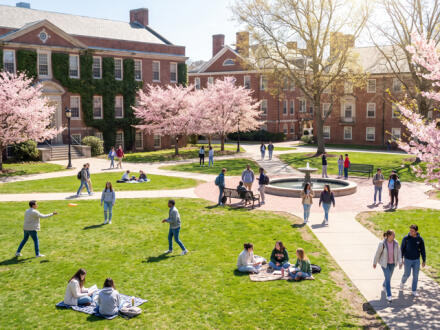
College costs hit fast. One lab fee here, one textbook bundle there, and a family can feel behind before the first class even starts. For students in Northern Virginia, the good news is that Loudoun County, Virginia scholarships are not limited to one type of applicant. There are awards for seniors, community college students, transfer students, graduate students, women, and future STEM professionals.
The smartest approach is not to apply to random scholarships and hope for the best. A better plan is to sort scholarships by student type, timing, and local fit. That helps a student spend 2 focused hours on strong applications instead of 8 scattered hours on weak ones.
This guide breaks the search into 6 practical paths. Each one matches a real student situation, from a high school junior building a calendar to a graduate student looking for employer support. It also points out where local students can widen their search through Virginia-based opportunities and free scholarship platforms that make short applications easier to manage.
One useful benchmark: EducationData reports that average in-state tuition and fees at a public 4-year college are $11,260, while private nonprofit colleges average $41,540. Even a single $1,000 award can cover books, a laptop repair, or a big chunk of housing deposits. That's why a focused scholarship plan matters.
1. Start With Local Scholarships Sponsored by Loudoun County Foundations, Businesses, and Civic Groups
Local awards are often the best first stop because the applicant pool is smaller. A student competing only against classmates, county residents, or local club members has better odds than one competing against 20,000 applicants nationwide.
This matters more than most students think. A $2,500 local scholarship with 80 applicants is usually a better bet than a $10,000 national award with 12,000 applicants. The smaller prize can still cover 1 semester of books, parking, and course materials at many public colleges.
Students should start with these local sources:
- Community foundations that give place-based awards
- Rotary, Lions, Ruritans, and women's clubs
- Local chambers of commerce and business associations
- Hospitals, law firms, banks, and real estate groups
- Faith communities and service nonprofits
The strongest method is simple. Build a spreadsheet with 5 columns: name, amount, deadline, requirements, and contact person. Then sort by deadline.
A student can also use a free scholarship platform to widen the search after local options are mapped out. On Studentscholarships.org scholarships, students can quickly spot Virginia awards that fit their grade level or intended major.
Another smart move is to ask very specific questions. Instead of saying, "Do you have scholarships?" they should ask, "Do you offer awards for Loudoun County seniors, trade students, or first-generation college students?" That often gets a better answer.
And local sponsors notice details. If an applicant mentions volunteering 46 hours at a food pantry in Sterling or working 18 hours a week in Ashburn, the essay feels real. Specifics beat generic ambition every time.
2. Focus on Loudoun County Scholarships for High School Students
Loudoun County Scholarships for High School Students often open earlier than students expect. Some deadlines arrive in late winter, which means waiting until spring break can leave a senior scrambling through recommendation requests, transcript orders, and essays.
High school students should start with the places already tracking their achievements:
- School counseling offices
- PTA and booster organizations
- Athletics and activities offices
- Local scholarship bulletins
- Virginia-based scholarship databases
Counselors remain one of the best sources because they know which scholarships quietly return each year. A student with a 3.6 GPA, 120 service hours, and varsity debate may be a great fit for one award, while a student with strong attendance and a part-time job may match another.
Sports, arts, and leadership awards also deserve attention. The VHSL scholarships can fit students who balanced academics with school activities, which is common across Loudoun County high schools.
Students who need gap-filling aid should also look at last-dollar programs. Some families earn too much for major need-based grants but still cannot absorb a surprise $3,200 bill for tuition and fees. In those cases, GRASP awards may be worth a close look.
One concrete edge: the Common App reported that students who start core application tasks earlier submit more complete applications. Scholarship essays follow the same pattern. Earlier work usually means better polish, fewer missing documents, and fewer deadline mistakes.
Build a Strong Application Timeline During Junior and Senior Year
The best scholarship timeline starts in junior year, not senior spring. That gives students enough time to build the kind of record local committees actually reward.
A practical schedule looks like this:
- Junior fall: track grades, join 1 or 2 meaningful activities, log volunteer hours
- Junior spring: ask which scholarships repeat each cycle, draft a base resume
- Summer before senior year: write 2 reusable essays of 500 to 650 words
- Senior fall: request 2 recommendations and order transcripts
- Senior winter: submit local applications first, then statewide ones
Students should save proof of everything. That includes service logs, award letters, certificates, and even screenshots of leadership roles. A committee reading 140 applications will trust exact details like "organized 3 blood drives and recruited 67 donors" more than "helped the community."
Parents can help without taking over. The best support is usually practical:
- Driving to volunteer events
- Reviewing deadlines once a week
- Proofreading for typos
- Making sure tax and transcript documents are ready
A small system works. One folder, one calendar, one running essay file. That alone can save 4 to 6 hours during peak deadline weeks.
3. Explore Loudoun County Scholarships for Undergraduate Students
Loudoun County Scholarships for Undergraduate Students are not just for freshmen heading straight to a university. Many awards also fit students already enrolled in college, students returning after a pause, and students moving from a two-year program into a four-year school.
That matters because undergraduate costs stack up after tuition. The College Board reports that students also face charges for housing, food, transportation, and supplies. A scholarship that covers only $1,500 can still protect a student from adding that amount to loans.
Undergraduates should search in layers:
- County and regional awards tied to residency
- Virginia field-specific awards tied to majors
- Institutional scholarships from the college itself
- Employer tuition support for working students
- Professional associations linked to future careers
Students often miss the middle layer. They apply for campus awards and national scholarships, but they skip Virginia organizations connected to nursing, education, public service, accounting, libraries, or technical fields.
That is where category-specific scholarships can stand out. For example, students entering nursing may find a closer fit through the DAR nursing award, especially if their record shows clear commitment to patient care or health service.
A good undergraduate application also explains momentum. If a student raised a GPA from 2.9 to 3.5 while working 22 hours a week, that story is stronger than a flat list of classes.
Look for Awards Open to Community College, Transfer, and Four-Year Students
This is where many students leave money on the table. Community college and transfer students often assume scholarships are aimed at first-time freshmen. That is not always true.
In Virginia, transfer pathways are common. A student may complete general education credits close to home, cut costs, and then move into a bachelor's program. Scholarship committees often like this because it shows planning and financial discipline.
Students should read eligibility lines for these phrases:
- Enrolled undergraduate
- Transfer student
- Community college student
- Rising junior or senior
- Part-time or full-time attendance
Students interested in school finance, administration, or operations may also look at school business awards. That kind of targeted funding is easy to miss if a student searches only by broad terms like "college scholarships Virginia."
A strong transfer applicant should show 3 things:
- Why the transfer makes sense
- How past credits support the next step
- What career goal the new school helps reach
Concrete examples help. "Completed 34 credits with a 3.7 GPA while caring for 2 younger siblings" paints a clear picture. So does "cut commuting costs by 18 miles each way after switching campuses."
4. Don’t Overlook Loudoun County Scholarships for Graduate Students
Loudoun County Scholarships for Graduate Students exist, but they are easier to miss because they are usually more specialized. Instead of broad "college student" wording, they may sit under professional associations, workforce development groups, hospitals, school systems, or employer education benefits.
Graduate students also face a different kind of money pressure. The tuition may be higher, but time is tighter too. A student working full time, commuting, and taking evening classes may need funds for child care, licensure prep, or reduced work hours more than for meal plans or residence halls.
The smartest search categories include:
- Career-specific associations
- Employer reimbursement programs
- Graduate department awards
- Scholarships tied to service commitments
- State-supported workforce shortage fields
Health care and education stand out. The Bureau of Labor Statistics continues to project strong demand across many nursing and health roles, which is why field-linked aid can be easier to justify and easier to win.
Students entering nursing education or advanced practice tracks may find a fit through the nurse educator program. A graduate student who plans to teach future nurses can be much more competitive there than in a generic scholarship pool.
Good graduate applications sound focused. They name the credential, the job target, and the local need. "MSN student planning to teach in Northern Virginia" is stronger than "wants to help people."
Target Career-Focused, Employer-Supported, and Professional Association Funding
Graduate students should think like specialists. The search works better when it starts with a profession, not a broad location term.
A practical route is to list 10 organizations connected to the student's field. For example:
- State associations
- Licensing boards
- Hospital systems
- Public agencies
- Trade groups
- Large local employers
Then the student should check 3 funding types on each site: scholarships, fellowships, and tuition reimbursement. Even a modest employer benefit of $3,000 per year can beat a time-heavy scholarship with a long essay and low odds.
For nursing students, another option may be the Mary Marshall nursing scholarships. Awards like that can line up well with students in practical care settings who already have clinical experience.
Professional associations also value service and leadership in the field. A graduate student who trained 12 new volunteers, supervised 3 interns, or ran a patient education workshop has a better story than a student who lists only coursework.
One more tip: ask professors directly. Faculty often know about small departmental awards worth $500 to $2,000 that never appear in broad scholarship searches.
5. Prioritize Loudoun County Scholarships for STEM Students
Loudoun County Scholarships for STEM Students deserve special attention because the region has strong demand for technical talent. Loudoun County is tied to data centers, public infrastructure, engineering work, health technology, and science-focused education pipelines.
That local job market matters. When employers and associations need future workers, scholarships often follow. Some are labeled under engineering, surveying, nursing, computer science, applied math, environmental science, or technical trades rather than under the broad STEM label.
Students should search for these terms:
- Engineering scholarship Virginia
- Surveying scholarship Virginia
- Computer science scholarship
- Health science scholarship
- Technical workforce scholarship
A useful fact from the U.S. Bureau of Labor Statistics: median annual wages for STEM occupations are much higher than the median for all occupations. That wage gap is one reason technical scholarships remain attractive to sponsors.
Students with math, mapping, land use, or civil engineering interests may have a strong match in the surveyors trust award. It is the kind of niche scholarship that fewer students chase, which can improve the odds.
The best STEM applications do not just say the student likes science. They show evidence:
- AP or dual-enrollment coursework
- Lab or coding projects
- Robotics, science fair, or hackathon work
- Paid technical work or internships
- Clear plans for a future role
Highlight Research, Technical Skills, and Future Workforce Goals
STEM committees want proof. They respond well to measurable work and problem-solving stories.
A student should mention numbers wherever possible. Examples include:
- "Built a Python tool that cut data entry time by 35%"
- "Placed in the top 8 at a regional robotics event"
- "Completed 72 volunteer hours tutoring algebra"
- "Designed a water-testing project with 14 sample sites"
That kind of detail creates trust.
Students should also connect their skills to practical needs in Virginia. If a student wants to study surveying, cybersecurity, nursing informatics, or engineering, the essay should explain how that work helps real communities. Think traffic safety, public health, utility planning, data security, or environmental measurement.
For students with public safety or justice-tech interests, chiefs scholarship support may be relevant depending on academic direction and eligibility.
A final edge for STEM students: attach context to hard classes. "Earned an A in calculus after retaking the first test and attending 11 tutoring sessions" says much more than "good at math." It shows grit, process, and growth.
6. Apply Early for Loudoun County Scholarships for Women
Loudoun County Scholarships for Women can be especially valuable because many awards focus on leadership, service, persistence, or entry into fields where women are still underrepresented. That includes STEM, business, public service, and some health leadership tracks.
Applying early matters here because these scholarships often ask for more than grades. A student may need a personal essay, leadership examples, references, and proof of community impact. That takes time.
A strong search should include:
- Women's clubs and civic groups
- Leadership and service organizations
- Career-field associations
- Scholarships for women in STEM
- Awards for first-generation or returning students
The National Center for Education Statistics has long shown that women earn a large share of postsecondary credentials, yet representation still varies a lot by field. That is one reason sponsors keep funding women pursuing engineering, computing, and leadership pathways.
Students with service records, strong writing, or resilience stories may also fit awards like the Virginia DAR scholarships, depending on eligibility and academic plans.
Early applicants usually submit stronger packets. They have time to revise a flat essay, replace a weak recommender, or add 1 more semester of grades.
Emphasize Leadership, Service, and Academic Momentum in Your Essays
The best essays for women-focused scholarships do 3 things. They show leadership, they prove impact, and they explain what comes next.
Leadership does not have to mean student body president. It can mean:
- Training 9 new volunteers at a shelter
- Leading a 4-person lab team
- Managing closing shifts at a grocery store
- Organizing rides for younger siblings while keeping a 3.8 GPA
That last example matters. Scholarship committees often reward responsibility that does not come with a title.
Service should also be concrete. "Mentored 6 middle school girls in coding for 10 weeks" lands harder than "cares about girls in STEM." So does "raised $1,240 for hygiene kits" instead of "helped with fundraising."
Academic momentum is the closer. If a student moved from a 3.1 GPA to a 3.7 GPA after changing study habits, that is worth stating plainly. The essay can name the change: 45-minute study blocks, weekly teacher office hours, and a Saturday writing group.
When a student combines numbers, action, and direction, the story sticks. That is what moves an essay from nice to memorable.
Loudoun County, Virginia Scholarships: Frequently Asked Questions
What types of Loudoun County scholarships are available for students?
Loudoun County offers scholarships for various student types, including high school seniors, community college students, transfer students, graduate students, women, and future STEM professionals, ensuring broad eligibility across educational paths.
How can high school students best prepare for Loudoun County scholarship applications?
High school students should begin early by tracking grades, joining activities, logging volunteer hours during junior year, drafting resumes, writing essays in summer before senior year, and submitting applications early winter to improve their chances.
Where should students start when searching for Loudoun County local scholarships?
Students should start with local foundations, civic groups, business associations, and community organizations, as local awards have smaller applicant pools and often better odds than large national scholarships.
Are there specific scholarships for STEM students in Loudoun County?
Yes, Loudoun County provides STEM scholarships focusing on engineering, computer science, health science, and related fields. Applicants should highlight technical skills, projects, internships, and future workforce goals in their essays.
What scholarship opportunities exist for graduate students in Loudoun County?
Graduate students can access specialized scholarships via professional associations, employer tuition programs, graduate departments, and workforce development groups, especially in high-demand fields like nursing and education.
Why is it important to apply early for Loudoun County scholarships for women?
Applying early for women-focused scholarships is crucial as these often require detailed essays, leadership examples, and references. Early applicants have time to polish submissions and add academic achievements to strengthen their applications.






