

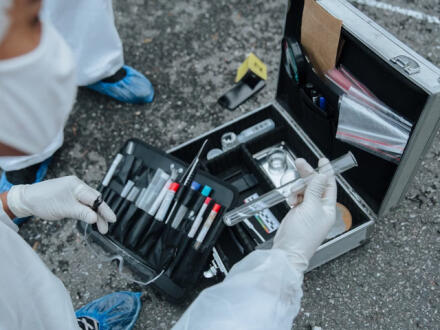
For students who want to study crime labs, DNA analysis, toxicology, or evidence processing, Maine Forensic Science Scholarships can make a real dent in tuition bills. And that matters. A single 3-credit science course with lab fees can add several hundred dollars to a semester budget, even before books, gloves, goggles, and commuting costs show up.
This guide focuses on 11 practical funding paths for Maine students. Some are built for forensic science directly. Others support the subjects that feed into forensic careers, like biology, chemistry, laboratory science, and criminal justice. That mix is useful because forensic science is often not a stand-alone major at every school. Students may need to piece together support from several categories.
The list is meant for high school students, first-year students, current college students, and university students aiming for advanced STEM work. It also helps families who are trying to turn a confusing scholarship search into a short, workable plan.
A quick answer up front: the best Maine forensic science scholarship strategy is usually stacking awards. A student might combine 1 local scholarship worth $1,000, 1 merit award worth $2,500, a Pell Grant, and a campus science scholarship. Four smaller awards can cover a semester faster than waiting for one perfect forensic-only prize.
Below are the funding paths most worth exploring, plus what makes each one a strong fit.
1. Maine Forensic Science Association Scholarships For Aspiring Investigators
A direct association scholarship is the cleanest fit for students who already know they want forensic work. Maine Forensic Science Association Scholarships are worth watching because professional groups often favor applicants who show a clear career goal, not just high grades.
A strong applicant usually has 3 pieces of proof:
- coursework in biology, chemistry, or criminal justice
- hands-on experience, such as lab club, mock trial, or evidence projects
- a short statement that explains a specific career path, like DNA analyst or crime scene technician
Forensic associations often like students who understand what the job actually looks like. That means careful note-taking, chain-of-custody discipline, and long hours in labs that smell faintly of bleach and solvent. A student who can describe that reality stands out.
One practical move is to compare local awards with national discipline-specific options. For example, the ASCLD scholarship path is relevant because it supports students in forensic science and laboratory fields. If a student applies to 5 association-based scholarships and wins even 1 award worth $1,500, that could cover roughly 150 lab manual copies at $10 each or a big slice of semester fees.
A sharp essay here should use exact details. "They processed 18 mock fingerprints in class and loved the pattern analysis" is stronger than "they enjoy science."
2. Maine Forensic Science Scholarships For High School Students Planning Early
Maine Forensic Science Scholarships for High School Students are easier to win when students start before senior spring. Waiting until the last 30 days usually means missed deadlines, rushed essays, and weaker recommendation letters.
Early planners should build a file with:
- an unofficial transcript
- a resume with clubs, jobs, and volunteer work
- 1 base essay of 400 to 600 words
- contact info for 2 to 3 recommenders
- a list of deadlines in one spreadsheet
This matters because forensic science is a competitive path. Students often need strong grades in lab-heavy classes before college even starts. A student with a 3.6 GPA, 120 volunteer hours, and a science fair project on fiber comparison can look more prepared than a student with a higher GPA but no field-related story.
Maine-specific high school awards can also free up money before college begins. Students with leadership or community ties may find useful options through the Maine 4-H scholarships or the Maine Mayflower scholarships, depending on their background and eligibility.
The biggest edge is time. A student who starts in September can apply to 8 to 12 scholarships by graduation. A student who starts late may only finish 2 or 3. That gap alone can mean thousands of dollars.
3. Maine Forensic Science Scholarships For First-Year Students Entering College
Maine Forensic Science Scholarships for first-year students matter because the first year often carries surprise costs. Beyond tuition, students run into orientation fees, lab supplies, parking, software, and textbooks that can hit $250 to $900 per term.
First-year applicants should focus on awards that value transition, academic promise, and state residency. Committees know many students have not yet completed advanced forensic coursework. They look instead for strong foundations in chemistry, biology, math, writing, and reliability.
Students entering college should search broad Maine awards, not just forensic ones. The Maine State Society scholarships can be relevant for students with state connections, and the Lamey Wellehan Maine Difference scholarship is another example of a Maine-centered opportunity that can support early college costs.
A useful first-year approach is this:
- apply to 3 local scholarships from community groups
- apply to 3 state-level scholarships
- apply to 3 campus awards
- apply to 2 field-related scholarships tied to science or justice
That gives a student 11 total shots without making the process impossible.
For example, if a first-year student wins 2 awards at $1,000 each and 1 award at $2,500, they have covered $4,500. That can pay for a meal plan upgrade, a semester of housing costs, or a large share of commuting and books.
4. Maine Forensic Science Scholarships For College Students In Biology, Chemistry, Or Criminal Justice
This is where many students actually find the best fit. A lot of Maine Forensic Science Scholarships for College are not labeled "forensic science" at all. They sit inside feeder majors like biology, chemistry, biochemistry, and criminal justice.
That makes sense. Forensic labs want people who understand cells, compounds, contamination control, microscopy, statistics, and report writing. A chemistry student who can explain gas chromatography may be just as competitive for funding as a student in a forensic concentration.
Students in these majors should search by course content and career outcome, not by title alone. Strong keywords include:
- forensic toxicology
n- analytical chemistry
- molecular biology
- criminalistics
- evidence analysis
- crime laboratory science
A student taking Organic Chemistry I, General Biology II, and Intro to Criminal Justice in one semester already has a compelling forensic story. Committees can see the direction.
One concrete example: a junior who has completed 45 credit hours, holds a 3.4 GPA, and works 12 hours a week in a campus lab can present both academic traction and practical discipline. That combination often plays well in scholarship essays.
Students should also ask department chairs about donor-funded awards. Many schools have small internal scholarships worth $500 to $2,000 that never show up in broad scholarship searches, yet they can cover a full semester of lab fees and books.
5. Maine Forensic Science Scholarships For University Students Pursuing Advanced STEM Degrees
Maine Forensic Science Scholarships for University students become especially important when the work turns more technical. Upper-level STEM study can involve instrument time, research travel, conference posters, and specialized software.
At that stage, committees want proof that the student can handle advanced work. Good signals include:
- research with faculty
- a poster presentation
- advanced statistics or instrumental analysis coursework
- internship hours in a lab, hospital, or justice setting
A university student pursuing a path like DNA analysis or toxicology should highlight exact methods. Saying they ran 24 gel electrophoresis samples or logged 80 research hours under faculty supervision paints a real picture.
There is also a practical career reason to aim high here. The U.S. Bureau of Labor Statistics reports a median pay of $67,440 for forensic science technicians. That doesn't guarantee a job, of course. But it does show why spending extra effort on upper-level scholarship applications can produce a solid return.
Graduate-adjacent or advanced undergrad students should also ask whether awards can fund more than tuition. Some departments allow scholarship money to support:
- conference registration
- research supplies
- transportation to internships
- certification-related costs
That flexibility can matter just as much as the award amount.
6. Criminal Justice Scholarships In Maine That Can Support A Forensic Science Track
Students sometimes miss this category because they think criminal justice funding is only for policing or law. It isn't. Criminal justice scholarships in Maine can support a forensic science track when the student connects evidence work to the justice system clearly.
That connection is easy to show. Forensic science sits at the meeting point of lab data and legal process. Evidence has to be collected, preserved, documented, tested, and explained in a form that can hold up under pressure.
A smart application might mention:
- chain of custody
- report accuracy
- courtroom communication
- ethics in evidence handling
Students from military families or service-connected backgrounds may have options through the Maine American Legion scholarships. Those broader scholarships can still support a student who plans to study criminal justice with a forensic focus.
Here's a useful example. A student majoring in criminal justice and minoring in chemistry may take 15 credits, including evidence, statistics, and lab science. That schedule makes a very believable case for forensic goals.
For essays, specificity matters again. "They want to improve the accuracy of evidence interpretation in rural counties" sounds more grounded than "they want to fight crime." One sentence like that can turn a generic application into a memorable one.
7. STEM And Laboratory Science Scholarships That Fit Forensic Science Majors
Many forensic students will win money through plain old STEM funding. And honestly, that is often the fastest route. Scholarships for chemistry, biology, health sciences, or lab training can fit forensic science majors very well.
That is because forensic work depends on laboratory habits. Pipetting, contamination control, microscope use, calibration, and data logging all transfer directly. A student who spends 6 hours a week in a teaching lab is already building the skill set these awards value.
Students should look for scholarship descriptions that mention:
- lab science
- analytical work
- research readiness
- quantitative skills
- STEM persistence
One solid strategy is to use a scholarship platform that groups opportunities by both major and career path. On Studentscholarships.org, students can often sort through science-related awards quickly, which helps when deadlines stack up across a semester.
A concrete scenario: if a forensic-bound student applies to 4 STEM scholarships, 3 forensic-related scholarships, and 2 general academic awards, they create 9 chances instead of waiting for rare forensic-only openings. That wider net is usually the better play.
Students with lab-heavy schedules should also save copies of graded reports. A clean report with data tables, error analysis, and a professor's feedback can help shape a much stronger essay than vague claims about loving science.
8. Merit-Based Maine Scholarships For Strong Academic And Science Records
Merit awards are a natural fit for students with strong transcripts, especially in science and math. If a student has the grades, they should absolutely use them. Merit-based Maine scholarships can stack well with smaller local awards and need-based aid.
Committees often look at a mix of numbers and context. That can include:
- GPA, often 3.3 or higher
- class rank, if available
- course rigor, such as AP or dual enrollment science
- leadership or work history
- writing quality in the essay
For high-achieving Maine students, options outside forensic science still count. The Maine Pulp and Paper Foundation high school scholarships and the Futurama Foundation scholarships show how broader merit opportunities can reduce total college cost.
A good merit essay does more than repeat grades. It explains what those grades mean. For instance, a student who earned an A- in chemistry while working 18 hours a week at a grocery store has a stronger story than a transcript alone can show.
One practical tip: list the hardest science classes first on the resume. Admissions staff and scholarship reviewers often scan for rigor in under 20 seconds, so the important numbers should sit right near the top.
9. Need-Based Financial Aid Programs That Can Reduce Forensic Science Degree Costs
Need-based aid should never be treated as a backup plan. For many students, it is the main engine that makes college possible. A forensic science degree can carry extra costs through lab fees, commuting, protective gear, and required science materials.
The first big step is filing the FAFSA accurately and early. The U.S. Department of Education uses it to determine federal aid eligibility, including Pell Grants, work-study, and some loan options. The maximum Pell Grant is $7,395, which can cover a huge share of costs at some public colleges.
Students should also ask financial aid offices about:
- institutional grants
- emergency micro-grants
- departmental aid
- textbook support programs
- work-study jobs in science departments
One concrete example: a student with a high financial need who receives a $4,000 Pell Grant, $2,000 campus grant, and $1,200 local scholarship has already reduced costs by $7,200 before taking on loans.
This section matters for forensic students because the degree path can be equipment-heavy. Even basics add up fast: lab coat, goggles, notebooks, printing, parking, and bus fare. A budget that looks manageable in August can feel very different by October.
Students should review aid letters line by line. Missing a $600 book grant or a small travel stipend is more common than people think.
10. Regional New England Scholarships Open To Maine Forensic Science Students
Maine students should not stop at state lines. Regional New England scholarships can open more doors, especially for students in science fields that cross state systems and lab networks.
This category matters because forensic science is not offered the same way at every campus. A student may study biology in Maine, intern in New Hampshire, and attend a conference in Massachusetts. Regional funding matches that reality.
Students should search for awards based on:
- New England residency
- attendance at a New England college
- STEM major status
- public service or justice interest
A good regional application often uses a simple story with specific numbers. For example, a student from Bangor might explain how they commute 42 miles round-trip for classes two days a week, work 10 hours in a campus lab, and hope to enter a regional crime lab after graduation.
Even a modest regional award of $1,500 can cover transportation, a laptop repair, or one semester of textbooks. And because some students ignore regional searches, the applicant pool can be smaller than broad national competitions.
This is also a smart category for transfer students. Someone moving from a community college to a university may fit regional eligibility rules better than they expect.
11. College-Specific Awards From Maine Schools With Related Science Programs
College-specific awards are often the most overlooked money on the table. Departments know their own students, donors often prefer local impact, and the applicant pools can be much smaller than state or national contests.
Students interested in forensic work should ask schools about scholarships in:
- biology departments
- chemistry departments
- health sciences programs
- criminal justice programs
- undergraduate research offices
A campus science award worth $750 may not sound huge. But combine that with a $1,000 local award and $500 book grant, and a student has created $2,250 from sources many classmates never even applied for.
Maine students should also review broader school-linked awards that support residents or specific backgrounds. Options like the Maine Manufacturers scholarship or the Maine pulp and paper scholarships may line up with family ties, career interests, or applied science goals.
What To Prioritize In Each Scholarship Application
A strong application usually wins on clarity, not drama. Reviewers read fast. They need to understand the student's goal in about 30 seconds.
Students should prioritize these items in order:
- Match the essay to the award. If the scholarship mentions science service, the essay should name a real service example, such as tutoring chemistry for 2 hours every Thursday.
- Show a forensic link. Even if the scholarship is broad, the student should connect biology, chemistry, lab work, or justice goals to forensic science.
- Use exact numbers. GPA, credit hours, work hours, volunteer totals, and project counts make the application feel real.
- Proofread names and details. A misspelled donor name can sink an otherwise solid application.
- Submit before the deadline. Even finishing 48 hours early helps avoid portal glitches and recommendation delays.
Students who apply through organized platforms can save time here. A well-kept profile, saved resume, and stored essay drafts can turn a 45-minute application into a 10-minute edit-and-submit job.
Maine Forensic Science Scholarships FAQs
What types of scholarships are available for Maine students pursuing forensic science?
Maine offers forensic science scholarships through associations like the Maine Forensic Science Association, feeder majors such as biology and chemistry, merit-based awards, need-based aid, regional New England scholarships, and college-specific awards in related science programs.
How can high school students in Maine best prepare to win forensic science scholarships?
High school students should start early, maintain strong grades in lab-heavy classes, build resumes with relevant club and volunteer work, prepare targeted essays, and apply to multiple scholarships including the Maine 4-H and Mayflower scholarships to increase their chances.
What is an effective scholarship strategy for first-year college students in forensic science in Maine?
First-year students should apply broadly to local, state, campus, and field-related scholarships. For example, combining awards like those from the Maine State Society and Lamey Wellehan Maine Difference Scholarship can help cover unexpected first-year costs such as lab fees and supplies.
Can criminal justice scholarships in Maine support a forensic science career track?
Yes, criminal justice scholarships can fund forensic science studies when the student links evidence handling, chain of custody, and courtroom communication to their forensic science goals. The Maine American Legion Scholarships are an example supporting service-connected students.
What funding options exist for advanced forensic science STEM students at Maine universities?
Advanced STEM students can seek scholarships supporting research, travel, and specialized coursework. Applications benefit from proving strong faculty research involvement and lab work. Some awards may also cover conference registrations and certification-related expenses.
How do merit-based scholarships help Maine forensic science students reduce college costs?
Merit scholarships reward students with strong academic records, especially in science and math. Awards like the Maine Pulp and Paper Foundation scholarships help high-achieving students complement forensic-specific funding by acknowledging GPA, course rigor, leadership, and essay quality.






