

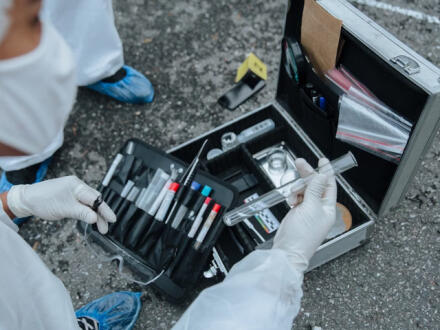
Forensic science sounds exciting on paper. Then the tuition bill lands, and suddenly the lab dream comes with a very real price tag.
That's why California forensic science scholarships matter so much. They can lower tuition, reduce loan pressure, and give students more room to focus on chemistry, biology, criminal justice, and hands-on lab work. For a student facing a $7,500 semester bill, even a $1,000 award can cover textbooks, lab fees, and a chunk of housing.
This list breaks down 10 scholarship paths that California students should pay attention to, from association awards to campus-specific funding and national opportunities. Some are built for high school seniors. Others fit first-year students, current college students, or university juniors and seniors already on a forensic science track.
The goal here is simple: help students find real places to look, understand what each scholarship type usually asks for, and avoid wasting time on poor-fit applications. A student applying to 10 well-matched scholarships has a much better shot than one sending the same essay to 30 random listings.
Students who want a faster search process often use scholarship platforms that sort awards by major, location, and class level. That matters when deadlines stack up fast and each application can take 45 to 90 minutes.
1. California Forensic Science Association Scholarships
Students searching for the most obvious starting point should begin with California Forensic Science Association Scholarships and similar awards tied to forensic labs, science groups, and public safety organizations. These programs often favor applicants who show a clear plan to work in crime labs, toxicology, DNA analysis, or evidence processing.
A strong applicant usually does three things well:
- Shows academic fit with courses like chemistry, biology, anatomy, or criminal justice
- Proves interest in forensic work through clubs, job shadowing, internships, or volunteer service
- Explains career goals clearly instead of using vague lines about "liking crime shows"
For example, a student with a 3.7 GPA, 86 volunteer hours, and one summer spent assisting in a school lab has a better story than a student with a generic essay and no evidence of sustained interest.
Students can also widen the net with related professional awards, including the ASCLD scholarship application, which supports students preparing for forensic and laboratory careers.
Eligibility Requirements And Typical Award Criteria
Most association-based scholarships ask for a mix of:
- California residency or planned attendance at a California school
- Enrollment in forensic science or a related field
- A minimum GPA, often 3.0 or higher
- One or two recommendation letters
- A personal statement of 500 to 1,000 words
Judges usually reward specificity. A statement that mentions latent print analysis, chain of custody, and trace evidence will often land better than one that simply says the student "wants to help solve crimes."
2. California Forensic Science Scholarships For High School Students
California Forensic Science Scholarships for High School Students are worth chasing early, especially during senior year. This is the stage when students can still shape their application story with classes, activities, and teacher recommendations.
High school applicants stand out when they connect their interests to real preparation. That can include:
- AP Biology or chemistry
- Criminal justice clubs
- Science fair projects
- Debate, mock trial, or leadership roles
A student who completed a 12-week science fair project on fingerprint residue or blood spatter angles has a far more memorable application than someone who only lists a general interest in crime investigation.
Some California-based scholarships are broader than forensic science but still useful for students entering the field. Programs like the California CAC educational scholarship and California State PTA scholarships can help high school seniors build a funding stack before college begins.
Students should also keep one practical rule in mind: apply before graduation pressure peaks. In many schools, the last 8 to 10 weeks of senior year fill up fast with testing, events, and college decisions.
A smart target is 5 to 8 applications that match the student's GPA, major interest, and residency. That approach usually beats rushing through 20 weak applications.
3. California Forensic Science Scholarships For First-Year Students
The transition into college is expensive. Tuition, meal plans, parking permits, lab manuals, and course materials can push a first-year student's costs up by $1,500 to $3,000 beyond the basic bill.
That's why California Forensic Science Scholarships for first-year students deserve their own search strategy. Many students assume scholarships are mostly for seniors in high school. Not true. Plenty of funding opens once a student has a college transcript and can show early progress.
First-year students should focus on scholarships that reward momentum. Reviewers like to see:
- A declared or intended science-related major
- First-semester grades, especially in math and lab science
- Participation in student organizations
- A steady attendance record and academic plan
A freshman who earns a 3.4 GPA in 15 credits and joins a criminal justice club in the first semester already has a stronger application profile than many peers.
Broader California awards can help here too. The CAPPS Memorial Scholarships may fit students pursuing postsecondary education in the state, while the Youth Leadership Scholarship Program can reward service and leadership that still matter in forensic science pathways.
First-year applicants should update essays after each term. A 700-word essay written in October often sounds outdated by March if the student has finished new coursework, joined a lab, or changed career goals.
4. California Forensic Science Scholarships For College Students
California Forensic Science Scholarships for College students often open up once a student has proven they can handle college-level science. This matters because forensic science is rarely just one subject. It usually blends biology, chemistry, statistics, writing, and criminal procedure.
College students should look for awards that support related majors too, not just programs labeled "forensic science." Good matches may include:
- Biochemistry
- Molecular biology
- Criminal justice
- Toxicology
- Anthropology
For example, a sophomore taking Organic Chemistry I, Intro Statistics, and Criminal Evidence can make a strong case that the coursework directly supports forensic lab work.
Some useful scholarship pages on StudentScholarships can broaden the search. The Conduct Science Scholarship may appeal to science-focused students, and the Service Corporation Mortuary Science Scholarship can make sense for students interested in death investigation, pathology support, or related applied science fields.
At this level, experience matters almost as much as grades. A student with a 3.2 GPA plus 140 hours in a campus research lab may look stronger than a student with a 3.8 and no applied work.
Students should keep a simple spreadsheet with deadline, award amount, essay prompt, transcript status, and recommendation contacts. That 15-minute habit can prevent missed applications.
5. California Forensic Science Scholarships For University Students
California Forensic Science Scholarships for University students often favor upper-division applicants who can show a sharp academic focus. By junior or senior year, reviewers expect more than enthusiasm. They want proof that the student understands the field.
That proof can come from:
- Advanced coursework like analytical chemistry or genetics
- Research with faculty
- Internship hours in a lab or justice setting
- Senior thesis or capstone projects
A university student who logs 180 internship hours processing mock evidence in a campus lab can describe actual procedures, not just career goals. That kind of detail sticks.
University applicants should also pay close attention to department newsletters, honors offices, and college-specific donor awards. Many scholarships have small applicant pools because they are only visible inside a school portal or a departmental email.
Broader California awards can still help. The California State Chapter scholarships may fit women at eligible institutions, while the Grand Chapter of California scholarship can be another funding source for students who meet the criteria.
Students at the university level should make each essay sound field-specific. Instead of writing "I want to work in law enforcement," they should write "I want to specialize in forensic toxicology and support DUI and overdose case analysis." That level of detail can shift an application from average to persuasive.
6. STEM And Criminal Justice Scholarships That Support Forensic Science Majors
Not every good scholarship says "forensic science" in the title. In fact, some of the best options sit under STEM, criminal justice, or even engineering-related categories.
This is a big deal because forensic science pulls from several disciplines. A student training for DNA analysis may qualify for biology funding. A student interested in accident reconstruction may fit engineering or physics awards.
Students should search these categories:
- STEM scholarships
- Criminal justice scholarships
- Women in science scholarships
- Underrepresented student awards
- Regional California academic scholarships
A student majoring in chemistry with a forensic concentration could reasonably apply to both science-based and justice-related scholarships. That one choice can double the list of possible awards from 6 to 12 in a single search session.
This is also where broad scholarship tools help. On StudentScholarships, the wider scholarships directory can help students filter beyond exact-major matches and find awards tied to science, leadership, residency, or financial need.
Students should read eligibility line by line. If the requirement says "related science field," that often includes forensic science, biochemistry, or microbiology.
The best applications in this category translate the major into clear job skills. For instance, a student can explain how microscopy, evidence logging, and statistical reasoning connect directly to forensic casework. That makes a mixed-discipline application feel logical, not stretched.
7. Merit-Based California Forensic Science Scholarships Worth Prioritizing
Merit-based awards are usually the first scholarships families think about. For forensic science students, they matter because the major can require expensive lab classes, specialized supplies, and heavy study time that makes outside work harder.
A merit scholarship usually looks at one or more of these factors:
- GPA
- Test performance, when required
- Leadership
- Research or project quality
- Community involvement
Students should prioritize merit awards when they have a clear strength. A student with a 3.85 GPA, 2 science club officer roles, and 60 tutoring hours has a strong merit profile even without major financial need.
California-based opportunities outside pure forensic science can still be worth the effort. The Southern California Edison scholarship may fit eligible STEM students, and engineering-adjacent awards can help students whose forensic interests lean into analytical instruments, data systems, or technical lab work.
Merit applications work best when the student proves consistency over time. Reviewers notice patterns:
- Four semesters above 3.5
- Repeated science competition participation
- One project developed across several months
A rushed application with inflated claims is easy to spot. A cleaner strategy is to show one real strength with numbers, dates, and results. For example, "they mentored 14 classmates in chemistry over 18 weeks" sounds far more convincing than "they love helping others."
8. Need-Based Scholarship Opportunities For Future Forensic Science Students
Need-based scholarships can be the difference between staying enrolled and stopping out. For students balancing tuition with rent, transportation, or family bills, these awards are not extra money. They're survival money.
Future forensic science students should search for need-based funding from:
- Colleges and universities
- State aid offices
- Private foundations
- Community groups
- Profession-linked charities
A student with a Student Aid Index showing high need, a part-time job of 18 hours per week, and a full course load can make a very strong case for support. Reviewers often respond well to honest, specific financial context.
Some California scholarships are especially important for students facing hard family circumstances. The Kids' Chance of California scholarship supports students affected by workplace injuries in the family, which can dramatically change a household budget.
Need-based essays should avoid vague lines like "college is expensive." That's obvious. Better details are:
- Monthly commute cost of $146
- Textbook bill of $612
- Loss of one parent's income after injury or layoff
Students should also submit aid forms early. Missing a priority deadline by even 7 days can close off grant money that never has to be repaid. Timing matters almost as much as eligibility.
9. Campus-Specific Scholarships At California Colleges And Universities
Campus-specific scholarships are often overlooked, which is exactly why they matter. A national scholarship may attract 2,000 applicants. A department award in one California college might attract only 25 to 80.
For forensic science students, campus funding can come from several places:
- Biology or chemistry departments
- Criminal justice programs
- Honors offices
- Alumni funds
- Foundation or donor scholarships
A student at a California community college planning to transfer into forensic science should not assume campus awards are only for four-year schools. Many two-year colleges have foundation scholarships that support science students, first-generation students, and transfer applicants.
University students can also find awards through faculty mentors. One email to a professor can lead to a small scholarship, paid assistant role, or nomination-based award worth $500 to $2,500.
Where To Check Departmental And Financial Aid Listings
Students should check these spots every term:
- The department website
- The financial aid portal
- The college foundation page
- Transfer center listings
- Scholarship bulletin emails
A practical routine works best. Spend 30 minutes each month scanning these sources and updating deadlines. Financial aid offices often post new openings as donors release funds.
Even a non-California example like the financial aid office model shows how schools organize grants, scholarships, and student support in one place. That same structure appears on many California campuses, even if the page names differ.
10. National Scholarships California Forensic Science Students Should Not Ignore
Students often search too narrowly. They type "California forensic science scholarships" and stop there. That misses a lot of money.
National scholarships can be a strong fit for California students because eligibility often depends on major, GPA, identity, leadership, or research interest, not state residency. A California applicant is just as eligible as a student from Ohio or Texas if the rules allow it.
National options worth reviewing include:
- Science association scholarships
- Criminal justice foundation awards
- Women in STEM programs
- Diversity-focused scholarships
- Lab science and research grants
A forensic science student with a 3.6 GPA, one faculty recommendation, and a polished 650-word essay may qualify for multiple national programs in one cycle.
The best part is range. One student might combine:
- A $1,000 campus award
- A $2,500 national STEM scholarship
- A $750 local foundation grant
That stack adds up to $4,250 without requiring a full ride.
Students should also reuse application materials smartly. A strong personal statement can be adapted into three versions: one for forensic science, one for STEM, and one for public service. That can cut writing time by 2 to 3 hours per application batch while still keeping each essay specific.
For students using scholarship databases, filtering by major plus class level is usually the fastest way to surface national awards that actually match their profile.
California Forensic Science Scholarships: Frequently Asked Questions
What types of scholarships are available for California forensic science students?
California forensic science students can find scholarships through forensic science associations, campus-specific awards, state-based programs, national STEM and criminal justice scholarships, merit-based and need-based funding options.
Who is eligible to apply for California Forensic Science Association Scholarships?
Eligibility generally includes California residency or attendance at a California school, enrollment in forensic science or related fields, a minimum GPA of around 3.0, recommendation letters, and a detailed personal statement showing a clear forensic career plan.
How can high school students prepare to qualify for forensic science scholarships in California?
High school students should focus on related coursework like AP Biology or Chemistry, join criminal justice clubs, participate in science fairs, and gather strong teacher recommendations to build a competitive scholarship application.
Are there scholarships specifically for first-year college students pursuing forensic science in California?
Yes, some scholarships target first-year students showing declared or intended science majors, good first-semester grades, participation in student organizations, and a solid academic plan.
Can forensic science students apply for scholarships outside of their major?
Absolutely. Many STEM, criminal justice, and women-in-science scholarships support forensic science students since the field integrates multiple disciplines like biology, chemistry, and criminal justice.
What are effective strategies to improve chances of receiving California forensic science scholarships?
Applying to well-matched scholarships, tailoring essays with field-specific details, maintaining strong academic performance, gaining relevant experience, and regularly checking campus and external scholarship listings enhance the chances of winning awards.




