

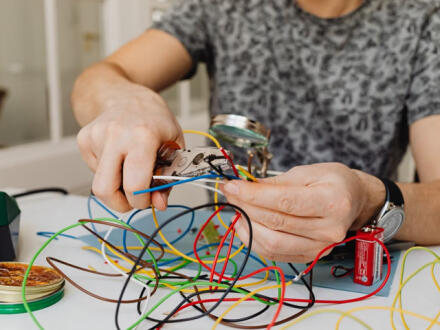
Training for electrical motor systems work can be cheaper than many students think. Between local co-op awards, community college aid, employer tuition help, and need-based grants, a student in Colorado can often stack several funding sources and cut a large share of tuition, tools, and fees.
That matters in a field where costs add up fast. A one-year certificate or two-year technical program can include tuition, lab fees, steel-toe boots, meters, textbooks, and transportation to shop classes or work sites. Even a tool kit can run $300 to $1,200 depending on the program.
For students aiming at maintenance, industrial technology, motor controls, electrical systems, or related technician roles, the best strategy is not to hunt for one perfect award. It is to build a scholarship mix. That can include school-based aid, trade scholarships, association awards, apprenticeships, and state grants.
This guide breaks down Colorado Electrical Motor Systems Technician Scholarships into nine practical paths. It is written for high school students, first-year students, current college students, and career changers who want a clear place to start. Each section explains where the money usually comes from, who often qualifies, and how to improve the odds of getting it.
1. Career And Technical Education Scholarships For Colorado High School Students
For many students, the first real funding chance shows up before graduation. Colorado districts, local education foundations, electric cooperatives, and career and technical education centers often support seniors entering trade programs.
This is where Colorado Electrical Motor Systems Technician Scholarships for High School Students often begin. These awards may not always use the exact phrase "electrical motor systems technician." Instead, they can sit under labels like:
- electrical technology
- industrial maintenance
- mechatronics
- manufacturing
- skilled trades
- career and technical education
A high school senior planning to attend a community college electrical program may find awards from local utility groups or service-area co-ops. Some are small, around $500 to $1,500, but three awards at $1,000 each can erase a full semester of books, tools, and fees at many technical programs.
Students should also ask counselors about district CTE offices. Colorado has more than 170,000 students participating in career and technical education pathways statewide through secondary and postsecondary programs, which shows how large the CTE pipeline is.
A practical move is to build a short list of scholarships with local ties. For example, a student comparing co-op style awards can review options like the Electrify Your Future award and the Tanner Electric scholarship to spot common essay themes, eligibility rules, and deadlines.
How To Find Colorado Electrical Motor Systems Technician Scholarships For High School Students
A student should search by program type, not just job title. Schools and donors often file relevant awards under broader terms.
Useful search phrases include:
- Colorado electrical scholarships
- industrial maintenance scholarships
- motor controls scholarship
- technical college scholarships Colorado
- electrician and technician scholarships
Students also improve results when they gather documents early. The most common application package includes:
- one transcript
- one resume with shop classes or work experience
- one recommendation from an instructor
- one short essay of 250 to 500 words
Platforms that sort awards by field can save a lot of time. On Studentscholarships.org's scholarship database, students can filter through thousands of listings and then narrow down to electrical, technical, and trade-friendly awards without filling out the same basics over and over.
2. Community College Scholarships For Electrical Motor Systems Technician Training
Community colleges are often the best-value route for this career path. In Colorado, many students train through certificate or associate programs in electrical systems, industrial maintenance, controls, or manufacturing technology.
That makes Colorado Electrical Motor Systems Technician Scholarships for College especially important at the two-year level. Community colleges usually offer three buckets of aid:
- general incoming student scholarships
- program-specific technical awards
- emergency or retention funds for current students
The big advantage is price. A student paying community college tuition may face a lower bill than a four-year student, so a $2,000 scholarship can cover a much larger share of costs. In some cases, that amount can cover an entire semester of tuition plus books.
Students should search college foundation pages, financial aid pages, and department notices. Many schools package several donor awards into one application. That means one form can put a student in the running for 10 or more scholarships at once.
Strong applicants usually show three things:
- a clear technical goal
- proof they can finish the program
- some tie to the field, such as a shop class, part-time maintenance work, robotics, or FFA/SkillsUSA projects
A useful example: a student entering an industrial maintenance certificate with a 3.2 GPA, one welding class, and weekend work at a grain facility may be more competitive than a student with a higher GPA but no trade focus. Community college committees often reward fit, not just grades.
3. Colorado Electrical Motor Systems Technician Scholarships For First-Year Students Entering Trade Or Technical Programs
The first year is when many students lose momentum. Bills hit all at once: deposit, tuition, safety gear, textbooks, and transportation. That is why Colorado Electrical Motor Systems Technician Scholarships for first-year students deserve a separate search.
Many donors like funding first-year students because the money helps a student cross the hardest starting line. A new technical student might need:
- $85 for safety glasses and gloves
- $140 for boots
- $220 for textbooks
- $400 to $900 for tools or testing equipment
That first-semester stack can wreck a budget fast.
When students search, they should use terms like "incoming student," "new student," "first-time freshman," and "certificate student." A trade student does not need to ignore awards that say "freshman" if the school uses that label for all first-time postsecondary students.
The best applications are specific. Instead of saying, "They want to work in electrical," a student can say they want to diagnose failed motors, read wiring diagrams, and move into industrial maintenance at a food processing plant or water treatment facility.
Numbers help too. A student who explains that tuition is $4,380, tools are $640, and commuting will cost $72 per month sounds prepared. Scholarship readers remember that level of detail.
Another smart step is stacking smaller awards. Two local scholarships worth $750 each and one campus award worth $1,500 can do more immediate good than waiting for one big statewide prize that only selects one winner.
4. University-Based Awards For Engineering, Industrial Technology, And Motor Systems Students
Some future motor systems technicians choose a university path, especially if they are studying industrial technology, engineering technology, electromechanical systems, or a maintenance-related applied program. In those cases, Colorado Electrical Motor Systems Technician Scholarships for University may be tucked inside larger engineering or technology scholarship systems.
Universities often have bigger scholarship pools than students realize. On the University of Colorado Boulder's scholarship services page, the school explains that campus and community partners support a wide range of scholarships. That matters because a student focused on motors or controls may qualify even if the award title sounds broader than expected.
University-based awards often consider:
- declared major
- GPA, often 3.0 or higher
- financial need
- leadership or project work
- research or lab interest
These awards can be substantial. A departmental scholarship of $3,000 at a university may cover a big chunk of fees or housing, especially when combined with grants and work-study.
A strong example is a student in industrial engineering technology who has built a motor starter panel, completed CAD coursework, and worked 12 hours per week in a campus machine shop. That profile clearly connects academic training with technician work.
How Colorado Electrical Motor Systems Technician Scholarships For University Students May Be Listed
A student should not expect the exact target job title to appear in every database. University aid is often organized by department or industry category.
Relevant listings may appear under:
- engineering technology
- industrial technology
- manufacturing systems
- automation and controls
- power systems
- maintenance engineering
This is also where outside field awards can matter. Students comparing broader industry options may spot technical-fit scholarships like the P.O. Pistilli award, which can align with students in applied electrical and systems-focused study tracks.
5. Colorado Electrical Motor Systems Technician Scholarships For College Students Through Departmental And Program Funds
Current students often forget to keep searching after the first semester. That is a mistake. Departmental and program funds are one of the most overlooked forms of Colorado Electrical Motor Systems Technician Scholarships for College.
These funds usually come from:
- donor endowments
- retired faculty gifts
- industry partners
- program advisory boards
- memorial scholarships
Unlike broad freshman scholarships, these awards often target students who have already proved they belong in the program. A student who has passed Motor Controls I, kept a 2.8 or 3.0 GPA, and shown up consistently in lab may suddenly be a great fit.
This is especially common in programs tied to workforce demand. Colorado employers need workers who can troubleshoot pumps, motors, conveyors, control panels, and variable frequency drives. A department may direct funds toward students likely to finish and step into those jobs quickly.
The best move is simple: ask the program chair. Many students never do. A two-minute office conversation can uncover scholarships that draw 12 applicants instead of 300.
Students should also ask whether one application covers multiple awards. If a program has 8 donor funds, it may rank applicants once and then distribute money based on need, merit, or field interest.
A concrete example: a second-semester student who improved from a C on the first wiring exam to a 92% final lab score may have a strong story for departmental aid because it shows persistence, which trade instructors value a lot.
6. Apprenticeship And Workforce Pipeline Scholarships Linked To Skilled Trades
Some students do best when school and work happen together. Apprenticeship and workforce pipeline programs can lower out-of-pocket costs while building job experience from day one.
This path works well for future motor systems technicians because the job is hands-on. Students learn faster when they wire controls, test motors, and diagnose failures on actual equipment instead of only reading about them.
Pipeline support may include:
- tuition assistance
- paid classroom time
- employer-paid tools
- boot or PPE reimbursement
- wage increases as skills rise
The math can be impressive. If a student earns $19 per hour for 20 hours per week, that is about $380 per week before taxes while training. Over a 16-week term, that can produce more than $6,000 in gross earnings, which changes the affordability picture fast.
Students should look beyond formal "scholarship" language. Workforce boards, trade partnerships, and apprenticeship readiness programs may call the funding stipends, sponsorships, grants, or supportive services.
Industry-related scholarships can also bridge the gap before wages start. For example, students exploring electrical supply, manufacturing, or trade-adjacent opportunities may compare programs like the Alltricity scholarship or the Miller Electric award when building a broader skilled-trades funding plan.
A good candidate for this route is someone who wants to finish training with less debt and a resume that already includes 500 to 1,000 hours of practical experience.
7. Association, Union, And Industry Foundation Awards For Motor Systems Careers
Trade associations, unions, and industry foundations are a strong match for students heading into motors, maintenance, and electrical systems. These groups fund scholarships because they need future workers. It is not charity for the sake of charity: it is workforce building.
That makes Colorado Electrical Motor Systems Technician Association Scholarships worth real attention. Awards from associations often favor students who can explain where they fit in the trade. A student who wants to maintain pump motors at a municipal utility or troubleshoot conveyors in a manufacturing plant gives reviewers a clear picture.
Association awards may focus on:
- electrical distribution
- power systems
- manufacturing
- industrial maintenance
- electromechanical training
The amount varies a lot. Some grants are $1,000. Others reach $5,000 or more, especially when an industry foundation has major corporate backing.
Students should not assume state borders are everything. National organizations may accept applicants from Colorado if they are enrolled in an eligible U.S. program. One broad example is the NEMA educational scholarship, which shows how industry-connected awards can support technical fields related to electrical systems.
Union-linked funding can also matter. Locals and training centers may support members, dependents, or students entering approved trade pathways. Even when the award is not motor-specific, the skill overlap can be strong.
Where To Look For Colorado Electrical Motor Systems Technician Association Scholarships
A smart search starts with organizations tied to electricity, co-ops, manufacturing, and skilled trades in Colorado or neighboring states.
Good places to look include:
- electric cooperative foundations
- electrical contractor associations
- manufacturing associations
- equipment distributors
- union training funds
Students should also watch for local co-op awards with strong technical ties. Examples include the Mountain View Electrical award and the La Plata Electric scholarship. Even when eligibility is geographic, these awards often fit students headed into power, maintenance, and technical training.
8. Employer-Sponsored Tuition Assistance From Electrical, Manufacturing, And Maintenance Companies
A lot of students overlook the most obvious funder: the employer. Electrical contractors, manufacturers, food processors, utilities, and maintenance firms often pay part of tuition because trained technicians are hard to replace.
This option works especially well for students already working part-time. A company may reimburse tuition after the term ends, pay upfront for approved classes, or cover certifications tied to the job.
Typical employer support can include:
- $1,500 to $5,250 per year in tuition help
- reimbursement for books or exam fees
- paid time for classes one night per week
- raises after finishing a certificate
For a student taking two technical courses per term, that can be the difference between borrowing and staying debt-light.
The tradeoff is usually commitment. Employers may ask for:
- a minimum grade, such as B or better
- a work requirement, often 6 to 12 months after reimbursement
- job-related coursework only
This route is common in plants and facilities that rely on motors every day. Think of a packaging line that stops because a three-phase motor fails. An employer would rather pay $2,400 toward an employee's training than lose 8 hours of production.
Students should ask HR specific questions, not vague ones. "Does the company reimburse technical coursework in motor controls, industrial electricity, or maintenance?" gets better answers than "Do you help with school?"
A strong real-life profile here is a student working maintenance weekends at a warehouse who takes evening controls classes and turns that job into a full technician role within 18 months.
9. State, Local, And Need-Based Aid That Can Be Combined With Private Scholarships
The last path is often the biggest one, yet students treat it like background noise. State aid, local aid, and need-based grants can be stacked with private scholarships to cut costs far more than either source could alone.
This is where students should think in layers:
- federal grants
- state grants
- institutional aid
- local scholarships
- private trade scholarships
For many low- and moderate-income students, filing the FAFSA is the move that unlocks everything else. The federal Pell Grant can be worth thousands of dollars for eligible students, and schools often use FAFSA data to award campus need-based funds too.
A practical example looks like this:
- Pell Grant: $3,698
- college foundation scholarship: $1,500
- local rotary or co-op scholarship: $1,000
- employer book reimbursement: $400
That adds up to $6,598. For some technical students, that can cover most direct school costs.
Colorado students should also review state grant options, county scholarships, and city utility or chamber awards. Small local awards matter because they often have less competition. A scholarship open only to one county may draw 25 applicants, while a national trade award may draw 1,500.
Students who use free matching platforms can spot private awards that pair well with aid from school. On Studentscholarships.org, a student can build a list of options that fit trade education and compare them with campus-based aid packages.
The big lesson is simple: private scholarships are not a replacement for need-based aid. They work best as a stacking strategy.
Colorado Electrical Motor Systems Technician Scholarships - Frequently Asked Questions
What types of scholarships are available for high school students interested in electrical motor systems technician programs in Colorado?
High school students in Colorado can access scholarships from career and technical education centers, local electric cooperatives, and school districts under broader categories like electrical technology, industrial maintenance, or skilled trades. Examples include the Electrify Your Future and Tanner Electric scholarships.
How can community college students pursuing electrical motor systems technician training find scholarships in Colorado?
Community college students should explore general incoming student scholarships, program-specific awards, and emergency funds via their college foundation and technical departments. A strong application typically includes a clear technical goal and relevant work or shop experience.
What financial support is available specifically for first-year students entering electrical motor systems trade programs?
First-year students can find scholarships tailored to incoming or new students that help cover initial costs such as safety gear, tools, textbooks, and transportation. Using search terms like 'incoming student scholarships' can help identify these targeted awards.
Are there apprenticeship or employer-sponsored tuition assistance programs for electrical motor systems technicians in Colorado?
Yes, many electrical, manufacturing, and maintenance employers offer tuition reimbursement, paid classroom time, and tool reimbursements as part of apprenticeships or workforce pipelines. These programs combine hands-on work experience with financial support to reduce training costs.
How important is it to combine multiple scholarships and grants for funding electrical motor systems technician education in Colorado?
Students benefit most by stacking multiple funding sources including local scholarships, community college aid, employer support, and federal or state need-based grants. This layered approach can significantly reduce tuition and related costs.
Where can students find association or industry foundation scholarships related to motor systems careers in Colorado?
Scholarships from trade associations, unions, and industry foundations targeting electrical distribution, industrial maintenance, or power systems are available. Examples include Scholarship Application - Mountain View Electrical Association Scholarships and Scholarship Application - National Electrical Manufacturers Association Educational Scholarships.







