

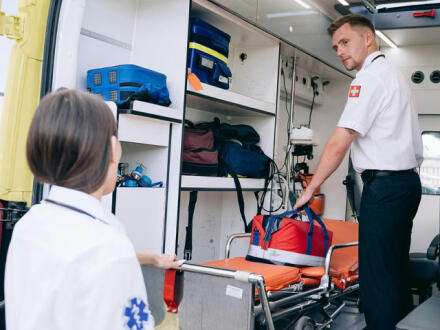
Paying for paramedic school in North Carolina can feel heavy fast. Tuition, books, uniforms, immunizations, exam fees, and gas for clinical rotations can push a modest program bill into the thousands before a student ever rides an ambulance.
That is why North Carolina Paramedic Scholarships matter so much. A single award of $500, $1,000, or $2,000 can cover textbooks, state fees, or a big chunk of tuition. Stack two or three awards, and the gap gets much smaller.
Students often assume scholarships are only for straight-A seniors or four-year university majors. That is not true. High school seniors, first-year students, community college EMS students, and adult learners all have real options. Some awards focus on financial need. Others reward rural service, leadership, volunteer work, or county residency.
North Carolina also gives students a useful starting point because it has 58 community colleges, and many EMS training paths begin there. Add local foundations, hospital-sponsored funding, and profession-specific awards, and the list gets wider than most applicants expect.
The smartest search is not random. It is targeted. The sections below break down 10 practical ways to find North Carolina Paramedic Scholarships for High School Students, college applicants, and university-track EMS students so they can spend less time guessing and more time applying.
1. Start With North Carolina Community College EMS Programs
For many students, the best first stop is a community college EMS department. North Carolina's 58-campus community college system gives future paramedics a broad base of options, and those schools often know about local awards that never show up in big scholarship roundups.
A student should look in three places first: the EMS program page, the financial aid office, and the foundation office. Many schools keep separate pots of money for workforce training, allied health, and county residents.
A strong example is the NC community college scholarship program, which can fit students starting at two-year schools. A second campus-friendly option is the NC Education Lottery scholarship, which students often overlook while focusing only on private awards.
Students should ask direct questions like:
- Does the EMS department have donor-funded awards?
- Are there scholarships only for allied health students?
- Does county residency matter?
- Are part-time EMS students eligible?
A practical example: if tuition and fees total $3,200, a $1,000 campus award plus a $500 book grant can cover nearly half the bill. That is why campus-specific searching usually beats a generic search bar.
2. Target North Carolina Paramedic Scholarships For High School Students Early
Students who start in high school usually get a cleaner shot at local money. By senior year, counselors, county foundations, and civic groups often release deadlines between December and April, and many funds close before graduation.
When looking for North Carolina Paramedic Scholarships for High School Students, a student should not search only for the word "paramedic." He or she should also search terms like EMS, public safety, health careers, first responder, allied health, and rural workforce.
The North State scholarship is one example of a North Carolina award that can help a high school student start building an aid package. Students in certain regions may also find county-based options through the North Carolina Triangle Area scholarships.
Early applicants usually have three advantages:
- They can request recommendation letters before teachers get swamped.
- They can shape essays around a clear EMS goal.
- They can file 10 to 15 applications instead of rushing through 3 or 4.
A student who volunteers 6 hours each month with a rescue squad, earns CPR certification, and writes a focused essay about serving a rural county often stands out more than someone with vague career plans.
3. Look For North Carolina Paramedic Scholarships For First-Year Students
A lot of scholarship money opens after a student has already enrolled. That makes North Carolina Paramedic Scholarships for first-year students worth special attention.
Some donors want proof that a student can handle college-level work first. That means a first-semester transcript, a completed anatomy course, or a program acceptance letter can become an asset instead of a barrier.
Students should search after these milestones:
- Admission to an EMS or allied health program
- Completion of 12 credit hours
- A GPA posted after term one
- Documented volunteer or work experience
This stage is also a good time to use a scholarship matching platform. On Studentscholarships.org, students can sort opportunities by major and background, which cuts down on random applications that go nowhere.
A concrete example helps here. If a student earns a 3.2 GPA in the first term and logs 48 volunteer hours with a fire department, that student can now show academic follow-through and public service. Those details matter more than broad claims like "hard worker."
First-year students should also ask program directors whether any awards are reserved for students who passed the first clinical phase. Small awards of $750 or $1,250 often hide in departmental funds.
4. Search College-Based Aid For EMS, Emergency Medicine, And Allied Health Majors
Many students miss scholarship money because they search only under "paramedic." Colleges often file the same type of funding under allied health, emergency medicine, health sciences, nursing support, or workforce education.
That wider search matters because EMS students share skill overlap with other clinical tracks. A donor may support students entering patient care, not just one exact major name.
A student should search campus scholarship systems using terms like:
- EMS
- Emergency medical science
- Allied health
- Health professions
- Public safety
- Clinical workforce
The Career Mobility scholarships can also fit students moving toward a health-care role, especially those balancing work and school. Another useful angle is safety-focused funding, such as the Safety in North Carolina scholarship, because EMS careers connect directly to injury response and community safety.
A typical hidden-cost example: textbooks, trauma shears, boots, and immunization records can total $650 to $1,100. A small departmental award may cover those extras even if it does not pay full tuition.
North Carolina Paramedic Scholarships For College: Where To Check On Campus
Students searching for North Carolina Paramedic Scholarships for College should ask more than one office. Scholarship information is often scattered.
The best campus checkpoints are:
- Financial aid office
- Foundation or advancement office
- EMS program chair
- Health sciences dean's office
- Student success center
- Veterans or workforce reentry office, if relevant
A simple email can work: "I am an EMS student seeking aid for clinical and tuition costs. Are there scholarships for allied health, first responders, or county residents?" That short note can uncover 2 or 3 awards that never appeared in a public search.
5. Explore University Funding Options For Advanced Paramedic Pathways
Not every future paramedic stays on the two-year track. Some students move into bachelor's programs tied to emergency management, health sciences, public health, or leadership roles in prehospital care. That is where North Carolina Paramedic Scholarships for University searches become useful.
University aid can help students who plan to build on EMS training later. A student might begin with paramedic certification, then complete a four-year degree that supports roles in administration, disaster planning, or education.
North Carolina State University notes that students can access scholarship and aid support through its financial aid office. That kind of central office matters because university scholarships may come from both the institution and specific colleges.
Students should pay close attention to awards tied to:
- Health sciences
- Public health
- Emergency preparedness
- Rural health service
- Leadership and service
A realistic case: a student who already completed EMT or paramedic coursework can frame the next degree as career expansion. That story is stronger than "I want to help people." It shows a clear ladder from field care to advanced responsibility.
North Carolina Paramedic Scholarships For University Students: Best Departments To Contact
Students should contact the departments that control the most relevant budgets. Sending one message to a general inbox often is not enough.
Best targets include:
- College of health and human sciences
- Public health department
- Emergency management program
- Scholarship office
- Academic advising office
A student who emails 5 offices and follows up once after 7 days often gets more useful leads than someone who submits a single general form and waits.
6. Review North Carolina Paramedic Association Scholarships And Industry Awards
Professional associations can be gold for focused applicants. They may offer awards directly, share member-sponsored scholarships, or point students toward EMS conferences and training grants.
When searching for North Carolina Paramedic Association Scholarships, students should also look at related groups in emergency medicine, rescue, fire service, and rural health. Scholarship labels vary, but the audience overlaps.
Industry awards often favor students who can show:
- Active volunteer service
- Professional membership
- Instructor recommendations
- Commitment to practice in North Carolina
This is also where family or employment connections sometimes matter. The Bob R. McGuire scholarship is one example of a scholarship with specific eligibility rules that students might miss if they search too broadly.
A strong application in this category usually includes practical proof. For example, a student who completed 120 ride-along hours, earned 2 instructor references, and served on a rescue squad fundraiser has a better industry profile than a student with only a general personal statement.
Association awards may not always be huge. But $500 to $2,000 from a profession-linked source can carry more weight on a resume and may be easier to win than giant national contests with 5,000-plus applicants.
7. Apply For Hospital, Health System, And Workforce Shortage Scholarships
Hospitals and regional health systems need trained workers. That simple fact creates one of the best scholarship angles for EMS students.
Some organizations fund students entering shortage fields or high-need service areas. Others offer tuition support in exchange for work commitments after graduation. A student should look for terms like tuition sponsorship, workforce development, rural recruitment, and clinical pipeline.
These awards can be especially useful in counties where ambulance staffing is thin. Rural facilities often feel the strain first, so they may support students willing to serve locally after training.
Useful places to ask include:
- Hospital HR departments
- Workforce development boards
- Regional AHEC offices
- Hospital foundations
- County EMS agencies
A concrete scenario: if a hospital offers $3,000 toward education in exchange for 12 months of post-grad service, that may be a better deal than a one-time $750 scholarship with no career connection. Students should still read the terms closely. Some programs require repayment if the work commitment is not met.
This route works best for students who already know where they want to live and serve. It turns scholarship hunting into early career planning.
8. Use Local Foundations, Civic Groups, And County Scholarships To Fill Gaps
Local money is often less crowded. That is the biggest reason students should not ignore it.
Community foundations, Rotary clubs, women's groups, county funds, and local employers may offer awards between $250 and $2,500. Those amounts may sound small, but three local awards can wipe out a semester book bill and lab fees.
The Community Foundation of Western North Carolina scholarships show how regional funds can support local students. Another example is the BPW Triangle scholarships, which can matter for students in that area.
Students should search by:
- County name
- Town or city name
- Community foundation
- Civic club
- Memorial scholarship
Precise filters work better than broad ones. "Johnston County allied health scholarship" usually beats "paramedic scholarships North Carolina."
A good local application often includes a place-based story. If a student grew up 18 miles from the nearest hospital and watched ambulance crews cover long distances on two-lane roads, that detail creates a vivid reason for entering EMS. Local reviewers respond to local realities.
9. Focus On Scholarships That Reward Service, Leadership, And Rural Commitment
A paramedic path naturally connects with service. Students should use that to their advantage.
Many scholarships do not require a paramedic major label. They reward the habits that EMS programs value: dependability, leadership, service, calm under pressure, and commitment to underserved communities.
The Golden LEAF scholarship program is especially relevant for students with ties to eligible rural or tobacco-dependent communities. Students from underrepresented backgrounds may also find support through the North Carolina Hispanic College Fund, depending on fit and eligibility.
Students should document service with exact numbers, not general claims:
- 84 volunteer hours with a fire department
- 2 years on a school leadership team
- 17 blood drive donors recruited
- 1 county CPR event organized for 42 attendees
Those details turn a flat essay into a credible one. They show action, scale, and follow-through.
Rural commitment matters because some counties struggle to recruit and keep EMS staff. A student who explains why he or she plans to return to a home county after training can make a stronger case than one who writes a broad "I want to make a difference" essay.
10. Build A Strong Scholarship Application Package That Fits EMS Programs
Finding scholarships is only half the job. The other half is sending an application that sounds like a future paramedic, not a copied school essay.
A strong package should include a focused resume, one adaptable essay, a basic budget, and 2 to 3 references who can speak to reliability. EMS reviewers care about trust. They want proof that the student shows up, stays calm, and follows through.
The best scholarship packet usually includes:
- A one-page resume with certifications, volunteer hours, and work history
- A master essay of about 500 to 650 words
- A short version of about 150 words for portal forms
- An unofficial transcript
- A cost sheet listing tuition, books, uniforms, and testing fees
Good EMS essays use specific scenes. For example, "During a 10-hour volunteer shift, she watched a crew stabilize a crash victim on a dark rural road" is stronger than "She has always loved helping people." One line gives sound, setting, and pressure.
Students should also track deadlines in a spreadsheet. A simple system with columns for amount, due date, essay prompt, reference needed, and status can prevent missed opportunities. Missing a 11:59 p.m. deadline by 7 minutes still counts as missing it.
North Carolina Paramedic Scholarships - Frequently Asked Questions
What types of North Carolina paramedic scholarships are available for high school students?
High school students in North Carolina can access scholarships targeting EMS, allied health, public safety, and rural workforce service. Examples include the North State scholarship and local county scholarships like the Scholarship Application - North Carolina Triangle Area Scholarships that reward volunteer work and leadership early in the application cycle.
How can first-year EMS students find scholarship opportunities in North Carolina?
First-year EMS students should check with their EMS program, financial aid office, and use scholarship matching platforms like Studentscholarships.org to find awards requiring proof of college-level work or volunteer experience. Campus-based awards often include funds for books, tuition, and clinical fees.
Are there scholarship options at the community college level for paramedic students in North Carolina?
Yes, North Carolina's 58 community colleges offer scholarships specifically for EMS and allied health students. Programs like the Scholarship Application - NC Community College Scholarship Program and the NC Education Lottery Scholarship provide targeted financial aid to reduce costs for paramedic training.
What scholarship options exist for university students pursuing advanced paramedic or health science degrees?
University students expanding into emergency management, public health, or leadership can seek scholarships through colleges of health sciences or public health departments. Important resources include the university financial aid office and awards like the Scholarship Application - Golden LEAF Scholarship Program that support rural or underserved community commitments.
How do local foundations and civic groups support paramedic students in North Carolina?
Local community foundations, civic organizations, and county funds provide scholarships ranging from $250 to $2,500. Applying for awards through groups like the Scholarship Application - Community Foundation of Western North Carolina Scholarships can help fill financial gaps unique to a student’s hometown or county.
What is the best way to prepare a strong scholarship application for EMS programs in North Carolina?
A strong scholarship application should include a detailed resume of certifications and volunteer hours, a focused essay linking EMS goals to community impact, an unofficial transcript, and a cost sheet covering tuition and supplies. Specific examples and documented service enhance credibility.






