

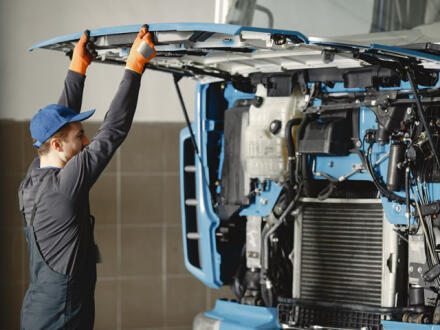
Paying for training in heavy equipment operation can feel bigger than the machine itself. Tuition, tools, boots, fuel, certification fees, and lost work hours can stack up fast. For an Idaho student, that bill can easily climb from $3,000 for a short certificate to $10,000 or more for a longer trade or college pathway, depending on the program.
That's why Idaho Equipment Operators Scholarships matter. They can cut direct school costs, lower borrowing, and make it easier to say yes to a program that leads to real work. And this field has a practical payoff. The U.S. Bureau of Labor Statistics reports a median annual wage of $58,700 for construction equipment operators, which helps explain why students keep looking for training routes that are affordable and quick to start.
This list focuses on the scholarship and funding paths that make the most sense first for high school students, first-year students, college students, and university students in Idaho who want to work around heavy equipment, construction, diesel, or related programs. Some options are highly targeted. Others are broader, but still fit equipment operator goals if the student matches the criteria.
The goal is simple: help students find the best starting points, avoid wasting hours on poor-fit applications, and build a smart funding stack from local awards, state aid, workforce grants, and employer support.
1. Idaho Equipment Operators Association Scholarships: The Most Targeted Place To Start
For students searching for Idaho Equipment Operators Association Scholarships, the most targeted option should always come first. Association-based awards usually have the strongest fit because they already care about the trade, the local workforce, and students who plan to stay connected to Idaho job sites.
That fit matters. A student applying to a broad general scholarship may compete against 500 to 2,000 applicants. A trade-specific award can bring that pool down sharply, sometimes into the double digits. Better odds make the application time worth it.
Students should look for associations tied to:
- Heavy equipment operation
- Construction and highway work
- Excavation and site development
- Utility work and water operations
- Agriculture equipment use
A strong example of adjacent trade funding is the One AWWA operator scholarship, which can fit students interested in equipment-heavy utility and operator work.
Association awards often ask for proof that the student is serious about the field. That can include:
- Program enrollment or acceptance
- A short essay on career goals
- A reference from an instructor or employer
- Evidence of shop, FFA, 4-H, or construction class experience
What To Look For In Idaho Equipment Operators Association Scholarships
The best-fit scholarships usually share 4 signs.
First, they mention the exact trade or a close cousin. Words like operator, construction, heavy equipment, diesel, utilities, earthmoving, or AGC are green flags.
Second, they value hands-on experience. A student who has logged 120 hours on a family farm tractor, worked 1 summer on a grading crew, or completed 2 semesters of welding or diesel lab should say so clearly.
Third, they prefer local commitment. If the student plans to work in Idaho after training, that can help. Industry groups like applicants who may stay in the state workforce.
Fourth, they often reward professionalism over polish. A clean essay, a specific goal, and a supervisor quote such as "she arrived by 6:45 a.m. for every shift" can beat vague ambition every time.
Students who want a construction-specific match should also review the Idaho AGC construction scholarship, since contractor-backed awards often align closely with equipment careers.
2. Career And Technical Education Scholarships For High School Students Entering Heavy Equipment Programs
For Idaho Equipment Operators Scholarships for High School Students, career and technical education funding is one of the smartest entry points. These awards are built for students moving straight from high school into a skilled-trades path, not for students chasing a four-year lecture-heavy route.
That matters because many equipment operator applicants already have proof of fit before graduation. They may have:
- 2 years of ag mechanics
- 1 semester of diesel technology
- OSHA or safety training
- FFA, 4-H, or shop competition work
Those details help a student look job-ready before the first day of postsecondary training. In Idaho, programs linked to workforce development often favor that kind of direct preparation.
Students from college-readiness programs should review the GEAR Up Idaho scholarship if they match eligibility. Students with agricultural backgrounds may also fit the Idaho FFA Foundation scholarships, which can align nicely with heavy equipment goals tied to land, machinery, and production.
When applying, high school seniors should make the file concrete. Instead of writing "he likes working with equipment," a better line is: "He completed 86 lab hours, repaired 3 small engines, and operated a skid steer during 2 supervised job-shadow days."
That kind of sentence sounds real because it is. And committees notice.
A good rule: if the student has touched tools, machinery, or job-site safety training in a structured setting, that belongs in the application.
3. Idaho Equipment Operators Scholarships For First-Year Students At Trade Schools And Colleges
Idaho Equipment Operators Scholarships for first-year students are often easier to win than students expect. Why? Because first-year applicants usually compete in a smaller pool than continuing students applying for renewal funds across multiple departments.
This stage is where broad Idaho scholarships can still work well, especially if the student is entering a trade school, technical college, or community college program tied to heavy equipment, diesel, construction, or applied technology.
One strong funding path is the Idaho Opportunity scholarships. State-oriented awards like this can matter because they often support students based on financial need and in-state education goals, not just perfect grades.
First-year students should also think like budget planners, not just scholarship hunters. The first semester often includes extra upfront costs:
- Tuition deposit
- Steel-toe boots costing $120 to $220
- Basic tools costing $250 to $900
- Transportation and fuel
- Certification or testing fees
A $1,000 award may not sound huge on paper, but it can cover most of those startup costs and keep a student from putting them on a credit card.
The best first-year applications explain both direction and readiness. A student who says, "She chose heavy equipment because she wants to move into road building and already spent 140 hours helping on excavation work," sounds much stronger than someone offering a generic career essay.
This is also where a free search tool like StudentsScholarships.org helps. It can cut discovery time sharply by surfacing relevant matches instead of forcing students to search random databases for 3 or 4 hours at a stretch.
4. Community College Scholarships For Construction, Diesel, And Equipment Operation Pathways
Community colleges are one of the best homes for future operators. They often offer lower tuition, shorter credential routes, and closer ties to regional employers. For many Idaho students, that combination is the most practical path into the field.
Average published tuition and fees at public two-year colleges are far below the price of many four-year options nationwide. That matters when a student wants job training without dragging debt for years.
Students should look for campus scholarships attached to programs such as:
- Construction technology
n- Diesel technology
- Agricultural systems
- Welding and fabrication
- Industrial maintenance
- Transportation and logistics
Even when a college doesn't advertise an "equipment operator" award by that exact name, related departments often fund students working toward the same job outcome. A diesel student who wants to operate and maintain dozers or loaders is still a sensible fit.
Local foundations and college aid offices also matter here. Many awards at the community college level are based on county residence, first-generation status, GPA thresholds like 2.5 or 3.0, or financial need.
Students should ask each school 3 direct questions:
- Are there department awards for construction or diesel students?
- Are there donor-funded scholarships with workforce or rural criteria?
- Can one application unlock multiple awards?
That third question saves time. Some colleges use a single general application to match students to 10, 20, or even 50 small awards. A stack of $500 awards can cover books, lab fees, and a month or two of commuting.
5. Idaho Equipment Operators Scholarships For College Students Already Enrolled In Skilled Trades Programs
Once a student is already enrolled, the search changes. Idaho Equipment Operators Scholarships for College students often depend on performance, persistence, and proof that the student is sticking with the program.
That's good news for students who had an average high school record but are doing well now. A college GPA of 3.2 plus strong attendance in a trades program can outweigh a shaky start from earlier school years.
Enrolled students should focus on 4 funding buckets:
- Department scholarships
- Foundation scholarships at the school
- Trade association awards
- Local employer or memorial scholarships
Students from agricultural or rural leadership backgrounds may fit the Idaho Friends of 4-H scholarship, especially when their equipment interest connects to farm operations, land management, or rural workforce needs.
At this stage, instructors matter a lot. A recommendation from a diesel or construction instructor who can say, "They completed every lab on time and scored 94% on hydraulic systems troubleshooting," carries weight.
Students should also keep a simple record of results:
- Hours in lab or field training
- Certifications earned
- Equipment types practiced
- Attendance rate
- Internship or worksite experience
That record turns into scholarship language fast. Instead of vague effort, the student can show 48 shop sessions attended, 2 certifications earned, and 1 employer willing to rehire them.
Committees love evidence because it lowers risk. They want to fund the student most likely to finish training and move into work.
6. University Scholarships That Fit Construction Management, Agriculture, And Equipment-Related Majors
Not every future equipment professional trains only through a short trade program. Some students head into university majors that still connect directly to machines, worksites, and field operations. Construction management, agricultural systems, civil technology, and operations-heavy ag programs all fit.
That opens up broader scholarship paths. A student may not be applying under "equipment operator" wording, but the career target still matches equipment-intensive work.
Good fits often include students studying:
- Construction management
- Agricultural business with machinery focus
- Agricultural engineering technology
- Civil or transportation-related fields
- Land, water, or utility operations
At Idaho State University, students can sort through aid options like scholarships, grants, loans, and work-study through the ISU financial aid office. That matters for equipment-related majors because mixed funding packages often work better than waiting on one perfect scholarship.
This is also a smart section for broader Idaho awards with flexible major rules. The Idaho Governor's Cup scholarship can be worth a look for students whose academic record is stronger and who plan to use that support in a related degree path.
A concrete example helps here. A student in construction management may spend 6 hours in class, 12 hours on project software, and 8 hours on field labs in one week. That student is not "just academic." He or she is training for planning, safety, and machine-centered site work.
That distinction is worth making in scholarship essays.
7. Idaho Equipment Operators Scholarships For University Students Pursuing Related Degrees
Idaho Equipment Operators Scholarships for University students are often indirect. That sounds annoying, but it actually creates opportunity. A student can qualify through a related degree, rural background, leadership work, or service record while still aiming at an equipment-heavy career.
Boise State notes that students can apply for scholarships and other aid through its financial aid and scholarships office. For a university student, that central process can open several funding channels at once.
This path works well for students in majors tied to:
- Construction supervision
- Supply chain for materials and equipment
- Agriculture operations
- Environmental field services
- Project management for infrastructure
A student should connect the degree to the worksite in plain language. For example: "She plans to manage grading crews and understands operators because she spent 2 summers, roughly 320 hours, around compactors, loaders, and trenching work."
Broader Idaho awards may also stack with university funding. The Idaho Power memorial scholarship is one example of a statewide opportunity that can fit students in infrastructure-adjacent fields when eligibility lines up.
University students sometimes make one big mistake: they sound too broad. Committees don't need a grand life story. They need a believable path from degree to work. A tight explanation with 3 concrete experiences often beats a long essay full of nice-sounding general ideas.
8. Workforce Training Grants And State-Funded Aid For Equipment Operator Career Preparation
Scholarships are only one lane. Workforce grants and state-funded aid can be just as useful, especially for students who want fast training tied to real labor demand.
This funding path makes sense for:
- Recent high school graduates
- Adults changing careers
- Students entering short certificate programs
- Workers who need one skill upgrade to move up
The strongest point here is flexibility. Grants may cover tuition, fees, supplies, or training tied to in-demand occupations. For equipment operator preparation, that can mean help with a short-term program that gets a student job-ready in months, not years.
State-based aid can also be paired with scholarship money. A student who uses the Idaho Turn Around scholarship fund or similar aid route may reduce out-of-pocket cost enough to stay enrolled full time.
A practical budget example shows why this matters:
- Certificate tuition: $4,800
- Books and lab fees: $640
- Safety gear and tools: $410
- Fuel and transportation: $900
- Total: $6,750
If a student lands $2,000 in grants, $1,500 in scholarships, and pays the remaining $3,250 through work and family support, the plan becomes realistic.
Students should ask workforce offices and training programs whether funds are first-come, income-based, or tied to specific start dates. Missing a deadline by 7 days can mean waiting an entire term.
Speed matters here more than people think.
9. Employer-Sponsored Scholarships From Idaho Construction And Excavation Companies
Employer-sponsored scholarships are underrated. Idaho construction, excavation, utility, paving, and aggregate companies often need dependable workers more than they need polished essay writers. If a student looks trainable, local, and serious, that matters.
These awards may come as:
- Direct scholarships
- Tool reimbursements
- Paid internships
- Tuition assistance after hire
- Work-and-school arrangements
For a student, that's huge. A paid summer role at $18 to $24 per hour over 10 weeks can beat a small scholarship by itself, especially if the company also helps with school costs.
The student should look at employers within 30 to 60 miles of home first. Local companies are more likely to invest when they think the student might stay. A short email, one-page resume, and instructor reference can open doors faster than waiting for a public posting.
This is also a place for adjacent private scholarships. The Idaho Advocates scholarship shows how non-school organizations can support education costs even when they are not directly tied to heavy equipment.
The best employer outreach is simple:
- State the training program
- Name the start date
- Mention any equipment exposure
- Ask whether they offer student aid or paid training
A student who says, "He has 160 hours around excavation and wants to train locally," sounds like a possible hire. That changes the conversation fast.
10. Local Community Foundation And Regional Scholarships With Trades-Friendly Criteria
Community foundations can be gold for students who are willing to read the criteria carefully. These awards are often smaller, but they are also more local, which can improve the odds.
A national scholarship might draw 5,000 applicants. A county or regional award may draw 40 to 150. That difference alone makes local applications worth the effort.
Trades-friendly criteria often include:
- Residence in one Idaho county or region
- Attendance at a local high school
- Financial need
- Community service
- First-generation college status
- Interest in technical or workforce education
Students should not reject a scholarship just because it doesn't say "equipment operator." If the rules say technical training, agriculture, construction, or career education, it may still fit.
This is also where background-based awards can help students stack funding. The Community Council of Idaho Hispanic scholarship is a strong example for eligible students whose identity and education plans align.
A useful tactic is to build one master packet with:
- A 300-word personal statement
- A resume with 5 to 8 bullet points
- Unofficial transcript
- One reference letter
- A list of awards, hours, and work history
Then the student can adapt that packet to 12 local applications instead of starting from zero each time. That can save 6 to 10 hours across a scholarship season.
11. Scholarships For High School Seniors Building A Strong Equipment Operator Application Profile
A lot of seniors think they need perfect grades to win money. They don't. For Idaho Equipment Operators Scholarships for High School Students, a strong profile often comes from proof of reliability, work ethic, and real exposure to tools, machinery, or outdoor labor.
A student building that profile should focus on 5 pieces.
Show relevant experience
This can include farm work, shop class, welding, landscaping, construction cleanup, machinery maintenance, or helping a family business. Even 80 documented hours matter.
Keep grades steady enough
Not every scholarship demands elite numbers. But many use a floor like 2.5 GPA or 3.0 GPA. Staying above that line keeps more doors open.
Add one or two activities that make sense
FFA, 4-H, SkillsUSA, ag mechanics, or volunteer work on community builds all help. A student who helped set fence posts for 3 Saturdays has a more believable story than one with zero field experience.
Get references from adults who saw the work
The best recommender is often not the fanciest title. A shop teacher, crew lead, or ag instructor who watched the student solve problems is better than a distant school official.
Write a plain, specific essay
A good essay names a goal, a program, and a reason. "They want to complete operator training, work road construction, and save for a CDL upgrade within 18 months" is clear and grounded.
Students with service-focused or community-minded records may also scan awards such as the Idaho Pointe Pest Control scholarship, since smaller private scholarships can still cover books, fees, or tools.
The strongest applications usually feel like a real person wrote them, dirt on the boots and all.
Idaho Equipment Operators Scholarships - Frequently Asked Questions
What types of scholarships are available specifically for Idaho equipment operator students?
Idaho offers targeted scholarships through associations like the Idaho Equipment Operators Association, Idaho AGC Education Foundation, and utility-focused awards such as the One AWWA Operator Scholarship. These focus on trades like heavy equipment, construction, excavation, and agriculture operations, rewarding hands-on experience and local workforce commitment.
How can high school students in Idaho qualify for equipment operator scholarships?
High school students should highlight career and technical education like ag mechanics, diesel technology, OSHA training, and involvement in FFA or 4-H. Scholarships like the GEAR Up Idaho and Idaho FFA Foundation Scholarships support students advancing directly into skilled trades pathways focused on equipment operation.
Are there scholarships for Idaho students who are already enrolled in heavy equipment or related trade programs?
Yes, enrolled students can access scholarships through their department, school foundations, trade associations, and employers. Awards often require proof of progress, such as GPA above 3.0, lab or field hours, certifications earned, and strong instructor recommendations. The Idaho Friends of 4-H Scholarship is one example for agriculture-related equipment students.
What financial support exists for college or university students pursuing construction management or agriculture degrees related to equipment operation?
University students studying construction management, agricultural engineering, civil technology, or related fields can apply for state and campus-based scholarships, like the Idaho Governor's Cup Scholarship. Financial aid offices at institutions like Idaho State University and Boise State offer combined funding packages including scholarships, grants, and work-study options.
How do workforce training grants complement scholarships for Idaho equipment operator students?
Workforce grants provide flexible funding that can cover tuition, fees, supplies, and training specifically tied to in-demand occupations. These grants suit recent graduates, adult learners, or certificate program students, helping offset upfront costs like tools, safety gear, and transportation, making equipment operator careers more accessible and affordable.
What role do local employers play in supporting equipment operator scholarships in Idaho?
Local construction, excavation, and utility companies often offer employer-sponsored scholarships, paid internships, tuition assistance, or work-and-school arrangements. Students with relevant experience and local ties have better chances of receiving support, which can include tool reimbursements and paid training opportunities to foster workforce development.




