

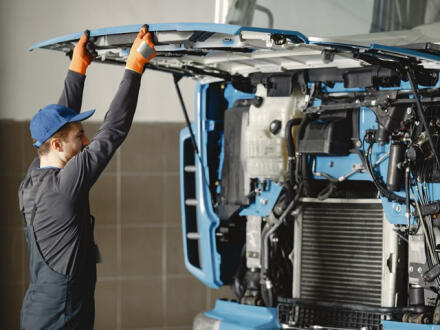
Training to become a diesel mechanic in South Carolina can lead to steady work, but school bills can hit hard. Tuition, tools, boots, safety glasses, and transportation can push the real cost far above the number on a college website. For a student trying to enter the skilled trades, even a $1,500 award can cover a full semester of books and hand tools.
That's why a focused scholarship search matters. Students looking for South Carolina diesel engine mechanic scholarships should not rely on one source or one school office. The best results usually come from stacking aid from colleges, state grants, workforce programs, local groups, and employers tied to trucking, agriculture, construction, and heavy equipment repair.
A diesel program can also pay off. The U.S. Bureau of Labor Statistics reports a median annual wage of $60,640 for diesel service technicians and mechanics, which makes this a practical path for students who like hands-on work and want a faster route into the workforce.
The list below shows 12 smart ways students can find scholarship money without wasting weeks on random searches. It covers high school seniors, first-year students, current college students, and students who may later move into a university pathway. Each section gives clear actions, real examples, and details that help applicants find money that other students miss.
1. Start With South Carolina Technical Colleges Offering Diesel Programs
The fastest way to find South Carolina diesel engine mechanic scholarships is to start where the program lives. Technical colleges often know about awards that never show up on big scholarship search engines.
A diesel student should first contact the financial aid office, the skilled trades department, and the program chair. Those three sources often hold different pieces of the puzzle. One office may know about state grants, while an instructor may know about a donor-funded tool scholarship worth $500 to $2,000.
Good starting points include technical and community colleges that offer diesel, heavy equipment, or related transportation programs. Students should ask direct questions such as:
- Are there awards only for diesel or transportation students?
- Are there scholarships tied to GPA, attendance, or tool purchases?
- Does the department nominate students automatically?
- Are there emergency grants for lab fees or safety gear?
A smart student also checks the school's scholarship portal every 2 weeks during application season. Small awards can open and close quickly.
For students who need broader state aid, pages like the South Carolina Need-Based Grant Program can help fill gaps that program-specific awards do not cover. That matters because a diesel student may face extra costs of $800 or more for tools and supplies in the first term alone.
2. Target South Carolina Diesel Engine Mechanic Scholarships For High School Students
Many students wait until college acceptance letters arrive before hunting for money. That is late. South Carolina Diesel Engine Mechanic Scholarships for High School Students often open while the student is still a senior.
High school counselors, career and technical education staff, and automotive or welding teachers can be strong leads here. They often know which local scholarships favor students entering skilled trades instead of a four-year academic major.
A student with a diesel goal should build a short proof file before senior year ends. It should include:
- Attendance records
- GPA and class rank if available
- CTE course list
- Teacher recommendation letters
- Photos or records from shop class projects
- Work history, even part-time farm or equipment work
That last point matters. A scholarship committee may remember the student who rebuilt a mower engine, worked 18 hours per week at a tire shop, or helped maintain tractors on a family farm.
State merit programs can also support trade-bound students if they meet the rules. A senior with strong grades should review the South Carolina LIFE Scholarship Program, since even students headed to eligible in-state colleges outside the classic university path may qualify depending on enrollment details.
The best move is simple: start applying in the fall, not the spring. Missing a January deadline can cost more than a semester of books.
3. Apply For South Carolina Diesel Engine Mechanic Scholarships For First-Year Students
A lot of students assume freshman year is too early to stand out. It often works the other way. South Carolina Diesel Engine Mechanic Scholarships for first-year students can have smaller applicant pools because many new students are still figuring out campus systems.
First-year applicants should focus on awards that look for momentum, not perfection. A committee may care more about a student who showed up every day, earned a 3.1 GPA, and completed lab work on time than one who wrote a flashy essay but had weak follow-through.
Strong first-year scholarship targets include:
- Retention scholarships for students who finish their first term
- Program scholarships based on instructor recommendation
- Need-based awards for students enrolled at least half-time
- Scholarships tied to shop performance or safety habits
Students who miss one state program should not assume all state aid is gone. The South Carolina Hope Scholarship Program is worth reviewing for students who are early in college and building their academic record.
A first-year student should also update his or her resume after every term. Add completed lab courses, OSHA or safety training, part-time repair work, and any measurable result. "Maintained service logs for 27 fleet vehicles" lands better than "helped in a shop."
Freshman year is often when students leave money unclaimed. A student who treats applications like a weekly job can gain an edge fast.
4. Look For Program-Specific Awards At Community And Technical Colleges
General scholarships matter, but program-specific awards are often the best fit. They are built for students in a narrow lane, which means the competition is usually lower than for a broad scholarship open to every major on campus.
For diesel students, that narrow lane may include:
- Diesel technology
- Heavy equipment repair
- Industrial maintenance
- Commercial trucking support fields
- Agricultural mechanics
A community college may not label an award "diesel mechanic scholarship." It may sit under transportation, workforce, applied technology, or industrial trades. That is why students should search by department, not just by the word scholarship.
One practical trick is to email the department chair and ask for three things: current scholarship names, last deadline dates, and whether tools or certification fees can be covered. That small question can save hours.
Students using StudentScholarships.org can also widen the search without bouncing between dozens of sites. A free platform that combines scholarship listings with career guidance can help students keep school-based and outside awards in one workflow.
Program-specific awards may be small, often $500, $750, or $1,000. But three small awards can cover books, lab fees, and steel-toe boots. And because these awards are tied to a department, instructors often know what kind of essay or experience gets attention.
5. Expand Your Search To South Carolina Diesel Engine Mechanic Scholarships For College
Students should not stop with awards that mention diesel by name. South Carolina Diesel Engine Mechanic Scholarships for College can include broader scholarships for technical education, workforce majors, or South Carolina residents.
This wider search matters because a diesel student might qualify for money based on residency, income, military family status, first-generation status, or academic improvement. In real terms, that means a student could combine a trade award with a county scholarship and a state grant.
A good college-level search should include these categories:
- State grants and scholarships
- Technical college foundation awards
- Trade and workforce scholarships
- Local business sponsorships
- Scholarships for first-generation or low-income students
- Awards for part-time students, if that applies
Students should also look at trade-adjacent scholarships. An association may support construction, trucking, mechanical contracting, or equipment operation, and a diesel student may still fit.
For example, a student interested in equipment-heavy construction work may find value in the AGC NYS Diesel Scholarships. Even when a scholarship sits outside South Carolina, the structure of those awards can help students spot similar opportunities tied to contractors and equipment fields.
The key is volume plus fit. A student who submits 15 strong applications with targeted essays usually does better than one who sends 40 generic forms with the same paragraph pasted into each box.
6. Include South Carolina Diesel Engine Mechanic Scholarships For University Pathways
Not every diesel student plans to stop at a certificate or associate degree. Some want to move into management, engineering support, logistics, operations, or technical education later on. That makes South Carolina Diesel Engine Mechanic Scholarships for University worth a look.
A university pathway can make sense for students who want to add business or supervisory skills after trade training. A diesel tech with shop experience and a later bachelor's credential may become a service manager, fleet operations lead, or equipment trainer.
Students should ask whether their technical college credits transfer into fields such as:
- Operations management
- Supply chain and logistics
- Industrial technology
- Engineering technology
- Business administration
Financial aid offices at universities can help students map that route. The University of South Carolina's financial aid office outlines scholarship and aid options that can matter for transfer students building beyond a two-year program.
This path is not only academic. It can change earning power over time. A student may start turning wrenches, then move into a role supervising 12 technicians across a fleet shop. That shift often starts with planning early, not after graduation.
Even if the student never transfers, checking university pathways helps clarify which classes and grades will preserve future options.
7. Check South Carolina Workforce, CTE, And Skilled Trades Funding Sources
Some of the best aid is not labeled as a scholarship at all. Workforce grants, CTE support, and skilled trades funding can reduce tuition or cover training costs in ways students overlook.
South Carolina students should look beyond college scholarship pages and ask about funding from:
- Workforce development programs
- Career and technical education offices
- Adult education centers
- Veterans' services if applicable
- Apprenticeship or employer training partnerships
These programs may cover tuition, tools, testing fees, or short-term certifications. A diesel student who needs $1,200 for diagnostic equipment and books might get support from a workforce source even if a scholarship committee says no.
Students should ask one precise question: "Do you fund transportation, equipment, or credential costs for diesel or heavy equipment training?" That wording gets better answers than "Do you have scholarships?"
This section also matters for students returning to school after work. A 27-year-old changing careers from warehouse work into diesel repair may fit workforce funding rules better than traditional freshman scholarships.
The search should include county workforce offices and the college's workforce division, not only the credit-program side. Money sometimes sits in a different office entirely. Students who ask both sides often uncover funding that never appears in the general campus scholarship portal.
8. Explore South Carolina Diesel Engine Mechanic Association Scholarships And Trade Groups
Trade groups can be gold for students who know where to look. South Carolina Diesel Engine Mechanic Association Scholarships may not always use that exact phrase, but associations tied to mechanics, contractors, trucking, construction, and service industries often fund students entering hands-on fields.
These groups like applicants who already look serious about the trade. That means students should show:
- Shop class or technical coursework
- Mechanical work experience
- Volunteer work with equipment or vehicles
- A clear career goal in diesel, fleet, or heavy equipment service
Association scholarships also tend to reward local ties. A student whose parent works in HVAC, trucking, or equipment service may have a useful lead through industry membership groups.
For example, the MCA South Carolina Scholarship is not a diesel-only award, but it shows how trade associations in South Carolina support students tied to practical technical fields. That pattern can lead students to similar groups in construction and transportation.
Students should search membership organizations at the state and regional level, then call or email directly. Many associations award only 1 to 5 scholarships per cycle, and some do very little promotion. That sounds small, but small pools can mean better odds.
If a student has spoken at SkillsUSA, worked on farm equipment, or logged 200 volunteer hours with a local fire department motor pool, that story can fit this kind of application very well.
9. Search Employer-Sponsored Scholarships From Trucking, Equipment, And Service Companies
Employers often invest in future technicians because they need workers. Shops, trucking companies, equipment dealers, and fleet service businesses all face hiring pressure when experienced mechanics retire or move into management.
That makes employer-sponsored scholarships a smart target. Students should look at:
- Trucking fleets
- Caterpillar, John Deere, and heavy equipment dealers
- Agricultural service companies
- Municipal fleet contractors
- Diesel repair chains
- Bus and transit maintenance partners
A company may offer a scholarship, tool stipend, paid internship, or tuition reimbursement instead of a classic award. In practice, a paid internship at $18 per hour for 20 hours per week can be worth more than a one-time $1,000 scholarship.
Students should ask local employers two direct questions:
- Do you sponsor students in diesel or heavy equipment programs?
- Do you pay for ASE, CDL, or related certifications after hire?
The best applications here connect school to business value. A student who writes, "They want to diagnose aftertreatment faults, reduce downtime, and move into fleet maintenance," sounds more hireable than one who says only, "They like engines."
And these applications can open doors beyond money. An employer scholarship can turn into a summer job, then a permanent role right after graduation.
10. Stack Local Scholarships From Counties, Foundations, And Community Organizations
Local scholarships are often less crowded than statewide awards. That alone makes them worth serious time. A county foundation may get 35 applications, while a big state scholarship may get 3,500.
Students should search close to home first:
- County education foundations
- Community foundations
- Rotary, Kiwanis, and Lions clubs
- Chambers of commerce
- Local banks and credit unions
- Civic and memorial scholarship funds
These awards may not mention diesel, but they often support residents heading into college or technical training. A student from Florence, Sumter, Rock Hill, or Beaufort might find several awards worth $500 to $2,500 each just by focusing on hometown groups.
This is also where broader scholarships can help a diesel student stack aid. For instance, pages such as the South Carolina Association of CPA Scholarships and the Garden Club of South Carolina Scholarships show how many South Carolina awards live outside one major. A student should not assume "not diesel-specific" means "not for me."
A smart routine is to build a spreadsheet with 4 columns: award name, amount, deadline, and essay topic. That keeps local opportunities from slipping past while the student focuses only on bigger names.
11. Build A Strong Application Package For Diesel Scholarship Committees
A weak application usually fails for simple reasons: vague essays, thin resumes, and generic recommendation letters. Scholarship committees want proof that the student will finish training and use it well.
A strong diesel scholarship package should include 5 core parts:
- A resume with work, shop, and volunteer experience
- A short essay with a clear career goal
- One transcript or grade summary
- Two recommendation letters
- A list of certifications, licenses, or safety training
The essay should sound real. Instead of saying, "They have always loved engines," the student should use a scene. Example: "At age 16, they spent 6 hours helping replace injectors on a farm truck that had to be back in service by sunrise." That image sticks.
Recommendation letters should come from people who can name facts. A welding teacher who writes that the student completed 14 lab projects with zero safety violations gives the committee something concrete.
Students should also match each essay to the sponsor. A local foundation may care about community ties. An employer may care about attendance, reliability, and mechanical curiosity. A trade group may care about long-term commitment to the field.
Before submitting, the student should read every application out loud once. That simple step catches awkward wording, missed dates, and the kind of small mistake that makes a rushed application look forgettable.
12. Track Deadlines, Renewal Rules, And FAFSA Requirements To Maximize Aid
Finding scholarships is only half the job. Keeping them is the other half. Students lose money every year because they miss a deadline, forget a renewal form, or fail to file FAFSA on time.
A diesel student should track at least 7 items for every award:
- Opening date
- Deadline date
- Required GPA
- Enrollment minimum
- FAFSA requirement
- Renewal rules
- Documents needed
This matters because some awards are one-time only, while others renew for 2 or more terms if the student stays eligible. A renewable $1,500 scholarship can become $3,000 or $4,500 over time.
Students should keep one calendar for all aid deadlines and set reminders 30 days, 14 days, and 3 days before each one. Phone reminders work. Paper planners work too. What matters is consistency.
FAFSA is especially important because many state and college aid programs require it, even when the scholarship itself looks merit-based. A student who skips the form may lose access to grants, work-study, and school-based need aid all at once.
The strongest strategy is simple: apply early, save every confirmation email, and review renewal terms after each semester. That habit can mean the difference between scrambling for tool money in August and starting class with tuition, books, and lab costs already covered.
South Carolina Diesel Engine Mechanic Scholarships FAQs
What types of scholarships are available specifically for diesel engine mechanic students in South Carolina?
Diesel mechanic students in South Carolina can access scholarships from technical colleges, workforce programs, trade associations, local businesses, and employer-sponsored awards focused on diesel technology, heavy equipment repair, and transportation programs.
How can high school students in South Carolina prepare early for diesel mechanic scholarships?
High school seniors should gather attendance records, GPA details, teacher recommendations, career and technical education course lists, and relevant work experience before senior year ends to apply early for diesel mechanic scholarships.
Are there financial aid options that cover diesel tools and safety equipment costs?
Yes, many South Carolina technical colleges and workforce programs offer scholarships and grants that help cover extra expenses like tools, safety glasses, and boots, such as those found through the South Carolina Need-Based Grant Program.
Can diesel mechanic students in South Carolina benefit from scholarships if they plan to pursue a university degree later?
Absolutely. Scholarships exist for students aiming to continue education beyond technical training into fields like operations management or industrial technology. Universities such as the University of South Carolina provide financial aid pathways and credit transfers for such students.
What should applicants include to build a strong scholarship application package for diesel mechanic programs?
Applicants should prepare a resume showcasing work and volunteer experience, a clear career goal essay, transcripts, two strong recommendation letters, and certification or safety training records tailored to each scholarship's priorities.
Why is it important to track deadlines and renewal requirements for South Carolina diesel mechanic scholarships?
Tracking deadlines, GPA requirements, FAFSA submissions, and renewal criteria ensures continued eligibility and maximizes aid over multiple terms, preventing loss of funding due to missed documentation or deadlines.




