

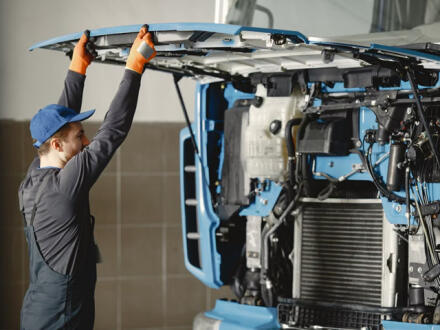
Training for diesel work can lead to solid pay, steady demand, and hands-on careers that keep trucks, heavy equipment, marine systems, and farm machinery moving. But tuition, tools, safety gear, and transportation can still hit hard. That is why Maine Diesel Engine Mechanic Scholarships matter so much for students who want skill-based careers without piling up debt.
A diesel technology student in Maine can face costs for tuition, fees, steel-toe boots, diagnostic tools, and textbooks before the first shop lab even starts. The good news is that scholarship money often comes from more places than students expect. It can come from community colleges, trade groups, manufacturers, employers, local foundations, and state workforce programs.
This guide breaks the search into 10 practical paths. It covers options for high school seniors, first-year students, college students in technical programs, and university students in related fields. It also shows how to stack grants, scholarships, and tool aid to shrink the final bill.
For students who want a faster way to organize options, a free scholarship platform like StudentScholarships can help them spot matches, track deadlines, and find applications that often take only a couple of minutes. That saves time, which matters when classes, work, and applications all compete for the same week.
1. Maine Community College Programs With Diesel Mechanic Funding Opportunities
Maine community colleges should be the first stop for students hunting Maine Diesel Engine Mechanic Scholarships. Diesel and heavy equipment training often lives in the community college system, where tuition is usually lower than at four-year schools. According to the College Board, average published tuition and fees at public two-year colleges are thousands less than at public four-year colleges, which makes every scholarship dollar stretch further.
Students should start with three campus offices:
- Financial aid
- Workforce development
- Academic department staff
That third group matters more than most students think. Program chairs often know about donor-funded awards that never show up in broad scholarship searches.
A smart move is to ask for aid tied to:
- Diesel technology
- Automotive or transportation programs
- Heavy equipment repair
- Skilled trades or career and technical education
Students who have Maine ties may also find broader state-focused awards helpful. For example, the Maine State Society application can fit applicants whose story connects strongly to the state, even if the award is not diesel-specific.
Another angle is manufacturing-related support. Diesel students who plan to work on industrial engines or production equipment may fit the manufacturing scholarship listing, especially when their training aligns with Maine industry needs.
The key is simple: students should not ask only, "Do you have diesel scholarships?" They should also ask, "What trade, transportation, workforce, and donor awards can apply to diesel students?" That one question can uncover 3 or 4 extra funding leads in a single meeting.
2. Maine Diesel Engine Mechanic Scholarships For High School Students
Maine Diesel Engine Mechanic Scholarships for High School Students often open earlier than seniors expect. Some deadlines land in late winter, months before graduation. A student who waits until May can miss the best money.
High school applicants should focus on proof that they already belong in a shop setting. Strong evidence includes:
- CTE coursework
- Ag mechanics classes
- 4-H projects
- FFA participation
- Part-time work with trucks, tractors, boats, or small engines
That kind of experience makes an essay feel real. Instead of saying they "love engines," they can describe rebuilding a mower carburetor at age 16 or spending 120 hours in a school shop.
Students with youth agriculture or technical project backgrounds should look closely at the Maine 4-H scholarship page. It can be a useful fit for applicants whose hands-on experience started long before college planning did.
Broader Maine senior awards also matter. The Maine Mayflower scholarship listing is one example of a state-linked opportunity worth checking when diesel-specific funds are limited.
A high school student becomes more competitive by building a small evidence file with exact numbers:
- GPA: 3.1, not "good grades"
- Attendance: 97%, not "rarely missed school"
- Shop hours: 86 lab hours, not "lots of experience"
- Community service: 42 hours, not "volunteered often"
That precision helps judges trust the application. And trust wins money.
3. Maine Diesel Engine Mechanic Scholarships For First-Year Students
Maine Diesel Engine Mechanic Scholarships for first-year students often reward momentum. Committees like students who made a clear choice, enrolled on time, and started training with a plan. The first semester matters because many awards ask for proof of program entry, credit load, or early academic progress.
First-year students should search in three waves.
- Before enrollment: admissions scholarships, local awards, community foundation aid
- At enrollment: department awards, orientation packets, financial aid appeals
- After first-term grades: retention scholarships and program-specific funds
This is also a good stage to look at national or trade-connected awards that line up with diesel systems. The Yanmar/SAE scholarship application is worth reviewing for students interested in engine technology and applied mechanical fields.
Students should also ask whether their school releases unused scholarship money after the add-drop period. Some campuses do. If 7 students decline an award, that pool may be reassigned quickly to students who already filed a complete aid profile.
A useful first-year strategy is to send one short email each month to the program coordinator. It can ask if new funding has opened, whether a donor visit is planned, or if any tool stipends are available. Ten minutes of follow-up can lead to a $500 or $1,000 surprise.
For students juggling school and work, even a modest award matters. A $1,250 scholarship can cover tools, two months of fuel, or a large share of semester fees.
4. Maine Diesel Engine Mechanic Scholarships For College Students In Technical Programs
Students already enrolled in technical programs have one big advantage: they can prove performance in a real shop. That makes Maine Diesel Engine Mechanic Scholarships for College easier to target because donors can look at attendance, lab grades, certifications, and instructor feedback instead of guessing from high school records.
A strong technical-program application usually includes:
- Current GPA in trade classes
- Instructor recommendation with shop-specific detail
- Attendance record for labs
- Safety performance
- Career goal such as on-road diesel, marine diesel, or heavy equipment
Specific proof helps. For example, "completed 94% of lab assignments on time" is stronger than "worked hard." "Passed OSHA shop safety training" is stronger than "takes safety seriously."
Technical students should also search regional diesel-related awards outside Maine if eligibility covers neighboring states or broader trade programs. The AGC diesel scholarship page is a good example of an industry-focused listing that may overlap with construction equipment or diesel pathways.
Another overlooked source is local civic money. Rotary clubs, Elks lodges, county foundations, and employer-sponsored community awards often receive fewer applications from trade students than from nursing or business majors. That lower competition can work in a diesel student's favor.
According to the National Center for Education Statistics, grant and scholarship aid makes up a major share of student aid packages nationwide. For trade students, stacking two small awards of $750 each can be just as useful as chasing one larger award with 300 applicants. Small money adds up fast when the bill includes books, gloves, eye protection, and a torque wrench set.
5. Maine Diesel Engine Mechanic Scholarships For University Students Pursuing Related Degrees
Not every future diesel professional studies in a pure diesel program. Some choose engineering technology, mechanical engineering, operations, transportation management, or other related majors. That is where Maine Diesel Engine Mechanic Scholarships for University become more flexible.
A university student should connect the degree directly to diesel work. That link needs to be obvious. A mechanical engineering student, for example, might plan to work on combustion systems, fleet reliability, emissions diagnostics, or heavy equipment design.
That story works better when it includes numbers and examples:
- Senior project on engine efficiency
- Internship with a truck fleet serving 180 vehicles
- Research tied to fuel systems or maintenance intervals
- CAD work for industrial components
Students in related STEM paths may also fit engineering-focused aid. The professional engineering scholarship listing can be relevant for students whose training supports technical careers connected to diesel systems.
University applicants should also search department pages for words like:
- Power systems
- Applied mechanics
- Manufacturing
- Transportation
- Engineering foundation
One useful tactic is to ask a professor for a recommendation that mentions both academic work and practical shop interest. A letter that says a student modeled thermal loads in class and also spent weekends repairing skid steer engines feels grounded. That mix stands out.
For students on the fence about applying, it is worth remembering this: a scholarship committee does not need a perfect diesel-only title. It needs a believable connection between the student's degree and future work.
6. Maine Diesel Engine Mechanic Association Scholarships And Industry-Sponsored Awards
Trade associations and industry sponsors are one of the best sources of smaller, practical awards. These groups fund students because they need skilled workers. That creates a direct line between training and hiring, which is exactly what diesel students want.
Maine Diesel Engine Mechanic Association Scholarships may not always appear under that exact phrase, so students should widen the search to groups tied to construction, trucking, equipment, marine service, agriculture, and manufacturing. A foundation linked to engines or machinery may support the same career path even if the title sounds broader.
Students should look for awards offered by:
- Dealer networks
- Equipment manufacturers
- Engine brands
- Contractor associations
- Transportation groups
- Skilled trade foundations
Industry-backed scholarships can be especially valuable because they may come with extras like networking, mentorship, or a plant tour. A $2,000 award plus direct employer contact can beat a $2,500 award with no connection to jobs.
Application quality matters here. Sponsors want to know whether a student will stay in the field. A committee may trust the candidate who can explain why they prefer heavy-duty diagnostics over general auto repair, and who can name the type of engines they want to work on.
Potential Sponsors To Research In Maine
Students should research employers and associations tied to diesel-heavy sectors in Maine, including:
- Trucking and freight companies
- Heavy equipment dealers
- Marine engine service businesses
- Forestry and logging operations
- Municipal public works departments
- Agricultural equipment suppliers
A practical search string helps: "Maine diesel scholarship," "Maine heavy equipment scholarship," and "Maine skilled trades foundation." Students should also review sponsor pages on scholarship hubs such as the Maine Trade scholarship listing, which can lead to other local funding clues.
According to the U.S. Bureau of Labor Statistics, diesel service technicians and mechanics typically need postsecondary training, and employers value hands-on preparation. That is why sponsor essays should sound like a worker in training, not a generic student essay.
7. Employer, Dealership, And Apprenticeship Tuition Assistance Options
Some of the best funding does not come from scholarships at all. It comes from employers who need technicians now. A truck dealership, public works garage, equipment rental company, or marine repair shop may help pay tuition if the student agrees to work part time or stay after graduation.
These offers can take several forms:
- Tuition reimbursement after passing classes
- Direct tuition payment to the school
- Paid apprenticeships with classroom support
- Tool allowances of $500 to $2,000
- Signing bonuses tied to program completion
Students should ask exact questions. Not "Do you help with school?" but:
- How much per semester?
- Minimum GPA requirement?
- How many hours of work each week?
- Is there a post-graduation work commitment?
- Are tools included?
That level of detail matters. A reimbursement plan worth $3,000 sounds great until the student learns they must front the money first.
Diesel students with manufacturing or industrial interests may also benefit from local workforce pipelines connected to employers. Even awards that are not strictly diesel-specific can reduce the total bill and make apprenticeship options easier to accept.
A concrete example: if a student earns $18 per hour for 16 hours each week and receives $1,500 in tuition help each term, that package can be worth more than $6,000 over a four-month semester before overtime or tool assistance. That is real money.
The biggest mistake is waiting until graduation to ask. Employers often budget training support months earlier, sometimes before spring hiring starts.
8. Statewide Workforce, CTE, And Skilled Trades Grants That Can Supplement Scholarships
Scholarships work best when students treat them as one piece of the funding puzzle. Maine students should also search statewide workforce grants, career and technical education support, and short-term training funds that can sit on top of scholarship money.
These programs may come through:
- State workforce offices
- Adult education centers
- CTE regions
- Community college workforce divisions
- Local economic development efforts
A student in diesel technology might be able to combine tuition aid with help for books, transportation, or required gear. That matters because hidden costs can get ugly fast. Boots can cost $140. Safety glasses, gloves, and rain gear can add another $90. A basic starter tool set can jump well past $500.
Students from military families or veterans' households should also research broad Maine-specific opportunities like the American Legion scholarship page when building a full aid plan.
For CTE students, dual-enrollment credits can cut the total price of training before scholarships even apply. If a student enters college with 6 credits already done, that may remove one course and free up several hundred dollars or more, depending on tuition rates.
This section is where persistence pays off. Workforce grants may open on different calendars than scholarships. A student who checks only once can miss money that appears midyear. A student who checks monthly often builds a stronger package.
In plain terms, scholarships lower tuition. Grants can lower everything else.
9. School-Specific Financial Aid Strategies For Diesel Technology Applicants
Students often miss money because they treat financial aid like one form and done. Schools usually have layers of aid, and diesel applicants need to dig through all of them. A campus may have general scholarships, emergency grants, retention funds, textbook support, and program-based awards that do not show up in the first email.
A diesel technology applicant should ask the aid office these five questions:
- Are there scholarships just for technical students?
- Are there donor awards that need a separate form?
- Is there emergency help for transportation or tools?
- Can work-study be used in a shop or maintenance setting?
- When are reconsideration or appeal reviews held?
That last one matters. If family income drops by $4,800 because a parent loses overtime hours, an appeal may increase aid.
Students with strong Maine community ties may also find broader local awards useful, such as the Lamey Wellehan Maine Difference listing, especially when school-based diesel funds are thin.
Schools may also have used-tool programs, textbook lending, or alumni gift accounts. Those are easy to miss if the student only watches the main scholarship portal.
How To Combine Scholarships, Grants, And Tool Assistance
A smart package might look like this:
- $1,500 department scholarship
- $2,000 state or workforce grant
- $750 local civic award
- $600 tool voucher
- $400 emergency transportation aid
That stack totals $5,250. For some students, that covers a huge share of first-year costs.
The goal is not one perfect award. The goal is a stack of smaller wins that cuts the out-of-pocket bill to something manageable.
10. Application Tips That Help Diesel Mechanic Scholarship Candidates Stand Out
Most diesel scholarship applications are lost on basics, not talent. Students miss deadlines, submit flat essays, or use generic recommendations. The strongest candidates make the reviewer picture them in a real shop, solving a real problem.
A better diesel essay uses concrete scenes. Instead of saying they are "passionate about engines," they can describe diagnosing a no-start issue on a cold morning, tracing fuel delivery step by step, and finally hearing the engine fire after replacing a failed component. That scene sticks.
Students should include exact details like:
- Hours worked: 240 hours in a garage
- Grades earned: B+ in welding, A- in shop math
- Projects completed: rebuilt one injector pump or serviced three farm tractors
- Goals: become a fleet technician within 2 years of graduation
Recommendations matter too. The best letter usually comes from a shop teacher, employer, or instructor who can describe work habits with specifics. "She arrived 18 minutes early for lab every Tuesday for 14 weeks" says more than "She is dependable."
Before submitting, students should use a four-point check:
- Match the essay to the sponsor's mission.
- Replace vague words with numbers.
- Cut one paragraph of filler.
- Proofread names, dates, and required documents.
Students who need more volume in their search can use scholarship databases to find related awards by category, not just by the word diesel. That is useful because some heavy-equipment, manufacturing, and transportation awards fit the same student profile.
One careful hour can raise an application from forgettable to fundable. That is a very good trade.
Maine Diesel Engine Mechanic Scholarships - Frequently Asked Questions
What types of scholarships are available for diesel engine mechanic students in Maine?
Maine offers diesel mechanic scholarships through community colleges, trade associations, manufacturers, employers, local foundations, and state workforce programs, covering tuition, tools, safety gear, and other vocational costs.
How can high school students in Maine increase their chances of receiving diesel mechanic scholarships?
High school applicants should showcase CTE coursework, Ag mechanics classes, 4-H or FFA participation, shop hours, and part-time work with engines, emphasizing specific achievements and hands-on experience with detailed numbers.
Are there scholarships specifically for first-year diesel mechanic students in Maine?
Yes, first-year students can find scholarships rewarding early commitment and academic progress. They should explore admissions awards, department funding, and national opportunities like the Scholarship Application - Yanmar/SAE Scholarship.
What role do employer and apprenticeship programs play in funding diesel mechanic education in Maine?
Employers such as truck dealerships and repair shops may offer tuition assistance, apprenticeships, tool allowances, or signing bonuses, often with work commitments, helping students finance education while gaining hands-on experience.
How can Maine diesel mechanic students supplement their scholarship funding with other financial aid?
Students can combine scholarships with statewide workforce grants, CTE support, emergency aid, and local economic development funds, maximizing their resources to cover tuition, tools, transportation, and safety equipment costs.
Where can students find industry-sponsored diesel mechanic scholarships related to Maine?
Trade associations and industry groups connected to trucking, construction, marine service, agriculture, and manufacturing sponsor practical awards. The Scholarship Application - AGC NYS Diesel Scholarships is an example aligned with regional needs.






