

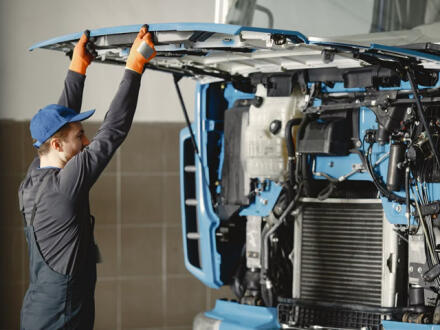
Diesel training in California can get expensive fast. Tuition, tools, boots, books, and transportation can push a short certificate well past $5,000, while longer associate programs can cost much more once fees are added.
That's why students looking for California diesel engine mechanic scholarships should cast a wide net early. Good funding rarely comes from one source. It often comes from stacking school awards, industry scholarships, local grants, and workforce aid into one workable plan.
This guide breaks the search into 7 practical moves. It covers options for high school seniors, community college students, transfer students, and people aiming for university-level transportation or engineering paths. It also shows where diesel-adjacent awards can make sense when a scholarship is not labeled "diesel mechanic" but still fits heavy equipment, ag mechanics, transportation, or applied engineering.
The goal is simple: help students cut training costs without wasting weeks on dead-end applications. A strong student can often find 8 to 15 solid-fit scholarships in a weekend if they search the right categories and keep documents ready. The sections below show where those categories are, what programs deserve attention first, and how to build an application that stands out in the first round.
1. Start With Trade School And Community College Diesel Programs In California
Students should begin with the schools that actually run diesel, heavy equipment, truck, or automotive technology programs. That sounds obvious, but it's the step many people skip.
Community colleges often bundle several aid types in one place: department scholarships, foundation awards, emergency grants, and fee waivers. California residents may also qualify for state-based support that lowers per-unit costs sharply. At many public two-year colleges, tuition is about $46 per unit before fees, which makes school-based aid especially valuable.
A smart search starts with three places on each campus website:
- the financial aid office
- the career technical education or transportation department
- the college foundation scholarship page
Students should also ask one blunt question: "Which scholarships have gone unclaimed in diesel, automotive, ag equipment, or welding?" Small technical awards sometimes get fewer applicants than broad academic scholarships.
Diesel students should prioritize programs with strong employer ties. A department that feeds graduates into fleet shops, transit maintenance, agriculture, or construction equipment repair is more likely to hear about local awards before they hit public listings.
For students who want a wider scholarship pool beyond one campus, the main scholarship database can help surface matches by field, grade level, and state. That matters because diesel funding is often hiding under related labels rather than one exact phrase.
California Diesel Engine Mechanic Scholarships For College Students To Prioritize First
When students search for California Diesel Engine Mechanic Scholarships for College, the best early targets are not always diesel-only awards. Reviewers often accept students in applied mechanical, transportation, agricultural, or equipment-focused paths.
The strongest college-first categories include:
- department awards tied to transportation or industrial technology
- foundation scholarships for career education students
- employer-sponsored awards from dealerships or equipment companies
- engineering-adjacent scholarships when coursework overlaps mechanics, systems, or equipment design
A good example is the Yanmar/SAE award. It fits students whose studies connect with engines, equipment, and mobility systems. Another broader option is the Hendrickson award, which can make sense for students whose diesel path overlaps suspension, commercial vehicle, or heavy-duty engineering topics.
Students should rank applications by fit and odds, not just award size. A $1,500 scholarship with 80 applicants can be a better target than a $10,000 scholarship drawing 4,000 applicants.
One more tip: apply before the class schedule fills. Some colleges release internal scholarship windows only once per term, and missing that date can cost a student an entire funding cycle.
2. Target Scholarships For High School Seniors Entering Diesel Mechanic Training
High school seniors have a real edge because they can apply before starting school and again after enrolling. That creates two separate chances to get money in the first year.
The best search window usually opens during senior year, when counselors, ag teachers, auto shop instructors, and FFA advisors are still easy to reach. Students in agricultural mechanics, welding, transportation, or small engines often already have the hands-on background scholarship reviewers want.
Reviewers like to see clear intent. That means the student should name the exact training path:
- diesel technology certificate
- heavy equipment mechanic program
- truck maintenance program
- agricultural equipment repair track
Concrete proof matters more than hype. A student who rebuilt a small diesel, logged 120 hours in an ag mechanics shop, or worked 12 weekend shifts at a family farm shop has a stronger story than someone who only says they "love engines."
For California students, local scholarships can be gold. Farm bureaus, regional trucking groups, and utility-related foundations often prefer students who will stay and work nearby after training.
That local tie is one reason the California Farm Bureau program can be worth a close look for students interested in agricultural diesel work, irrigation engines, and equipment service.
California Diesel Engine Mechanic Scholarships For High School Students With The Best Fit
The best-fit California Diesel Engine Mechanic Scholarships for High School Students usually share three traits: they reward practical skills, they accept technical programs, and they do not require a perfect GPA.
Students should focus first on awards that line up with their background:
- FFA or ag mechanics students should target agriculture-linked scholarships.
- Auto shop students should look at transportation and dealership-related awards.
- STEM students with engine or fabrication projects can include engineering-adjacent funding.
A good example of an adjacent opportunity is the Southern California Toyota award. It is not a pure diesel scholarship, but it can fit students entering vehicle service or technical education with a strong community story.
Students should also ask teachers for evidence-rich recommendations. The best letters cite specifics such as:
- 3 engine tear-down projects completed
- perfect attendance in shop for 2 semesters
- top 5% troubleshooting score in class lab work
That level of detail helps reviewers picture the student in a real shop. And that picture wins more often than generic praise.
If a senior applies to 10 strong-fit scholarships before graduation and wins even one $1,000 award, that can cover books, tools, or a first-semester fee bill.
3. Look For Manufacturer, Dealership, And Heavy Equipment Industry Awards
Some of the best diesel funding comes from the companies that need skilled technicians most. Manufacturers, truck groups, equipment dealers, and parts suppliers all have a financial reason to support training: the labor shortage is real.
The U.S. Bureau of Labor Statistics reports a median pay of $60,640 for bus and truck mechanics and diesel engine specialists. That pay level reflects steady demand, especially in freight, transit, agriculture, and construction maintenance.
Students should search beyond the word "scholarship." Industry money may appear under:
- technician education grants
- tool allowances
- apprentice sponsorships
- dealer training awards
- foundation support programs
This category works best for students who already know their lane. Someone aiming for heavy equipment repair should look at dealer networks tied to earthmoving, ag, or lift equipment. Someone interested in on-road diesel should search truck, fleet, and trailer brands.
Applications in this bucket should mention actual equipment exposure. Reviewers notice when a student names Cummins diagnostics, hydraulic hose repair, DPF systems, or preventive maintenance intervals instead of writing vague statements.
Students can also include related engineering-style opportunities where vehicle systems overlap with commercial transport. The BMW engineering award is one example of how technical students can widen their net when their coursework includes applied mechanical systems.
And yes, this takes more digging. But manufacturer-linked money is often worth it because applicants are filtered by interest, which can shrink the pool.
4. Apply For Association-Based Funding From State And National Trade Groups
Trade groups are a smart source of diesel money because they exist to feed talent into the field. That means they often fund students who plan to work, not just students with top grades.
Association awards can come from construction, trucking, engineering, agriculture, equipment management, or transportation maintenance groups. Some are national. Others are regional and much easier to win because the applicant pool is smaller.
A strong example is the AGC diesel award, which shows how construction-linked groups support diesel training tied to fleet and equipment work. Even when an award is not California-specific, it teaches students what industry-focused criteria look like.
Students should search association websites using these phrases:
- diesel technician scholarship
- transportation maintenance scholarship
- heavy equipment scholarship
- construction fleet scholarship
- ag mechanics scholarship
This is also where memberships matter. If a student, parent, employer, or school is connected to a trade association, that link can open doors to smaller member-only funds.
One practical move is to make a spreadsheet with 5 columns: sponsor, amount, deadline, eligibility, and essay theme. That simple system can cut missed deadlines fast, especially when spring applications bunch together.
California Diesel Engine Mechanic Association Scholarships And Related Industry Programs
Students looking for California Diesel Engine Mechanic Association Scholarships should think broadly about what "association" means. It can include construction groups, engineering councils, agricultural organizations, utility foundations, and regional workforce partnerships.
That wider lens matters because California diesel work touches several sectors:
- ports and freight corridors
- farm equipment service
- public transit fleets
- construction and paving equipment
- power generation and utility vehicles
Association-based programs tied to those sectors may fund students whose training supports mechanical reliability, emissions compliance, and fleet uptime. California's clean-air rules make this especially relevant. The U.S. Environmental Protection Agency notes that diesel exhaust contains fine particles and nitrogen oxides, which is one reason employers value technicians trained in diagnostics and emissions systems.
Students who can connect their goals to cleaner, safer, more efficient equipment often read as more mature applicants. A statement like "they want to reduce idle-related issues in farm and fleet engines" is stronger than "they want to work on trucks."
For students whose path leans toward engineering systems or infrastructure support, the ACEC California award can be a useful adjacent option. It will not fit everyone, but transfer-minded students should not ignore these crossover programs.
5. Search Workforce Development, Apprenticeship, And Regional Grant Opportunities
A lot of students focus only on scholarships and miss the money sitting in workforce programs. That's a mistake.
Regional grants, apprenticeships, and training support can sometimes cover costs that scholarships do not, such as tools, testing fees, fuel, childcare, or bus passes. In some cases, that support is worth $500 to $3,000 even when it is not labeled as scholarship aid.
Students should search through:
- local workforce development boards
- apprenticeship readiness programs
- county career centers
- employer-paid trainee tracks
- union and contractor training funds
This path is especially strong for students who want to work quickly while training. Paid learn-and-earn models reduce debt and build experience at the same time.
A regional grant office may also care less about class rank and more about employability. That helps students whose GPA is average but whose attendance, work ethic, and mechanical skill are strong.
When students talk to workforce advisors, they should ask precise questions:
- Does the program fund tools or PPE?
- Is there support for ASE test fees?
- Are diesel or heavy equipment programs on the approved training list?
- Can grants stack with Pell, fee waivers, or private scholarships?
Even one funded tool set can save a student $800 on day one. That kind of help changes whether training feels possible.
6. Use University And Four-Year Pathways If You Plan To Study Diesel, Transportation, Or Related Fields
Not every diesel student stops at a certificate or associate degree. Some want to move into fleet management, transportation systems, equipment engineering, operations, or technical education.
For that group, a four-year path can open a second layer of funding. The scholarship labels may shift away from "diesel mechanic," but the career path still fits. Students in mechanical, agricultural, transportation, construction, or applied engineering programs should search with both narrow and broad terms.
Good keyword pairings include:
- diesel + engineering
- transportation + maintenance
- heavy equipment + operations
- agricultural systems + mechanics
- fleet management + technical education
This matters because a transfer student can qualify for awards that pure certificate students cannot. A student moving from community college into a bachelor's program may access department scholarships, transfer awards, and industry grants in the same cycle.
Students should also use school advising offices early. Financial aid staff often know which scholarships accept technical majors even when the public description sounds general.
A wider list can include programs like the Currie engineering award for students whose work is moving toward engineering, systems, or applied vehicle technology. It's a reminder that transfer plans can expand funding, not limit it.
California Diesel Engine Mechanic Scholarships For University Students And Transfer Applicants
Students searching for California Diesel Engine Mechanic Scholarships for University should build a hybrid list. Part of that list should stay diesel-related. The rest should target technical fields that support diesel-centered careers.
Transfer applicants are often stronger than they think. A student with 24 completed credits, a 3.2 GPA, and 200 hours of shop or fleet experience may look more credible than a first-time applicant with no hands-on record.
Best-fit university categories include:
- mechanical or transportation programs tied to vehicle systems
- construction or infrastructure programs linked to equipment fleets
- agricultural engineering or systems for farm diesel students
- leadership awards for students who mentor others in labs or clubs
For example, the Fall Leadership in Engineering award can fit students who combine technical skill with team leadership, tutoring, or project management.
Transfer students should make their application bridge clear. They should explain how diesel training connects to a larger goal, such as managing a municipal fleet, improving service operations, or designing more reliable heavy vehicle systems.
That bridge is what turns an "adjacent" scholarship into a realistic target instead of a stretch.
7. Build A Strong Application Strategy To Win More Scholarships In Your First Year
Finding scholarships is only half the job. Winning them takes a repeatable system.
Students should build one core application package and reuse it with small edits. That package should include:
- a master resume with work hours, certifications, and shop projects
- a base essay of about 500 to 650 words
- 2 recommendation requests sent early
- transcripts, FAFSA details if needed, and enrollment proof
- a deadline tracker with alerts set 14 days and 3 days before each due date
Specificity wins. A line like "they diagnosed a no-start issue on a diesel tractor after tracing a fuel delivery fault" is far stronger than "they enjoy problem-solving."
Students should also use a scholarship platform that reduces search friction. A free matching tool can save hours compared with clicking through scattered listings one by one. On StudentScholarships, students can sort through a large range of opportunities and pair scholarship searches with career guidance instead of treating the two as separate jobs.
A simple target is 12 applications in 90 days. If the average award is $1,250 and a student wins just 2, that's $2,500 off the cost of training.
That's not luck. That's volume plus fit.
California Diesel Engine Mechanic Scholarships For First-Year Students: What Reviewers Want To See
For California Diesel Engine Mechanic Scholarships for first-year students, reviewers usually want evidence in four areas: commitment, capability, reliability, and direction.
They are asking simple questions:
- Will this student finish the program?
- Can this student handle technical training?
- Will this student show up and work?
- Does this student have a real career plan?
The best first-year applications answer those questions with proof. That proof can include 96% attendance, 150 work hours, 3 completed shop projects, or a supervisor quote about safety and dependability.
Students should shape essays around one clear scene. Maybe they spent 6 hours helping repair a harvest machine before sunrise. Maybe they changed filters and traced wiring faults in a noisy fleet bay that smelled like oil and hot rubber. Details like that make the essay feel lived-in.
Reviewers also like practical plans. A student who says a $1,800 award will cover tools, steel-toe boots, and first-term lab fees sounds prepared.
And if a student's GPA is not stellar? They should not hide from it. A brief explanation plus rising grades, work history, and strong recommendations can still make the application competitive.
California Diesel Engine Mechanic Scholarships FAQs
What are the primary sources for California diesel engine mechanic scholarships for college students?
College students seeking California diesel engine mechanic scholarships should start with trade school and community college diesel programs, focusing on department awards, foundation scholarships, employer-sponsored awards, and engineering-adjacent scholarships like the Yanmar/SAE and Hendrickson awards.
How can high school seniors find the best-fit scholarships for diesel mechanic training in California?
High school seniors should target scholarships that reward practical skills, such as those linked to FFA, ag mechanics, or auto shop experience. Local scholarships like the California Farm Bureau and technical participation awards like the Southern California Toyota Scholarship are particularly valuable.
What role do manufacturers and industry associations play in funding diesel mechanic scholarships?
Manufacturers, dealerships, and trade associations provide scholarships, tool allowances, and apprentice sponsorships to support diesel training, addressing labor shortages. Associations like AGC offer targeted awards, while manufacturer-linked opportunities often require specific equipment knowledge, improving chances for qualified applicants.
Are there scholarship opportunities beyond traditional diesel mechanic programs for university students in California?
Yes, university students can access scholarships by pursuing transportation, mechanical, agricultural engineering, or applied engineering programs related to diesel technology. Awards like the ACEC California and Currie Undergraduate Engineering scholarships support broader technical and leadership development paths.
How can students effectively organize their scholarship applications to maximize funding?
Students should assemble a core application package including a detailed resume, base essay, two strong recommendations, transcripts, and a deadline tracker. Applying broadly—aiming for about 12 applications in 90 days—and targeting scholarships by fit and odds improves chances of securing multiple awards.
What do scholarship reviewers look for in first-year diesel mechanic scholarship applicants?
Reviewers often seek evidence of commitment, capability, reliability, and clear career direction. Highlighting hands-on projects, consistent attendance, and specific skills like diagnosing diesel tractor issues enhances competitiveness, even if GPA is average, especially when paired with strong recommendations.







