

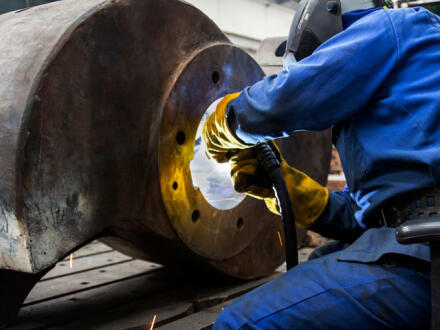
Tool and die training is practical, precise, and expensive in very specific ways. Tuition matters, but so do calipers, safety gear, steel-toe boots, lab fees, certification exams, and the gas money it takes to get to a machining lab at 7:30 a.m. For a New Mexico student who wants to work with CNC equipment, dies, molds, and precision tooling, the right funding mix can cut thousands of dollars from that bill.
That's why New Mexico Tool and Die Technician Scholarships matter. They don't always appear under the exact words "tool and die." Many are tucked inside career and technical education awards, manufacturing grants, engineering funds, workforce programs, or local scholarships tied to county, tribal, or employer needs.
A smart search usually combines three things: statewide aid, school-based awards, and smaller local or industry opportunities. In New Mexico, that can mean using lottery-based aid, community college funding, workforce grants, and employer tuition support together instead of relying on one big scholarship.
The list below breaks down 10 of the best scholarship and funding paths for students who want hands-on training in machining, manufacturing technology, toolmaking, or related engineering programs. Each section shows where the money usually comes from, who tends to qualify, and how a student can improve the odds of getting selected.
1. New Mexico Career And Technical Education Scholarships For Future Tool And Die Technicians
Career and technical education funding is often the best starting point for future tool and die technicians. These awards usually support students in machining, manufacturing, industrial maintenance, welding, and precision technology programs rather than using one narrow program title.
In New Mexico, state-backed aid can matter a lot because tuition at public colleges is often lower than in many other states, which makes even a modest award go further. A $1,500 scholarship can cover a large share of a semester's tuition at a community college and free up cash for micrometers, textbooks, and shop fees.
Students should focus on these common CTE funding sources:
- State higher education programs
- School-specific technical scholarships
- Workforce training awards
- Foundation grants for trade education
The New Mexico Higher Education Department is a useful source for statewide aid details, residency rules, and student support programs. That matters because a student can lose a good opportunity simply by missing a credit-hour or GPA rule.
A practical move is to build a short list of programs that connect directly to tool and die work, such as:
- CNC machining
n- manufacturing technology
- industrial engineering technology
- precision metalworking
- advanced manufacturing
Students using scholarship search platforms can also widen the net. A listing like the 505 Southwestern award may not be trade-specific, but general New Mexico aid can still reduce the total cost of technical training.
2. New Mexico Tool And Die Technician Scholarships For High School Students Exploring Skilled Trades
New Mexico Tool and Die Technician Scholarships for High School Students often start before graduation. That's important because many deadlines land between January and April, months before a student ever touches a college machine shop.
High school students interested in skilled trades should build proof early. Selection committees like to see concrete signs that the student is serious, such as:
- A metals, drafting, robotics, or shop class
- A dual-credit manufacturing or math course
- Attendance at a career and technical center
- A teacher recommendation from a STEM or trades instructor
- A short personal statement with a real career goal
For example, a student who writes, "They spent 96 hours in a high school fabrication lab and want to program CNC mills," sounds far stronger than someone who says they merely like working with their hands.
State and local scholarships for high school seniors can also stack with trade funding. The New Mexico Scholars program is one example of a broader New Mexico opportunity that can help a future tool and die student lower first-year costs.
Students from rural districts should ask counselors about hidden money from:
- County foundations
- Electric co-ops
- Local manufacturers
- Tribal education offices
- Chamber of commerce groups
Even a $750 local award can pay for safety glasses, measuring tools, and course materials. For a student exploring skilled trades, that small win can make training feel reachable instead of distant.
3. Community College Awards For Tool And Manufacturing Technology Students In New Mexico
Community colleges are often the most direct path into tool and die work. They offer shorter programs, lower tuition, and stronger ties to local employers who need machinists, maintenance techs, and manufacturing workers now, not four years from now.
For many students, New Mexico Tool and Die Technician Scholarships for College are easiest to find at this level. Financial aid offices, department chairs, and college foundations often manage awards that never show up in a broad internet search.
A student should ask each school three very direct questions:
- Are there scholarships for manufacturing or industrial programs?
- Are there emergency grants for tools, uniforms, or certification tests?
- Do local employers sponsor students in technical pathways?
Schools such as New Mexico Junior College can be a strong fit for hands-on technical education because community colleges often combine classroom learning with lab-based practice. A program budget might include tuition plus $400 to $1,200 in books, equipment, and protective gear, so even small campus awards help.
Students should also look at broader New Mexico scholarships that can apply to community college enrollment. The Legislative Lottery option is worth reviewing because statewide lottery-based aid often supports eligible residents attending public institutions.
The big advantage here is speed. A student can complete a certificate, start earning, and later return for more advanced training in CNC programming, tool design, or quality control.
4. New Mexico Tool And Die Technician Scholarships For College Students Pursuing Hands-On Training
College students already enrolled in a technical program have a different edge: they can prove performance with real grades, attendance, and lab work. That makes New Mexico Tool and Die Technician Scholarships for College especially realistic after the first term.
Committees often want evidence like this:
- A GPA above 2.5 or 3.0
- Completion of introductory machining or manufacturing courses
- Instructor comments on shop safety and precision
- Progress toward a certificate or associate degree
- Financial need shown through FAFSA data
A strong applicant can point to exact results. For instance, "They completed 12 credit hours, maintained a 3.4 GPA, and passed blueprint reading and shop math" gives reviewers something solid.
This is also the stage where campus foundation money becomes easier to access. Some colleges reserve awards for students who made it through the first semester, since retention is a major concern in technical programs.
General state awards still matter. The New Mexico Lottery Scholarship may fit students at eligible public colleges, while a broader option like the Davis New Mexico award can support educational costs that standard tuition aid doesn't fully cover.
Hands-on training is expensive in practical ways. A student may need $85 for a dial indicator, $140 for boots, and $200 for software access or lab fees. Scholarships that fill those gaps keep students in the shop instead of out of class.
5. New Mexico Tool And Die Technician Scholarships For University Students In Engineering And Advanced Manufacturing
University students can find tool-and-die-related funding through engineering, industrial technology, materials, and advanced manufacturing pathways. These awards usually support the design side of production as much as the shop floor side.
That makes New Mexico Tool and Die Technician Scholarships for University especially relevant for students studying:
- Mechanical engineering
- Manufacturing engineering
- Industrial engineering
- Engineering technology
- Mechatronics or automation
A university student working toward die design, process improvement, or CNC systems work should say that clearly. Committees respond well to a direct connection between coursework and New Mexico industry demand.
The New Mexico Engineering Foundation program is an obvious fit for students whose path leans toward engineering and production systems. Campus offices such as the UNM aid office also matter because university-based aid often includes departmental awards that never reach large scholarship databases.
This route makes sense for students who want to move beyond operating machines and into:
- Tool design
- Process engineering
- CAD/CAM systems
- Production optimization
- Quality and metrology leadership
A bachelor's path costs more, but it can open higher earning roles. The U.S. Bureau of Labor Statistics reports median annual pay for machinists and tool and die makers at $53,940, while engineering-linked manufacturing roles can climb higher depending on specialization, software skill, and supervision duties.
6. New Mexico Tool And Die Technician Scholarships For First-Year Students Starting Technical Programs
The first year is where many technical students run into money problems. Tuition shows up first, then the hidden costs follow fast: calculators, print fees, PPE, transportation, and lab materials.
That's why New Mexico Tool and Die Technician Scholarships for first-year students deserve special attention. Schools and donors know first-term students are vulnerable, so many entry-level awards focus on getting them through that first stretch.
First-year students should apply even if their resume feels light. Reviewers know brand-new students may not have college grades yet. They often score applications using high school attendance, work ethic, financial need, and a believable career plan.
A solid first-year application usually includes:
- A short goal statement with a specific trade outcome
- FAFSA completion
- One instructor or employer reference
- Proof of enrollment in a technical program
- A simple budget showing actual costs
For example, a student who shows $2,180 in semester expenses and a $640 gap after grants makes the need easy to understand. That works better than a vague request for help.
Broader New Mexico scholarship pages can also surface options a first-year student might overlook. The AAUW Las Vegas award and similar listings can help certain students offset those first-semester costs, especially when combined with campus-based aid.
7. Workforce Development Grants That Help Cover Tuition, Tools, And Certification Costs
Workforce development grants are one of the most practical funding paths for tool and die students because they often pay for more than tuition. In many cases, they can cover tools, testing fees, transportation, and short-term training tied to local labor demand.
This matters because employer-facing training money is usually built around job placement, not academic prestige. If a region needs precision manufacturing workers, a grant program may support students heading into that field even if the award is not labeled as a scholarship.
Students should ask about grants through:
- College workforce offices
- Local workforce boards
- State employment programs
- Tribal workforce agencies
- Adult education and re-entry initiatives
Some technical colleges coordinate these paths directly. Southeast New Mexico College is one example of a New Mexico institution where students can explore career training options connected to workforce needs.
Workforce money is especially useful for certifications and required supplies. A student may need:
- $125 to $300 for an OSHA or safety credential
- $150 to $500 for precision tools
- $60 to $90 per week for fuel or commuting
That kind of support can make the difference between enrolling and dropping out. Students who are older, returning to school, or supporting family members should pay close attention here, because grant eligibility sometimes extends beyond traditional scholarship rules.
8. New Mexico Tool And Die Technician Association Scholarships And Industry-Sponsored Awards
Association and industry-sponsored funding can be harder to find, but it's often more focused. That focus helps students who already know they want a place in machining, tooling, manufacturing, or industrial production.
These awards may come from trade groups, professional societies, local manufacturing alliances, or education foundations tied to technical careers. While New Mexico Tool and Die Technician Association Scholarships may not always appear under that exact name, similar opportunities often support the same skill set.
A student should also look at schools with strong technical and Indigenous education connections, such as Southwestern Indian Polytechnic Institute, because specialized institutions and partner organizations sometimes share smaller funding streams that broad searches miss.
Industry-sponsored awards can be especially valuable because they often connect to hiring pipelines. A $1,000 award plus a summer interview may carry more real value than a larger check with no employer access.
How To Find Association-Based Opportunities
The fastest method is simple and a little old-school. Students should make a list of every group connected to manufacturing within 100 miles, then contact each one directly.
Good places to ask include:
- Local chambers of commerce
- Manufacturing associations
- Society chapters for engineers or fabricators
- Workforce training councils
- College advisory boards
A useful trick is to ask instructors which companies donate scrap stock, sponsor events, or attend advisory meetings. Those names often lead to hidden awards.
What Selection Committees Usually Look For
Selection committees usually prefer proof over promises. They want signs that the student can finish training and contribute to the field.
The strongest applications often show:
- Attendance and reliability
- Mechanical curiosity backed by a project or job
- Clear interest in manufacturing careers
- Decent math performance
- A realistic budget and real need
One student might stand out by describing a personal project, such as machining a replacement bracket within 0.003-inch tolerance. That single detail tells a reviewer far more than a generic essay ever will.
9. Employer-Sponsored Scholarships, Apprenticeships, And Tuition Assistance In Manufacturing
Employer money is one of the strongest funding paths because it can lead straight to a paycheck. Manufacturers do not always advertise these programs widely, but many support students through tuition reimbursement, paid internships, tool stipends, or formal apprenticeships.
This route works well for students who can balance school with a set work schedule. A company may pay part of tuition in exchange for continued employment, minimum grades, or a promise to stay for a set period such as 12 months after training.
Employer-sponsored support often looks like this:
- Paid apprenticeship hours
- Reimbursement after course completion
- Sponsorship for credentials
- Paid summer work linked to the program
- Grants for boots, tools, or safety equipment
Students should ask human resources teams very direct questions. Does the company reimburse technical coursework? Will it cover NCCER, NIMS, or safety certifications? Is there a wage increase after finishing training?
The strongest candidates usually bring evidence that they are worth the investment. A supervisor note stating that the student had 0 unexcused absences in 180 days says a lot.
This is also where broad scholarship platforms help with flexibility. Students balancing work and school may use general awards, faith-based aid, or community scholarships to cover the portion that an employer will not pay, especially if deadlines do not line up with payroll reimbursement cycles.
10. Local Scholarship Search Strategies That Help New Mexico Students Uncover Hidden Funding
The best local strategy is not searching harder. It is searching closer. Hidden funding usually comes from organizations that know the student's town, school, employer, tribe, church, or county.
That makes local research one of the smartest ways to find New Mexico Tool and Die Technician Scholarships for High School Students, college students, and university students. Smaller awards often get fewer applicants. A $500 scholarship with 12 applicants can be easier to win than a $5,000 scholarship with 1,200 applicants.
Students should search in layers:
- High school counseling offices
- Community college foundation pages
- Local employers in metalworking or energy
- Tribal education departments
- County and city community foundations
- Civic groups such as Rotary or Lions clubs
A general scholarship database can still help organize the hunt. Pages like the National Guard state awards or Baptist Convention aid show how many useful opportunities sit outside a strict manufacturing label.
Students should keep a simple spreadsheet with:
- Deadline
- Dollar amount
- Eligibility rule
- Essay requirement
- Contact name
- Submission status
That habit saves real time. A student applying to 18 scholarships can easily lose track of two recommendation requests and one transcript deadline without a system.
New Mexico Tool and Die Technician Scholarships FAQ
What types of scholarships support tool and die technician training in New Mexico?
Scholarships in New Mexico for tool and die technicians include career and technical education awards, manufacturing grants, workforce programs, and local scholarships. Combining statewide aid, school-specific awards, and local opportunities can significantly reduce training costs.
How can high school students in New Mexico increase their chances of earning tool and die technician scholarships?
High school students should demonstrate commitment by taking shop, metals, or robotics classes, completing dual-credit courses, attending technical centers, obtaining teacher recommendations, and writing clear career goals to qualify for scholarships like the New Mexico Scholars program.
What financial aid options are available for community college students studying machining or manufacturing technology in New Mexico?
Community college students can access scholarships through school foundations, workforce grants, and local employer sponsorships. Programs like New Mexico Junior College offer technical education, while statewide lottery-based aid provides additional funding support.
Are there scholarships available for university students pursuing engineering or advanced manufacturing related to tool and die work?
Yes, university students can find scholarships through engineering-focused programs such as mechanical, industrial engineering, or manufacturing engineering. The New Mexico Engineering Foundation Scholarship Program supports students aiming for design, CAD/CAM, or production optimization careers.
What is the role of employer-sponsored scholarships and apprenticeships in funding tool and die technician training in New Mexico?
Employer-sponsored scholarships often include tuition reimbursement, paid apprenticeships, tool stipends, and certification support. These programs can provide a direct path to employment and may require commitments like maintaining grades or working for the company post-training.
Where can New Mexico students find hidden local scholarships for tool and die technician programs?
Students should explore high school counseling offices, community college foundations, local manufacturers, tribal education offices, and civic groups like Rotary clubs. Smaller awards from these sources may have fewer applicants and contribute to tool and die training costs.






