

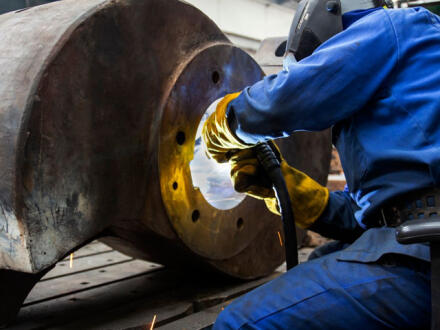
Welding training can lead to solid pay, fast hiring, and work that feels real the minute class starts. But booths, gear, tuition, testing fees, and gas money add up fast. For a South Dakota student, even a modest welding program can strain a family budget before the first bead is laid.
That's where South Dakota welding scholarships matter. They can reduce trade school bills, help first-year students cover tools, and make it easier for college and university students to stay enrolled. And the money does not come from one place. It can come from technical colleges, state aid, employers, community foundations, unions, and industry groups.
The good news is simple: welding students usually have more funding paths than they think. A student might combine one school award, one local scholarship, a federal Pell Grant, and a part-time shop job reimbursement in the same term. That stack can cut costs by hundreds or even thousands of dollars.
This guide breaks down 10 practical South Dakota welding scholarships and funding paths for high school students, trade school students, associate degree students, and university students in related programs. Each section explains who the funding fits, where students usually find it, and how to improve the odds of getting it.
1. South Dakota Welding Scholarships For High School Students Through CTE And Skilled Trades Programs
South Dakota Welding Scholarships for High School Students often start before graduation. Many students first hear about them through Career and Technical Education programs, school counselors, FFA chapters, or local skills competitions.
South Dakota's public high school graduation rate has stayed above 80% in recent reporting from the National Center for Education Statistics, and CTE pathways keep growing because employers need skilled workers. That matters for welding students, since early participation in shop classes can turn into scholarship points later.
Students should focus on these starting points:
- CTE program awards tied to welding, manufacturing, or ag mechanics
- Senior-year trade scholarships from local businesses and civic groups
- Competition-based funding tied to welding performance or technical skills
- Regional trade association awards for students entering a hands-on field
A strong example is the SDATAT award page, which supports senior high school students in South Dakota pursuing technical training. Another useful route is talking with a school's welding or ag instructor about nomination-based awards, because many small scholarships never show up in big search engines.
Concrete proof helps. A student who logged 180 classroom hours in welding, placed in a local contest, and earned a teacher recommendation usually looks stronger than a student who submits only a GPA. Photos of a clean MIG bead, a small trailer repair, or a farm gate build can make an application feel real instead of generic.
2. South Dakota Technical College Welding Scholarships For Certificate And Diploma Students
Technical colleges are one of the clearest paths for welding aid in the state. Students pursuing certificates or diplomas should start with the financial aid and scholarship offices at their own school before looking elsewhere.
Schools such as Mitchell Technical College, Western Dakota Technical College, and Southeast Technical College regularly connect students with campus-based support, program-specific aid, and outside trade scholarships. These schools also know which awards line up with welding, fabrication, or industrial technology.
For certificate and diploma students, useful funding often includes:
- Program scholarships for students in welding or metal fabrication
- Need-based campus aid for tuition, books, and equipment
- Foundation awards tied to donor interests in skilled trades
- Retention scholarships for students who finish one term and return
One national option that fits technical training well is the Glenn W. Oyler scholarship page. Students should also ask whether their school offers emergency grants for helmets, jackets, gloves, or testing fees.
A realistic budget example shows why this matters. If tuition and fees reach $6,800, tools cost $1,150, and PPE adds $325, a student faces $8,275 before transportation. Even a $1,000 scholarship cuts more than 12% off that total. That is not small money when the tool cart still needs filling.
3. South Dakota Welding Scholarships For College Students Pursuing Associate Degrees
South Dakota Welding Scholarships for College students often look a little different from high school awards. Associate degree students need to show not only interest, but progress. That means credits completed, shop performance, attendance, and a clear plan for employment.
Many two-year students qualify for a mix of technical and academic support. A welding student taking metallurgy, blueprint reading, and fabrication math can appeal to both trade-focused donors and general college scholarship committees.
Good places to look include:
- Institutional scholarships for returning students
- Workforce awards tied to high-demand careers
- Association-based aid for welding, steel, or construction students
- Internship-related scholarships tied to manufacturing employers
The Steel Intern scholarship page is a smart example for students interested in fabrication, steel production, or industrial work tied to welding skills. College students should also ask their advisor whether credits in welding technology connect with cooperative education or paid internships.
Numbers matter here too. According to the U.S. Bureau of Labor Statistics, the median annual pay for welders, cutters, solderers, and brazers is above $48,000 nationally. That figure helps a student explain return on investment in an essay: borrowing $3,500 is one thing, but cutting that borrowing through scholarships can mean a much easier start after graduation.
A solid associate applicant usually shows one hands-on result, such as repairing livestock equipment, building a trailer frame, or passing a bend test in class. Specifics beat broad claims every time.
4. South Dakota Welding Scholarships For University Students In Welding-Related Industrial And Engineering Programs
Not every welding-focused student enters a booth-only program. Some head into industrial technology, manufacturing, construction management, or engineering tracks where welding knowledge still matters. That is where South Dakota Welding Scholarships for University students come into play.
Universities may not label every award as "welding," but funding often exists for related paths. Students interested in welding engineering, materials, heavy industry, or plant operations should search by department, not just by the word scholarship.
Strong South Dakota examples include South Dakota Mines, where engineering and applied science students can connect welding skills with materials and manufacturing, and South Dakota State's financial aid office, which organizes broad scholarship options across majors.
Useful university-side funding paths include:
- Departmental scholarships in engineering or industrial studies
- Merit awards for GPA and ACT or SAT scores
- Project-based awards tied to design teams or research
- Industry scholarships from materials, gases, steel, and manufacturing groups
A national industry option is the AWS national scholarships page. Students in welding-related university programs can also benefit from internships at plants, mines, or fabrication companies because paid work often strengthens the next scholarship cycle.
One concrete angle: a materials student who studies weld failure in high-strength steel and works 12 hours per week in a campus lab may stand out more than a student with only classroom grades. Scholarship readers tend to remember applied experience.
5. South Dakota Welding Scholarships For First-Year Students Entering Trade School Or College
South Dakota Welding Scholarships for first-year students matter because the first term is usually the most expensive. New students pay deposits, buy steel-toe boots, pick up gloves and jackets, and often move or commute farther than they did in high school.
First-year funding often rewards readiness. Committees want proof that the student will show up, finish the term, and use the training well. That means deadlines, transcripts, and a short, clear statement of purpose can matter as much as grades.
First-year students should prioritize:
- Admissions scholarships offered automatically at enrollment
- Trade-entry scholarships for new certificate or degree students
- Tool and equipment grants tied to hands-on programs
- Scholarships for underrepresented students in welding and manufacturing
One example is the Women of Gases & Welding award page, which can be especially useful for women entering a field where they are still underrepresented. The U.S. Department of Labor has long shown that women make up a small share of many construction and extraction occupations, which means targeted funding can carry real weight.
A basic first-term cost sketch makes the point:
- Tuition and fees: $3,400
- Helmet and PPE: $420
- Basic tools: $550
- Fuel for a 32-mile round trip over 16 weeks: roughly $430
That total lands around $4,800 before surprise costs. A first-year scholarship worth $750 or $1,500 can keep a student enrolled when money gets tight halfway through the semester.
6. South Dakota Welding Association Scholarships And Industry-Sponsored Awards
This is the section many applicants miss. South Dakota Welding Association Scholarships and national welding-industry awards often sit outside the school's main financial aid system, so students have to hunt for them on purpose.
Industry-backed awards usually favor students who can show skill, work ethic, and commitment to the trade. A polished essay helps, but so does evidence from the shop floor: certifications, instructor comments, or a part-time fabrication job.
Students should search in these buckets:
- State welding associations and local chapters
- National welding organizations with South Dakota applicants eligible
- Supplier-sponsored awards from gases, steel, or equipment firms
- Memorial scholarships honoring tradespeople and instructors
The JFLF welding awards page fits arc-welding education well, while the Donald F. Hastings award page is another example of trade-connected support. These awards often ask for more specific trade information than a general college scholarship would.
A better application includes exact details. Instead of "they love welding," a student could write that they completed 3 FCAW plate coupons, repaired a cracked loader bucket on a family farm, and plan to earn AWS D1.1-related skills after school. That kind of sentence sounds like a real welder talking, because it is.
Students using Studentscholarships.org can also filter by trade and career interest, which saves time compared with sorting through dozens of broad awards that do not fit welding at all.
7. Employer, Fabrication Shop, And Apprenticeship-Supported Welding Funding In South Dakota
Not all funding comes from a scholarship committee. Some of the best help comes from employers who need welders badly enough to pay part of the bill.
South Dakota manufacturers, repair shops, ag equipment businesses, and construction firms often support students through tuition reimbursement, paid internships, tool stipends, or apprentice wages. This matters because "earn while learning" can beat a small one-time scholarship if the hours are steady.
Employer-backed help often looks like this:
- Paid internships at fabrication or welding shops
- Tuition reimbursement after a completed term or grade requirement
- Tool allowances worth $250 to $1,000
- Registered apprenticeships with classroom support and wages
A good related option is the AGC South Dakota scholarships page, especially for students whose welding path connects to construction. A student working 20 hours per week at $18 per hour over 15 weeks earns $5,400 before taxes. That can cover tuition faster than many people expect.
The smartest move is simple: ask local employers direct questions.
- Do they reimburse welding classes?
- Do they pay for certification tests?
- Will they cover boots, gloves, or a hood after 90 days?
- Can part-time work turn into an apprenticeship?
A short email and one in-person visit can open a funding path that never appears on a public list. In smaller towns, that personal approach often works better than a formal online search.
8. Community Foundation And Local Scholarship Opportunities For South Dakota Welding Students
Community foundations and local scholarship committees are often overlooked, which is exactly why they matter. Fewer applicants can mean better odds.
South Dakota has a strong local giving culture, especially in rural areas where donors want students to train, work, and stay close to home. County funds, town foundations, farm organizations, and local memorial scholarships may support students heading into welding even when the award title does not mention the trade.
A useful statewide hub is the South Dakota Community Foundation, which supports communities across the state. Students should also ask about awards through hometown banks, electric cooperatives, school foundations, and local employers.
Common local-fit scholarships include:
- County or town education funds
- Farm and ranch memorial awards
- Service club scholarships from Rotary, Lions, or Kiwanis
- Trade-adjacent awards in agriculture, construction, or mechanics
One internal example is the Ramia Boersma award page, which shows how smaller regional scholarships can still help fill a gap. A $750 local award may cover textbooks, weld test fees, or 2 months of fuel.
Students should be specific when applying. Saying they want to "help the community" is weak. Saying they plan to return to a town of 1,400 residents and repair ag equipment within 50 miles gives a donor a clear picture. Local committees often fund students they can imagine meeting at the grocery store.
9. Federal And State Aid That Can Be Combined With South Dakota Welding Scholarships
Scholarships are only one part of the picture. Many welding students lower costs the most by combining South Dakota welding scholarships with federal and state aid.
The Free Application for Federal Student Aid, or FAFSA, is the base step. Students who qualify may receive Pell Grants, federal work-study, subsidized loans, or campus-based aid. The U.S. Department of Education has reported maximum Pell Grant amounts in the thousands of dollars per award year, which can cover a large share of tuition at some technical programs.
State-supported options matter too. The South Dakota Opportunity Scholarship page and the Dakota Corps award page are two important examples for eligible students.
Students should think in layers:
- Federal grants first, because they do not usually need repayment
- State scholarships next, if eligibility rules fit
- School aid after that
- Private scholarships and employer support to close the gap
How To Stack Grants, Scholarships, And Work-Based Aid
A simple funding stack can look like this:
- Pell Grant: $3,700
- State scholarship: $1,500
- Local welding scholarship: $1,000
- Employer reimbursement: $800
That adds up to $7,000 in support. On an $8,900 annual training budget, the student would have only $1,900 left to cover through savings, work income, or a small loan.
The key is timing. FAFSA deadlines, school deadlines, and private scholarship deadlines often fall months apart. Students who keep a spreadsheet with application date, amount, status, and documents needed usually make fewer mistakes and miss less money.
10. Application Strategies That Help Welding Students Stand Out In South Dakota
A lot of applicants have similar grades. Fewer have a clear story. That is the difference.
Students applying for South Dakota Welding Scholarships for High School Students, South Dakota Welding Scholarships for College, or first-year and university awards should build an application that feels concrete. Committees read piles of vague statements. They remember details.
The strongest applications usually include:
- A short goal statement with exact training and career plans
- A resume listing shop hours, projects, work, and certifications
- One strong recommendation from a welding instructor or employer
- Proof of reliability, such as attendance, punctuality, or completed projects
A useful trick is to measure everything. Instead of writing "they worked hard in the shop," write "they completed 4 structural weld projects, missed 0 lab sessions, and worked 12 Saturday shifts at a repair shop." Exact numbers make the student sound prepared and honest.
What To Highlight In A Welding Scholarship Essay Or Resume
The best essay content usually covers these points:
- Why welding fits the student: family farm repairs, metal art, shop class, or job-shadowing
- What they have already done: MIG practice, oxy-fuel cutting, fabrication, or maintenance work
- What the money will pay for: tuition, PPE, certification tests, fuel, or housing
- Where they plan to work: pipeline support, manufacturing, ag equipment repair, or structural welding
A vivid example helps. A student might describe the sharp smell of hot steel, the orange spark trail hitting the concrete, and the moment a crooked practice bead finally straightened out after 6 hours of repetition. That feels real. It also shows persistence.
Students can also use Studentscholarships.org to speed up the search and find matches in less time, which helps when several deadlines hit in the same month.
Frequently Asked Questions about South Dakota Welding Scholarships
What types of welding scholarships are available for high school students in South Dakota?
High school students can access scholarships through Career and Technical Education programs, local business awards, skills competitions, and regional trade associations. Early participation in welding classes and contests often strengthens applications.
How can technical college students in South Dakota find welding scholarships?
Students should start with financial aid offices at technical colleges like Mitchell Technical College, Western Dakota Technical College, or Southeast Technical College. These schools offer program-specific scholarships, need-based aid, and emergency grants for tools and PPE.
What funding options exist for South Dakota college students pursuing an associate degree in welding?
Associate degree students can qualify for institutional scholarships, workforce awards, association-based aid, and employer-sponsored internship scholarships. Progress in shop performance and a clear employment plan improve chances for awards.
Are there welding scholarships for university students in related industrial or engineering programs?
Yes, university students in industrial technology, manufacturing, or engineering with welding knowledge can find departmental scholarships, merit awards, project-based scholarships, and industry-sponsored funds at institutions like South Dakota Mines and South Dakota State University.
Can first-year welding students in South Dakota get scholarships to cover initial costs?
First-year scholarships often support deposits, PPE, and tools. Programs like the Women of Gases & Welding award target underrepresented groups and help students cover expenses that arise in their first term, easing financial strain early on.
How can welding students combine various funding sources to cover training costs in South Dakota?
Students commonly stack federal Pell Grants, state scholarships such as the South Dakota Opportunity Scholarship, local welding scholarships, and employer reimbursements. Careful timing of applications and maintaining an organized tracking system maximizes successful funding.




