

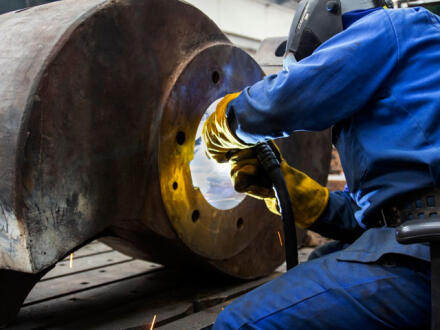
Welding school in Alaska can lead to steady work, strong hands-on skills, and a paycheck that feels real fast. But tuition, tools, boots, transportation, and certification fees can hit hard before classes even start. For a student trying to build a plan, that stack of costs can feel bigger than the weld itself.
That's where Alaska welding scholarships and other funding options can make a real difference. A student might cut a $6,000 training bill down by a few thousand dollars with the right mix of scholarships, grants, workforce aid, and school-based awards. In some cases, employer support or apprenticeship funding can reduce out-of-pocket costs even more.
This guide breaks down 7 practical Alaska welding scholarships and funding paths for high school students, first-year applicants, college students, and university students in related technical fields. It also shows where students often miss money, what documents they usually need, and how to combine more than one source of aid without creating deadline chaos.
For students and families who want a simpler search process, scholarship platforms can help sort options by program, school level, and trade interest. That matters, because the best funding path is often not one big award. It's three or four smaller ones stacked together at the right time.
1. Alaska Welding Scholarships For High School Students Through CTE And Dual-Enrollment Programs
High school students often start closest to the money and don't realize it. Career and Technical Education programs, dual-enrollment classes, and district trade partnerships can open early scholarship options before graduation.
In Alaska, students who begin welding exposure in high school may save money in two ways: they can earn credits early, and they can build a stronger scholarship file before senior spring. That matters because many trade awards ask for proof of interest, not just grades. A student with 120 hours in a shop class, a teacher recommendation, and a completed safety unit usually looks stronger than a student who simply says they "like welding."
Some schools also connect students to local workforce events, construction employers, and regional foundations. Those contacts can lead to smaller awards in the $500 to $2,500 range, which often cover gloves, helmets, textbooks, or the first term's lab fees.
Students in cooperative service areas may also find local education awards connected to utilities or regional employers. One example is the AVEC education award, which can fit students pursuing technical training in communities served by the cooperative.
A smart move is to ask three people before senior year ends:
- the CTE instructor
- the school counselor
- the dual-enrollment coordinator
Those three names can uncover funding faster than a broad internet search.
Best Opportunities To Check Before Graduation
Before graduation, students should focus on opportunities that reward momentum and local ties. These are usually easier to compete for than large national scholarships.
Good places to look include:
- district CTE program awards
- local community foundation funds
- union-sponsored training support
- scholarships attached to introductory trade classes
- utility, construction, or regional employer education awards
The Alaska Community Foundation is worth attention because community foundations often host multiple small funds with different local eligibility rules. Even a $1,000 award can cover a welding jacket, steel-toe boots, and one set of basic hand tools.
Students should also keep a simple file with:
- attendance records
- class transcripts
- shop photos or project summaries
- competition results, if any
- volunteer or work hours
That file saves time later. It also helps when an application asks for a short statement about why the student chose welding. Specific details work better than broad claims. "Built a trailer frame in class and passed bend tests" lands harder than "I enjoy working with my hands."
2. Community College Welding Awards For Certificate And Associate Degree Students In Alaska
For many students, community college is the clearest route into welding. It often costs less than a four-year path, and the schedule can fit work better. That makes Alaska Welding Scholarships for College especially important for certificate and associate degree students.
School-based awards are often the first layer to check. Financial aid offices, workforce departments, and technical program coordinators may each manage separate pots of money. A student who asks only one office can miss half the options.
At colleges connected to the University of Alaska system, aid may come through general financial aid, program funds, or donor scholarships. The UAA aid office gives students a starting point for grants, loans, and campus-based funding. Students should also ask whether welding lab fees, consumables, and certification testing can be covered by separate workforce support.
A practical example: if tuition is $4,800, lab fees are $900, books are $600, and tools cost $1,200, the real first-year bill is $7,500, not the sticker tuition alone. That's why small awards matter.
Community college welding students should look for:
- program-specific donor scholarships
- FAFSA-based grants
- need-based campus emergency funds
- industry-sponsored trade awards
- local construction and manufacturing scholarships
National trade scholarships can also be useful at this level. The AWS national awards application is one example students can include in a broader funding plan.
And students shouldn't ignore nearby technical schools either. Programs at Alaska Career College may offer another route for students comparing cost, duration, and hands-on training structure. Sometimes the best financial choice is the program that gets a student job-ready in fewer terms, even if the per-credit price looks higher at first glance.
3. Alaska Welding Scholarships For First-Year Students Starting A Trade Program
First-year students face a weird timing problem. They need money before they've built a college record, but many scholarships ask for proof they can finish what they start. That's why Alaska Welding Scholarships for first-year students usually reward preparation, reliability, and a clear trade plan.
A strong first-year applicant often shows four things:
- a confirmed program start date
- a realistic budget
- some evidence of trade interest
- a short, direct career goal
Even a simple plan helps. If a student writes, "I'm starting a one-year welding certificate, need $1,850 for tools and fees, and plan to test for structural welding," that sounds grounded. It sounds like someone who will use the money well.
First-year students should search beyond the exact phrase "welding scholarship." Construction, fabrication, steel, maintenance, industrial technology, and skilled trades funding can all overlap. For example, a student interested in metals work may find adjacent opportunities such as the steel internship fund useful for longer-term planning if the program leads toward mill, fabrication, or industrial work.
Another point: first-year trade students often miss application windows because they wait until classes begin. Many awards close months earlier. If school starts in late summer or early fall, the scholarship calendar usually starts moving in winter and spring.
What First-Year Applicants Usually Need To Submit
Most first-year welding scholarship applications ask for a tight set of materials. Students who gather them once can reuse them again and again.
Typical requirements include:
- high school transcript or GED record
- proof of admission or enrollment
- FAFSA results, if required
- one or two recommendation letters
- short essay, usually 250 to 500 words
- budget estimate for tuition, tools, and fees
Some applications also ask for work history or safety training. Even 80 hours at a hardware store or a summer helper job on a crew can help show work ethic.
Essay prompts usually fall into three buckets:
- Why welding?
- How will this training lead to employment?
- What barriers does the student need help covering?
The strongest answers use concrete details. A student can mention the smell of hot steel in class, the first time a bead held clean, or the cost of a helmet and grinder. Real details make the application feel true.
For students using free scholarship search tools, a filtered platform can cut research time hard. On Studentscholarships.org, applicants can sort through trade-related awards in a few minutes instead of spending 3 or 4 hours jumping between scattered pages.
4. Alaska Welding Scholarships For College Students Who Need Program-Specific Financial Aid
Program-specific aid matters because welding costs are not generic college costs. A history major does not usually need flame-resistant clothing, test coupons, grinding wheels, and lab consumables. Welding students do.
That's why Alaska Welding Scholarships for College should be matched to the exact training path. A short certificate, a one-year occupational endorsement, and a two-year associate degree can lead to different aid choices.
Students who need program-specific help should ask direct questions:
- Does the scholarship cover only tuition?
- Can it be used for tools and PPE?
- Is half-time enrollment enough?
- Does it require a welding major code?
- Is renewal possible after the first term?
A good example of specialized funding is the JFLF welding award, which supports arc welding education and fits students seeking trade-focused funding rather than broad academic aid.
Students can also benefit from related Alaska industry scholarships when their welding path connects to construction or technical project work. The AGC Alaska scholarship page can make sense for students whose training links to the building trades and contractor workforce.
One budget reality: AWS certification tests, fuel, filler metal, and plate coupons can add $700 to $2,000 beyond basic tuition, depending on program structure. Students who target aid that explicitly allows equipment or course supplies often come out ahead.
How To Match Scholarships To Welding Certificate Vs. Degree Paths
Certificate students and degree students should not apply in exactly the same way. The strongest application matches the program's end goal.
Certificate path:
- stress fast job entry
- explain short training timeline
- list tool and testing costs
- show interest in immediate field work
Associate degree path:
- connect welding skills to longer-term advancement
- mention blueprint reading, inspection, or supervisory goals
- include transfer or management options if relevant
- show commitment across multiple terms
For example, a certificate student might say they plan to finish in 9 months and seek pipeline support work. A degree student might explain a 2-year plan that combines welding with fabrication, drafting, or maintenance management.
That distinction matters. Donors often want to know exactly what the money helps a student do next. A short, precise path is easier to fund than a fuzzy one.
5. Alaska Welding Scholarships For University Students In Related Technical And Engineering Tracks
Not every future welder starts in a welding booth. Some students move into related fields like mechanical engineering, civil construction, petroleum systems, industrial technology, or applied sciences. For them, Alaska Welding Scholarships for University may come from adjacent technical and engineering sources rather than a scholarship with "welding" in the title.
This path fits students interested in:
- welding engineering support
- materials and metallurgy
- inspection and quality control
- heavy industry project work
- fabrication design and process improvement
In Alaska, university students in technical tracks should pay attention to engineering and energy-sector funding. The Alaska Engineering Education Foundation awards can fit students building careers in engineering-linked fields where welding knowledge supports design, field operations, or infrastructure work.
Students tied to petroleum, pipeline, or industrial systems may also find value through the Alaska Section award. That kind of scholarship is especially relevant when a student's coursework connects welding knowledge to structural integrity, field maintenance, or energy projects.
University-based options matter because Alaska's economy still depends heavily on infrastructure, transportation, energy, and construction work. Technical students who understand weld behavior, inspection limits, and materials performance often bring practical value to those sectors.
A student at UAF or another Alaska university might not apply as a "welding major," but their capstone, lab work, or internship plan can still make them a strong fit for industry-related money. If they can explain how welding knowledge affects design safety, project cost, or equipment life, they become more competitive fast.
6. Alaska Welding Association Scholarships And Other Industry-Sponsored Awards
Association and industry money is often the most overlooked funding category. Students search school websites first, then stop. That leaves a lot of trade money untouched.
Alaska Welding Association Scholarships may not always appear under that exact name, but association-backed awards, union funds, and employer-sponsored scholarships can be strong options for welding and fabrication students. National groups also matter, especially when local lists feel thin.
The Air Products women in welding award is a good example of an industry-backed scholarship that supports representation in welding-related fields. Students should also watch trade groups tied to steel, gas, fabrication, inspection, and industrial maintenance.
One reason these awards matter: association scholarships may attract fewer applicants than broad academic scholarships. A general college award might draw 1,200 applicants, while a specialized trade fund may get a fraction of that pool.
Industry-backed applications often ask for:
- trade goals
- school enrollment
- GPA minimums, often around 2.5 to 3.0
- recommendation from an instructor or supervisor
- short essay about career plans
They also tend to reward students who sound work-ready. Clear, practical writing beats fancy wording here.
Where To Find Association, Union, And Employer-Backed Funding
Students should search in layers instead of relying on one list. The best industry funding usually sits in places that aren't obvious.
Start with:
- national welding and steel associations
- local contractor groups
- labor unions and apprenticeship offices
- regional utilities and cooperatives
- manufacturers, gas suppliers, and industrial employers
The Alaska Society of Professional Engineers can help students identify connected professional networks in the state, especially for those mixing welding skills with broader technical interests. That kind of network matters because scholarships often travel through associations before they hit search engines.
Students should also ask employers directly. A fabrication shop with 18 employees may still offer a small $750 tool grant or tuition reimbursement for a worker entering night classes. Those offers are easy to miss because they may never be publicly advertised.
This is also where scholarship search platforms help again. A site that keeps trade awards organized can surface smaller industry funds faster than a manual search through ten association websites.
7. Statewide Workforce, Apprenticeship, And Regional Aid Options That Can Lower Welding School Costs
Scholarships are only one part of the picture. Some of the best ways to lower welding school costs come from workforce programs, apprenticeships, tribal or regional aid, and employer training support.
This category matters because many students need cash-flow help now, not just a scholarship check later. Workforce funds may cover tuition, transportation, books, gear, or even supportive services depending on eligibility.
Students should explore:
- state workforce programs
- apprenticeship sponsors
- union training centers
- Native corporation or tribal education assistance
- regional nonprofit and foundation aid
- employer-sponsored upskilling support
The official state portal is useful for finding public agencies and workforce contacts. Regional schools such as Alaska Pacific University may also have aid staff who can point students toward local funding sources outside the standard scholarship lane.
Apprenticeships can change the math in a big way. If a student earns while training, even $20 per hour for 20 hours a week can offset $1,600 per month in living costs before taxes. That doesn't replace scholarships, but it reduces the amount a student has to borrow.
Regional foundations and employers also matter. Rural students may qualify for community-specific aid that a statewide applicant pool never sees. And some employers will cover welding certifications if the student agrees to work a set period after training.
How To Stack Scholarships, Grants, And Training Support Without Missing Deadlines
Stacking aid means combining sources without breaking award rules. Done well, it can cut school costs sharply. Done badly, it can create deadline misses, duplicated forms, or lost eligibility.
A simple stacking plan looks like this:
- File FAFSA as early as possible.
- Apply for school-based grants and donor awards.
- Add trade-specific scholarships.
- Add workforce or apprenticeship support.
- Ask whether tool, travel, and exam costs can be billed separately.
Example stack:
- Pell Grant: $3,500
- campus donor scholarship: $1,200
- trade scholarship: $1,000
- employer gear reimbursement: $600
That total is $6,300. For a student with a $7,500 annual cost, the remaining gap is just $1,200.
Students should track five details in one spreadsheet:
- deadline date
- award amount
- documents needed
- whether the scholarship is renewable
- whether it reduces other aid
One missed transcript request can cost a student more than a week of wages. So can waiting too long for a recommendation letter. A clean list, one folder, and calendar reminders set 14 days before each deadline can prevent most mistakes.
Alaska Welding Scholarships - Frequently Asked Questions
What types of Alaska welding scholarships are available for high school students?
High school students in Alaska can access welding scholarships through Career and Technical Education (CTE), dual-enrollment programs, and local partnerships. These often provide funds for gloves, helmets, or lab fees and require proof of welding interest and teacher recommendations.
How can community college welding students in Alaska find scholarship opportunities?
Community college students should check financial aid offices, workforce departments, and technical program coordinators for program-specific scholarships. They can also apply for FAFSA grants and industry-sponsored awards like the American Welding Society National Scholarships.
What should first-year welding students in Alaska include in their scholarship applications?
First-year students need to provide a high school transcript or GED, proof of enrollment, FAFSA results, recommendation letters, a short essay explaining their welding goals, and a budget estimate for tuition, tools, and fees to strengthen their applications.
Are there welding scholarships in Alaska that cover tools and certification fees as well as tuition?
Yes, some Alaska welding scholarships specifically cover tools, PPE, lab fees, and certification testing costs. Students should ask scholarship providers if aid includes these expenses to better manage the real cost of training beyond tuition.
Can university students in Alaska pursuing related technical fields access welding-related scholarships?
University students in technical majors like engineering or industrial technology can qualify for welding-related scholarships from industry groups such as the Alaska Engineering Education Foundation, especially if their studies involve welding knowledge applied to infrastructure or energy projects.
How can Alaska welding students combine multiple scholarships and funding sources without missing deadlines?
Students should file FAFSA early, apply for school and trade-specific scholarships promptly, track deadlines and required documents in a spreadsheet, and coordinate awards to avoid overlaps. This strategic stacking reduces out-of-pocket costs effectively.







