

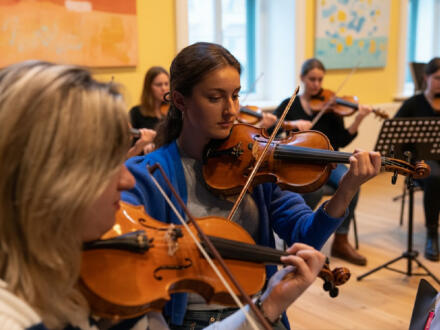
Music school can be expensive fast. Tuition, private lessons, accompanist fees, instrument repairs, audition travel, and housing can turn one acceptance letter into a serious money problem.
That's why California Music School Scholarships matter so much. The right scholarship can cover a few hundred dollars for books and strings, or several thousand dollars toward tuition. For students in California, the options are wider than many families expect. Some awards come from music groups. Others come from universities, community foundations, and statewide associations.
This list focuses on seven strong categories of scholarships that can help high school seniors, first-year students, transfer students, and continuing college musicians. It also points out where each type of funding usually comes from, who tends to qualify, and what students should prepare before applying.
For context, the average published tuition and fees at four-year colleges remain a major cost for families, and music majors often face extra program expenses on top of that. A single pre-screen recording session can cost $200 to $600 when students rent space and hire an accompanist. That makes even smaller awards worth the effort.
Students searching for California Music School Scholarships for High School Students, California Music School Scholarships for College, or California Music School Scholarships for University can use this guide to build a smarter application plan and avoid missing local money that is often less competitive than national awards.
1. California Music Center Merit Scholarships For Performance And Composition Students
The California Music Center has long been connected with music study and artist development in the state, so merit-based awards tied to performance or composition are worth attention. These scholarships usually reward clear artistic ability, not just financial need.
Students applying for this type of funding often need:
- A polished audition video or live audition
- A repertoire list
- Letters of recommendation from conductors or private teachers
- A short artistic statement
- For composers, scores and recordings
A strong application feels specific. A violinist who writes, "performed the Bruch Concerto with youth orchestra and practices 16 hours per week," gives a committee more to trust than a generic claim about passion.
For composition students, judges often look for range. That could mean one chamber work, one vocal work, and one electronic piece. Even a short portfolio of 3 to 5 pieces can stand out if the notation is clean and the recordings are organized.
This category matters because merit awards can stack with campus aid. A student entering a conservatory-style program at places such as the San Francisco Conservatory of Music may be considered for institutional talent support alongside outside scholarships.
Students using scholarship search tools on Studentscholarships.org can often spot similar arts-focused listings faster by filtering for state and discipline. That matters because some music-specific deadlines land 2 to 4 months before the school's general financial aid deadline.
For California music school scholarships, this is often the first bucket students should target if they already have a strong audition profile.
2. California Music Educators Association Scholarships For Future Music Teachers
The California Music Educators Association is especially relevant for students who want to teach band, choir, orchestra, or general music. These awards often favor applicants who show both musical skill and teaching promise.
That second part matters. Committees do not just want a fine performer. They want someone who can lead a rehearsal, explain rhythm to a beginner, or mentor a section of younger players.
A competitive application often includes proof of service such as:
- Section leader work in high school ensemble
- Volunteer tutoring for middle school musicians
- Marching band leadership
- Church or community choir coaching
- Teaching beginner piano or guitar lessons
California has a real need for teachers in many districts, and arts educators remain important in schools where music access can shrink during budget pressure. A student who can point to 40 hours of volunteer teaching over one school year has a concrete story to tell.
This scholarship path fits students pursuing music education, but it can also help performance majors who plan to teach privately or in schools later. The best essays usually answer one question: Why does music education matter in actual communities? Strong replies mention attendance, confidence, literacy links, or belonging, not just love of music.
Students looking beyond music-only awards sometimes pair this search with statewide education funds. For example, awards such as the California State PTA scholarship can overlap well with a service-heavy profile. Regional school leadership programs, including Region 3 awards, may also reward students who already work with younger learners.
Among California Music School Scholarships for College, this category is one of the best fits for students whose résumé shows leadership, patience, and real teaching experience.
3. University-Based California Music School Scholarships For First-Year Students
Many of the biggest awards come directly from colleges and conservatories. For California Music School Scholarships for first-year students, university-based aid can include merit scholarships, need-based grants, departmental awards, and named donor funds.
At major campuses, students are often reviewed for music awards during the admission and audition process. At the UCLA Herb Alpert School of Music, for example, applicants can explore program-specific study options while also using the university's financial aid office to understand grants, loans, work-study, and scholarship timing.
Private schools may offer larger talent packages, but public universities can still become the lower net-price option after aid. The key is to compare the actual offer, not the sticker price.
Students should track these pieces carefully:
| Funding source | Typical amount | When it's reviewed |
|---|---|---|
| Music talent award | $1,000 to $25,000+ | During audition review |
| University merit scholarship | $500 to full tuition | During admission review |
| Need-based grant | Varies by family finances | After aid forms |
| Departmental scholarship | $500 to $5,000 | Often after enrollment |
Missing one deadline can cost real money. Some schools require prescreen materials in late fall, while scholarship priority dates may arrive weeks earlier than regular admission deadlines.
Students hunting beyond a single campus sometimes compare broad listings on college scholarship pages, especially when they want to layer school aid with outside awards.
Freshman Audition Awards And Talent-Based Packages
Freshman audition awards usually go to applicants with a strong live or recorded performance and a clear fit for the studio. Voice students may need 2 to 4 contrasting pieces in different languages. Instrumentalists might submit scales, orchestral excerpts, and one major solo work.
Talent-based packages can include more than tuition help. Some schools add:
- Paid ensemble work
- Accompanist support
- Summer study stipends
- Housing grants
- Named music department awards
A trumpet player who wins a $6,000 annual talent award and a $2,500 outside scholarship has reduced college cost by $8,500 before loans enter the picture. That can equal one semester of housing at some campuses.
The best strategy is simple: apply early, prepare the audition like a paid gig, and ask the music department whether scholarship reconsideration is possible after admission. Students often forget that improved recordings, competition wins, or stronger semester grades can support an appeal.
4. California Music School Scholarships For High School Students Preparing To Apply
This group matters because the scholarship search should start before college applications are finished. Many California Music School Scholarships for High School Students are open to juniors and seniors who are still building their portfolio.
Early scholarship hunting does two useful things. First, it gives students practice with essays, recommendation requests, and deadlines. Second, it can fund the very things needed for college auditions, like lessons, recording sessions, or travel.
High school musicians should focus on four assets:
- An updated artistic résumé
- A repertoire list
- Recordings made in a quiet room with clear audio
- One recommender who can describe growth, not just talent
Specificity wins. A band director who writes that a student raised their sight-reading score from Level 2 to Level 5 in 11 months gives a committee measurable progress.
This is also a good stage to search smaller state awards that are not limited to music majors. Programs such as the California CAC scholarship or district-based opportunities like Sacramento City USD awards can help students build an early funding stack before college decisions arrive.
Families often wait too long because they assume scholarship season starts after admission letters. For music students, that is usually a mistake. Audition calendars, ensemble commitments, and FAFSA-related tasks already create a packed senior year.
Pre-College Competitions, Summer Programs, And Senior-Year Awards
Pre-college competitions and summer music programs can function like scholarship stepping stones. Winning or even placing can strengthen later applications because it gives outside validation.
For example, a pianist who attends a summer institute with a 50-student acceptance cap and receives a partial tuition award has proof that another panel already recognized ability. That helps in future scholarship essays and college auditions.
Students should look at:
- Youth concerto competitions
- State solo and ensemble festivals
- Summer intensives with scholarship aid
- Community arts grants for seniors
- Senior-year memorial scholarships from local donors
Senior-year awards are often overlooked because they may live on school counseling pages, booster club sites, or community arts newsletters. The amounts may be smaller, often $500 to $2,000, but five small awards can cover books, reeds, strings, and audition clothes.
This section is where organization beats raw talent. A student who applies to 12 realistic awards will usually outperform a stronger musician who applies to only 2.
5. California Music School Scholarships For College Students Continuing Their Degrees
Students already in college should not assume the scholarship hunt is over. In fact, many California Music School Scholarships for College open up after the first year because departments now have a performance record, GPA history, and faculty feedback to evaluate.
That changes the application. Instead of promising future talent, students can show concrete results:
- Jury scores
n- Ensemble placement
- Recital work
- Conducting assignments
- Studio class leadership
- GPA in theory, history, and ear training
A sophomore vocalist who moved from chorus to opera scenes, kept a 3.7 GPA, and taught beginner lessons off campus has a stronger funding case than they did as a high school senior.
Continuing students should ask three offices every term: the music department, the financial aid office, and the university scholarship office. Schools sometimes release donor-funded awards after enrollment numbers settle, and those funds may not be heavily advertised.
Students with broader financial pressure can also look outside music-specific pools. For instance, California PTA scholarships and California State Chapter awards may support continuing education goals when eligibility matches.
Transfer, Continuing Student, And Departmental Funding Options
Transfer students often miss scholarship money because they focus only on admission. But many campuses reserve funds for incoming transfers, especially when a student fills an ensemble need or brings strong academic performance from community college.
Departmental funding options can include:
- Named memorial scholarships
- Studio-specific awards
- Accompanying or ensemble stipends
- Travel grants for conferences or festivals
- Emergency assistance for instrument repair
A percussion major facing a $420 timpani mallet and accessory bill may find that a small departmental grant makes the semester manageable. That kind of support rarely shows up in national scholarship lists, yet it matters in real life.
Students transferring into large programs, including places such as the USC Thornton School of Music, should ask whether departmental scholarship review is automatic or separate. That one question can save hours and prevent missed forms.
For continuing students, faculty relationships matter more than people like to admit. A professor who knows a student's work ethic can point them toward funds that never appear on a public search page.
6. Need-Based And Community-Focused California Music Scholarships
Not every scholarship is built around virtuoso-level playing. Some of the most useful California music funding options are designed for students with financial need, community roots, or hardship-related barriers.
These awards often ask a broader question: What does this student need to stay in school and keep making music? That can open doors for applicants whose audition is solid but not elite.
Strong candidates may include students who:
- Come from lower-income households
- Are first-generation college students
- Support family members financially
- Experienced injury, illness, or family job loss
- Serve a local arts or faith community through music
Community-focused scholarships can be especially powerful because they may consider character, service, and persistence alongside grades. A student who works 18 hours per week and still performs in a community choir has a compelling case.
This is where local and statewide funds outside strict music labels can help pay for music study. For example, the Kids' Chance of California scholarship supports students affected by workplace injury in the family. The California Scottish Rite Foundation award is another example of state-based funding that can matter for eligible residents.
Need-based aid should also be compared with campus grants. At universities, the net cost can shift by thousands of dollars once grants, scholarships, and work-study are added together. Students who submit aid forms late often lose access to limited institutional funds first.
For families under pressure, this category is often the difference between enrolling full time and stopping out.
7. California Music School Association Scholarships And Local Foundation Awards
Association and foundation awards are easy to underestimate. They are often smaller than university packages, but they can be less crowded and more local. That improves the odds.
California Music School Association Scholarships can come from arts councils, service organizations, local music clubs, alumni chapters, education groups, and profession-linked foundations. Some do not require a music major at all. They just want a student with a serious history in music and a clear college plan.
Local awards often care about place. A committee may prioritize students from one county, one school district, or one branch of an association. That means the applicant pool might be 40 students instead of 4,000.
Examples of nearby scholarship sources include:
- County music teachers associations
- Community concert guilds
- Local symphony leagues
- Women's clubs and civic groups
- Credit unions and business foundations
Broad California options can help too. The California Association of Realtors award and CAPPS Memorial scholarships show how non-music organizations may still support California students pursuing higher education.
How To Find Regional Opportunities Through Associations And Community Arts Groups
Students usually find these scholarships by looking where other applicants do not. School counseling offices matter, but so do local arts newsletters, booster groups, and association bulletins.
A practical search plan looks like this:
- List the student's city, county, school district, and performance groups.
- Search each with words like music scholarship, arts grant, and foundation award.
- Ask private teachers, choir directors, and youth orchestra managers for local leads.
- Track deadlines in one spreadsheet with columns for amount, requirements, and recommendation letters.
One afternoon of organized searching can produce 15 to 25 leads. That is realistic, not hype.
Students can also use a broad search platform and then filter for California-based awards. The Creative Soul music scholarship is a good example of the kind of niche listing that can fit an arts-focused student, while the Grand Chapter of California award shows how local and statewide organizations can widen the search beyond music departments alone.
The main lesson is simple: regional money is often less glamorous, but it is often easier to win.
California Music School Scholarships: Common Questions
What types of scholarships are available for California music students?
California music students can access various scholarships including merit-based awards for performance and composition, music educator grants, university scholarships for first-year and continuing students, need-based aid, and local foundation awards.
How can high school students in California prepare for music school scholarships?
High school students should build an updated artistic résumé, prepare a repertoire list, produce clear recordings, and secure recommendation letters that highlight growth, which can improve their chances in applying for scholarships like the California CAC Educational Scholarship.
What is unique about the California Music Educators Association scholarships?
These scholarships favor applicants showing musical skill and teaching potential, especially those with leadership in school ensembles or community music education, supporting students aiming to become music teachers or private instructors.
How do university-based California music scholarships work?
Universities and conservatories offer merit, need-based, and departmental scholarships, often evaluated during audition or admission. Awards at schools like UCLA and USC can range from $500 to full tuition coverage, plus additional support such as housing grants or paid ensemble work.
Are there scholarships for continuing college music students in California?
Yes, continuing students can apply for scholarships based on their performance records, jury scores, GPA, and leadership roles. Departmental funds and donor-supported awards often become available after enrollment, often not listed publicly, so maintaining strong faculty relationships is important.
Where can students find local or association-based California music scholarships?
Local awards from groups such as county music teacher associations, women's clubs, or credit unions offer less competitive scholarships. Exploring opportunities like the Creative Soul Music School Scholarship or the Grand Chapter of California Scholarship can uncover valuable funding sources.