Choosing a college major is easier when you understand what the degree actually demands, and where it can take you afterward. A chemical engineering major combines chemistry, physics, mathematics, biology, and process design to solve practical problems at industrial scale. You might study how to manufacture medicines, refine energy products, produce safer materials, treat wastewater, or develop cleaner technologies.
That breadth is both the major's greatest advantage and one of its challenges. Chemical engineering is not simply "chemistry with better job prospects." It is an engineering discipline built around calculations, systems, experimentation, safety, and optimization. You'll spend less time memorizing chemical reactions than many people expect and more time modeling what happens when heat, fluids, pressure, and materials interact.
This review examines the chemical engineering college major from a future student's perspective. You'll learn what you study, how difficult the coursework can be, what skills employers seek, the job opportunities for chemical engineering majors, and whether the expected starting salary in the US justifies the investment. The goal isn't to persuade you either way, it's to help you decide whether the work matches your interests, strengths, and long-term plans.
Chemical Engineering Major At A Glance
A chemical engineering degree teaches you to design, control, and improve processes that transform raw materials into useful products. Those products can include pharmaceuticals, fuels, food ingredients, plastics, semiconductors, cosmetics, batteries, and water-treatment chemicals.
At a glance, expect:
- Core subjects: Calculus, differential equations, physics, general and organic chemistry, thermodynamics, fluid mechanics, heat transfer, mass transfer, reaction engineering, and process control.
- Typical degree length: Four years for a bachelor's degree, although co-op programs and internships may extend the timeline.
- Common work settings: Manufacturing plants, laboratories, corporate offices, pilot facilities, hospitals, government agencies, and research centers.
- Important strengths: Quantitative reasoning, curiosity, persistence, communication, and comfort with complex systems.
- Potential challenges: A demanding math-and-science sequence, laboratory reports, team projects, and limited room to fall behind.
The major is unusually versatile. You're not trained only for one product or industry: you're trained to understand processes. That makes it possible to move between sectors, but it also means you'll need to build industry-specific experience through internships, undergraduate research, electives, or co-ops.
What Do Chemical Engineering Students Study?
Your first year or two will usually resemble the foundation of other engineering programs. You'll take calculus, university physics, general chemistry, introductory programming, and engineering design. These courses establish the language you need for later analysis.
The upper-level curriculum becomes more distinctive. Material and energy balances teach you to track what enters, leaves, accumulates, or changes within a process. Thermodynamics examines energy, equilibrium, and the behavior of mixtures. Fluid mechanics focuses on how liquids and gases move through pipes and equipment. Heat and mass transfer explain how temperature and chemical components travel through systems.
You may then study reaction engineering, where you analyze how quickly chemical reactions occur and how reactors should be designed. Process dynamics and control show you how sensors, feedback loops, and automated systems keep industrial operations stable. A senior design course often asks your team to develop and evaluate a complete process, including equipment, economics, safety, and environmental considerations.
Laboratories add practical context. You might measure reaction rates, operate a small heat exchanger, test fluid flow, or use computer software to simulate a production plant. Electives can help you specialize in biotechnology, polymers, energy, environmental engineering, nanotechnology, computational methods, or pharmaceutical manufacturing.
The degree is hence broader than its name suggests. Chemistry matters, but so do mechanics, statistics, economics, coding, and human factors.
How This Major Should Be Evaluated
You shouldn't evaluate a chemical engineering major by salary alone. A better review considers academic fit, career flexibility, cost, work environment, and the kind of problems you want to solve.
Start with interest alignment. Do you enjoy asking why a process behaves a certain way? Are you willing to work through a difficult equation rather than rely on intuition? A genuine interest in systems and troubleshooting will carry you farther than liking chemistry in high school.
Next, investigate the program itself. Compare:
- Accreditation and graduation outcomes
- Faculty research areas and undergraduate lab access
- Internship, co-op, and industry partnerships
- The availability of computing, biotechnology, environmental, or materials electives
- Typical class sizes and academic support
- Total cost after scholarships and financial aid
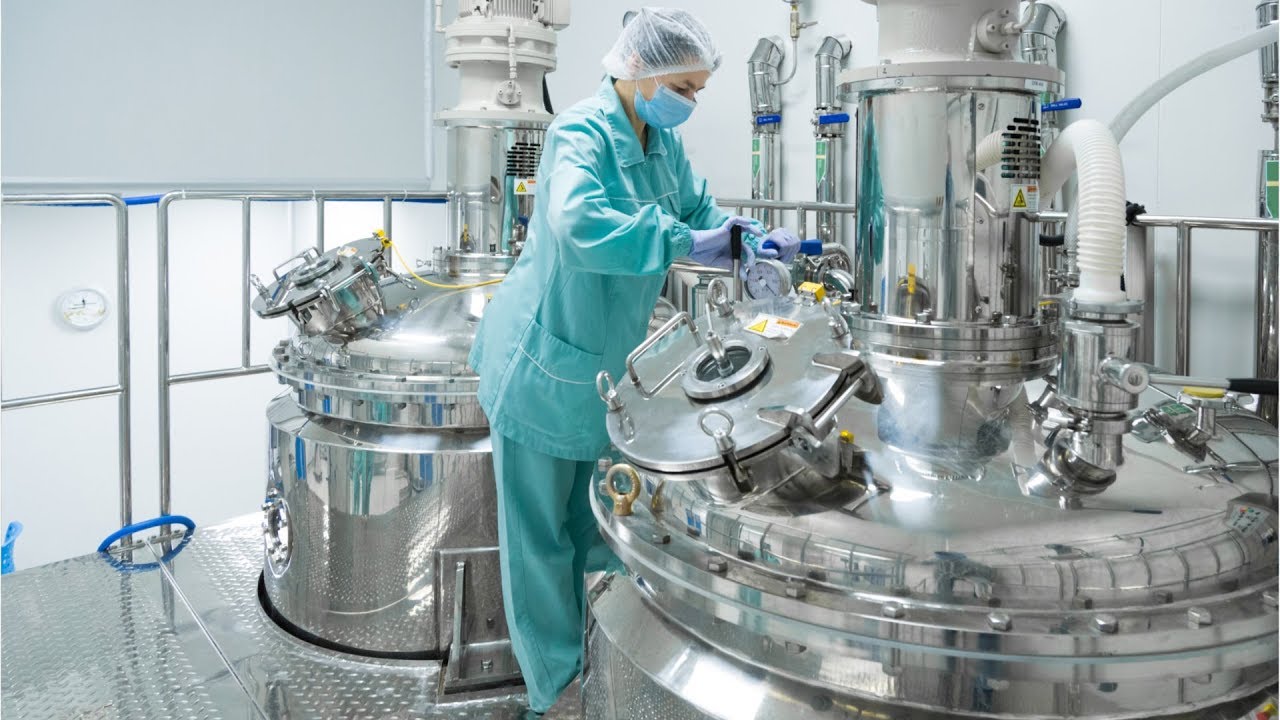
Also consider the career environment. Some chemical engineers spend much of their time in plants, where safety procedures, protective equipment, and rotating schedules may be part of the job. Others work in offices, laboratories, clean rooms, or research settings. Ask current students what graduates actually do, not just what the department brochure lists.
Finally, assess opportunity cost. Four years of tuition and living expenses is a major investment. Scholarships can materially change the calculation, so search early and compare awards, deadlines, eligibility rules, and renewal requirements. The strongest choice is not automatically the highest-ranked program: it's the program that gives you credible preparation at a manageable cost.
Coursework, Workload, And Academic Difficulty
Chemical engineering is widely considered one of the more demanding college majors because courses build on one another. If you struggle with calculus, for example, that difficulty can reappear in fluid mechanics, thermodynamics, and process control. You won't necessarily need to be a mathematical genius, but you will need consistent practice.
A typical week may include lectures, problem sets, laboratory preparation, lab reports, group meetings, and office hours. One assignment can take several hours when it requires modeling, assumptions, calculations, and a written explanation. Senior design adds another layer: you must coordinate with teammates while defending technical decisions.
The difficulty is manageable when you treat studying as a routine rather than an emergency response. Useful habits include:
- Review notes within 24 hours instead of waiting for an exam.
- Solve problems without immediately looking at worked examples.
- Keep a list of assumptions, units, and common mistakes.
- Form a small study group, but make sure you can solve problems independently.
- Use tutoring, office hours, and academic advising early.
The major also rewards precision. A unit error or unrealistic assumption can produce a polished but meaningless answer. That may feel frustrating at first, yet it mirrors professional engineering, where safety and reliability matter more than speed alone.
Expect difficult semesters. But difficulty should not be confused with impossibility. Students who plan their time, ask for help, and keep practicing generally have far better outcomes than students who rely on last-minute memorization.
Skills And Career Preparation
The chemical engineering major develops a mix of technical and professional skills that can transfer across industries. You'll learn to translate a real process into equations, test assumptions, interpret data, and recommend improvements.
Technical preparation often includes:
- Process simulation and modeling
- Data analysis and statistical reasoning
- Equipment and process design
- Laboratory measurement and documentation
- Safety and hazard analysis
- Energy efficiency and waste reduction
- Programming or computational problem-solving
Your communication skills matter just as much. Engineers write reports, explain risks to non-engineers, present design proposals, and collaborate with operators, scientists, managers, and regulators. A technically correct idea that nobody understands is unlikely to be adopted.
Internships and co-ops are especially valuable because they expose you to production schedules, quality systems, workplace safety, and commercial constraints. They can also help you discover what you don't want. Perhaps you enjoy modeling but dislike plant work, or prefer product development to routine process monitoring. Finding that out before graduation is useful.
Professional preparation may include student chapters of engineering organizations, design competitions, undergraduate research, and software training. Build a portfolio where possible: a process simulation, research poster, sustainability analysis, or capstone project gives you something concrete to discuss in interviews.
Programs also differ in emphasis. For example, some engineering colleges present engineering education around broad societal impact and multidisciplinary problem-solving, while others place more weight on industrial process design. Read curricula carefully rather than assuming every chemical engineering degree feels the same.
Job Opportunities For Chemical Engineering Majors
The job opportunities for chemical engineering majors extend well beyond traditional petroleum and chemical manufacturing. Your process knowledge can apply anywhere organizations need to make, scale, purify, transport, or control materials.
Common career directions include:
- Process engineer: Improves production equipment, throughput, reliability, and operating conditions.
- Production engineer: Helps a facility meet output, quality, cost, and safety targets.
- Research and development engineer: Develops products or processes and moves them from laboratory scale toward commercialization.
- Pharmaceutical or bioprocess engineer: Supports drug manufacturing, fermentation, purification, and validation.
- Environmental engineer: Works on emissions, wastewater, remediation, recycling, or sustainable production.
- Materials or battery engineer: Develops coatings, polymers, electrodes, and manufacturing processes.
- Quality or regulatory engineer: Ensures products and processes meet technical and legal standards.
- Technical sales or consulting professional: Applies engineering knowledge to customer problems, business decisions, or compliance.
Energy, specialty chemicals, food processing, semiconductor manufacturing, consumer products, and medical technology all hire people with relevant backgrounds. Some graduates also enter law, medicine, finance, business, or public policy after gaining technical experience.
The trade-off is that jobs may cluster near manufacturing regions, research hubs, or energy centers. Plant-based roles can involve travel, on-call responsibilities, or shift support. Office and laboratory roles may offer more predictable schedules but can be more competitive. Ask whether you prefer hands-on operations, experimentation, analysis, or client-facing work before choosing electives and internships.
Expected Starting Salary In The US For Chemical Engineering Majors
The expected starting salary in the US for chemical engineering majors is often attractive compared with many other bachelor's-level fields, but no single number applies to every graduate. Pay varies by location, industry, internship experience, company size, shift requirements, and whether you work in manufacturing, pharmaceuticals, energy, or another sector.
A practical way to interpret salary information is to separate starting compensation from long-term earning potential. An entry-level process engineer in a high-cost industrial region may receive a different offer from a graduate joining a small research company in a lower-cost area. Bonuses, relocation assistance, overtime, and benefits can also change the real value of an offer.
When reviewing salary data, ask:
- Is the figure for a bachelor's graduate or someone with a master's degree?
- Does it include bonuses and overtime?
- Is it based on national data or one metro area?
- How recent is the survey?
- What industries and job titles were included?
Your first offer shouldn't be judged in isolation. A lower initial salary may come with excellent training, tuition support, a strong mentor, or a clear promotion path. Conversely, a high-paying role may demand frequent travel, difficult shifts, or relocation.
Return on investment depends on your net cost of attendance and persistence through the program. Scholarships can reduce borrowing and make a strong engineering salary more meaningful. Research employers early, build internship experience, and compare total compensation rather than focusing only on the headline figure.
Why Major In Chemical Engineering: Benefits And Drawbacks
There are compelling reasons why major in chemical engineering. The degree offers broad technical preparation, access to industries considered essential to modern life, and the flexibility to move between products and sectors. You may contribute to cleaner manufacturing, better medicines, safer food production, renewable energy, or more efficient materials.
Major benefits
- Versatility: Process, product, environmental, quality, and technical business roles are all possible.
- Strong analytical foundation: You learn to approach unfamiliar problems systematically.
- Industry mobility: Skills can transfer between pharmaceuticals, energy, materials, food, and manufacturing.
- Graduate-school flexibility: The background can support advanced study in engineering, science, medicine, law, or business.
- Meaningful applications: Many roles connect directly to health, sustainability, infrastructure, or resource efficiency.
Important drawbacks
- Heavy workload: The math and science sequence can leave little room for casual studying.
- Early specialization pressure: Some career paths favor internships and relevant electives before graduation.
- Location constraints: Manufacturing and plant jobs aren't distributed evenly across the country.
- Workplace variation: Certain roles involve shift work, industrial hazards, or high operational pressure.
- Potential mismatch: If you mainly love laboratory chemistry and dislike mathematics, the major may disappoint.
The degree's value also depends on your expectations. Chemical engineering is not a guaranteed ticket to a glamorous research job. Many graduates begin by monitoring processes, analyzing data, writing documentation, or solving ordinary production problems. Those responsibilities can be a strong foundation, but you should understand them before enrolling.
Chemical Engineering Compared With Related College Majors
Comparing related majors can clarify whether chemical engineering fits your interests better than its alternatives.
| Major | Primary focus | You may prefer it if you enjoy… | Typical distinction |
|---|---|---|---|
| Chemical engineering | Processes, materials, energy, and scale-up | Applying chemistry and physics to systems | Strong emphasis on transport, thermodynamics, and process design |
| Chemistry | Molecules, reactions, and laboratory analysis | Investigating substances at the molecular level | Often more laboratory and theory focused: advanced research may require graduate study |
| Mechanical engineering | Machines, motion, mechanics, and thermal systems | Designing physical devices and equipment | Broader mechanical systems focus, with less chemistry |
| Materials science | Structure and performance of materials | Creating or characterizing metals, polymers, ceramics, or composites | Sits between engineering, physics, and chemistry |
| Environmental engineering | Pollution control, water, waste, and public health | Solving environmental and infrastructure problems | More directly centered on environmental systems and regulation |
| Biotechnology or bioengineering | Biological systems and medical applications | Cells, genetics, devices, or therapies | Often more biology intensive, depending on the program |
There is overlap. A chemical engineer may work in batteries or biotechnology, while a materials scientist may help design manufacturing processes. The course catalog reveals more than the major title: compare required classes, laboratories, electives, and senior projects.
You should also consider your preferred scale. Chemistry often asks what happens to molecules. Chemical engineering asks how to make that transformation happen reliably, safely, economically, and repeatedly in a real facility. If that bridge from science to production interests you, chemical engineering may be the better fit.
Programs with broad engineering cores can also make switching easier. Some colleges, including Purdue's engineering college, emphasize a wide engineering ecosystem that can support exploration before you commit to a specific direction.
Chemical Engineering College Major FAQs
What subjects are typically studied in a chemical engineering college major?
A chemical engineering major usually includes calculus, physics, chemistry, thermodynamics, fluid mechanics, heat and mass transfer, reaction engineering, and process control, along with laboratory work and electives in areas like biotechnology or environmental engineering.
How difficult is the coursework in a chemical engineering major?
Chemical engineering is considered demanding due to its heavy math and science requirements that build on each other. Success requires consistent study habits, problem-solving skills, and precision, especially in calculations and assumptions.
What career opportunities are available for chemical engineering graduates?
Graduates can work as process, production, or research engineers, pharmaceutical or environmental engineers, materials or battery engineers, quality control specialists, or technical consultants across industries like energy, pharmaceuticals, food processing, and manufacturing.
How does chemical engineering compare with related majors like chemistry or mechanical engineering?
Chemical engineering focuses on applying chemistry and physics to process design and scale-up, while chemistry emphasizes molecular-level analysis and mechanical engineering centers on machines and thermal systems. It bridges science and industrial production.
What skills do chemical engineering students develop that employers seek?
Students gain technical skills like process simulation, equipment design, safety analysis, and programming, alongside communication and teamwork abilities crucial for explaining complex ideas and collaborating with diverse professionals.
Is a chemical engineering degree worth the investment based on starting salary?
While starting salaries for chemical engineers in the US are often competitive, actual compensation varies by location, industry, and experience. Scholarships and internships enhance return on investment by reducing costs and improving job prospects.