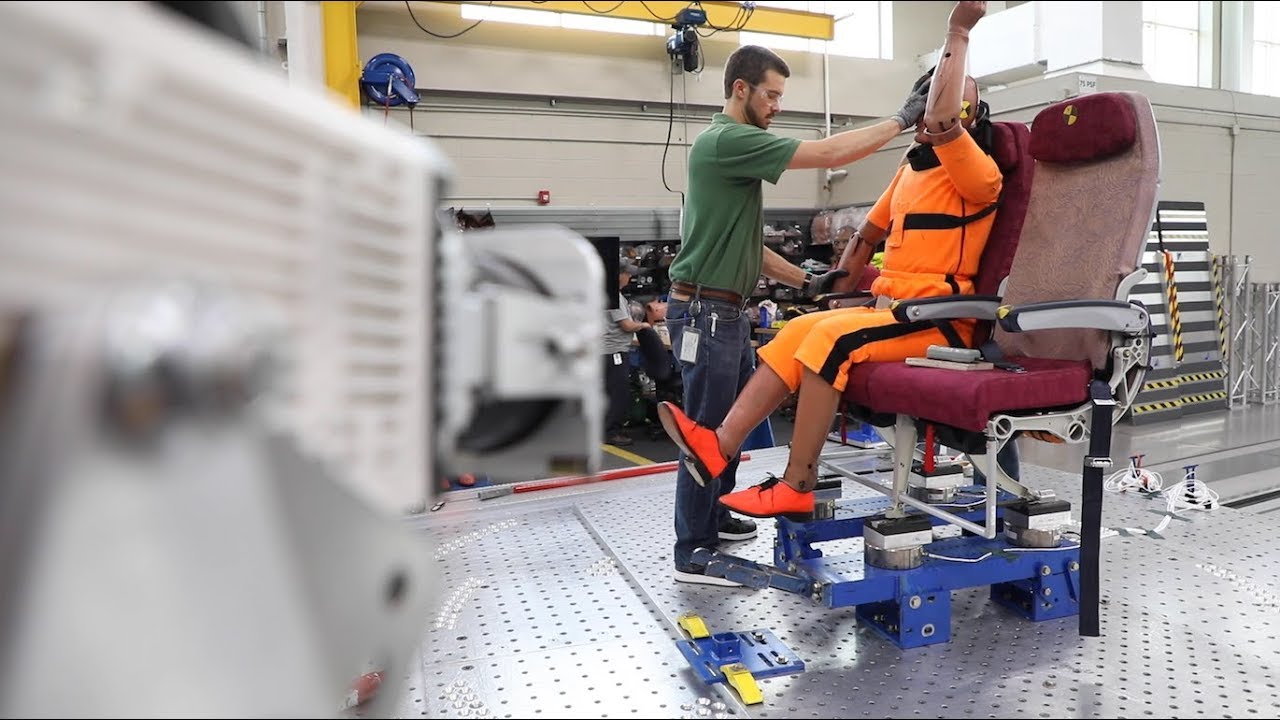
Choosing a college major is easier when you understand both the subject and the trade-offs behind it. Biomedical engineering sits at the intersection of biology, medicine, mathematics, and engineering, making it appealing if you want to help create medical devices, diagnostic tools, prosthetics, or health technologies. It can also be one of the more demanding undergraduate paths, with a workload that combines laboratory science, calculus, programming, and design.
This biomedical engineering college major review explains what you'll study, how difficult the degree can be, which careers it supports, and how it compares with related majors. It is written for prospective US college students, not as a promise of a particular salary or job, but as a framework for deciding whether the field matches your interests, strengths, and financial goals. By the end, you should have a clearer answer to the practical question: is biomedical engineering worth pursuing for you?
Biomedical Engineering Major At A Glance
Biomedical engineering, often abbreviated BME, applies engineering principles to healthcare and biological systems. As a BME major, you may design an artificial joint, model blood flow, develop a wearable sensor, improve medical imaging, or study how cells interact with materials.
The degree is usually a Bachelor of Science and commonly takes four years. Programs differ substantially: one university may emphasize biomechanics and rehabilitation, while another focuses on biomaterials, electrical systems, computational biology, or tissue engineering. Reviewing the course plan matters more than relying on the major's name alone.
| Category | What you can generally expect |
|---|---|
| Core subjects | Biology, chemistry, physics, calculus, statistics, and engineering |
| Technical skills | Programming, data analysis, CAD, modeling, laboratory methods, and design |
| Common settings | Hospitals, medical-device companies, biotechnology firms, laboratories, and universities |
| Typical next steps | Industry employment, graduate school, medical school, or professional programs |
| Best fit | Students who enjoy science, quantitative problem-solving, and healthcare applications |
BME is not simply "pre-med with engineering." You can use it as preparation for medicine, but the curriculum is designed to make you an engineer first. That distinction affects your courses, internships, career options, and the type of work you may do after graduation.
What Students Study In A Biomedical Engineering Program
Your first year or two will usually establish a broad scientific and mathematical foundation. Expect courses such as general chemistry, biology, physics, calculus, differential equations, and introductory engineering. These classes may feel disconnected at first, but they become the tools you use to analyze biological systems and build working solutions.
Upper-level coursework typically includes several of the following:
- Biomaterials: How metals, polymers, ceramics, and other materials interact with the human body.
- Biomechanics: How forces affect bones, muscles, joints, tissues, and medical devices.
- Bioinstrumentation: How electronic systems measure physiological signals such as heart rate or brain activity.
- Medical imaging: The physics and computation behind technologies such as MRI, ultrasound, and X-ray systems.
- Tissue engineering: How cells, scaffolds, and biological signals may be combined to repair or replace tissue.
- Systems and computational biology: How mathematical models and software can explain complex biological processes.
- Design and regulation: How to identify a clinical need, develop a prototype, test it, and consider safety and regulatory requirements.
You'll likely encounter lab reports, team projects, programming assignments, and a senior design project. A strong program connects classroom theory with real medical problems rather than treating engineering and biology as separate silos.
Because BME is interdisciplinary, you may have more flexibility than students realize. Electives can help you build a niche in robotics, rehabilitation, pharmaceuticals, public health, artificial intelligence, or medical entrepreneurship.
How To Evaluate A Biomedical Engineering Major
The right program is not necessarily the most famous one. You should evaluate whether its curriculum, facilities, student support, and career outcomes fit your goals.
Start by comparing required courses and technical concentrations. If you already know you're interested in prosthetics, a program with biomechanics laboratories and rehabilitation partnerships may be more useful than one centered on molecular engineering. If you enjoy coding, look for substantial coursework in computation, programming, and data science, not just a single introductory class.
Then investigate the learning environment:
- Accreditation: Check whether the engineering program is accredited by ABET or is pursuing appropriate accreditation. Accreditation does not guarantee a job, but it signals that the program meets established educational standards.
- Faculty research: Read faculty profiles and identify whether professors work in areas you genuinely care about.
- Facilities: Look for tissue culture spaces, imaging equipment, biomechanics labs, fabrication tools, and computing resources.
- Industry and clinical partnerships: Hospitals, medical-device companies, and research institutes can create better opportunities for projects and internships.
- Completion and career data: Ask how many students graduate on time, what graduates do six months or a year later, and how results are measured.
- Total cost: Compare tuition, housing, fees, equipment, and the likely borrowing required, not just the advertised tuition rate.
You should also speak with current students. Ask what happens when a student struggles in calculus or chemistry, how accessible professors are, and whether undergraduates can join research labs. Those answers often reveal more than a polished admissions webpage.
Curriculum, Workload, And Academic Difficulty
Biomedical engineering is usually a challenging major because it combines several demanding disciplines rather than allowing you to specialize immediately. You may spend one week balancing chemical equations, the next writing code, and the next analyzing stress on a bone implant. The variety is intellectually rewarding, but it leaves little room for avoiding subjects you dislike.
The most common pressure points are calculus, physics, chemistry, statistics, and programming. A student who excels in biology but dislikes quantitative work may find the degree unexpectedly difficult. Conversely, you don't need to be a mathematical prodigy. Consistent practice, office-hour visits, tutoring, and early help matter more than trying to rescue a course two days before the final exam.
Expect group work as well. Engineering design rarely happens alone, so you'll need to document decisions, divide tasks, give constructive feedback, and manage teammates who have different schedules. Lab reports can be time-consuming because they require both technical accuracy and clear writing.
Before enrolling, review sample four-year plans and estimate weekly commitments. Ask whether difficult prerequisite courses are offered every semester or only once a year. A failed prerequisite can delay graduation if the course is part of a strict sequence.
The major is difficult, but difficulty alone shouldn't determine your choice. The better question is whether the work feels meaningful enough for you to sustain disciplined effort when the material becomes abstract or frustrating.
Hands-On Learning, Research, And Career Preparation
The strongest biomedical engineering programs give you ways to apply theory before graduation. A first-year design activity might involve a simple assistive device, while an advanced project could require you to prototype a monitoring system, test a biomaterial, or analyze patient data.
Look for several forms of practical experience:
- Undergraduate research: You may assist with experiments, data collection, image analysis, or literature reviews in a faculty laboratory.
- Capstone design: Teams identify a problem, develop requirements, build prototypes, test performance, and present their results.
- Internships and co-ops: These provide exposure to manufacturing, quality systems, research and development, clinical engineering, or regulatory affairs.
- Clinical experiences: Hospital-based projects can teach you how clinicians actually use equipment and where proposed solutions fail in practice.
- Professional organizations: Student engineering groups can provide design competitions, mentors, and networking.
Career preparation should include more than a résumé workshop. You want instruction in technical communication, intellectual property, human-centered design, quality control, and the regulatory environment for medical products. A device that works in a lab may still be unusable, unaffordable, difficult to manufacture, or impossible to approve.
You can strengthen your profile by maintaining a project portfolio. Include design sketches, code, test results, posters, and a short explanation of the clinical problem. Employers often respond better to evidence of how you think than to a list of course titles.
Why Major In Biomedical Engineering?
Why Major in Biomedical Engineering? The strongest reason is that you want to use engineering tools to solve human health problems. The field can give you a meaningful application for technical work without limiting you to one career immediately after college.
You may enjoy BME if you:
- Like understanding how the body works but also want to build, calculate, or program.
- Want a career connected to healthcare without necessarily becoming a physician or nurse.
- Prefer applied projects over purely theoretical study.
- Enjoy collaborating with scientists, clinicians, engineers, and business professionals.
- Can tolerate uncertainty, experimentation, and repeated design failures.
The major can also create a flexible platform. Graduates move into medical devices, biotechnology, diagnostics, software, manufacturing, consulting, research, and healthcare operations. Others continue into medicine, dentistry, physical therapy, law, public health, or graduate engineering programs.
But, don't choose BME solely because it sounds prestigious or because you assume it automatically leads to medical school. Medical schools generally care about prerequisite completion, academic performance, admissions tests where applicable, clinical experience, and a coherent personal story. BME may help you understand medical technology, but it can also make it harder to protect your GPA if you underestimate the workload.
Your motivation should survive ordinary tasks: debugging code, repeating an experiment, writing a detailed report, or studying a difficult equation. If the healthcare connection is the only part that excites you, another major paired with health-related experiences may be a better fit.
Job Opportunities For Biomedical Engineering Majors
Job Opportunities for Biomedical Engineering Majors exist across product development, research, manufacturing, healthcare, and technical business functions. Common entry-level titles include biomedical engineer, design engineer, quality engineer, clinical engineer, manufacturing engineer, validation engineer, and research assistant.
Your work could involve designing surgical tools, testing implants, validating a manufacturing process, maintaining hospital equipment, analyzing physiological data, or supporting regulatory submissions. Some employers hire BME graduates for broader engineering roles, especially when candidates can demonstrate programming, electronics, mechanical design, or materials expertise.
| Career direction | Typical early responsibilities | Helpful preparation |
|---|---|---|
| Medical devices | Design, prototype, test, and document products | CAD, biomechanics, materials, quality systems |
| Biotechnology | Analyze biological processes or develop laboratory tools | Molecular biology, data analysis, laboratory research |
| Clinical engineering | Evaluate and manage medical technology in healthcare settings | Systems thinking, safety, communication |
| Regulatory and quality | Prepare documentation and verify compliance | Attention to detail, statistics, standards |
| Software and data | Build analytical tools or process health data | Programming, algorithms, databases |
| Research | Conduct experiments and interpret results | Graduate study, laboratory experience, scientific writing |
The degree title alone won't guarantee employment. Employers often want evidence that you can use a specific tool or solve a specific problem. Internships, co-ops, research, coding ability, and a clear technical portfolio can make you more competitive.
Geography also matters. Regions with medical-device, pharmaceutical, biotechnology, and hospital research activity may offer more openings, although remote work is less common for laboratory and manufacturing roles. Keep your search broad during college and use career services early, not only during your final semester.
Expected Starting Salary In The US For Biomedical Engineering Majors
Expected starting Salary in the US for Biomedical Engineering Majors varies by location, employer, job title, industry, experience, and degree level. Salary websites often combine different engineering occupations or report national averages, so treat any single figure as an estimate rather than a guarantee.
A new graduate working in medical-device design, quality, manufacturing, or clinical engineering may earn a competitive entry-level engineering salary. But, a research assistant at a university, a small startup employee, or a graduate student may earn less. A candidate with a co-op, strong programming skills, or experience with regulated product development may have more negotiating leverage than a candidate with coursework alone.
When comparing offers, look beyond base pay. Consider:
- Health insurance premiums and deductibles
- Retirement contributions and vesting schedules
- Bonuses, overtime, relocation assistance, or tuition benefits
- Commute and housing costs
- Training, mentorship, and promotion potential
- Whether the role gives you technical ownership or repetitive support work
A higher first-year salary isn't always the better launch. For example, a slightly lower-paying role that lets you work directly on verification testing, design controls, or clinical data may open stronger opportunities later than a better-paid position with little technical growth.
Research compensation by exact job title and region using current government labor data, professional associations, and several reputable salary sources. Also calculate your expected student-loan payment. A major can be financially worthwhile when your debt remains manageable and your skills transfer to multiple industries: it becomes riskier when you borrow heavily for a narrow outcome.
Pros And Cons Of Choosing Biomedical Engineering
Biomedical engineering offers a compelling combination of purpose and technical variety, but it has real limitations.
Pros
- Meaningful applications: Your work may improve diagnosis, mobility, treatment, or patient safety.
- Interdisciplinary training: You learn to communicate across engineering, biology, medicine, and business.
- Multiple career routes: You can pursue industry, research, healthcare, medicine, or graduate education.
- Practical project experience: Labs and design courses can produce useful portfolio material.
- Growing technology needs: Aging populations, chronic disease, diagnostics, and digital health continue to create problems that require technical solutions.
Cons
- Heavy course load: You must manage advanced math and engineering alongside life sciences.
- Broad rather than deep preparation: Some employers may prefer a mechanical, electrical, chemical, or computer engineer for specialized roles.
- Graduate school may help: Research-intensive positions often require a master's or doctorate.
- Regulated industry pace: Medical products can take years to validate and bring to market.
- Salary expectations can be unrealistic: The healthcare label doesn't automatically produce higher pay than other engineering fields.
- Team and documentation demands: A great idea still requires testing, reports, revisions, and compliance evidence.
The major is strongest when you deliberately add depth. Pair BME with a concentration, programming competency, manufacturing experience, or clinical exposure. If you graduate with a broad transcript but no demonstrable technical strength, the interdisciplinary advantage may become a disadvantage.
Biomedical Engineering Compared With Related Majors
Comparing BME with neighboring majors can clarify whether it is the best route to your goal. The "best" major depends on the work you want to perform, not simply the industry you want to enter.
| Major | Strong choice if you want to… | Potential advantage over BME |
|---|---|---|
| Mechanical engineering | Design machines, mechanisms, implants, or manufacturing systems | Deeper mechanical design and mechanics foundation |
| Electrical engineering | Build sensors, circuits, imaging systems, or embedded devices | More advanced electronics and signal-processing depth |
| Computer science | Develop software, algorithms, artificial intelligence, or health-data tools | Stronger programming and computational preparation |
| Chemical engineering | Work with pharmaceutical processes, materials, or bioprocessing | Greater depth in chemistry, transport, and scale-up |
| Biology | Study organisms, cells, genetics, or laboratory science | More biological depth, usually less engineering design |
| Materials science | Develop and characterize materials for implants or devices | Deeper materials structure and processing knowledge |
BME makes sense when you want the intersection. It may be less ideal if you already know you want to spend nearly all your time coding, designing mechanical systems, or conducting molecular biology experiments. In those cases, a traditional engineering or science major, with biomedical electives, research, or a minor, could provide stronger preparation.
Bottom line
A biomedical engineering college major is worth pursuing when you genuinely enjoy quantitative problem-solving and want to apply it to health-related challenges. Before committing, compare program costs, course plans, internship access, graduate-school expectations, and realistic job outcomes. Seek scholarships and campus funding early so financial pressure doesn't force you into an unsuitable career decision. If your interests fit and you build a clear technical specialty, BME can be a versatile and rewarding US college major: if not, choosing a related discipline may give you a deeper and more marketable foundation.
Frequently Asked Questions About Biomedical Engineering College Major
What subjects are typically studied in a biomedical engineering college major?
A biomedical engineering major usually covers biology, chemistry, physics, calculus, statistics, and engineering, with advanced courses in biomaterials, biomechanics, medical imaging, tissue engineering, and computational biology.
How difficult is a biomedical engineering degree compared to other majors?
Biomedical engineering is challenging due to its interdisciplinary nature, requiring strong skills in math, science, programming, and design. Success depends on consistent study and interest in quantitative problem-solving combined with biology.
What career opportunities are available for biomedical engineering graduates?
Graduates can work in medical device design, biotechnology, clinical engineering, regulatory affairs, software development, or research, with roles like biomedical engineer, quality engineer, research assistant, or clinical engineer.
How can I choose the right biomedical engineering program for me?
Evaluate programs by curriculum focus, accreditation status, faculty research interests, facilities, industry partnerships, and career outcomes to ensure they match your interests and career goals.
What are the benefits of pursuing a biomedical engineering major?
Biomedical engineering offers meaningful work improving healthcare technology, interdisciplinary training, multiple career paths, hands-on project experience, and growing industry demand related to aging populations and chronic diseases.
How does biomedical engineering compare to related majors like mechanical or electrical engineering?
Biomedical engineering integrates engineering with biology and medicine, while mechanical or electrical engineering offer deeper specialization in their fields. Choose based on whether you want a bio-health focus or a traditional engineering specialty.