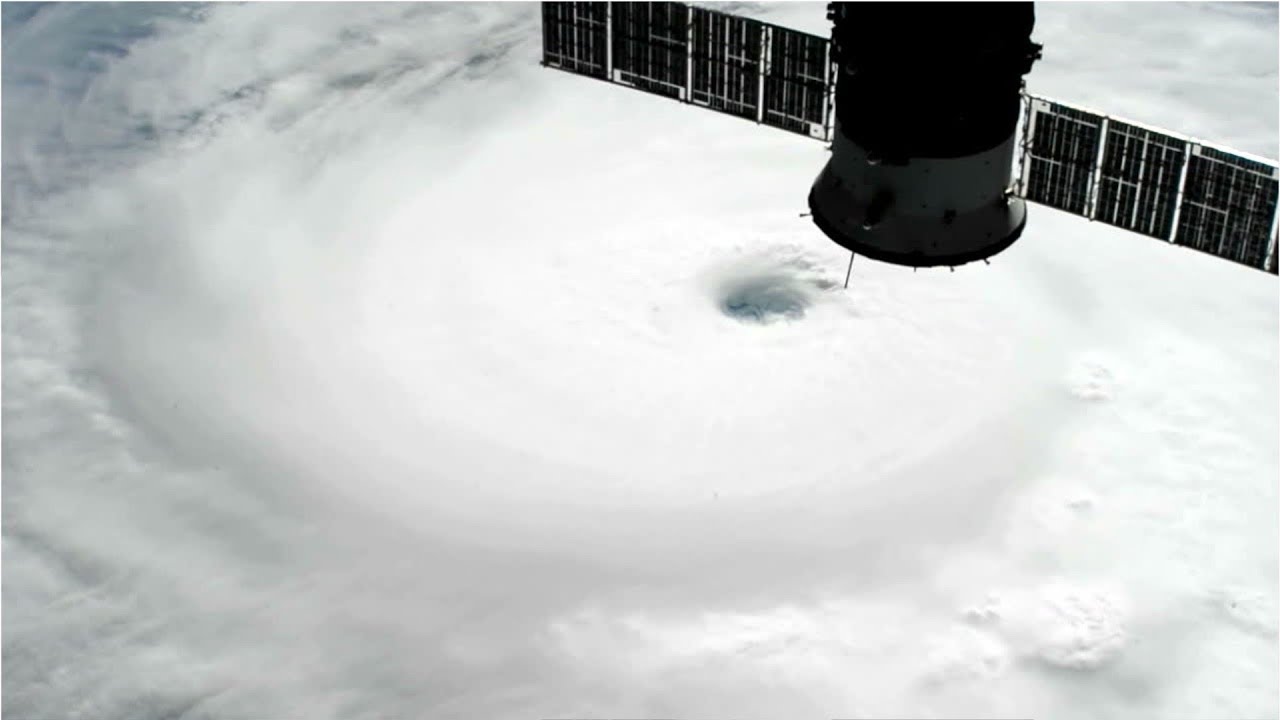
An atmospheric science college major turns your interest in weather, climate, and the forces shaping Earth's atmosphere into a practical scientific education. You'll study everything from thunderstorms and hurricanes to air pollution, climate systems, satellite observations, and computer modeling. It's a fascinating path, but it isn't simply "learning to forecast tomorrow's weather."
As an atmospheric science student, you'll combine physics, chemistry, mathematics, programming, and Earth science. That mix can lead to careers in forecasting, environmental consulting, climate analysis, emergency management, aviation, research, and government. At the same time, the major can be mathematically demanding, and some specialized positions require graduate school.
This review explains what you'll study, how difficult the degree may be, what jobs are available, what you might earn, and how atmospheric science compares with related majors. Use it to decide whether the field fits your strengths, interests, financial goals, and preferred work environment.
Atmospheric Science Major At A Glance
Atmospheric science is the study of Earth's atmosphere and the processes that influence weather, climate, air quality, and atmospheric circulation. Depending on the college, the major may be called atmospheric science, meteorology, atmospheric and oceanic science, or meteorology and climatology.
Most programs are bachelor's degrees requiring about 120 credits. You'll typically complete general education courses, a substantial mathematics and science foundation, core atmospheric science classes, laboratory work, and electives. Some programs emphasize operational weather forecasting, while others focus more heavily on climate, environmental science, remote sensing, or research.
| Category | What you can generally expect |
|---|---|
| Degree type | Usually a Bachelor of Science |
| Typical length | Four years full time |
| Core subjects | Calculus, physics, chemistry, weather, climate, programming |
| Best-fit interests | Weather, Earth systems, data, science, public safety |
| Common employers | Government agencies, media, consulting firms, universities, utilities |
| Graduate school | Helpful or required for many research and advanced technical roles |
You should compare program requirements carefully rather than relying only on the major's title. Two atmospheric science degrees may prepare you for very different careers. A forecasting-focused curriculum could include synoptic meteorology and radar interpretation, while a climate-focused program might prioritize statistics, geospatial analysis, and climate modeling.
What Do Atmospheric Science Students Study?
Your first year or two will usually resemble the early curriculum of other physical science majors. You may take college algebra or calculus, general chemistry, calculus-based physics, introductory programming, and an Earth science course. These classes establish the tools you'll use to understand atmospheric processes quantitatively.
Later coursework becomes more specialized. Common subjects include:
- Weather analysis and forecasting: You learn how pressure systems, fronts, moisture, instability, and wind patterns produce weather.
- Thermodynamics: This explains energy transfer, atmospheric stability, clouds, and precipitation.
- Dynamic meteorology: You examine atmospheric motion using physics and mathematical equations.
- Climatology: You study long-term weather patterns, climate variability, and human-caused climate change.
- Remote sensing: You interpret observations from satellites, radar, weather stations, aircraft, and other instruments.
- Air pollution and atmospheric chemistry: You investigate pollutants, chemical reactions, dispersion, and public health impacts.
- Numerical weather prediction: You explore how computers simulate atmospheric behavior and why forecasts contain uncertainty.
- Statistics and data science: You learn to evaluate observations, forecast accuracy, trends, and model output.
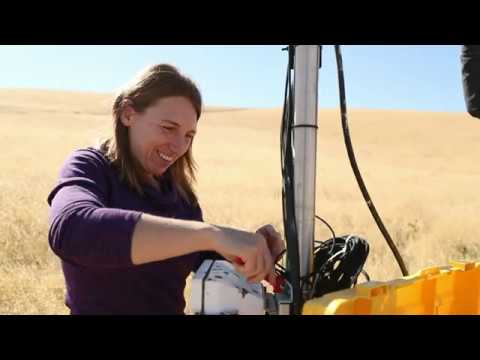
Many departments include a laboratory, fieldwork, internship, capstone, or forecasting practicum. You may analyze real weather maps, write forecast discussions, build visualizations in Python, or study data from a severe-weather event.
The major is increasingly computational. Even if you eventually work as a forecaster or communicator, coding and data literacy can make you more employable. Programming won't replace your understanding of weather: it will help you handle the enormous datasets modern atmospheric work depends on.
How To Evaluate An Atmospheric Science Degree
The best atmospheric science degree for you depends on your intended career, not simply on a school's name or ranking. Start by identifying whether you're interested in operational forecasting, climate research, environmental work, public policy, broadcasting, or technical analysis.
Then examine the curriculum. Look for several years of calculus and physics if you want a rigorous meteorology foundation. Check whether the program offers programming, statistics, GIS, remote sensing, machine learning, and communication courses. A program that combines atmospheric science with data analysis may give you more flexibility after graduation.
Also evaluate the practical experience available. Strong programs may provide:
- Student forecasting teams or weather labs.
- Internships with government agencies, private weather firms, utilities, or media organizations.
- Undergraduate research with faculty.
- Access to radar, satellite, weather-station, or high-performance computing data.
- A capstone project that produces work you can show employers.
If you want to work for the federal government as a meteorologist, review the relevant coursework expectations before enrolling. Some positions have specific requirements in meteorology and supporting physics or mathematics, so a general environmental science degree may not provide enough technical preparation.
Finally, compare total cost, financial aid, location, class sizes, graduation rates, and career outcomes. A lower-cost in-state program with excellent forecasting facilities can be a better investment than a more expensive school with limited hands-on work. Search for scholarships early, and include departmental awards, STEM scholarships, and paid research opportunities in your financial plan.
Coursework, Skills, And Academic Difficulty
Atmospheric science is usually more challenging than its popular image suggests. Weather maps may look intuitive, but understanding why a storm develops requires calculus, physics, thermodynamics, fluid dynamics, and computer modeling. You don't need to be a mathematical prodigy, but you do need persistence and a willingness to practice.
The most important academic skills include:
- Translating physical processes into equations.
- Reading charts, maps, and scientific visualizations.
- Working with uncertainty instead of expecting one perfectly correct answer.
- Writing clear technical explanations.
- Coding, cleaning, and interpreting data.
- Collaborating during fast-moving forecast or research projects.
Calculus-based physics is often a turning point. Students who succeed usually attend office hours, form study groups, solve practice problems consistently, and seek help before falling behind. Memorizing cloud types or weather terminology won't compensate for weak quantitative fundamentals.
Your workload can also vary by semester. A schedule containing calculus, physics, chemistry, and an atmospheric dynamics course may be substantially heavier than one built around introductory electives. Plan your courses carefully and avoid assuming that every requirement can be postponed.
Communication matters, too. Atmospheric professionals must explain uncertainty to people who need to make decisions, whether that's an emergency manager responding to a tornado threat, an airline planning routes, or a city preparing for extreme heat. The strongest graduates can move comfortably between equations, datasets, and plain-English recommendations.
Why Major In Atmospheric Science?
Why major in atmospheric science? The clearest answer is that the field connects rigorous science with problems that affect daily life. Weather influences agriculture, transportation, energy demand, construction, public safety, and health. Climate change is also increasing demand for people who can interpret environmental risks rather than simply repeat headlines.
You may enjoy the major if you like asking questions such as: Why did this storm intensify? How will drought affect a region? Can a wind farm predict tomorrow's output? Which neighborhoods face the greatest heat risk? Atmospheric science gives you tools to investigate those questions.
The field also offers variety. You could spend part of your career analyzing satellite data and later move into environmental policy, risk communication, or renewable energy forecasting. Skills in statistics, GIS, coding, and scientific writing transfer well to other technical occupations.
Another advantage is purpose. Forecasting and hazard communication can protect lives. Air-quality analysis can inform public-health decisions. Climate research can support infrastructure planning. If you want your work to have a visible connection to communities and the environment, atmospheric science can be rewarding.
Still, don't choose it only because you like watching weather videos. The degree is science-heavy, and professional work can involve routine data processing, overnight shifts, deadlines, and forecasts that never feel completely certain. Your interest should extend beyond dramatic storms to the less glamorous mechanics of measurement, modeling, and verification.
Job Opportunities For Atmospheric Science Majors
Job opportunities for atmospheric science majors exist across government, private industry, research, media, and environmental services. Your first job will depend heavily on your technical electives, internships, location, and willingness to earn a graduate degree.
| Career area | Typical work | Graduate degree commonly needed? |
|---|---|---|
| Operational meteorology | Forecast weather for agencies, utilities, aviation, or private clients | Not always |
| Broadcast meteorology | Explain forecasts and hazards to the public | Usually not, though communication experience matters |
| Climate analysis | Study trends, scenarios, and climate impacts | Often preferred |
| Environmental consulting | Assess air quality, emissions, and regulatory risks | Sometimes |
| Energy forecasting | Predict wind, solar output, demand, and severe-weather effects | Not always |
| Emergency management | Plan for hazards and coordinate public response | No, but related training helps |
| Research and academia | Develop models, analyze data, publish findings, teach | Usually yes |
| Data and geospatial analysis | Build models, maps, dashboards, and decision tools | Not necessarily |
Government employers may include national weather services, environmental agencies, defense organizations, and local offices. Private employers hire atmospheric scientists for weather intelligence, insurance risk, agriculture, logistics, construction, and energy.
Internships can make a major difference because employers want evidence that you can work with real data and communicate under practical constraints. Build a portfolio containing forecast write-ups, Python notebooks, maps, dashboards, or a capstone project. Keep the work understandable: a polished explanation of one project is more useful than a folder of unexplained code.
Some roles are competitive, especially high-profile broadcasting and research positions. Geographic flexibility helps. So does developing a specialty such as severe weather, air quality, climate risk, numerical modeling, or renewable-energy forecasting.
Expected Starting Salary In The US For Atmospheric Science Majors
The expected starting salary in the US for atmospheric science majors varies widely, so you should treat any single figure as a rough estimate rather than a promise. Location, employer type, internship experience, technical skills, clearance requirements, and degree level can all change your first offer.
A new graduate in an entry-level forecasting, environmental, data, or government position may commonly see an annual salary in roughly the $45,000–$70,000 range. Some private-sector positions in energy, specialized weather services, or technical analytics may start higher, while small-market media and nonprofit roles may start lower. A master's degree can improve access to specialized positions, but it also adds tuition and opportunity costs.
| Career path | Plausible early-career range | What can raise earnings |
|---|---|---|
| Government or public forecasting | $45,000–$70,000 | Location, grade level, experience |
| Environmental consulting | $50,000–$75,000 | Air-quality tools, regulation knowledge |
| Private weather services | $50,000–$80,000 | Client communication, coding, niche expertise |
| Energy or climate analytics | $55,000–$85,000 | Python, statistics, GIS, modeling |
| Broadcast meteorology | Highly variable | Market size, on-camera experience |
These ranges are planning estimates, not official salary guarantees. Compare them with local housing costs and benefits, including health insurance, retirement contributions, overtime, relocation assistance, and paid professional development. A $65,000 offer in a high-cost city may provide less purchasing power than a $52,000 position near family.
To improve your earning potential, pair atmospheric knowledge with a scarce skill. Python, SQL, GIS, statistical modeling, cloud computing, and strong technical communication can distinguish you from applicants whose experience is limited to classroom forecasting. Track outcomes through internship conversations and current job postings rather than choosing a career based on a salary headline alone.
Advantages And Drawbacks Of The Major
Atmospheric science offers a distinctive combination of science, technology, and public relevance. But the same specialization that makes it interesting can create limitations if your goals change.
Advantages
- Meaningful work: Your analysis may support public safety, environmental protection, or climate adaptation.
- Interdisciplinary preparation: Physics, coding, statistics, and Earth science can open doors beyond traditional meteorology.
- Varied work settings: You might work in an office, forecast center, laboratory, field station, newsroom, or hybrid environment.
- Growing data needs: Organizations increasingly need professionals who can interpret environmental and weather-related data.
- Accessible undergraduate pathways: Many technical roles are available with a bachelor's degree, even though advanced research generally requires more education.
Drawbacks
- Demanding prerequisites: Calculus, physics, and programming can make the degree difficult.
- Specialized job market: There are fewer atmospheric science openings than broad business or general communications roles.
- Irregular schedules: Forecasting, emergency response, and broadcast jobs may include nights, weekends, or holidays.
- Graduate-school pressure: Research, university, and some climate-modeling careers often favor master's or doctoral graduates.
- Geographic constraints: The best opportunities may be concentrated near government centers, universities, weather companies, energy markets, or major media markets.
The major is a stronger choice if you already enjoy quantitative science and are comfortable developing transferable skills. It's riskier if you want a very broad degree with minimal required math or if your main interest is only television weather presentation.
Atmospheric Science Compared With Related Majors
Atmospheric science overlaps with several majors, but the differences matter when you choose courses and career targets.
| Major | Main emphasis | Best fit if you want to… | Main trade-off |
|---|---|---|---|
| Atmospheric science | Weather, climate, air, and atmospheric physics | Forecast, model, or analyze atmospheric systems | More specialized and math-heavy |
| Environmental science | Human-environment relationships and applied environmental problems | Work across conservation, policy, or compliance | May offer less advanced physics and forecasting |
| Earth science/geology | Rocks, landforms, Earth history, and geologic processes | Study the solid Earth, resources, or hazards | Less focus on weather and climate dynamics |
| Oceanography | Oceans, marine systems, and air-sea interactions | Research coastal and ocean processes | Often tied to coastal institutions and fieldwork |
| Physics | Fundamental laws of matter, energy, and motion | Pursue broad quantitative or research-based options | Less direct professional weather preparation |
| Data science | Statistics, computation, and predictive modeling | Build models across many industries | Requires you to add environmental specialization |
Atmospheric science may be the most direct route to professional meteorology. Environmental science may be better if you want policy, conservation, or environmental education. Data science can offer broader job mobility, particularly if you're willing to learn atmospheric applications independently.
You can also combine fields through a minor or double major. For example, atmospheric science plus computer science can support weather-modeling careers, while atmospheric science plus communication can strengthen science-media work. Before adding a second major, calculate whether the extra semesters delay graduation or increase debt. Strategic electives may produce nearly the same career benefit at a lower cost.
Verdict: Is Atmospheric Science A Good College Major?
Atmospheric science is a good college major if you're genuinely interested in weather and climate, prepared for calculus-based science, and willing to build practical technical skills. It can lead to meaningful work in forecasting, climate analysis, environmental consulting, energy, government, emergency management, and data analytics.
It isn't the best choice if you want a low-math degree, a guaranteed high salary, or a career limited to dramatic storm coverage. Your results will depend on the program you choose and what you do beyond required classes. Internships, coding, research, communication practice, and a useful portfolio can matter as much as the diploma itself.
Before enrolling, compare course plans, internship pipelines, graduate-school expectations, total cost, and local career outcomes. If the subject excites you and the numbers make sense financially, atmospheric science can give you a focused education with surprisingly broad applications. Start researching scholarships early so you can invest in the degree without taking on more debt than your likely first salary can comfortably support.
Atmospheric Science College Major FAQs
What core subjects are studied in an atmospheric science college major?
Atmospheric science majors study subjects like calculus, physics, chemistry, weather, climate, and programming to understand atmospheric processes scientifically and quantitatively.
How difficult is an atmospheric science degree?
The degree is mathematically demanding, involving calculus-based physics, thermodynamics, and computer modeling. Success requires persistence, strong quantitative skills, and willingness to handle complex scientific concepts.
What career options are available for graduates with an atmospheric science degree?
Graduates can pursue forecasting, climate analysis, environmental consulting, emergency management, broadcast meteorology, energy forecasting, research, and government roles, depending on their specialization and experience.
Do atmospheric science jobs require graduate school?
While some research and advanced technical positions often require graduate degrees, many operational roles in forecasting, emergency management, or media do not strictly require graduate school.
How does programming relate to atmospheric science majors?
Programming skills help atmospheric scientists manage and analyze large datasets, build models, create visualizations, and improve forecasting accuracy, enhancing employability in the data-driven field.
What is the typical starting salary range for atmospheric science graduates in the US?
Starting salaries commonly range between $45,000 and $70,000 annually, varying by location, employer, experience, and skills such as coding and data analysis.