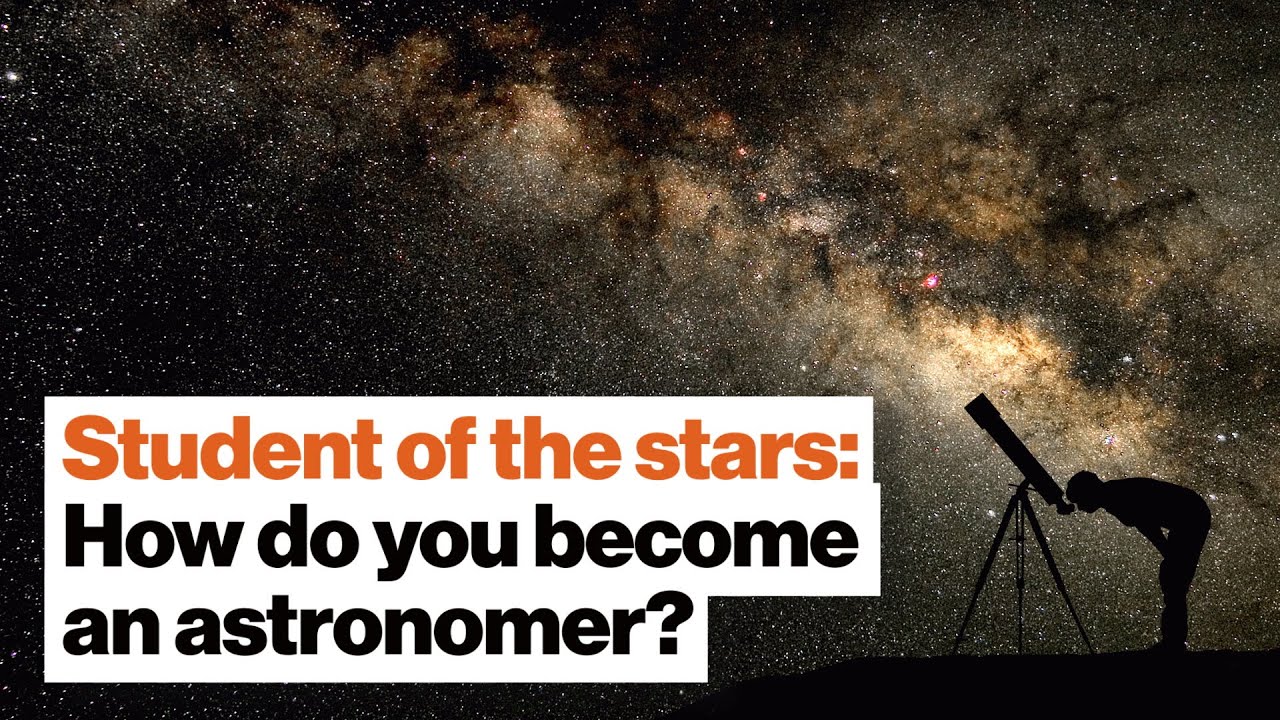
Choosing an astrophysics college major means choosing a demanding path into questions that are both enormous and precise: How do stars form? What is dark matter? How did the universe begin? You'll study those questions through physics, mathematics, computation, and observation, not through stargazing alone.
This review examines what an astrophysics degree actually involves, how programs differ, what the workload feels like, and where the major can lead. It also considers the trade-offs: astrophysics can be intellectually rewarding, but many research and university positions require graduate school. If you're comparing majors, the central question isn't simply whether you love space. It's whether you enjoy solving difficult quantitative problems for years at a time.
Salary figures and career outcomes vary by location, education, and industry. Use this guide as a decision-making framework, then compare specific programs, costs, internship access, and scholarship opportunities, including personalized options through StudentScholarships.org.
Astrophysics Major At A Glance
An astrophysics major applies the laws of physics to stars, planets, galaxies, black holes, and the universe as a whole. Most programs combine a strong physics core with astronomy courses, advanced mathematics, computer programming, and laboratory or research experience.
You'll typically earn either a Bachelor of Science in Astrophysics or a physics degree with an astrophysics concentration. The names differ, but the academic foundation is often similar. In both cases, you should expect calculus, linear algebra, differential equations, mechanics, electromagnetism, thermodynamics, quantum mechanics, and statistical methods.
| Category | What you should expect |
|---|---|
| Typical degree | Bachelor of Science, usually four years |
| Main subjects | Physics, astronomy, mathematics, computation |
| Class style | Lectures, problem sets, labs, coding, research |
| Best preparation | Physics, calculus, programming, curiosity |
| Common next step | Graduate school for research careers |
| Career flexibility | Research, data, engineering, education, technology |
This is not a lightweight astronomy major focused mainly on constellations and observing. Astrophysics is mathematically intensive. You'll spend more time deriving equations, analyzing data, and writing code than looking through a telescope.
The major can be an excellent fit if you want to understand physical systems deeply and don't mind that answers often arrive slowly. It may be a poor fit if you want a space-related career with minimal advanced math.
What You Study In An Astrophysics Degree
Your first year or two will usually establish the tools used throughout the degree. Introductory physics and calculus lead into more specialized work, while general education courses round out your schedule. A representative curriculum may include:
- Classical mechanics and waves
- Electricity, magnetism, and optics
- Thermodynamics and statistical mechanics
- Quantum and modern physics
- Multivariable calculus, linear algebra, and differential equations
- Introductory and observational astronomy
- Stellar structure and evolution
- Galactic and extragalactic astronomy
- Cosmology and general relativity
- Scientific programming, often in Python
- Physics or astronomy laboratory courses
The balance varies. Some departments emphasize theoretical astrophysics, where you model physical processes with equations and simulations. Others prioritize observational astronomy, including telescope instrumentation, spectroscopy, image processing, and analysis of survey data.
You may also encounter planetary science, astrobiology, space physics, fluid dynamics, plasma physics, or gravitational-wave astronomy. Electives matter because they help you test possible specialties before applying to graduate programs or jobs.
What the work looks like
A problem set might ask you to calculate how a star's luminosity changes as it evolves. A lab could involve calibrating a detector or measuring a spectrum. A computational assignment might simulate orbital motion or analyze a public dataset from a space telescope.
That mix is one of the degree's strengths. You aren't learning physics only as abstract theory: you're learning how scientists turn observations into evidence. But, the major leaves little room for avoiding areas you dislike. Even a future observational astronomer needs substantial physics and math.
How Astrophysics Programs Are Evaluated
A program's title tells you less than its curriculum, faculty, facilities, and student outcomes. When comparing colleges, look beyond rankings and ask whether the department supports the way you want to learn.
Start with accreditation and curriculum quality. In the United States, regional institutional accreditation is important, while engineering-related options may have additional program accreditation. More important for your goals is whether the degree includes the prerequisite courses expected by physics and astronomy graduate programs.
Then investigate research access. Can undergraduates join faculty projects after their first year, or are opportunities reserved for seniors? Does the department operate an observatory, computing cluster, laboratory, or instrumentation facility? Are students involved in projects connected to major collaborations or national laboratories?
Useful evaluation criteria include:
- Faculty specialties: Look for research areas that genuinely interest you.
- Student-to-faculty access: Smaller departments may offer more direct mentoring.
- Course availability: Check whether advanced astronomy classes run regularly.
- Computing preparation: Programming and data science are increasingly valuable.
- Graduate outcomes: Ask where recent graduates work or attend graduate school.
- Internship support: Strong career offices can make off-campus experience easier.
- Total cost: Compare net price, housing, fees, and likely debt, not tuition alone.
A famous program isn't automatically the best choice. A less prominent college where you can conduct research, present at a conference, and graduate with manageable debt may give you a stronger starting position. Contact current students and ask what surprised them about the workload and access to opportunities.
Academic Workload, Skills, And Learning Experience
Expect astrophysics to be one of the more demanding science majors on campus. The challenge comes less from memorizing facts than from connecting several ideas at once. A single assignment may require calculus, physical reasoning, algebraic manipulation, and careful interpretation of assumptions.
Weekly problem sets can take several hours, particularly in upper-level courses. Labs add preparation, data analysis, and reports. Programming assignments may be unfamiliar at first, especially if you have never worked with arrays, plots, numerical methods, or version control.
You'll develop skills that transfer well beyond astronomy:
- Quantitative reasoning and mathematical modeling
- Programming and computational analysis
- Experimental design and error analysis
- Technical writing and presentation
- Collaboration on complex projects
- Persistence when the first approach fails
The learning experience is often collaborative even when grades are individual. Study groups, office hours, tutoring, and peer instruction can make a major difference. You don't need to arrive as a mathematical prodigy, but you do need to build consistent study habits and ask for help early.
A useful test is to take calculus-based introductory physics before committing fully. Notice how you respond when a problem takes an hour and still doesn't work. Frustration is normal: complete disengagement is more revealing. Astrophysics rewards patience, not just enthusiasm.
Your schedule may also be less flexible than that of majors with fewer sequential courses. If you fall behind in calculus or introductory physics, later courses can become difficult to access. Planning with an academic adviser is essential.
Research Opportunities, Internships, And Scholarships
Research experience is especially valuable if you may pursue a master's or Ph.D. It helps you discover whether you enjoy open-ended investigation, strengthens recommendation letters, and gives you concrete evidence of your abilities.
Look for opportunities through faculty laboratories, undergraduate research programs, observatories, national laboratories, and summer programs. Some projects involve telescope observations: others use simulations, detector development, archival data, or machine learning. You don't have to work on a glamorous black-hole project. Learning to clean data reliably can be more useful than having an impressive-sounding project with little responsibility.
Internships can broaden your options beyond universities. Aerospace companies, government agencies, engineering firms, software organizations, and research institutes often value the analytical training of physics students. Apply early: many summer programs open applications months before the start date.
Paying for the degree
Scholarships can reduce the financial pressure of a major that may require graduate school later. Search for awards from colleges, scientific societies, local foundations, professional organizations, and employers. Keep a spreadsheet of deadlines, eligibility rules, recommendation requirements, and essay prompts.
A practical funding strategy combines:
- Institutional merit or need-based aid
- Departmental scholarships
- Federal and state aid, where eligible
- Paid research or campus employment
- Summer internships and fellowships
- External scholarships matched to your background and goals
The best scholarship search is not always the one with the largest list. A platform that filters opportunities to your profile can save time and help you apply consistently. Start early, reuse adaptable essay material, and never pay an application fee for a legitimate scholarship.
Why Major In Astrophysics? Key Benefits
Why major in astrophysics when you could study a broader form of physics or computer science? The answer depends on what motivates you, but the degree offers several meaningful advantages.
You learn to think from first principles. Astrophysics asks you to explain complicated systems using a small set of physical laws. That habit, reducing a problem, stating assumptions, and testing a model, is valuable in many technical fields.
You gain strong quantitative and computational training. Employers increasingly need people who can work with data, build models, and communicate technical results. Astrophysics students often graduate with experience in Python, numerical analysis, statistics, and visualization.
You can study genuinely frontier questions. Exoplanets, cosmology, gravitational waves, galaxy formation, and black-hole physics remain active research areas. If intellectual discovery matters to you, few majors offer a broader sense of scale.
You build career flexibility. Although the degree is specialized in subject matter, its methods are broadly useful. Graduates may move into software, data analysis, engineering, finance, education, science communication, or public policy.
You join an interdisciplinary community. Modern astronomy involves physics, computer science, engineering, chemistry, Earth science, and statistics. Collaborating across those fields can expose you to careers you didn't initially consider.
The major is also personally rewarding for students who want their work connected to big questions. Just keep the distinction clear: loving the universe is a reason to explore astrophysics, not a substitute for being willing to study its mathematics.
Challenges And Potential Drawbacks
The largest drawback is the length and uncertainty of the research career path. If your goal is to become a university professor or lead astrophysics research, a bachelor's degree is usually only the beginning. You may need a Ph.D., followed by temporary postdoctoral positions before competing for permanent roles.
Academic employment can be geographically demanding. Research positions may require relocating, and opportunities can be concentrated in particular institutions or cities. Competition is also significant because the number of astronomy graduates exceeds the number of permanent research jobs.
The coursework itself can affect your quality of life. During difficult semesters, problem sets and labs may consume evenings and weekends. Students who enter expecting a relaxed "space" major can be surprised by the amount of calculus and physics.
Other potential drawbacks include:
- Some entry-level astronomy jobs require graduate training.
- Specialized equipment and observatory access may be limited at smaller colleges.
- Research funding and project priorities can change.
- Starting pay may trail that of some engineering or computing careers.
- The work can involve repetitive coding, calibration, and data cleaning.
None of these issues makes the major a bad choice. They mean you should build optionality. Take programming and statistics seriously, seek internships outside academia, and learn to explain your skills in language employers understand. You'll be better positioned if your plan includes both a preferred path and credible alternatives.
Job Opportunities For Astrophysics Majors
Job opportunities for astrophysics majors extend beyond the job title "astrophysicist." Your strongest options depend on your education level and the practical skills you develop.
With a bachelor's degree, you may qualify for roles such as research assistant, laboratory technician, data analyst, software developer, test engineer, technical support specialist, science educator, or planetarium staff member. Some aerospace and government employers recruit physics graduates for systems, testing, modeling, and instrumentation work.
A master's degree can support more specialized technical roles, while a Ph.D. is the standard route for independent research and many university positions. Graduate training may lead to careers in observational astronomy, theoretical modeling, cosmology, planetary science, space instrumentation, or computational astrophysics.
| Career direction | Typical additional preparation | Useful undergraduate skills |
|---|---|---|
| Research astronomer | Ph.D. and often postdoctoral work | Physics, math, research, coding |
| Data analyst or scientist | Portfolio, internships, possibly graduate study | Python, statistics, visualization |
| Aerospace or engineering | Technical electives or engineering experience | Modeling, programming, systems thinking |
| Software development | Strong coding portfolio or minor | Algorithms, software projects |
| Science communication | Writing, media, education experience | Clear explanation of complex ideas |
| Teaching | State credentials or graduate training | Communication, subject knowledge |
The U.S. Bureau of Labor Statistics' occupational outlook information is useful for broad employment trends, but it doesn't capture every role available to a physics-trained graduate. Search job postings rather than relying only on degree labels. Many employers advertise for "analyst," "engineer," or "research associate" instead of "astrophysics major."
Expected Starting Salary In The US For Astrophysics Majors
The expected starting salary in the US for astrophysics majors varies widely because graduates enter different industries and education pathways. A bachelor's graduate entering a private-sector data, software, laboratory, or aerospace role may earn substantially more than someone taking a lower-paid research assistant or education position.
A reasonable broad planning estimate for many entry-level roles is roughly $50,000 to $85,000 per year, with higher offers possible in software, specialized engineering, defense, or data-intensive positions. Research and academic-track roles can fall toward the lower end, while location and security-clearance requirements may push compensation upward. These are planning ranges, not guarantees.
For occupation-level context, the BLS physicists and astronomers data reports wages for workers in the occupation, including people with advanced degrees and substantial experience. It should not be treated as a starting-salary promise for a new bachelor's graduate.
Your likely pay depends on:
- Degree level and technical specialization
- Programming, statistics, and software experience
- Internship and research history
- Geographic location and cost of living
- Industry, employer size, and clearance requirements
- Communication and project-management ability
Compare salary with the total cost of your education. A high starting offer may not be attractive if it requires heavy debt or an expensive relocation. Conversely, a modest first job can be worthwhile if it provides strong mentorship, useful technical experience, and a clear route to advancement.
To improve your options, graduate with a portfolio: a GitHub project, a research poster, a data analysis report, or a documented simulation. Employers can evaluate evidence of what you can do, not just the name of your major.
Astrophysics Compared With Related College Majors
Astrophysics overlaps with several majors, but each emphasizes different preparation and career trade-offs.
| Major | Main emphasis | Advantages | Potential limitation |
|---|---|---|---|
| Astrophysics | Physics applied to astronomical systems | Direct route to astronomy research: broad quantitative training | Often requires graduate school for research careers |
| Physics | Fundamental physical laws across systems | Maximum flexibility for graduate study and technical careers | Less astronomy-specific coursework |
| Astronomy | Celestial objects and observation | More direct exposure to observing and astronomical topics | May offer less depth in advanced physics or math |
| Aerospace engineering | Aircraft, spacecraft, and systems | Clear engineering and industry pathways | Less focus on fundamental cosmic questions |
| Computer science | Algorithms, software, and computation | Strong job market and high technical flexibility | Space science must be added through electives or projects |
| Planetary science | Planets, moons, atmospheres, and surfaces | Strong fit for solar-system and Earth-related research | Can be narrower depending on the program |
Choose astrophysics when the science itself is central and you want substantial exposure to astronomy. Choose physics if you want broader freedom or are unsure whether you'll pursue astronomy. Aerospace engineering may be better if you want to design spacecraft, while computer science may be the more efficient route to software and data careers.
You can also combine paths. A physics major with astronomy electives, a computer science minor, or an astrophysics degree with engineering and programming coursework can produce a powerful profile. The best choice is the one whose required classes you can complete successfully and affordably, not the one with the most exciting title.
Conclusion: Is an astrophysics major worth it?
An astrophysics college major is worth it if you enjoy rigorous math, persistent problem-solving, and questions about how the universe works. It gives you valuable research, computational, and analytical skills, but it isn't a shortcut to a high-paying astronomy job. Many research careers require graduate school, and the undergraduate workload is substantial.
Before choosing, compare curricula, research access, net price, scholarships, and graduate outcomes. Build practical skills alongside your cosmic interests. If you graduate with strong physics fundamentals, programming experience, and evidence of real projects, you'll have more than one route forward, and that's what makes the major a thoughtful investment rather than a narrow gamble.
Astrophysics College Major FAQs
What does an astrophysics college major typically involve?
An astrophysics major combines physics, astronomy, advanced mathematics, and programming to study stars, galaxies, black holes, and the universe. It includes courses like calculus, quantum mechanics, and observational astronomy, plus labs and research projects.
How does an astrophysics major differ from an astronomy or physics major?
Astrophysics focuses on applying physics to celestial systems with rigorous math and computation. Astronomy emphasizes celestial objects and observation, while physics covers fundamental physical laws broadly. Physics offers more flexibility; astronomy has more observational work; astrophysics is more quantitative.
What kind of workload and skills should I expect in an astrophysics degree?
Expect a demanding workload with weekly problem sets, labs, and programming assignments. You'll develop quantitative reasoning, mathematical modeling, programming, experimental design, and technical communication skills. Persistence and strong study habits are essential.
What career options are available for someone with an astrophysics degree?
Graduates can work as research assistants, data analysts, software developers, aerospace engineers, educators, or technicians. Advanced degrees open paths to research astronomy, theoretical modeling, and university positions. Skills also transfer to data science, engineering, finance, and science communication.
Why should I choose an astrophysics major?
Astrophysics lets you explore fundamental cosmic questions using physics and math, while gaining strong computational and analytical skills. It offers intellectual challenge, interdisciplinary collaboration, and career flexibility beyond astronomy.
What are some challenges of pursuing an astrophysics major?
The major requires heavy math and physics coursework, demanding time and effort. Research careers often need graduate school and can be competitive with limited permanent positions. Some roles have lower starting pay compared to engineering or computing fields.