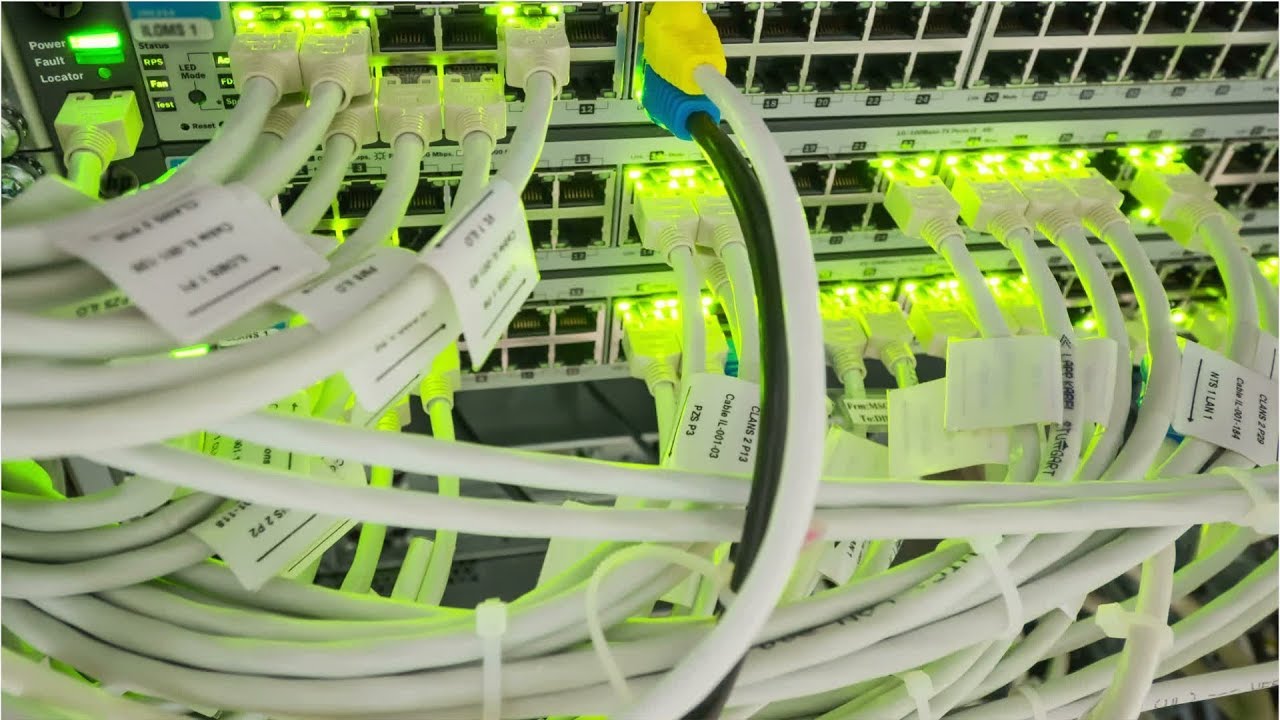
Choosing a technology major can feel like choosing a highway without knowing where it leads. Computer science, cybersecurity, information technology, cloud computing, and networking all overlap, but they don't prepare you for exactly the same work. A network design and administration college major focuses on the systems that connect people, devices, applications, and organizations: wired and wireless networks, servers, cloud infrastructure, security controls, and troubleshooting.
This major can be a practical route into information technology, especially if you enjoy solving technical problems and prefer hands-on systems work over writing software all day. But, its value depends heavily on the program's curriculum, laboratory resources, industry certifications, internship opportunities, and ability to keep pace with cloud and cybersecurity.
This review explains what you'll study, how the major compares with related technology degrees, what jobs may be available, and what you might earn in the United States. Salary and employment figures vary by location, experience, employer, and job title, so treat the numbers as planning estimates rather than promises.
Network Design and Administration Major at a Glance
A network design and administration major prepares you to plan, build, secure, monitor, and maintain computer networks. Depending on the school, the program may be offered as a bachelor's degree in network administration, information technology, computer networking, or a closely related field.
You'll typically learn how devices communicate across local networks, wide-area networks, wireless systems, data centers, and cloud platforms. You'll also study the practical side of IT: documenting infrastructure, managing user access, responding to outages, and explaining technical issues to nontechnical coworkers.
| Category | What to expect |
|---|---|
| Typical degree length | About four years for a bachelor's degree: two years for an associate degree |
| Core subjects | Networking, routing and switching, operating systems, security, cloud computing, databases, and scripting |
| Common tools | Cisco or similar networking equipment, Windows and Linux servers, virtualization platforms, cloud consoles, and monitoring software |
| Learning style | Lectures combined with labs, simulations, troubleshooting exercises, and team projects |
| Common entry roles | Network technician, systems administrator, IT support specialist, or junior network administrator |
| Useful certifications | CompTIA Network+, Cisco CCNA, CompTIA Security+, Microsoft or cloud certifications |
The strongest programs go beyond memorizing networking terms. They give you a safe environment to configure equipment, break systems, analyze logs, restore services, and practice communicating under pressure. That experience can make a major difference when you apply for internships or your first IT job.
What Students Learn in a Network Design and Administration Program
Course titles vary, but the academic foundation is relatively consistent. Early classes often cover computer hardware, operating systems, introductory programming, information technology concepts, and professional communication. These subjects help you understand what sits at each layer of a technology environment.
As you progress, the coursework becomes more specialized:
- Network fundamentals: You learn about the OSI and TCP/IP models, Ethernet, IP addressing, subnetting, DNS, DHCP, and common network protocols.
- Routing and switching: You practice designing network segments, configuring switches and routers, using VLANs, and troubleshooting connectivity.
- Wireless networking: You examine radio frequencies, access-point placement, authentication, interference, and wireless security.
- Server and operating-system administration: You manage Windows and Linux users, permissions, services, storage, backups, and system policies.
- Network security: You study firewalls, encryption, identity management, vulnerability reduction, intrusion detection, and incident response.
- Virtualization and cloud computing: You work with virtual machines, containers, software-defined networking, and services from platforms such as AWS, Microsoft Azure, or Google Cloud.
- Automation and scripting: You may use Python, PowerShell, or Bash to automate repetitive administration tasks and inspect network data.
- Design and documentation: You create diagrams, address plans, equipment inventories, disaster-recovery procedures, and implementation proposals.
A good curriculum also teaches you to evaluate tradeoffs. For example, a small business may not need an expensive enterprise architecture, while a hospital needs strong redundancy, segmentation, privacy controls, and rapid recovery. Network administration is not simply "making the Wi-Fi work": it is designing dependable systems around real operational needs.
Evaluation Criteria: Curriculum, Cost, Flexibility, and Career Preparation
You should evaluate this major as a program, not just as a degree title. Two schools can use similar names while offering very different levels of lab access and career support.
Curriculum quality
Look for current courses in IPv6, virtualization, cloud infrastructure, network automation, zero-trust security, and cybersecurity fundamentals. A curriculum focused only on traditional routers and desktop support may leave you less prepared for modern infrastructure roles. Check when course descriptions and lab equipment were last updated.
Total cost
Compare tuition, fees, textbooks, certification exams, transportation, and the opportunity cost of attending full time. An affordable public program with strong labs can be a better value than a costly private program with limited practical work. Ask whether certification vouchers, lab access, and internship support are included.
Flexibility
Online and hybrid programs can work well if you're employed or managing family responsibilities. But, networking is hands-on. Confirm whether you receive remote access to realistic labs or must supply your own equipment. Evening schedules, transfer-credit policies, and accelerated options may also affect your decision.
Career preparation
Investigate internship placement, employer partnerships, career fairs, résumé reviews, and graduate outcomes. Ask how many students complete an internship and which certifications graduates commonly earn. A capstone project should resemble workplace work: planning a network, documenting it, securing it, and presenting the solution.
Before enrolling, request a sample four-year plan and talk with current students. Their answers about lab availability and instructor responsiveness may reveal more than a polished brochure.
Academic Experience and Technical Skill Development
The academic experience is usually a blend of conceptual study and controlled experimentation. You might begin by calculating subnets on paper, then configure those addresses in a simulator or physical lab. Later, you could build a multi-site network, connect it to a cloud environment, and investigate why a service is unreachable.
That progression develops several kinds of competence:
- Technical knowledge: You understand how protocols, devices, operating systems, and security controls work.
- Troubleshooting judgment: You learn to form hypotheses, test them, read logs, and isolate the failure instead of changing random settings.
- Design thinking: You balance performance, availability, security, scalability, and cost.
- Documentation: You produce diagrams, configuration records, support procedures, and change plans.
- Professional communication: You explain downtime, risk, or a proposed upgrade to managers and users.
Expect some frustration. A minor configuration error can prevent an entire lab from functioning, and technical documentation can feel tedious until you need it during an outage. Those challenges are valuable because real network work rewards methodical habits.
You may also need to build skills outside class. Practice with a home lab, virtual machines, network simulators, Linux, Git, and a cloud free tier can strengthen your portfolio. Keep a record of projects, without exposing passwords or sensitive data, and describe the problem, your design, your tests, and the result. That gives employers evidence beyond your transcript.
Why Major in Network Design and Administration?
The main reason to major in network design and administration is that nearly every organization depends on reliable connectivity. Schools, banks, manufacturers, hospitals, government agencies, retailers, and technology companies all need people who can keep infrastructure available and secure.
The major is also a practical choice if you like technology but don't want a degree centered on advanced software development. You'll still encounter scripting and programming, but your daily focus is more likely to involve infrastructure, systems, diagnostics, and implementation.
Other advantages include:
- A visible connection between study and work: You can see how a network diagram becomes a functioning environment.
- Multiple entry points: Help desk, desktop support, network technician, and systems support roles can lead toward administration or engineering.
- Transferable skills: Troubleshooting, documentation, identity management, and security awareness apply across industries.
- Room to specialize: You can move into cloud networking, wireless design, data centers, cybersecurity, automation, or infrastructure architecture.
- Certification alignment: Courses can support well-known credentials such as Cisco's CCNA or CompTIA Network+.
There is a caution, though. Basic device administration is increasingly automated, outsourced, or absorbed into broader IT roles. The most durable version of this major combines networking with cloud, security, automation, and business communication. If a program treats network administration as an isolated traditional specialty, its long-term value may be weaker.
Job Opportunities for Network Design and Administration Majors
Job opportunities for network design and administration majors range from user support to infrastructure engineering. Your first job may not include "network" in the title, particularly if you enter through a help-desk or systems-support position. That isn't necessarily a setback: learning how an organization operates can prepare you for more advanced responsibilities.
Potential roles include:
| Role | Typical responsibilities | Possible next step |
|---|---|---|
| Network technician | Install equipment, test connections, and resolve basic outages | Network administrator |
| IT support specialist | Assist users with hardware, software, accounts, and connectivity | Systems or network administration |
| Network administrator | Maintain switches, routers, wireless systems, firewalls, and documentation | Network engineer |
| Systems administrator | Manage servers, identities, storage, backups, and operating systems | Cloud or infrastructure engineer |
| Network security analyst | Monitor alerts, investigate suspicious activity, and improve controls | Security engineer |
| Cloud network associate | Configure virtual networks, access rules, load balancing, and connectivity | Cloud network engineer |
| Network engineer | Design resilient, scalable infrastructure and lead implementations | Senior engineer or architect |
The U.S. Bureau of Labor Statistics computer and information technology overview provides current occupation and pay information, although its categories do not perfectly match every college major. Employer demand tends to be strongest when you can demonstrate practical experience with cloud platforms, security, automation, and enterprise tools.
To improve your prospects, seek an internship, join a campus technology team, complete a substantial lab project, and build a professional network. A résumé that says "studied networking" is less persuasive than one that explains how you designed a segmented network, configured access controls, and tested failover.
Expected Starting Salary in the US for Network Design and Administration Majors
Your expected starting salary in the US for network design and administration majors depends more on your first job, location, experience, and certifications than on the major's name alone. A realistic broad planning range for many entry-level roles is roughly $45,000 to $70,000 per year, with lower figures common in smaller markets and support roles and higher figures possible in major metropolitan areas, government contracting, or cloud-focused positions.
For context, the BLS reports occupational data for roles such as computer network support specialists, network and computer systems administrators, and computer systems analysts. Those figures include workers at every experience level, so a published median salary should not be mistaken for a new-graduate offer. Review the latest BLS Occupational Outlook Handbook data and compare it with local job postings before making financial plans.
| Entry path | Approximate early-career planning range* | Factors that can raise offers |
|---|---|---|
| Help desk or IT support | $40,000–$58,000 | Customer service, troubleshooting, certifications |
| Network technician | $45,000–$65,000 | CCNA, lab experience, cabling or wireless knowledge |
| Junior network or systems administrator | $52,000–$75,000 | Internships, Linux, PowerShell, security skills |
| Cloud or network security associate | $55,000–$85,000 | Cloud projects, Security+, scripting, internships |
*These are approximate planning ranges, not guaranteed salaries. Benefits, overtime, shift work, clearance requirements, and cost of living also matter. A $65,000 offer in one region may provide less purchasing power than a $55,000 offer elsewhere.
Over time, specialization can influence earnings substantially. Cloud networking, security engineering, automation, and architecture generally offer stronger advancement potential than routine support, but they also require deeper skills and continued learning.
Pros, Cons, and Comparison With Related Technology Majors
Network design and administration can be an excellent major, but it is not the universal best choice. Compare its emphasis with your interests and intended work.
| Major | Strongest emphasis | Good fit if you want to… | Main limitation |
|---|---|---|---|
| Network design and administration | Connectivity, infrastructure, systems, and operations | Build and troubleshoot networks and IT environments | Must continually adapt to cloud and automation |
| Computer science | Algorithms, software, theory, and programming | Create software or pursue technical computing research | Can be less focused on hands-on infrastructure |
| Cybersecurity | Risk, defense, monitoring, and incident response | Protect systems and investigate threats | Entry-level security roles often expect IT experience |
| Information technology | Broad applied technology and business support | Keep many kinds of technology working | May offer less depth in one specialty |
| Computer engineering | Hardware, electronics, embedded systems, and low-level computing | Design devices and computing hardware | More math and engineering theory |
Advantages
- Practical, career-oriented coursework
- Several entry-level pathways into IT
- Strong overlap with cloud and cybersecurity
- Useful across almost every industry
- Opportunities to learn through labs rather than lectures alone
Disadvantages
- Some programs become outdated quickly
- Entry-level support work can involve shifts, stress, and repetitive tickets
- Certifications and self-study may be necessary
- Routine administration is increasingly automated
- A bachelor's degree alone does not guarantee a network engineering job
The most important comparison is not "Which major sounds most impressive?" It's "Which curriculum gives you the skills and experiences employers currently request?" Read job postings in the region where you hope to work, then map their requirements to each program's courses.
Who Should Choose This Major?
You may be well suited to this major if you enjoy taking a complicated problem apart and testing one possibility at a time. Patience matters: network failures rarely announce their exact cause. You may need to inspect a cable, address, route, permission, firewall rule, service, or provider before finding the answer.
The major is a strong match if you:
- Like hands-on technology and learning by experimentation
- Want a career connected to IT infrastructure rather than primarily application development
- Can communicate clearly with both technical and nontechnical people
- Are comfortable learning continuously as tools and threats change
- Appreciate organized documentation and repeatable procedures
- Can stay calm when users or business operations are affected by an outage
It may be a weaker fit if you strongly dislike troubleshooting, customer interaction, on-call responsibilities, or detailed configuration work. You also shouldn't choose it solely because you heard that technology jobs pay well. Employers value curiosity and persistence, and those qualities are difficult to fake through four years of coursework.
Before committing, try an introductory networking course, use a simulator such as Cisco Packet Tracer if available, watch a real network administration lab, or speak with an IT professional. A small experiment, configuring a virtual machine, creating a home network diagram, or practicing subnetting, can tell you more about your fit than a general career quiz.
Network Design and Administration College Major FAQs
What does a Network Design and Administration major typically study?
Students learn about networking fundamentals, routing and switching, wireless systems, server administration, network security, cloud computing, automation, and design documentation to prepare for managing IT infrastructure.
How long does it take to earn a degree in Network Design and Administration?
A bachelor's degree usually takes about four years to complete, while an associate degree can be finished in two years, depending on the program and pace.
What career opportunities are available for Network Design and Administration graduates?
Graduates can pursue roles like network technician, systems administrator, IT support specialist, network security analyst, cloud network associate, or network engineer in various industries.
How does a Network Design and Administration major differ from Computer Science or Cybersecurity?
Network Design focuses on infrastructure and connectivity, Computer Science emphasizes software development and algorithms, and Cybersecurity centers on protecting systems and responding to threats.
What certifications should students in Network Design and Administration consider obtaining?
Valuable certifications include CompTIA Network+, Cisco CCNA, CompTIA Security+, and cloud certifications from providers like Microsoft Azure or AWS to enhance job prospects.
What skills are important for success in Network Design and Administration?
Strong troubleshooting ability, hands-on technology experience, clear communication with technical and nontechnical audiences, and the willingness to continuously learn new tools are essential.