Choosing a college major is easier when you understand both the fascinating coursework and the practical path beyond graduation. A planetary science major lets you study planets, moons, asteroids, comets, atmospheres, space missions, and the physical processes that shape worlds, including Earth. It sits at the intersection of astronomy, geology, physics, chemistry, computer science, and engineering.
That breadth is its greatest strength, but it also creates an important question: what exactly can you do with the degree? Planetary science is not usually a single, standardized major offered at every college. Programs may be housed in astronomy, Earth science, geophysics, or space-science departments, and their quality can vary considerably.
This review examines what you study, how to evaluate programs, the skills you build, research and internship options, job opportunities for planetary science majors, expected starting salary in the US for planetary science majors, and how the field compares with related degrees. The goal is not to sell you a dream, it's to help you decide whether this demanding, specialized major fits your interests and career plans.
Planetary Science Major At A Glance
Planetary science is the scientific study of planets and other bodies in the solar system and beyond. You may investigate how rocky planets form, why atmospheres change, how ice behaves on distant moons, or what surface features reveal about a planet's history. The field includes both observation and physical explanation: you might analyze spacecraft images in one class and model planetary interiors in another.
At the undergraduate level, planetary science programs typically combine foundational science with specialized electives. Expect substantial work in:
- Calculus, statistics, and data analysis
- Physics and astronomy
- Geology, mineralogy, and geophysics
- Chemistry or atmospheric science
- Programming and computational modeling
- Laboratory and field methods
The major is a strong fit if you enjoy asking scientific questions that cross traditional departments. It's less suitable if you want a degree with a clearly defined entry-level occupation immediately after graduation. Many research-heavy planetary science careers require a master's degree or Ph.D.
| Typical feature | What you should expect |
|---|---|
| Degree type | Usually a bachelor's degree in planetary science, astronomy, Earth science, or a related field |
| Time to complete | About four years full time |
| Work style | Combination of lectures, labs, coding, research, and sometimes fieldwork |
| Common advanced degree | Master's or Ph.D., especially for research and university careers |
| Best preparation | Strong math, physics, communication, and computing skills |
Program names matter less than the curriculum. A university may call its degree "planetary science," while another offers a geophysics degree with a planetary emphasis that provides equally strong preparation.
What You Study In A Planetary Science Program
Your first year or two will usually focus on general education and science prerequisites. Calculus, introductory physics, chemistry, and programming may feel far removed from Mars or Europa, but they provide the tools used to interpret real planetary data. You'll need to understand the mathematics behind an orbit, the chemistry behind an atmosphere, and the physics behind a crater or magnetic field.
Upper-level courses become more specialized. Depending on the college, you might take planetary geology, solar-system astronomy, remote sensing, astrobiology, atmospheric dynamics, planetary atmospheres, geochemistry, orbital mechanics, or geophysics. Some programs also offer courses in space mission design, instrument development, or geographic information systems.
A representative course sequence could look like this:
- Foundations: calculus, physics, chemistry, introductory astronomy, and Earth science.
- Methods: programming, statistics, laboratory science, GIS, and scientific writing.
- Specialization: planetary geology, atmospheres, geophysics, astrobiology, or astronomy.
- Application: independent research, a senior thesis, internship, or capstone project.
The balance between Earth and space science deserves close attention. Studying Earth is not a detour: terrestrial geology and atmospheric science help you interpret other worlds. But, a program with no planetary electives, faculty, or research may not deliver the experience you expect.
You should also look for courses using real datasets from NASA missions, observatories, or international space agencies. Learning to work with spacecraft imagery, spectral data, or orbital measurements makes classroom knowledge more practical.
How To Evaluate A Planetary Science Degree
Because planetary science degrees differ widely, compare programs by what you can actually do, not by the title on the brochure. Start with the curriculum. Does it include calculus-based physics, quantitative geology, programming, statistics, and advanced planetary courses? A program built mostly around general astronomy may not prepare you for planetary research or technical employment.
Next, examine the faculty. Search department pages for professors whose research interests you, such as Mars geology, exoplanets, planetary atmospheres, icy moons, impact processes, or space instrumentation. Faculty research often determines whether undergraduates can join meaningful projects.
Use this checklist when comparing colleges:
- Research access: Can undergraduates work in laboratories or analyze mission data?
- Equipment: Does the department have observatories, imaging systems, geochemistry labs, or computing resources?
- Internship pipeline: Are there relationships with NASA centers, national laboratories, museums, aerospace companies, or research institutes?
- Course flexibility: Can you add computer science, engineering, or geology courses?
- Graduate outcomes: Do graduates enter technical jobs, graduate school, education, or science communication?
- Affordability: Will the program leave you with debt that limits your postgraduation options?
Accreditation and institutional reputation can matter, but they shouldn't replace detailed investigation. Ask current students how accessible professors are and whether research positions are paid. Review course syllabi when available. Also check whether the department supports internships during the summer, when many research placements occur.
For scholarship planning, compare total cost, not just tuition. A more expensive program with strong aid, paid research, and excellent placement may be more affordable than a cheaper-looking college with limited opportunities.
Academic Experience And Skills You Build
A planetary science major gives you a broad scientific education, but it is not academically light. You'll solve quantitative problems, interpret imperfect measurements, write technical reports, and revise conclusions when evidence changes. The work rewards curiosity, patience, and comfort with uncertainty.
The most valuable skills typically include:
- Quantitative reasoning: You learn to use equations, graphs, statistics, and models to explain physical systems.
- Programming: Python, MATLAB, or similar tools can help you process images, analyze datasets, and create simulations.
- Scientific communication: Labs, presentations, and papers teach you to explain complex findings clearly.
- Data interpretation: Remote sensing and observational science require you to distinguish meaningful patterns from noise.
- Research design: You practice developing questions, testing assumptions, documenting methods, and defending conclusions.
- Collaboration: Space science is team-based, involving scientists, engineers, programmers, and project managers.
The academic experience may feel less linear than a conventional professional major. You might begin with geology, move into atmospheric physics, and discover that your strongest interest is coding. That flexibility can be an advantage, provided you deliberately develop a recognizable specialty.
Try not to graduate with only broad enthusiasm. Pair planetary science with a practical technical strength, such as software development, geospatial analysis, laboratory chemistry, electronics, or statistics. Employers can understand and use a specific capability more easily than a general statement that you "like space."
Research Opportunities, Internships, And Fieldwork
Research experience can make the difference between a fascinating degree and a strong launch into graduate school or technical employment. Planetary science research may involve analyzing spacecraft data, simulating atmospheres, studying meteorites, mapping geological features, testing instruments, or investigating Earth environments that resemble other planets.
As a first-year student, ask professors about volunteer roles, data-cleaning tasks, laboratory assistance, or introductory projects. These small opportunities can lead to a paid position, independent study, or senior thesis. Don't assume you must already know advanced science: faculty often value reliability and willingness to learn.
Internships can be found through university departments, museums, observatories, aerospace firms, government laboratories, and national research programs. NASA's official careers and student opportunities resources are a useful starting point, although competition is high. You should also monitor opportunities through professional organizations such as the American Astronomical Society and the Geological Society of America.
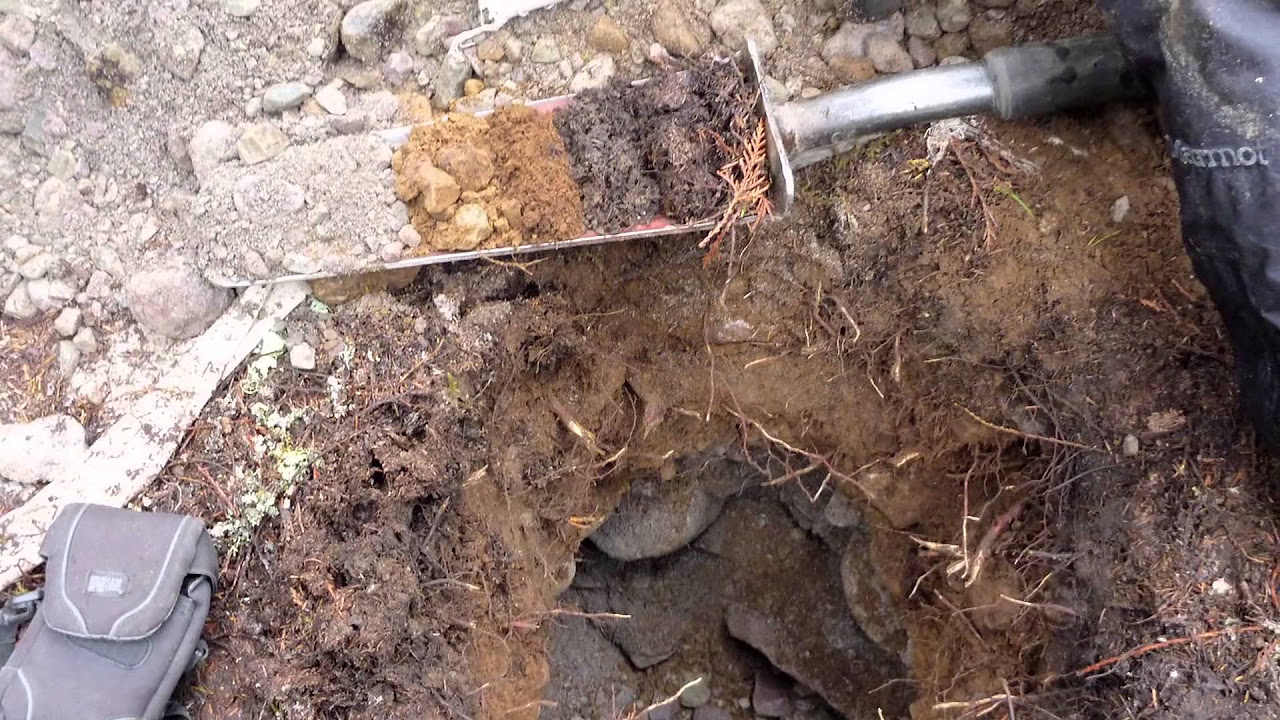
Fieldwork is another distinctive feature. Depending on your concentration, you might map volcanic terrain, study deserts, analyze glacial landscapes, collect mineral samples, or practice remote sensing. These environments serve as analogs for planetary surfaces. Field courses can be physically demanding and may involve travel, early mornings, and uncomfortable conditions, but they teach observation skills that computer simulations can't fully replace.
When evaluating opportunities, ask whether you'll receive mentorship, training, authorship credit where appropriate, and compensation. A prestigious name is helpful, but a project where you produce a concrete result is often more valuable.
Job Opportunities For Planetary Science Majors
Job opportunities for planetary science majors exist across research, education, technology, government, and communication. The degree itself doesn't guarantee a job titled "planetary scientist," but it can prepare you for several technical pathways, especially when combined with computing or engineering skills.
Potential roles include:
- Research assistant or laboratory technician
- GIS or remote-sensing analyst
- Data analyst or scientific programmer
- Geophysics or geology technician
- Observatory or planetarium educator
- Science writer, museum specialist, or outreach coordinator
- Aerospace systems, mission-operations, or instrument-support roles
- Environmental consultant or geological technician
A bachelor's degree may qualify you for technician, analyst, education, and support positions. Research scientists, university professors, and many mission-level roles generally need graduate training. The U.S. Bureau of Labor Statistics overview of physicists and astronomers notes that research and academic positions commonly require a doctoral degree. Its geoscientist career information can also help you compare adjacent career paths.
Your job prospects improve when you build a portfolio. Include code repositories, GIS maps, research posters, lab results, data visualizations, or a senior thesis. Employers want evidence that you can perform useful work, not just list courses.
Geographic mobility may matter, too. Space-related jobs cluster near research universities, aerospace hubs, government centers, and laboratories. Be open to locations and industries beyond the label "space sector." Skills learned through planetary science transfer well to Earth observation, climate analysis, software, defense, and environmental technology.
Expected Starting Salary In The US For Planetary Science Majors
The expected starting salary in the US for planetary science majors varies too much for one reliable number. Salary depends on your job title, degree level, technical skills, location, employer, and whether you enter research, education, government, or private industry. National salary datasets also tend to group planetary science with broader categories such as astronomy, physics, geology, or atmospheric science.
As a practical guide, many bachelor's-level graduates entering technician, laboratory, GIS, environmental, or data-support roles may begin in the upper-$40,000s to $70,000-plus range, while highly technical computing, engineering-adjacent, or aerospace roles can start higher. These are broad planning ranges, not a promise. Graduate research assistants often earn a stipend rather than a conventional salary, and education or nonprofit roles may begin lower.
For current benchmarks, consult the Bureau of Labor Statistics Occupational Employment and Wage Statistics and compare related occupations rather than searching only for "planetary scientist." The American Institute of Physics employment resources can provide useful context for physics graduates, while university career reports may show outcomes for specific programs.
A degree's return on investment depends on more than starting pay. Consider tuition, debt, paid internships, scholarship support, graduate-school plans, and regional living costs. A student who graduates with strong Python, GIS, and data-analysis experience may have more immediate options than a student with a nearly identical degree but no applied portfolio.
Treat salary as one input, not the entire decision. If your goal requires a Ph.D., plan financially for several years of additional education and relatively modest graduate stipends before potential long-term earnings improve.
Why Major In Planetary Science? Benefits And Drawbacks
The strongest reason to major in planetary science is intellectual range. You can study worlds that are both visually compelling and scientifically important while drawing on several disciplines. The field also contributes to practical questions about Earth's climate, geological hazards, resource use, habitability, and the future of space exploration.
Benefits
- You'll work on questions with genuine scientific significance.
- The interdisciplinary curriculum can support several career directions.
- Research, coding, fieldwork, and laboratory experience create transferable skills.
- Space missions and Earth-observation programs provide continuing research opportunities.
- The major can be excellent preparation for graduate study in astronomy, geology, geophysics, atmospheric science, or planetary science.
Drawbacks
- The job market for narrowly defined planetary-science roles is small and competitive.
- A bachelor's degree may not be enough for the career you initially imagine.
- Programs vary widely in quality, and some lack specialized faculty or equipment.
- Research careers may require relocation, temporary positions, or lengthy graduate training.
- Coursework can be mathematically and technically demanding.
The best answer to "Why Major in Planetary Science?" is not simply "because space is exciting." Choose it because you enjoy scientific problem-solving and are willing to build a practical specialty. If you want broad flexibility, add computer science, statistics, engineering, or Earth science coursework. If you dislike math, lab work, or coding, the major may be frustrating even if you love astronomy documentaries.
Planetary Science Compared With Related Majors
Planetary science overlaps with several majors, but the emphasis changes your coursework and career preparation. Comparing alternatives can help you choose a degree that preserves your interests while improving flexibility.
| Major | Main emphasis | Typical advantage | Potential limitation |
|---|---|---|---|
| Planetary science | Planets, moons, atmospheres, geology, and space systems | Direct interdisciplinary preparation for planetary research | Fewer clearly defined entry-level job titles |
| Astronomy or astrophysics | Stars, galaxies, cosmology, and physical processes in space | Strong physics and mathematical foundation | May include less geology, fieldwork, or surface science |
| Geology or geophysics | Earth materials, structure, and physical processes | Broader Earth-based employment options | Planetary electives may be limited unless you seek them out |
| Physics | Fundamental laws, modeling, and measurement | Excellent quantitative and graduate-school preparation | Requires intentional specialization in planetary topics |
| Aerospace engineering | Spacecraft, propulsion, structures, and systems | Direct route toward engineering and mission hardware | Less focus on planetary environments and scientific interpretation |
| Atmospheric science | Weather, climate, and atmospheric physics | Useful for Earth and planetary atmosphere careers | May provide less geology or astronomy |
There is no universally superior choice. If you want to design spacecraft, aerospace engineering may be more direct. If you want to study planetary surfaces, geology or geophysics could offer stronger field and laboratory preparation. If you're undecided, physics or Earth science may provide broader undergraduate options while allowing a planetary specialization.
Look at the second-choice career you would accept. A major should support your central interest without making every alternative unnecessarily difficult.
Planetary Science College Major FAQs
What does a planetary science major study in college?
A planetary science major studies planets, moons, asteroids, comets, atmospheres, and physical processes shaping worlds. Coursework includes calculus, physics, astronomy, geology, chemistry, programming, and field methods, blending astronomy, geology, physics, chemistry, computer science, and engineering.
What skills do you gain from a planetary science degree?
Planetary science majors develop quantitative reasoning, programming (e.g., Python, MATLAB), scientific communication, data interpretation, research design, and teamwork skills, preparing them for interdisciplinary scientific problem-solving and technical careers.
What career opportunities are available for planetary science graduates?
Graduates can work as research assistants, GIS analysts, scientific programmers, geology technicians, educators, science communicators, aerospace support staff, and environmental consultants. Advanced research or university roles often require graduate degrees.
How can I evaluate a planetary science program before choosing one?
Look for curricula with strong math, physics, programming, and advanced planetary courses. Assess faculty research interests, access to labs and data, internship partnerships, course flexibility, graduate outcomes, and affordability to find quality programs.
What is the expected starting salary for planetary science majors in the US?
Starting salaries vary widely depending on role, skills, and location, typically ranging from upper $40,000s to over $70,000 annually for bachelor's level jobs in technical, analyst, or technician positions.
How does a planetary science major differ from related degrees like astronomy or geology?
Planetary science integrates astronomy, geology, physics, and chemistry focused on planetary bodies, while astronomy emphasizes stars and galaxies, and geology centers on Earth's materials. Each major offers different coursework and career paths suited to specific interests.