Dinosaurs may be what first attracts you to paleontology, but a professional career in the field involves far more than memorizing species names or visiting fossil exhibits. As a paleontology college major, you'll study biology, geology, chemistry, evolution, statistics, and Earth history, and you may spend as much time analyzing rock samples or computer data as working outdoors.
This review examines what you can expect from a paleontology program, including typical coursework, fieldwork, career options, salaries, education costs, and the major's long-term return on investment. It's written for potential college students who are deciding whether their fascination with prehistoric life can become a practical academic and career path.
The short answer is that paleontology can be deeply rewarding, but it's a specialized and competitive choice. Your success will depend on building strong scientific skills, gaining research experience, and staying open to careers beyond traditional museum-based paleontology.
Paleontology Major At A Glance
Paleontology is the scientific study of ancient life through fossils, geological evidence, and biological analysis. At the undergraduate level, you may not find a standalone paleontology major at every college. More commonly, universities offer related majors, such as geology, geoscience, biology, or Earth and planetary sciences, with a paleontology concentration, minor, or research track.
That structure matters. Paleontology sits at the intersection of life science and Earth science, so your degree may look different from one school to another. A geology-heavy program could emphasize sedimentology, stratigraphy, and fossil formation. A biology-based program might focus on evolution, comparative anatomy, ecology, and organismal biology.
| Factor | What you can generally expect |
|---|---|
| Typical degree | Bachelor's in geology, biology, geoscience, or Earth science |
| Common specialization | Vertebrate, invertebrate, plant, micro-, or behavioral paleontology |
| Time to degree | About four years for a bachelor's degree |
| Graduate education | Often required for research, university, and curator roles |
| Learning environment | Classrooms, laboratories, museums, field sites, and collections |
| Best fit | Students who enjoy science, outdoor work, research, and long-term projects |
Your exact experience will depend heavily on faculty expertise and location. A university near fossil-rich rock formations may offer regular field courses, while another may provide stronger laboratory or museum-collection opportunities. Before applying, check the department's course catalog, faculty research interests, field school schedule, and undergraduate research options.
What You Study In A Paleontology Program
A paleontology college major usually begins with broad science requirements before moving into specialized courses. You'll likely take introductory biology, chemistry, physics, calculus, and statistics. These courses may not feel directly related to fossils at first, but they give you the tools to interpret evidence and understand how organisms and environments change over time.
Geology is especially important. Courses in historical geology, mineralogy, sedimentology, stratigraphy, geomorphology, and Earth history help you determine how fossils formed, where they are likely to be found, and what ancient environments looked like. You may also study taphonomy, the process through which an organism becomes preserved, and geochronology, which helps establish the age of rocks and fossils.
Biology-focused classes can include evolution, genetics, ecology, zoology, botany, comparative anatomy, and developmental biology. Depending on your interests, you could concentrate on dinosaurs and other vertebrates, marine invertebrates, fossil plants, pollen and spores, microscopic fossils, or ancient ecosystems.
Laboratory And Research Training
Laboratory work may involve preparing fossil specimens, examining thin rock sections, conducting chemical analyses, photographing specimens, or using microscopes and imaging technology. Increasingly, paleontologists also use 3D scanning, digital modeling, geographic information systems, and statistical software.
You may complete an independent research project or senior thesis. A project could analyze changes in fossil diversity, reconstruct an extinct animal's movement, compare ancient climates, or examine how fossils are distributed across a rock formation. These experiences are valuable because they teach you how to ask a research question, evaluate evidence, manage uncertainty, and communicate your conclusions.
Why Major In Paleontology?
The strongest reason to choose paleontology is that it lets you investigate some of Earth's biggest questions: How did life evolve? Why did certain organisms disappear? How did climate and geography shape ecosystems? What can ancient environmental change teach us about the future?
If you're naturally curious and enjoy solving evidence-based puzzles, the field can be a great fit. Fossils rarely provide a complete story. You may need to combine anatomy, rock layers, chemistry, and computer modeling to make a careful interpretation. That mix of detective work and laboratory science is what makes paleontology distinctive.
You may also value the field's connection to public education. Paleontologists work with museums, parks, schools, and community programs to help people understand science and Earth's history. If you enjoy explaining complicated ideas through exhibits, public talks, writing, or documentaries, the major can support that direction.
But, you shouldn't choose the degree solely because you love dinosaurs. Professional paleontology is a small field, and many research positions require a master's degree or doctorate. The day-to-day work can involve repetitive specimen preparation, grant writing, data cleaning, academic reading, and physically demanding field seasons.
A practical approach is to ask yourself:
- Do you enjoy biology and geology, not just prehistoric animals?
- Are you comfortable with mathematics, chemistry, and scientific writing?
- Would you consider museum, environmental, education, or geological careers?
- Can you tolerate a competitive job market and possible graduate school?
If you can answer yes, and you're willing to build transferable skills, paleontology can provide an intellectually rich foundation.
Academic Requirements, Skills, And Fieldwork
Paleontology programs generally expect you to complete demanding laboratory science courses. High school preparation in biology, chemistry, physics, algebra, and calculus will make the transition easier. You don't need to be an expert before college, but you should be prepared to strengthen your quantitative skills.
The major also rewards abilities that aren't always obvious from the course title. You'll need close observation, patience, organization, and the ability to distinguish evidence from speculation. Scientific writing is essential: even excellent discoveries have limited impact if you can't explain your methods and conclusions clearly.
Fieldwork Experience
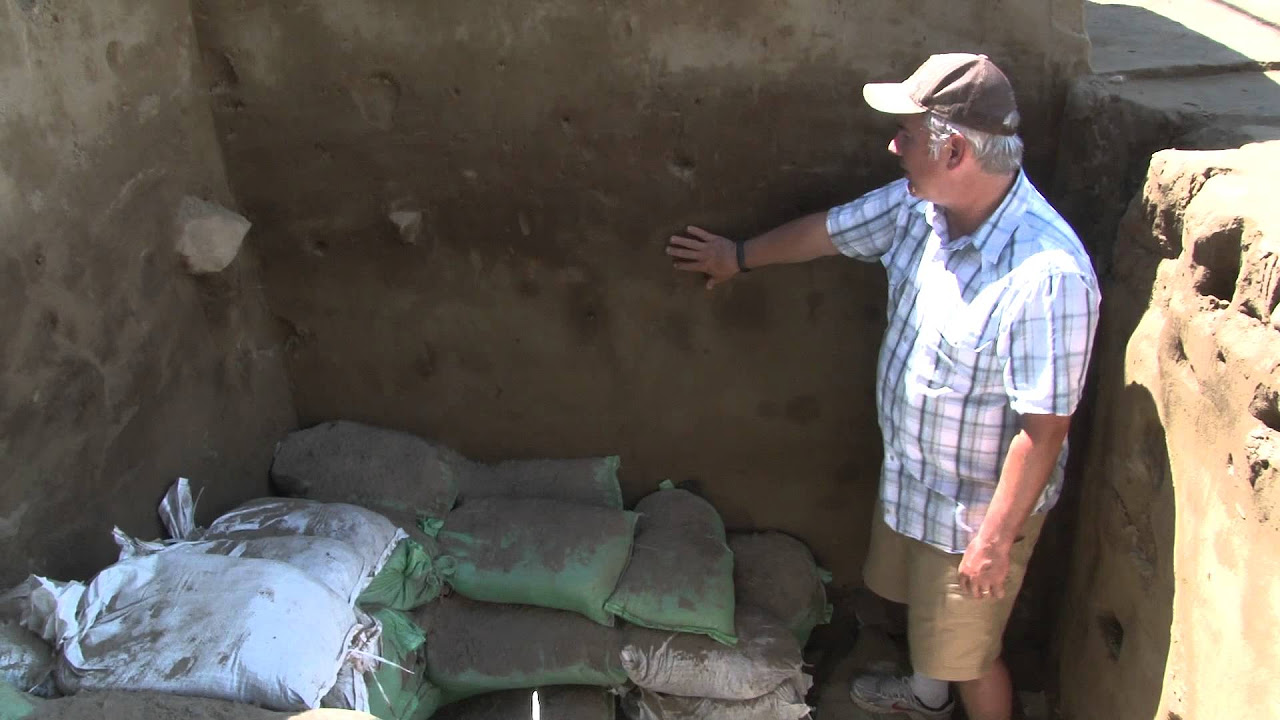
Fieldwork may involve surveying rock exposures, mapping geological formations, locating fossils, documenting their position, collecting permitted specimens, and recording detailed notes. You might camp in remote areas, work in heat or dust, and spend long hours carefully removing sediment with small tools. Physical fitness helps, though fieldwork varies widely by project and specialization.
Ethics and regulations are also part of the training. Fossils on public lands may be protected, and collecting rules differ by location. A responsible program teaches you to obtain permission, document specimens, preserve context, and deposit important materials in recognized collections rather than treating fossils as souvenirs.
Skills That Improve Your Prospects
To become more competitive, consider developing:
- Geographic information systems and digital mapping
- Statistical analysis and data visualization
- 3D imaging, photogrammetry, or computer modeling
- Museum collection management and specimen preparation
- Public speaking, science writing, and educational design
- Coding, especially for handling research data
- Experience presenting research at conferences or publishing results
Internships, volunteer work, field schools, and faculty research can matter as much as grades. They help you test whether you actually enjoy the work and give you evidence of commitment when applying to graduate programs or internships.
Career And Job Opportunities For Paleontology Majors
Job Opportunities for Paleontology Majors exist in several sectors, but the number of jobs with "paleontologist" in the title is limited. You'll improve your options by treating the major as a scientific foundation rather than a single-job pipeline.
Traditional careers include research paleontologist, university professor, museum curator, collections manager, fossil preparator, and science educator. Federal and state agencies, geological surveys, natural history museums, and universities may employ specialists. Some paleontologists work for environmental consulting firms that conduct fossil surveys before construction or energy projects.
Other graduates move into adjacent roles involving geological mapping, laboratory analysis, environmental compliance, data management, conservation, science communication, or teaching. A geology-focused background can be useful in the energy, groundwater, engineering, and environmental sectors, although the exact opportunities depend on your courses and experience.
| Career direction | Typical additional preparation | What you may do |
|---|---|---|
| Museum curator or researcher | Master's or doctorate often preferred | Study collections, publish research, develop exhibits |
| College professor | Doctorate generally required | Teach, conduct research, secure funding |
| Fossil preparator | Hands-on technical training | Clean, stabilize, mold, and document specimens |
| Environmental consultant | Geology and regulatory experience | Survey sites and prepare technical reports |
| Science educator | Teaching or communication experience | Create programs, exhibits, and public content |
| Geological technician | Geoscience coursework and software skills | Gather, analyze, and manage field data |
| K–12 teacher | Education certification | Teach biology, Earth science, or related subjects |
Graduate school is common for independent research. A master's can help you specialize and qualify for certain technical or museum roles: a doctorate is usually expected for faculty positions and many curatorial or research careers. Before committing to graduate education, investigate funding. Strong programs often provide assistantships, tuition support, or research stipends, but arrangements vary.
Expected Starting Salary In The US For Paleontology Majors
Expected starting Salary in the US for Paleontology Majors is difficult to state precisely because the federal government and salary websites often group paleontologists with broader occupations such as geoscientists, biological scientists, museum professionals, or geological technicians. Your pay will depend on job title, location, education, employer, and whether you work in research, government, consulting, education, or collections.
As a broad planning estimate, a bachelor's graduate entering a related technician, laboratory, environmental, or education role might see starting pay around $40,000 to $65,000 per year. Entry-level positions in higher-cost regions, specialized consulting, or technical fields can pay more, while internships, nonprofit museum work, and temporary field roles may pay less. These are approximate ranges, not guaranteed outcomes.
A graduate degree can expand access to research and curator positions, but it doesn't automatically create a high salary. Academic and museum careers are often competitive, and early-career work may involve grant-funded contracts or temporary appointments. On the other hand, graduates who add GIS, data analysis, regulatory knowledge, or industry experience may qualify for better-paid technical positions.
When comparing offers, look beyond the headline number. Consider health insurance, retirement contributions, relocation expenses, seasonal work, overtime, field allowances, and opportunities for advancement. You should also compare local living costs. A $55,000 salary can feel very different in a rural area than in a major coastal city.
For current figures, consult occupation-specific data from the U.S. Bureau of Labor Statistics and salary information from actual employers. Search several related job titles rather than relying on a single "paleontologist salary" estimate.
Costs, Scholarships, And Return On Investment
The cost of a paleontology degree is shaped more by the university and your residency status than by the major itself. Tuition, housing, laboratory fees, books, transportation, field equipment, and travel can all affect your total bill. Field courses may add costs for gear, permits, transportation, or extended accommodation.
You can reduce expenses by comparing public in-state universities, transfer pathways, community college prerequisites, paid campus jobs, and programs with strong financial aid. Ask whether field schools are included in tuition and whether students can borrow equipment. A department that offers undergraduate research stipends can be financially valuable.
Potential funding sources include:
- Institutional merit and need-based aid
- Federal and state grants
- Departmental scholarships
- Geological society awards
- Museum and research internships
- Paid field assistant positions
- Work-study and campus employment
- Graduate assistantships for master's or doctoral study
Scholarship searches are most effective when you apply early and match eligibility requirements carefully. A platform such as StudentScholarships.org can help you explore scholarship opportunities and career guidance in one place.
The return on investment is not simply your first-year salary minus tuition. It includes the flexibility of your skills, the likelihood of finding stable work, graduate-school costs, and your personal satisfaction. A low-debt student with strong GIS and research abilities may have a healthier financial outlook than a student who borrows heavily for a narrow program without building practical experience.
Before enrolling, create a simple financial plan. Estimate four-year costs, likely aid, expected borrowing, and realistic salaries for several careers, not only museum research. Then ask whether you'd still value the degree if your first job were in environmental consulting, education, or geological data rather than dinosaur research.
Advantages And Disadvantages Of A Paleontology Major
A paleontology major offers an unusual blend of field science, laboratory analysis, history, and biology. But the same specialization that makes it exciting can make career planning more complicated.
Advantages
- You study meaningful scientific questions. Evolution, extinction, climate, and ecosystem change have broad importance.
- The coursework is interdisciplinary. You can combine biology, geology, chemistry, statistics, and technology.
- The work can be varied. Depending on your role, you may alternate between field sites, laboratories, collections, classrooms, and computers.
- You can contribute to public education. Museums, parks, and science programs create opportunities to share discoveries.
- Transferable skills are available. GIS, data analysis, technical writing, and research methods apply outside paleontology.
- The field can be personally fulfilling. Few careers let you investigate life that existed millions of years ago.
Disadvantages
- The job market is small. Permanent research, curator, and professor positions may attract many applicants.
- Graduate school is often necessary. Advanced degrees require additional time, cost, and academic commitment.
- Starting pay varies widely. Some entry-level roles are seasonal or modestly paid.
- Fieldwork can be demanding. Remote locations, difficult weather, and physical labor aren't for everyone.
- Discoveries take time. Specimen preparation, analysis, peer review, and publication can stretch over years.
- Your ideal specialization may not be available locally. You may need to relocate for mentors, field sites, or graduate opportunities.
The major becomes a stronger choice when you actively build a backup plan. That doesn't mean you're giving up on paleontology. It means you're making sure your science training remains useful if the exact job you want is unavailable.
Paleontology Compared With Related College Majors
Comparing paleontology with neighboring majors can help you identify the academic path that best matches your interests and career goals. In some cases, a broader degree may provide more flexibility while still allowing you to specialize through electives and research.
| Major | Main emphasis | Career flexibility | Best if you want to… |
|---|---|---|---|
| Paleontology track | Ancient life and fossil evidence | Moderate | Study fossils and Earth's biological history |
| Geology or geoscience | Earth materials, processes, and history | High | Combine field science with environmental or geological work |
| Biology | Living organisms, evolution, and ecosystems | High | Focus on organismal science or biological research |
| Anthropology | Human evolution and culture | Moderate | Study human origins, archaeology, or societies |
| Environmental science | Human-environment relationships | High | Work on conservation, regulation, or sustainability |
| Archaeology | Human-made materials and past societies | Moderate | Investigate people and civilizations through artifacts |
Geology may be the most practical alternative if you enjoy fieldwork and Earth history but want broader employment options. Biology may suit you better if your main interest is evolution, anatomy, or organisms rather than rock layers. Archaeology is different from paleontology: archaeology primarily examines human activity, while paleontology studies ancient life, including organisms that existed long before humans.
You don't necessarily have to choose between these subjects. A geology major with biology electives, or a biology major with geology and fossil courses, can create a strong interdisciplinary profile. When evaluating schools, focus less on the label of the degree and more on available faculty mentors, laboratories, collections, field opportunities, and research funding.
Paleontology College Major Frequently Asked Questions
What does a paleontology college major typically involve?
A paleontology major combines biology, geology, chemistry, evolution, and Earth history. Students analyze fossils both in the lab and through fieldwork, studying ancient life and the processes that preserve it.
Which degrees commonly include paleontology as a concentration or track?
Paleontology is often offered as a concentration in broader majors such as geology, geoscience, biology, or Earth and planetary sciences, rather than as a standalone degree at most universities.
What skills should I develop to succeed as a paleontology major?
Key skills include scientific writing, data analysis, geographic information systems (GIS), 3D imaging, research methods, and public communication. Fieldwork fitness and patience are also important.
What career options are available with a paleontology major?
Graduates can work as museum curators, researchers, fossil preparators, environmental consultants, educators, or geological technicians, though many pursue graduate degrees for specialized roles.
How competitive is the job market for paleontology majors?
The job market is specialized and competitive, especially for research and academic positions which often require a master's or doctorate. Building transferable skills and experience improves prospects.
Why should someone major in paleontology instead of just studying dinosaurs casually?
A paleontology major offers a rigorous scientific foundation to study evolution, extinction, and Earth’s history, requiring strong science skills and research aptitude, not just interest in prehistoric animals.