Choosing a college major can feel like choosing a direction for your entire working life. Mineral engineering is a specialized path that sits at the intersection of geology, chemistry, physics, environmental science, and mechanical engineering. You learn how to locate, extract, process, and manage the mineral resources used in everything from smartphones and batteries to buildings and transportation systems.
That focus makes mineral engineering different from broader engineering majors. You may encounter smaller programs, more fieldwork, and a closer connection to mining, materials, energy, and environmental industries. In return, you can gain technical skills that employers value and enter a field where specialized expertise often matters more than a crowded résumé.
This review examines the mineral engineering college major from a future student's perspective. You'll learn what you study, how demanding the coursework can be, what jobs are available, how much graduates may earn, and whether the major fits your goals, interests, and tolerance for industry-specific work.
Mineral Engineering Major At A Glance
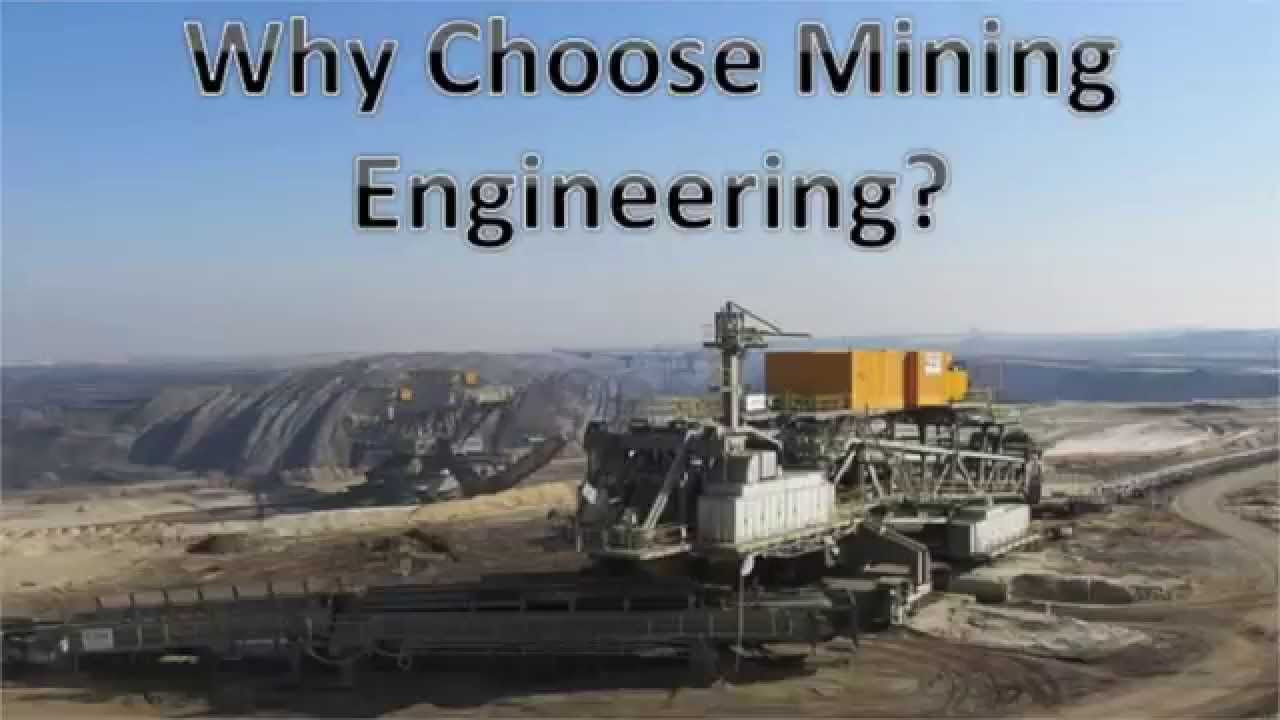
Mineral engineering is an engineering discipline focused on the responsible discovery, extraction, processing, and management of minerals and other geological resources. Depending on the college, the program may be called mineral engineering, mining engineering, metallurgical engineering, or mining and minerals engineering. The names overlap, but the emphasis can differ.
A mining-focused program usually concentrates on mine design, rock mechanics, drilling, blasting, ventilation, surveying, and production systems. Mineral processing programs emphasize separating valuable minerals from ore through crushing, grinding, flotation, magnetic separation, and related methods. Metallurgical coursework may focus more heavily on extracting and refining metals.
| Category | What you can generally expect |
|---|---|
| Degree level | Usually a four-year Bachelor of Science in Engineering |
| Core subjects | Calculus, physics, chemistry, geology, programming, engineering design |
| Specialized subjects | Mine planning, mineral processing, rock mechanics, surveying, economics, safety |
| Typical workplaces | Mines, processing plants, engineering firms, laboratories, government agencies |
| Work setting | A mixture of office, laboratory, field, plant, and remote-site environments |
| Best fit | Students who enjoy applied science, problem-solving, equipment, and outdoor or industrial work |
You should also understand the major's boundaries. It isn't primarily about collecting rocks or studying natural history, although geology is important. It's about turning geological knowledge into safe, efficient, economically viable engineering decisions. Sustainability, land reclamation, water management, emissions reduction, and recycling are increasingly important parts of that work.
What Students Study In A Mineral Engineering Program
Your first year or two will look familiar if you've considered other engineering fields. Expect calculus, differential equations, physics, general and organic chemistry, technical communication, computer programming, engineering graphics, and introductory design. These classes establish the mathematical and scientific foundation you'll need for advanced mineral systems.
Geology becomes more central as you progress. You may study mineral identification, crystallography, petrology, structural geology, geostatistics, and exploration methods. These subjects help you understand where valuable deposits occur and how geological uncertainty affects engineering decisions.
The engineering core typically includes:
- Rock mechanics: How rock behaves under stress, including stability concerns in underground and surface excavations.
- Mine design and planning: How to select mining methods, schedule production, estimate reserves, and design safe operations.
- Surveying and spatial data: How to measure sites and use mapping, geographic information systems, and three-dimensional models.
- Drilling and blasting: How to fragment rock while controlling cost, vibration, dust, and safety risks.
- Mineral processing: How to separate useful minerals from waste using physical and chemical processes.
- Environmental engineering: How to manage water, waste rock, tailings, reclamation, permitting, and community impacts.
- Engineering economics: How to compare capital costs, operating expenses, production forecasts, and project risk.
Many programs include laboratory work, design projects, internships, and a senior capstone. You might design a ventilation system, model an open-pit operation, test ore samples, or evaluate the economics of a proposed processing facility. Because the field is practical, a program with modern laboratories, software access, industry partnerships, and field experiences can be more valuable than one that offers only classroom theory.
How To Evaluate The Major: Academics, Careers, Cost, And Flexibility
Before you commit, evaluate the program rather than relying on the major's name. Two mineral engineering degrees can lead to different experiences depending on their faculty, facilities, location, and employer connections.
Academics and accreditation
Look for a curriculum that balances technical depth with communication, computing, economics, and environmental responsibility. In the United States, ABET accreditation is an important quality signal for engineering programs because it indicates that the program meets established educational standards. Accreditation can also support eligibility for the Fundamentals of Engineering exam, a common first step toward professional licensure.
Review the actual course catalog. Does the program teach mine planning software, data analysis, automation, or process modeling? Are there electives in battery materials, recycling, renewable-energy minerals, or environmental remediation? A traditional curriculum can still be strong, but you want room to connect it with emerging industries.
Careers and employer access
Check internship placement, co-op opportunities, graduate employment data, and the companies that recruit on campus. A school near active mines may provide excellent field access, while a school near manufacturing or research centers may offer stronger processing and materials connections.
Cost and financial support
Compare total cost, not just tuition. Include housing, transportation to field sites, equipment, professional fees, and the opportunity cost of internships. Scholarships can make a specialized engineering degree much more affordable, so search for awards tied to engineering, geology, STEM, mining, environmental science, and regional communities.
Flexibility
Ask whether your credits can support a second concentration or a minor in environmental engineering, computer science, business, or materials science. You should also determine whether the program prepares you for graduate study. Flexibility matters because mineral industries change with commodity prices, technology, regulation, and energy demand.
Academic Experience, Skills, And Workload
Mineral engineering is not an easy major, but its difficulty is usually predictable. You'll spend substantial time on mathematics, physics, chemistry, technical reports, laboratory assignments, and design calculations. Some semesters may combine several demanding courses, such as fluid mechanics, rock mechanics, mineral processing, and engineering economics.
The workload isn't limited to solving equations. You may need to interpret incomplete geological data, make assumptions, defend a design, and explain technical results to a nontechnical audience. That combination makes communication a genuine engineering skill rather than an optional extra.
By graduation, you may develop skills in:
- Quantitative modeling and engineering calculations
- Geological and spatial data interpretation
- Computer-aided design, simulation, and technical software
- Laboratory testing and process evaluation
- Risk assessment and operational planning
- Environmental compliance and reclamation concepts
- Team-based design and project management
- Written, visual, and oral technical communication
Fieldwork can be one of the most memorable parts of the experience. You might map a site, inspect a mine, collect samples, or observe industrial equipment. It can also be physically tiring and logistically inconvenient. Weather, travel, early starts, protective gear, and remote locations are part of the reality.
To succeed, build habits early: attend problem-solving sessions, ask questions before you fall behind, and use office hours for difficult quantitative material. Seek internships before your senior year if possible. A summer spent at a mine, laboratory, consulting firm, or processing facility can clarify whether you enjoy the work far more effectively than another elective course.
Job Opportunities For Mineral Engineering Majors
Job Opportunities for Mineral Engineering Majors extend beyond the traditional image of working inside a mine. Your options depend on your coursework, location, technical interests, and willingness to travel.
Common entry-level roles include mining engineer, drilling and blasting engineer, production engineer, mine planning engineer, ventilation engineer, and rock mechanics engineer. These positions may involve designing excavations, improving production schedules, monitoring safety, or analyzing operational data.
Other paths include:
- Mineral processing engineer: Optimize crushing, grinding, separation, and concentration systems.
- Metallurgical engineer: Develop or improve methods for extracting and refining metals.
- Resource or exploration analyst: Interpret geological information and estimate the potential of deposits.
- Environmental or reclamation engineer: Manage water, waste, permits, closure plans, and restoration projects.
- Geotechnical engineer: Evaluate slopes, foundations, tunnels, and underground stability.
- Consulting engineer: Provide specialized technical advice to mining, construction, energy, or government clients.
- Technical sales engineer: Explain equipment, software, or processing systems to industrial customers.
- Research engineer: Develop new methods for recycling, critical-mineral recovery, automation, or low-impact extraction.
The energy transition creates both opportunity and complexity. Demand for materials used in batteries, power systems, electronics, and infrastructure may support investment in exploration, processing, recycling, and supply-chain security. At the same time, projects face stricter environmental expectations and community scrutiny.
You should be comfortable with travel and possible relocation. Some of the strongest opportunities are near mines, processing plants, or exploration projects rather than major cities. Internships, software skills, safety credentials, and professional networking can significantly improve your prospects.
Expected Starting Salary In The US For Mineral Engineering Majors
The Expected starting Salary in the US for Mineral Engineering Majors is often competitive with other engineering fields because the occupation requires specialized technical knowledge and may involve remote work, travel, operational responsibility, or difficult working conditions. But, no single salary applies to every graduate.
A reasonable planning range for many new graduates is roughly $65,000 to $90,000 per year, with some offers falling below or above that range. Employers in high-cost regions, specialized processing, consulting, automation, or remote operations may offer more. Smaller firms, internships that do not convert to full-time roles, and locations with limited industrial activity may offer less.
| Factor | Likely effect on starting pay |
|---|---|
| Mining or processing location | Remote or difficult-to-staff sites may pay more |
| Internship or co-op experience | Can improve offer quality and negotiating position |
| Technical specialization | Automation, data, processing, and geotechnical skills can add value |
| Commodity and project conditions | Hiring may rise or fall with investment cycles |
| Travel and shift requirements | Premiums may accompany demanding schedules |
| Degree level | A bachelor's is commonly sufficient for entry-level work: advanced research roles may require graduate study |
Treat salary figures as estimates, not promises. Your total compensation may include bonuses, housing assistance, travel support, health benefits, retirement contributions, or paid relocation. A higher salary may also come with fly-in, fly-out schedules, rotating shifts, or long periods away from home.
When comparing offers, calculate the complete package and ask how compensation changes after one, three, and five years. You should also investigate whether the position provides supervised experience relevant to professional licensure.
Why Major In Mineral Engineering: Key Advantages
Why Major in Mineral Engineering? The strongest argument is specialization with practical impact. Modern life depends on minerals, yet producing them safely and responsibly requires engineers who understand both natural systems and industrial processes.
Strong technical differentiation
You graduate with knowledge that fewer students possess. That can help you stand out for employers seeking people who understand mine design, mineral processing, geotechnical risk, or resource evaluation. Your skills may also transfer into construction, environmental consulting, manufacturing, recycling, and materials companies.
Direct connection to real systems
The work has visible results. You may help design a safer underground operation, reduce energy use in a processing plant, recover valuable material from waste, or plan land restoration after a project closes. If you prefer applied problems to purely theoretical study, that connection can be motivating.
Good earning potential
Specialized engineering work can offer solid compensation, particularly when you develop experience in operations, automation, project management, or processing. Employers may also provide benefits that make remote assignments financially attractive.
Relevance to future industries
Critical minerals, electrification, recycling, mine automation, and lower-impact processing are expanding the field's scope. You aren't limited to conventional extraction. With the right electives, you can position yourself at the intersection of engineering, sustainability, and advanced manufacturing.
Smaller professional community
Mineral engineering programs are often smaller than mechanical or civil engineering programs. That can give you closer contact with faculty, more hands-on opportunities, and a focused alumni network. It also means you should actively build connections through internships and professional organizations.
Potential Drawbacks And Challenges
The same specialization that creates opportunity can narrow your choices if you dislike the industries connected to mineral production. You should think carefully about the trade-offs before enrolling.
Location can be limiting. Mines and processing facilities are often far from large metropolitan areas. You may need to relocate, travel regularly, or work at a remote site. If living near a major city is a firm priority, urban engineering fields may offer a better fit.
The industry is cyclical. Commodity prices, permitting decisions, project financing, and global demand can influence hiring. A strong market can produce excellent opportunities: a downturn can delay projects or reduce recruiting.
Work conditions vary. Some roles involve dust, noise, heat, industrial equipment, underground environments, rotating shifts, or extended site visits. Safety systems are essential, but the work may still be less comfortable than a conventional office position.
Environmental and ethical questions are real. Mining can affect land, water, ecosystems, and communities. You may face difficult decisions involving waste, tailings, reclamation, Indigenous rights, and competing economic interests. If you cannot engage thoughtfully with those issues, the field may frustrate you.
The coursework is demanding. Heavy math and science requirements can expose weak study habits quickly. You'll need persistence, not just curiosity.
Finally, a narrow program may offer fewer backup options if you later decide that mining is not for you. You can reduce that risk by adding coursework in data science, environmental systems, materials, business, or civil and mechanical engineering.
Mineral Engineering Compared With Related College Majors
Comparing related majors can help you identify the kind of problems you actually want to solve.
| Major | Main focus | Choose it if you prefer… |
|---|---|---|
| Mineral engineering | Extraction, processing, mine systems, and resource management | Geological resources and industrial operations |
| Geological engineering | Applying geology to construction, hazards, water, and earth systems | Subsurface conditions and geotechnical problem-solving |
| Materials engineering | Designing and testing metals, ceramics, polymers, and composites | How materials perform in products and manufacturing |
| Civil engineering | Infrastructure, structures, transportation, water, and construction | Buildings, roads, public works, and large civil systems |
| Environmental engineering | Pollution control, water, waste, and sustainability systems | Protecting human health and natural environments |
| Mechanical engineering | Machines, energy systems, manufacturing, and mechanics | Broad hardware and mechanical design options |
| Metallurgical engineering | Metal extraction, processing, properties, and performance | The chemical and physical behavior of metals |
Mineral engineering is more specialized than mechanical or civil engineering, but that can be an advantage if you already know you enjoy resource industries. Geological engineering may be better if you're interested in groundwater, landslides, foundations, or environmental geology. Materials engineering is often a stronger choice if you want product development, aerospace, electronics, or advanced manufacturing.
You can also compare program structures. Some schools combine mining with mineral processing or metallurgy, while others let you select a concentration. Read the required courses and examine where graduates work. The title matters less than the actual curriculum, facilities, internships, and employer network.
Mineral Engineering Major FAQs
What core subjects are included in a Mineral Engineering college major?
A Mineral Engineering major typically includes calculus, physics, chemistry, geology, programming, and engineering design. Specialized topics cover mine planning, mineral processing, rock mechanics, surveying, economics, and safety.
What types of jobs can Mineral Engineering graduates expect to find?
Graduates can work as mining engineers, mineral processing engineers, metallurgical engineers, environmental engineers, geotechnical engineers, or consultants in mining, processing plants, government agencies, and engineering firms.
How demanding is the coursework for a Mineral Engineering major?
The coursework is rigorous, combining heavy math, science, lab work, and design projects. Students must master technical calculations and communication skills while often participating in fieldwork in challenging environments.
What are the starting salary prospects for Mineral Engineering graduates in the US?
Starting salaries for Mineral Engineering graduates typically range from $65,000 to $90,000 per year, influenced by factors like location, internship experience, specialization, and project conditions.
How does Mineral Engineering differ from other engineering majors like Geological or Materials Engineering?
Mineral Engineering focuses on extraction, processing, and resource management of geological materials. Geological Engineering emphasizes subsurface conditions and environmental geology, while Materials Engineering centers on materials design and performance in manufacturing.
What skills can students develop during a Mineral Engineering program?
Students gain expertise in quantitative modeling, geological data interpretation, computer-aided design, lab testing, risk assessment, environmental compliance, project management, and technical communication.