Choosing a college major is easier when you understand what your future coursework, workday, and career options may actually look like. A materials science degree sits at the intersection of chemistry, physics, engineering, and manufacturing. You might study why a battery degrades, how a bridge resists stress, why a medical implant works inside the body, or how a semiconductor enables modern electronics.
That range is the major's greatest strength, and one reason it can be difficult to explain. Materials science is not always as familiar as mechanical, electrical, or chemical engineering, yet materials specialists contribute to nearly every technology people use. The field also rewards students who enjoy laboratory work, problem-solving, and understanding how microscopic structure creates visible performance.
This review examines the materials science college major from a student's perspective. You'll learn what you study, how the academic experience compares with related engineering degrees, which jobs are available, what you might earn, and whether the major fits your goals. Salary figures vary by location, degree level, industry, and experience, so treat every estimate as a planning range rather than a promise.
Materials Science Major At A Glance
Materials science is the study and application of materials, including metals, ceramics, polymers, composites, semiconductors, and biomaterials. You learn how a material's composition and structure influence properties such as strength, conductivity, flexibility, corrosion resistance, weight, and heat tolerance.
Most programs are offered through an engineering, science, or applied-physics department. A bachelor's degree typically takes four years and combines foundational science with engineering design and laboratory work. Depending on the school, the program may be called materials science and engineering, materials engineering, or a similar variation.
| Category | What to expect |
|---|---|
| Typical degree | Bachelor of Science |
| Core subjects | Chemistry, physics, calculus, thermodynamics, mechanics, and materials processing |
| Common concentrations | Metals, polymers, ceramics, electronic materials, nanomaterials, and biomaterials |
| Laboratory intensity | Moderate to high |
| Common employers | Manufacturing, aerospace, energy, electronics, automotive, medical devices, and research organizations |
| Graduate school | Helpful for advanced research and some specialist roles, but not mandatory for many entry-level jobs |
The major is broad rather than narrowly vocational. That can make you adaptable, but you may need to choose technical electives, internships, or research projects to communicate your specialty to employers. Accreditation, co-op availability, laboratory facilities, and industry partnerships are worth comparing before you apply.
What You Study In A Materials Science Degree
Your first year or two will usually resemble other engineering programs. Expect calculus, differential equations, general chemistry, physics, programming, statistics, and technical communication. These courses establish the mathematical and scientific language needed to model materials and interpret experiments.
Later, the curriculum becomes more specialized. Common courses include:
- Structure of materials: Crystal structures, defects, grain boundaries, and phase diagrams.
- Thermodynamics and kinetics: How energy, temperature, diffusion, and reaction rates influence materials.
- Mechanical behavior: Stress, strain, fracture, fatigue, hardness, and deformation.
- Electronic and magnetic materials: Conductivity, semiconductors, dielectric behavior, and magnetic response.
- Materials processing: Casting, welding, machining, sintering, polymer molding, thin-film deposition, and additive manufacturing.
- Characterization: Using microscopy, spectroscopy, diffraction, thermal analysis, and mechanical testing to identify materials and failure causes.
- Design and senior projects: Selecting or developing materials for a real product or performance requirement.
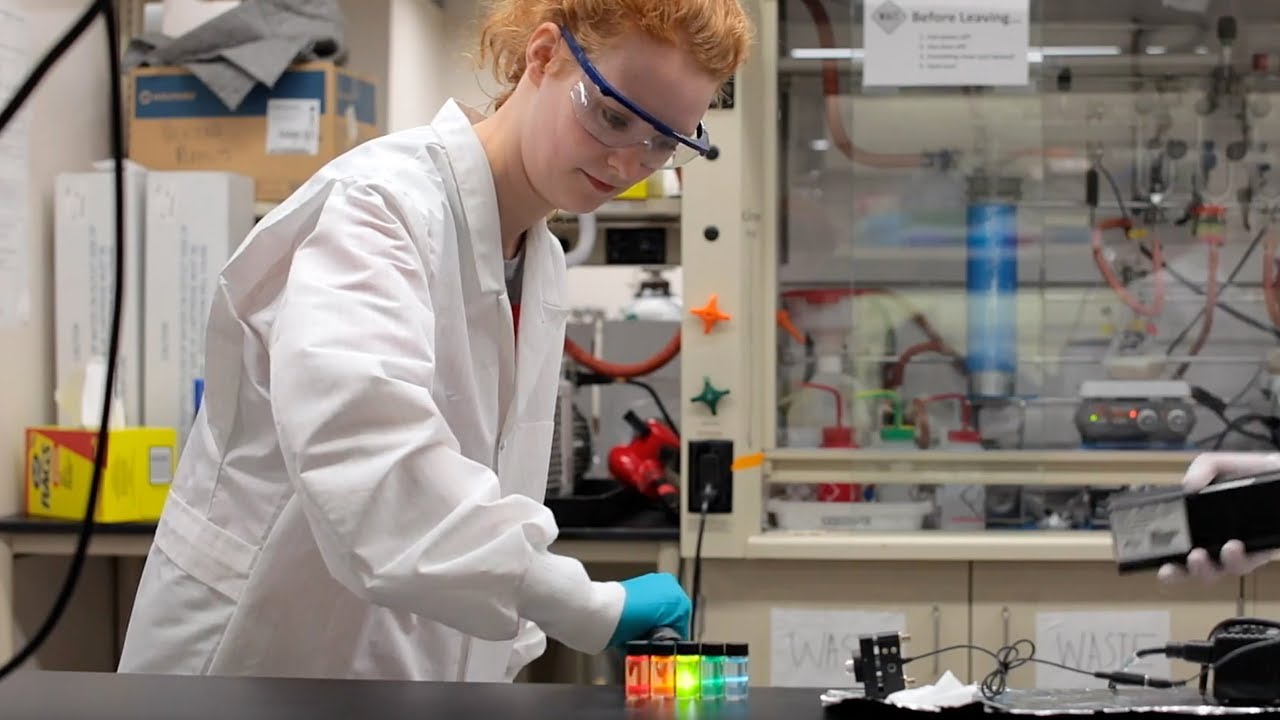
The subject is especially interesting because it links different scales. You may begin with atoms and crystal defects, then predict how those features affect a component you can hold. A lab might involve preparing a sample, examining its microstructure, testing its strength, and defending why the result differed from your prediction.
Some programs let you focus on sustainable materials, batteries, nanotechnology, tissue engineering, polymers, or semiconductor manufacturing. Review the course catalog carefully: two schools with the same major title may emphasize very different industries.
How This Major Was Evaluated
This review evaluates the materials science college major using criteria that matter when you are choosing a degree, not simply whether the topic sounds exciting. The assessment considers academic difficulty, transferable skills, practical experience, employment breadth, earning potential, graduate-school requirements, and long-term flexibility.
The analysis also recognizes an important limitation: outcomes depend heavily on your institution, location, academic performance, work experience, and degree level. A student who completes a co-op at a semiconductor manufacturer may have a very different first job from a graduate whose experience is mostly classroom-based. Salary ranges likewise change with inflation, demand, and regional cost of living.
The major receives the most credit when a program offers:
- Strong fundamentals: Chemistry, physics, mathematics, and engineering principles should be taught as an integrated foundation.
- Hands-on access: You should be able to use characterization equipment, mechanical-testing tools, modeling software, and manufacturing processes.
- Industry exposure: Internships, co-ops, employer projects, and career advising make an unusually broad major easier to translate into a job.
- Research opportunities: Faculty laboratories can help you test whether graduate school or research appeals to you.
- Flexible electives: You should be able to connect materials with energy, medicine, electronics, sustainability, or another interest.
This is a practical career review, not a ranking of individual colleges. Before committing, investigate each program's accreditation, retention rate, internship participation, laboratory condition, typical employers, and graduate outcomes.
Academic Experience And Skill Development
You will probably find the academic experience challenging but intellectually coherent. Materials science asks you to move between abstract concepts and physical evidence. One week you may calculate phase equilibrium: the next, you may inspect a fractured metal or explain why a polymer becomes brittle in cold conditions.
That variety develops several valuable skills:
- Quantitative reasoning and data analysis
- Laboratory safety, measurement, and experimental design
- Failure analysis and root-cause investigation
- Technical writing and presentation
- Computer modeling, simulation, and data visualization
- Manufacturing and process-improvement thinking
- Team-based engineering design
The workload is usually substantial. Chemistry and physics labs consume time beyond scheduled class hours, while upper-level courses can combine difficult mathematics with unfamiliar terminology. You do not need to be a genius, but you do need consistent study habits. Memorizing definitions alone won't carry you through thermodynamics, mechanics, or phase transformations.
Team projects can be a major advantage. Materials engineers rarely work in isolation: they communicate with mechanical designers, chemists, electrical engineers, quality teams, production managers, and customers. Learning to explain a technical tradeoff, such as choosing a cheaper alloy that is less corrosion-resistant, is preparation for real engineering work.
Seek undergraduate research, a co-op, or a manufacturing-focused project if possible. These experiences help you discover whether you prefer a laboratory, production floor, computer workstation, or customer-facing technical role. They also give you concrete examples for interviews.
Career Paths And Job Opportunities For Materials Science Majors
Job opportunities for materials science majors span far more than traditional metallurgy. You may work in product development, quality, manufacturing, research, testing, or technical sales. Common titles include materials engineer, metallurgical engineer, polymer engineer, process engineer, quality engineer, failure analyst, corrosion engineer, and manufacturing engineer.
Potential industries include:
- Aerospace and defense: Lightweight alloys, high-temperature materials, coatings, composites, and reliability testing.
- Automotive and transportation: Battery materials, electric motors, body structures, tires, polymers, and crash performance.
- Energy: Solar cells, fuel cells, batteries, nuclear materials, turbine components, and corrosion protection.
- Electronics and semiconductors: Thin films, packaging, wafers, dielectric materials, and contamination control.
- Medical devices: Implants, prosthetics, surgical tools, drug-delivery materials, and biocompatibility testing.
- Consumer products: Packaging, sporting equipment, appliances, coatings, and sustainable alternatives.
- Manufacturing and consulting: Process improvement, supplier qualification, inspection, and regulatory compliance.
A bachelor's degree is often sufficient for entry-level engineering, testing, quality, and manufacturing positions. A master's degree can make you more competitive for specialized development work, while a doctorate is generally most relevant to independent research, advanced semiconductor development, university teaching, or highly technical R&D.
Your first job may not contain "materials" in its title. Employers often hire materials graduates into process, reliability, quality, or product-engineering positions. When searching, use several related terms and emphasize your laboratory methods, software, processing experience, and project results rather than relying on the degree name alone.
Expected Starting Salary In The US For Materials Science Majors
The expected starting salary in the US for materials science majors commonly falls in an approximate range of $65,000 to $85,000 per year for bachelor's-level graduates, though some offers are lower or higher. Location, industry, security requirements, internship experience, and the difference between an engineering and a technician role can significantly affect the number.
Semiconductor manufacturing, aerospace, energy, and specialized product development may offer stronger starting compensation than smaller manufacturers or general laboratory positions. High-cost regions can also post higher salaries without necessarily providing more purchasing power. Overtime, bonuses, relocation assistance, and tuition support should be included when comparing offers.
| Career factor | Likely effect on starting pay |
|---|---|
| Relevant internship or co-op | Often improves competitiveness and negotiating leverage |
| Semiconductor or advanced manufacturing experience | Can increase demand for your skills |
| Graduate degree | May qualify you for more specialized entry roles |
| High-cost metropolitan area | May raise salary but also living expenses |
| Government or public-sector position | May offer structured benefits and predictable progression |
| Technician versus engineer title | Can involve different education and compensation levels |
Do not choose the major solely for the first paycheck. Early career growth may matter more: access to mentoring, technical training, challenging projects, and professional licensing can compound over time. When researching colleges, compare reported outcomes by degree and industry, and ask whether salary data include all graduates or only respondents. Those details can change the apparent result.
Advantages And Disadvantages Of Majoring In Materials Science
Materials science offers a rare combination of scientific depth and practical relevance. Its strongest advantages are flexibility and cross-industry demand. If one sector slows down, your understanding of processing, structure, testing, and failure can transfer to another. The major is also well suited to major technological shifts in batteries, renewable energy, advanced manufacturing, medical devices, and electronics.
You can build a career that is hands-on, analytical, research-oriented, or production-focused. The work often has a satisfying physical connection: you can see a coating improve durability, a composite reduce weight, or a new alloy solve a failure problem.
The disadvantages are real, but. The curriculum can be difficult because it combines several demanding disciplines rather than letting you specialize immediately. Entry-level job searches may require more explanation than searches for familiar degrees such as mechanical engineering. Some of the most exciting research roles require graduate school, and certain industries are concentrated in specific geographic areas.
Main advantages
- Broad career options across engineering and technology
- Strong foundation for graduate study
- Useful combination of chemistry, physics, and design
- Opportunities to work on sustainability and emerging technologies
- Transferable laboratory, testing, and problem-solving skills
Main disadvantages
- Heavy science and mathematics workload
- Degree title may be misunderstood by some recruiters
- Advanced research positions often favor master's or doctoral graduates
- Some roles are tied to factories, laboratories, or specialized regions
- Daily work may involve documentation and quality procedures, not constant invention
The major is a better fit when you value solving specific performance problems, not simply learning about futuristic materials.
Materials Science Compared With Related Engineering Majors
Comparing materials science with neighboring majors can clarify your choice. Materials science overlaps with several engineering disciplines, but its central question is different: How do composition, structure, processing, and environment determine performance?
| Major | Primary focus | Choose it if you prefer… |
|---|---|---|
| Materials science | Properties, selection, processing, and failure of materials | Understanding why a material behaves as it does |
| Mechanical engineering | Machines, structures, motion, and thermal systems | Designing physical systems and moving parts |
| Chemical engineering | Industrial chemical processes and mass or energy transfer | Scaling chemical reactions and production |
| Electrical engineering | Circuits, signals, power, and electronic systems | Hardware, computation, and electrical behavior |
| Biomedical engineering | Medical technologies and biological systems | Applying engineering to health and medicine |
| Chemistry | Molecular composition, reactions, and laboratory science | Investigating substances and chemical transformation |
Mechanical engineering may be preferable if you want to design engines, robotics, or mechanical systems and treat materials as one design consideration. Chemical engineering may suit you better if you are most interested in process plants and reaction systems. Electrical engineering is a stronger route into circuits and embedded hardware, although materials remains important in semiconductors and energy storage.
Materials science is often the most direct route when you want to investigate a battery electrode, develop a coating, study fractures, or improve a manufacturing process. It is also a useful bridge between departments. You may collaborate with every major listed above, which can expand your options but may require you to define your professional identity clearly.
Who Should Major In Materials Science?
You should consider this major if you're curious about how ordinary objects work at a deeper level. Why does one metal bend while another snaps? Why does a phone screen resist scratches but still break? Why does a battery lose capacity? Materials science turns those questions into experiments, models, and design decisions.
The major may suit you if you:
- Enjoy chemistry and physics rather than avoiding one for the other
- Like laboratory investigation and hands-on testing
- Can tolerate mathematics and want to become stronger at it
- Prefer solving open-ended problems with imperfect information
- Want career flexibility across technology and manufacturing
- Are interested in sustainability, energy, medicine, aerospace, or electronics
You may want a different major if you strongly dislike laboratory work, want a single clearly defined industry from day one, or prefer software and abstract computing over physical systems. That doesn't mean materials science is inaccessible: it means your motivation matters because the coursework can be demanding.
Before choosing, sample an introductory course, speak with current students, and read job descriptions rather than relying on promotional language. Ask yourself where you want to spend a typical workday: in a lab, at a production line, behind a simulation, in a cleanroom, or coordinating suppliers. An internship or summer research position can answer that question more reliably than a campus brochure.
Materials Science College Major FAQs
What does a materials science college major typically involve?
A materials science major studies the properties, composition, and processing of materials such as metals, ceramics, polymers, and semiconductors, combining chemistry, physics, engineering, and lab work to understand how materials perform and fail.
What kinds of courses are included in a materials science degree?
Courses usually start with calculus, chemistry, physics, and programming, advancing to specialized subjects like crystal structures, thermodynamics, mechanical behavior, electronic materials, and materials processing methods.
What career opportunities can a materials science major expect after graduation?
Graduates can work in aerospace, automotive, energy, electronics, medical devices, or manufacturing sectors in roles such as materials engineer, quality engineer, failure analyst, or research scientist.
How does the materials science major compare to other engineering fields?
Materials science focuses specifically on material properties and their effects on performance, distinct from mechanical, chemical, or electrical engineering, which concentrate more on design, chemical processes, or electronics respectively.
What skills are developed by studying materials science?
Students build skills in quantitative reasoning, laboratory methods, failure analysis, technical communication, computer modeling, and collaborative engineering design, preparing them for diverse technical roles.
Is graduate school necessary for a career in materials science?
While a bachelor's degree can secure many entry-level positions, advanced roles in research or specialized development often require a master's or doctoral degree to remain competitive.