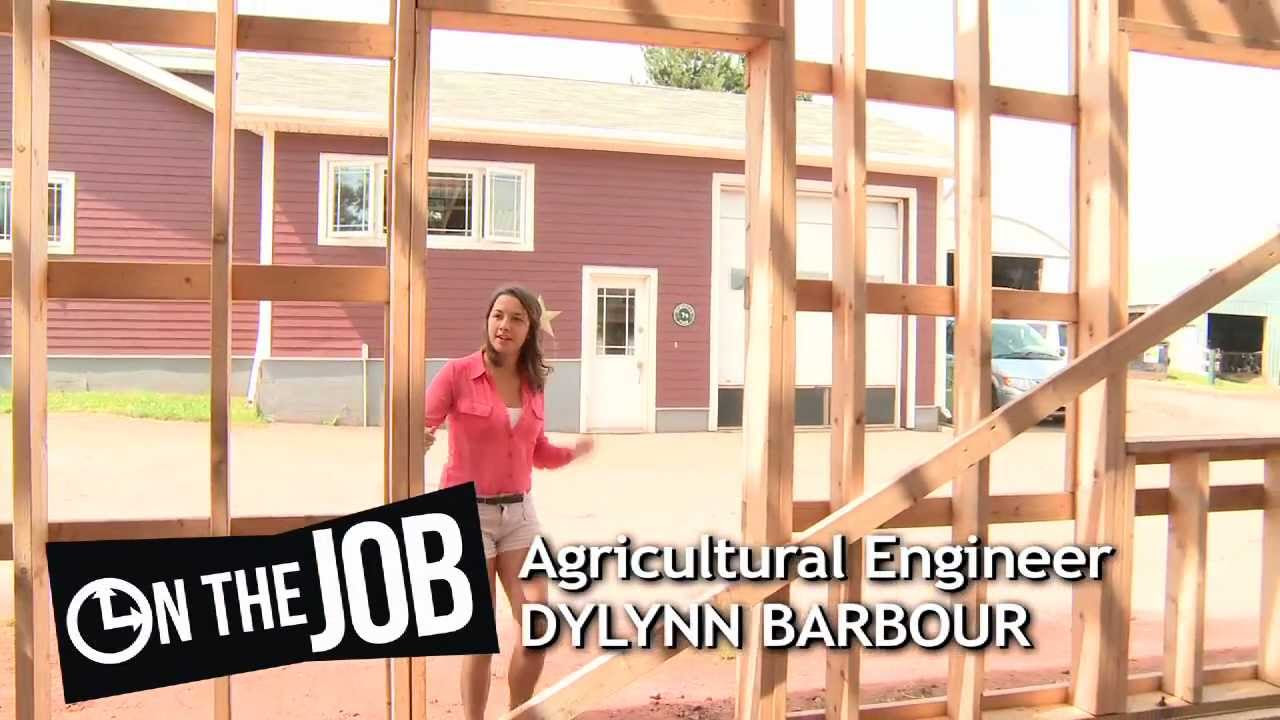
What if you could use engineering to improve food production, protect natural resources, design medical technologies, and develop biological solutions to major health and environmental problems? That broad combination is the appeal of an agricultural, biological engineering, and bioengineering major. It sits where engineering meets biology, chemistry, agriculture, medicine, and sustainability.
The major can lead to work in areas as different as precision agriculture, renewable energy, medical devices, water quality, food processing, tissue engineering, and biotechnology. That range is valuable, but it also makes the degree difficult to summarize, and sometimes difficult for students to understand before enrolling. You'll need to decide whether you enjoy quantitative coursework as much as biological problem-solving, and whether you want a career path that may be specialized or interdisciplinary rather than obvious from the job title.
This review evaluates the major for prospective college students. It covers what you study, the workload, career and salary prospects, related majors, and the strengths and limitations you should consider before choosing it.
What Agricultural, Biological Engineering, and Bioengineering Students Study
An agricultural, biological engineering, and bioengineering major teaches you to apply engineering principles to living systems and biological resources. Depending on the college, the program may be housed in an engineering department, an agricultural sciences college, or a specialized bioengineering department. The title can vary, but the central idea is similar: you design practical solutions involving organisms, ecosystems, food, medicine, or biological materials.
Your coursework may explore:
- Agricultural systems: Farm machinery, irrigation, soil and water conservation, controlled-environment agriculture, and automation.
- Biological systems: Cell biology, microbiology, genetics, biomaterials, biological modeling, and biochemical processes.
- Environmental applications: Water treatment, waste management, renewable energy, ecosystem protection, and climate-resilient infrastructure.
- Food and bioprocessing: Food safety, processing equipment, fermentation, packaging, and quality control.
- Medical applications: Medical instruments, biomechanics, rehabilitation technology, biosensors, and tissue engineering.
This is not simply an agriculture degree with extra science, nor is it identical to biomedical engineering. You'll generally spend substantial time learning calculus, physics, chemistry, statistics, and engineering design before applying those tools to biological problems.
The major's flexibility is both its defining feature and its main source of uncertainty. One university might emphasize environmental systems and agricultural technology, while another focuses on cellular engineering or medical devices. Before applying, compare required courses, laboratory facilities, concentrations, internships, and senior design projects, not just the major's name.
Core Curriculum, Skills, and Degree Requirements
Most bachelor's programs require about 120 to 130 credits and take four years for a full-time student, although co-op programs or demanding course sequences can extend that timeline. Your first year usually includes general education, calculus, chemistry, physics, and an introductory engineering course.
Later requirements commonly include:
Technical foundation
You may take multivariable calculus, differential equations, general and organic chemistry, physics, statistics, computer programming, and engineering mechanics. These courses build the mathematical and scientific foundation needed to analyze biological systems rather than merely describe them.
Engineering and biological core
Expect classes in fluid mechanics, thermodynamics, heat and mass transfer, materials science, transport phenomena, circuit fundamentals, biomechanics, microbiology, genetics, or biochemistry. Not every program includes every subject. The balance depends heavily on whether the degree leans agricultural, environmental, biological, or biomedical.
Design and professional preparation
Most accredited programs include engineering design, technical communication, ethics, economics, and a capstone project. You may design a low-cost irrigation system, develop a biosensor prototype, model a wastewater process, or create assistive technology. Teamwork matters because real projects require engineers to communicate with scientists, farmers, clinicians, manufacturers, regulators, and clients.
By graduation, you should be able to:
- Translate a biological or agricultural need into an engineering problem.
- Use data, models, experiments, and software to test solutions.
- Design with safety, cost, sustainability, and regulations in mind.
- Explain technical results to both expert and nontechnical audiences.
- Work effectively in multidisciplinary teams.
You'll also benefit from learning Python, MATLAB, CAD, statistical analysis, and laboratory methods. These skills can distinguish you in internships and entry-level roles, particularly when employers need graduates who understand both physical systems and biological data.
How This Major Was Evaluated
This review evaluates the major using the factors that matter most when you're choosing a college program: academic fit, workload, career flexibility, salary potential, practical experience, and long-term relevance. A high-paying major is not automatically a good choice if you dislike the coursework, while an interesting major may require careful planning if its job titles are less familiar.
The evaluation also considers the major's breadth. Agricultural and biological engineering programs can prepare you for several industries, but broad preparation does not guarantee a direct career pipeline. Your concentration, internships, software skills, research experience, and willingness to pursue graduate school can significantly influence your outcome.
Salary figures should be treated as national estimates rather than promises. Pay changes by location, employer, degree level, experience, industry, and specialization. A graduate working in medical-device manufacturing may have a different salary trajectory from one working in conservation engineering or agricultural consulting.
Finally, the review considers student experience. Laboratory access, faculty research, design teams, career services, and employer partnerships may matter as much as the course catalog. Engineering programs with strong hands-on opportunities generally give you better evidence of what the work feels like before graduation. For example, engineering colleges such as Purdue's engineering program emphasize broad technical preparation and applied problem-solving, though individual majors and experiences still vary.
Academic Experience and Learning Workload
You should expect this major to be challenging. It combines the workload of an engineering curriculum with the memorization and laboratory demands of biological and chemical sciences. In a typical semester, you might manage problem sets for calculus or fluid mechanics, laboratory reports, programming assignments, reading for biology, and a team design project at the same time.
The hardest transition for many students occurs during the first two years. Calculus, chemistry, and physics move quickly, and later engineering courses often assume that you remember the fundamentals. Falling behind in one prerequisite can delay an entire sequence of classes. Building a weekly study schedule, attending office hours early, and forming a reliable study group can make a measurable difference.
The work is not purely theoretical. You may calibrate instruments, collect field measurements, analyze biological samples, operate laboratory equipment, or build prototypes. That variety is appealing if you learn by doing. It can be frustrating if you prefer predictable assignments with one correct answer: biological systems often produce noisy data and imperfect results.
Team projects are another major part of the experience. You'll need to divide tasks, document decisions, resolve disagreements, and meet deadlines even when a teammate's work affects yours. Those are realistic professional skills, but group work can add stress during already demanding semesters.
The best programs provide undergraduate research, internships, maker spaces, student organizations, and industry-sponsored capstones. Try to ask current students how accessible those opportunities are. A brochure may mention research, but the practical question is whether undergraduates can actually earn lab roles, use equipment, and receive mentorship.
Career Paths and Job Opportunities for Agricultural, Biological Engineering, and Bioengineering Majors
Job Opportunities for Agricultural/Biological Engineering and Bioengineering Majors are broader than the major's title may suggest. You could work for an engineering consultancy, food manufacturer, biotechnology company, medical-device firm, agricultural technology startup, government agency, research institution, or environmental organization.
Common career directions include:
| Career area | Possible work |
|---|---|
| Agricultural engineering | Farm automation, equipment design, irrigation, crop systems, and postharvest technology |
| Biological engineering | Bioprocessing, fermentation, biomaterials, biological manufacturing, and laboratory systems |
| Bioengineering | Medical devices, biomechanics, rehabilitation equipment, biosensors, and diagnostics |
| Environmental engineering | Water quality, waste treatment, pollution control, and resource management |
| Food engineering | Processing systems, food safety, packaging, quality assurance, and production efficiency |
| Data and automation | Sensors, robotics, machine learning, precision agriculture, and process control |
| Public-sector work | Conservation, agricultural policy implementation, infrastructure, and regulatory compliance |
Your first job may not carry the exact title "biological engineer." Employers may advertise for process engineer, manufacturing engineer, quality engineer, product development engineer, research associate, field engineer, or environmental specialist. Search by skills and industry as well as by major name.
A bachelor's degree is enough for many design, operations, quality, sales-engineering, and technical-support positions. A master's or doctoral degree becomes more useful if you want to lead advanced research, develop novel medical technologies, specialize in tissue engineering, or teach at the college level. Some careers involving professional engineering practice may also require a fundamentals-of-engineering exam, supervised experience, and professional licensure, depending on your responsibilities and state.
Internships are especially important because they help you test a specialization. A summer in a food plant may show you that you enjoy process improvement more than laboratory research. A research assistantship may point you toward graduate school. Either outcome is valuable.
Expected Starting Salary in the US for Agricultural, Biological Engineering, and Bioengineering Majors
The Expected starting Salary in the US for Agricultural/Biological Engineering and Bioengineering Majors varies widely because graduates enter several different labor markets. A reasonable planning range for many bachelor's-level entry roles is approximately $60,000 to $85,000 per year, with some positions below that range and specialized roles in high-cost or high-demand markets above it.
Factors that can move your starting offer include:
- Industry: Medical devices, biotechnology, semiconductor-adjacent manufacturing, and specialized consulting may pay more than some nonprofit or conservation roles.
- Location: Metropolitan areas and biotechnology hubs often offer higher salaries, but living costs may also be substantially higher.
- Experience: Co-ops, internships, undergraduate research, and relevant software experience can strengthen your negotiating position.
- Technical focus: Automation, data analysis, manufacturing, regulatory systems, and process engineering are often commercially valuable skills.
- Degree level: Graduate education may improve access to research and development roles, but it also adds time and tuition costs.
Consider total compensation rather than salary alone. Health insurance, retirement contributions, relocation support, bonuses, tuition assistance, and predictable work hours affect the value of an offer. A $78,000 job with expensive relocation and long unpaid overtime may not beat a $70,000 local position with strong benefits.
You should also distinguish starting pay from long-term earning potential. Engineers who move into project management, specialized technical leadership, regulatory strategy, sales engineering, or operations management may increase their income over time. On the other hand, choosing a career for salary alone can backfire if you dislike the industry or daily work.
Before enrolling, investigate salary data for the specific concentration and region you're considering. Ask departments for recent graduate outcomes, but remember that self-reported data may omit students who changed fields or continued their education.
Advantages and Drawbacks of Choosing This Major
Advantages
You gain unusual flexibility. The major can connect you with agriculture, healthcare, biotechnology, environmental protection, food systems, and advanced manufacturing. That range may help you adapt as industries change.
You solve meaningful problems. Your work could improve water efficiency, reduce food waste, support people with disabilities, make medical testing more accessible, or reduce the environmental impact of production.
You develop transferable technical skills. Calculus, modeling, programming, design, experimentation, and data analysis remain useful across industries. You're not limited to one narrow job title.
You can combine practical and scientific interests. If you enjoy biology but also like building, calculating, and optimizing, this major offers a genuine middle ground.
You may find strong hands-on opportunities. Fieldwork, labs, prototyping, robotics teams, and research can make your education more engaging than a lecture-only program.
Drawbacks
The major can feel broad. Without a concentration, internship, or project portfolio, employers may not immediately understand what you do best. You'll need to explain your skills clearly.
The early coursework is demanding. A weak foundation in mathematics or chemistry can create problems later. You should not choose the major assuming it will be "mostly biology."
Some attractive careers require graduate school. Research-intensive biomedical and bioengineering roles may be difficult to enter with only a bachelor's degree.
Program quality varies. The same major label can represent agricultural systems at one college and cellular engineering at another. Careful program comparison is essential.
Certain industries are geographically concentrated. Biotechnology, medical-device development, and advanced food manufacturing may require relocation. If staying near home is important, examine local employers before committing.
Overall, the advantages are strongest when you're comfortable creating your own direction. The drawbacks are more serious if you want a highly standardized career path with a universally recognized job title.
How It Compares With Related Engineering Majors
Comparing this major with nearby options can clarify whether its breadth is an advantage for you or a source of confusion.
| Related major | How it differs | Choose it if you prefer… |
|---|---|---|
| Mechanical engineering | More emphasis on machines, mechanics, manufacturing, and thermal systems across nonbiological applications | Designing mechanical systems and products |
| Chemical engineering | Stronger focus on chemistry, industrial processes, reactions, and large-scale production | Process design, materials, and chemical manufacturing |
| Biomedical engineering | More concentrated on medical devices, biomechanics, imaging, and human health | Healthcare technology and medical applications |
| Environmental engineering | Greater emphasis on pollution control, water, waste, and environmental regulations | Protecting ecosystems and managing public infrastructure |
| Agricultural engineering | Often narrower focus on farm systems, machinery, irrigation, and agricultural production | Improving food and farming systems |
| Biotechnology | Usually more centered on laboratory biology, genetics, and biological discovery than engineering design | Researching cells, genes, and biological products |
Agricultural, biological engineering, and bioengineering can be a better fit than a specialized alternative if you want to keep several industries open. But, a more focused major may provide a clearer recruiting pipeline. For example, mechanical engineering can be easier for employers to recognize across manufacturing industries, while biomedical engineering may offer a more direct identity for medical-device recruiting.
You can also reach many of the same careers from different majors. A mechanical engineering student may enter medical-device design: a chemical engineer may enter biotechnology: an environmental engineer may work in agricultural water management. Internships, electives, research, and graduate education often matter as much as the label on your diploma.
When comparing programs, look beyond rankings. Review accreditation, laboratories, faculty specialties, capstone sponsors, co-op participation, and graduate outcomes. The right curriculum for your interests is more important than a small difference in institutional prestige.
Why Major in Agricultural, Biological Engineering, and Bioengineering?
Why Major in Agricultural/Biological Engineering and Bioengineering? The strongest answer is that you want to use engineering to work on living systems and real-world challenges, while keeping more than one industry open.
You may be a particularly good fit if you:
- Enjoy biology but want a quantitative, design-oriented degree.
- Like solving open-ended problems instead of memorizing facts alone.
- Care about food security, healthcare, sustainability, or environmental resilience.
- Want laboratory, field, and computer-based work in the same academic path.
- Are willing to build a specialization through electives and experience.
The major can be especially rewarding if you're motivated by impact. Designing a more efficient irrigation system, improving a medical device, or reducing waste in food production gives abstract equations a practical purpose. That connection can help you persist through difficult prerequisite courses.
You should take a few steps before declaring it. Compare two or three curricula. Talk with a professor and a current student. Shadow an engineer if possible. Take an introductory biology, coding, or engineering course and notice which assignments hold your attention. Then search internship postings to identify the skills employers actually request.
Financial planning matters, too. Compare total tuition, co-op earnings, scholarship availability, and likely time to graduation. A free scholarship-matching and application platform such as StudentScholarships.org can help you search for aid while you evaluate college costs, but you should still verify eligibility, deadlines, and award conditions directly.
The major is not a shortcut around rigorous engineering. It is a route into engineering that uses biology as the context, and that distinction matters.
Frequently Asked Questions About Agricultural, Biological Engineering, and Bioengineering Majors
What does an Agricultural, Biological Engineering, and Bioengineering major involve?
This major combines engineering principles with biology, chemistry, and agriculture to develop solutions in areas like food production, medical devices, water quality, and environmental sustainability. Students study courses in calculus, physics, biology, and engineering design applied to living systems.
What career opportunities are available for graduates in this major?
Graduates can work in diverse fields such as farm automation, biotechnology, medical device design, environmental engineering, food processing, and public-sector roles. Titles may include process engineer, manufacturing engineer, or environmental specialist, often depending on specialization and experience.
How challenging is the coursework for this major?
The major is academically demanding, combining rigorous engineering subjects like calculus and physics with biology and chemistry labs. Students manage complex problem sets, laboratory experiments, and team design projects, requiring strong quantitative and interdisciplinary skills.
What skills should I develop to succeed in Agricultural and Biological Engineering?
Key skills include strong foundations in math, physics, and chemistry; proficiency in programming languages like Python or MATLAB; engineering design capabilities; data analysis; and effective teamwork and communication to solve complex biological problems practically.
How does this major differ from biomedical or mechanical engineering?
While biomedical engineering focuses mainly on healthcare technologies and mechanical engineering emphasizes machines and manufacturing, Agricultural, Biological Engineering, and Bioengineering blend engineering with biological systems to address challenges across agriculture, environment, and biotechnology sectors.
What is the typical starting salary for graduates in this field?
Starting salaries generally range from $60,000 to $85,000 annually in the US, depending on industry, location, experience, and specialization. Roles in medical devices or biotechnology may offer higher pay, while agriculture or conservation positions might be on the lower end of the scale.