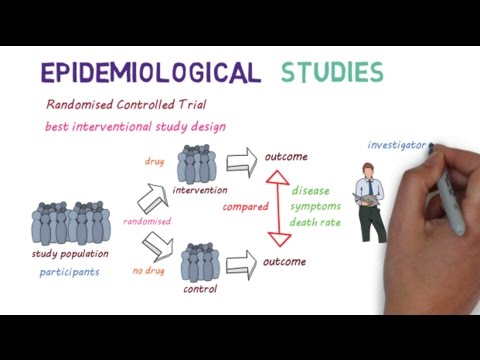
An epidemiology college major can put you at the center of public health: investigating disease outbreaks, analyzing health data, evaluating prevention programs, and explaining what communities can do next. It's a strong choice if you enjoy science but also like statistics, research, and real-world problem-solving.
But, epidemiology isn't always offered as a traditional undergraduate major. Many schools offer related bachelor's degrees, such as public health, health science, biology, or statistics, with an epidemiology concentration. Independent coursework can lead to entry-level roles, but an advanced degree is often expected for positions formally titled "epidemiologist."
This review examines what you'll study, how demanding the major can be, career and salary expectations, and how epidemiology compares with neighboring health fields. You'll also learn how to judge whether a program is a smart investment for your goals, budget, and preferred level of education.
Epidemiology Major At A Glance
An epidemiology college major focuses on the patterns, causes, and prevention of disease and injury in populations. Instead of treating one patient at a time, you'll ask broader questions: Who is affected? What risk factors are involved? How quickly is a condition spreading? Which intervention actually works?
| Category | What you can expect |
|---|---|
| Core subjects | Biology, public health, statistics, research methods, and epidemiology |
| Typical degree | Bachelor's in public health or a related field: epidemiology is often a concentration |
| Common graduate path | Master of Public Health (MPH), usually with an epidemiology focus |
| Important skills | Data analysis, scientific writing, study design, communication, and critical thinking |
| Entry-level settings | Health departments, hospitals, research organizations, nonprofits, and government agencies |
| Best fit | Students who enjoy science, numbers, investigation, and community impact |
As an undergraduate, you may study infectious disease, chronic disease, environmental health, global health, or health disparities. You could also learn software such as R, SAS, SPSS, or Python, depending on the program.
The biggest distinction to understand is between studying epidemiology and qualifying for an epidemiologist job. The U.S. Bureau of Labor Statistics epidemiologist profile reports that epidemiologists typically need at least a master's degree. Your bachelor's degree can be an excellent foundation, but it may not be the final credential.
What Students Study In An Epidemiology Program
Your curriculum will combine life science with quantitative analysis. The balance matters: epidemiology is not simply "public health with a little biology." You'll need to understand how diseases behave and how to test explanations using data.
Typical coursework
Most programs include some combination of:
- Introductory epidemiology: Disease frequency, transmission, risk, surveillance, and outbreak investigation.
- Biostatistics: Probability, confidence intervals, hypothesis testing, regression, and interpretation of results.
- Research methods: Study design, sampling, bias, confounding, ethics, and the difference between correlation and causation.
- Biology and microbiology: Human systems, pathogens, immunity, and mechanisms of disease.
- Public health policy: How laws, funding, social conditions, and institutions shape health outcomes.
- Environmental or occupational health: Exposure to pollutants, workplace hazards, foodborne illness, and community risk.
- Health disparities: How income, race, geography, disability, housing, and access to care influence outcomes.
- Data management and programming: Cleaning datasets, creating visualizations, and communicating findings clearly.
Advanced electives might cover genetic epidemiology, pharmacoepidemiology, maternal and child health, cancer epidemiology, or global health. A practicum, internship, capstone, or undergraduate research project is especially valuable because it lets you work with imperfect real-world data rather than neat textbook examples.
Expect writing as well as mathematics. You may produce literature reviews, surveillance reports, research posters, policy briefs, and presentations for nontechnical audiences. Being able to explain a statistical result without exaggerating it is one of the most useful skills you can develop.
How To Evaluate An Epidemiology College Major
The name of a program tells you less than its course list, faculty, and graduate outcomes. Before applying, compare programs systematically rather than choosing the one with the most appealing title.
Look for these program features
- A serious statistics sequence. One introductory statistics class is rarely enough. Look for biostatistics, regression, research methods, and possibly statistical computing.
- Hands-on data experience. Ask whether students use real datasets and tools such as R, SAS, Python, or GIS. Software experience can distinguish you during internships and job searches.
- Applied learning. An internship with a health department, hospital, laboratory, or research center is more useful than a purely theoretical curriculum.
- Qualified faculty. Review professors' research areas. Faculty working in infectious disease, cancer, environmental health, or health equity may provide mentorship and project opportunities.
- Graduate-school preparation. Check whether graduates enter MPH, Master of Science, medical, nursing, or other professional programs.
- Career support. Look for alumni networks, résumé advising, employer partnerships, and placement information, not just broad claims about "many opportunities."
- Cost and flexibility. Compare total tuition, fees, required semesters, online options, and whether transfer credits are accepted.
Also ask an admissions adviser what job titles recent bachelor's graduates actually obtain. "Public health graduate" is not a job outcome. A credible program should explain whether alumni become research assistants, health educators, data analysts, laboratory technicians, program coordinators, or epidemiologists after additional education.
Finally, verify accreditation where relevant. For public health programs, the Council on Education for Public Health provides accreditation information. Accreditation is not a guarantee of employment, but it can support program quality and graduate-school preparation.
Academic Experience, Skills, And Workload
You'll spend much of your time moving between scientific concepts and data. One week, you might learn how a pathogen spreads: the next, you could analyze a dataset to estimate whether an exposure is associated with illness. That variety keeps the major interesting, but it also means you can't avoid the quantitative side.
Skills you'll build
- Reading and evaluating scientific studies
- Designing surveys and observational studies
- Recognizing bias, confounding, and misleading conclusions
- Using spreadsheets and statistical software
- Cleaning, organizing, and visualizing data
- Writing concise technical and policy documents
- Presenting findings to scientific and general audiences
- Collaborating across medicine, government, laboratories, and community organizations
The workload is usually manageable if you keep up, but it can become demanding when several courses assign data projects at the same time. Statistics problems often require practice rather than memorization. Research assignments may also take longer than expected because real data contains missing values, inconsistent definitions, and inconvenient surprises.
You don't need to be a mathematical genius. You do need patience, attention to detail, and a willingness to ask what the numbers actually support. Strong programs typically offer tutoring, office hours, coding workshops, or research methods support. Use those resources early, waiting until the night before a regression assignment is a poor career strategy and an even worse sleep strategy.
Why Major In Epidemiology? Benefits And Motivations
Why major in epidemiology? The strongest reason is that you want to solve health problems at a population level. Your work could help identify an outbreak, measure the effect of a vaccination campaign, determine whether a workplace exposure is dangerous, or show that a preventive program is not reaching the people who need it most.
Other benefits include:
- Meaningful public impact: Your analysis can inform policies and services affecting thousands or millions of people.
- Transferable skills: Statistics, research, writing, and data visualization are useful across health care, government, consulting, and research.
- Multiple specialties: You can move toward infectious disease, chronic illness, environmental health, mental health, maternal health, or global health.
- A foundation for advanced degrees: The major can prepare you for an MPH, MS, medical school, nursing, health administration, or related graduate program.
- Work that stays intellectually active: Public health questions change with new diseases, technologies, treatments, and social conditions.
The major may also suit you if you prefer prevention and investigation to direct clinical care. You can contribute to health outcomes without spending your workday examining individual patients.
That said, impact isn't always immediate or visible. Epidemiologists may spend months cleaning data, checking definitions, or waiting for reliable results. If you need constant face-to-face interaction or quick, tangible outcomes, another health major may feel more satisfying. The right motivation is not simply "I want to help people": it's "I want to use evidence to understand and improve health."
Job Opportunities For Epidemiology Majors
Job opportunities for epidemiology majors vary substantially by education level and experience. With a bachelor's degree, you may qualify for support and analyst roles, especially if you complete an internship and learn practical software. With an MPH or MS, you'll usually have access to more specialized epidemiology positions.
Potential career paths
| Role | Typical work | Education often preferred |
|---|---|---|
| Research assistant | Collect data, manage studies, prepare reports | Bachelor's degree |
| Public health program coordinator | Organize services, reporting, and outreach | Bachelor's or master's |
| Health data analyst | Clean data, build dashboards, identify trends | Bachelor's or master's |
| Clinical research coordinator | Manage studies, participants, and compliance | Bachelor's degree |
| Infection prevention specialist | Monitor infections and improve hospital practices | Bachelor's or master's: clinical experience may help |
| Epidemiologist | Design studies, investigate disease patterns, advise interventions | Usually MPH or MS |
| Survey or research analyst | Analyze population or consumer health data | Bachelor's or master's |
| Public health consultant | Evaluate programs and advise organizations | Often master's degree |
Employers include local and state health departments, the Centers for Disease Control and Prevention, hospitals, universities, pharmaceutical companies, laboratories, insurers, nonprofit organizations, and international agencies.
Your first job may not contain the word "epidemiology." Search for terms such as public health analyst, surveillance analyst, research coordinator, data analyst, or program evaluator. Build a portfolio with a clear data visualization, a short methods report, and a project showing how you interpret findings responsibly. Internships and faculty references can matter as much as your transcript.
Expected Starting Salary In The US For Epidemiology Majors
The expected starting salary in the US for epidemiology majors depends on the job you obtain, not merely the degree printed on your diploma. A bachelor's graduate entering a research assistant or public health coordinator role will usually have a different starting point than someone completing an MPH and accepting an epidemiologist position.
The BLS reported a median annual wage of $83,620 for epidemiologists in May 2023, with employment projected to grow 19% from 2023 to 2033, much faster than the average for all occupations. Median pay is not a starting salary, and it generally reflects workers across experience levels. For current figures, consult the BLS Occupational Employment and Wage Statistics and individual job postings.
Your earnings can be affected by:
- Degree level and specialized training
- Government versus private-sector employment
- Geographic location and local cost of living
- Experience with R, SAS, SQL, Python, GIS, or electronic health records
- Industry, including hospitals, pharmaceuticals, consulting, or academia
- Security clearance, licensure, or subject-matter expertise
As a practical expectation, you should research entry-level salaries for the specific title you want rather than rely on a single "epidemiology major salary." Compare at least 10 postings in your target region, noting required education, software, and experience. An advanced degree may raise your access to epidemiologist roles, but it also adds tuition and opportunity costs. Calculate likely debt alongside likely income.
Pros And Cons Of Choosing Epidemiology
Epidemiology can be a rewarding major, but it isn't a universal shortcut into a high-paying health career. Here's the tradeoff in plain terms.
Pros
- You address prevention, population health, and health equity rather than only individual treatment.
- Your skills can transfer among government, research, hospitals, nonprofits, and industry.
- Demand for evidence-based health decisions supports long-term relevance.
- You can specialize in diseases and issues that genuinely interest you.
- The major provides a strong platform for graduate and professional school.
- You'll develop valuable analytical and communication abilities.
Cons
- Many formal epidemiologist positions require a master's degree.
- Statistics, research design, and data management may be challenging.
- Entry-level bachelor's roles can be competitive and may carry modest salaries.
- Government and academic hiring can involve lengthy processes or grant uncertainty.
- Results may be slow, ambiguous, or politically difficult to communicate.
- Some roles involve routine data cleaning rather than dramatic outbreak investigation.
The field is also emotionally demanding at times. Studying preventable illness, health disparities, or outbreaks can be difficult, particularly when evidence points to problems that institutions are slow to address. Still, if you value careful analysis and long-term prevention, those challenges may reinforce rather than weaken your commitment.
Epidemiology Compared With Related Health Majors
Several majors can lead to public health work, but they emphasize different questions and daily activities.
| Major | Main emphasis | Typical fit |
|---|---|---|
| Epidemiology | Disease patterns, causes, prevention, and population data | You enjoy investigation and statistics |
| Biostatistics | Statistical theory and methods for health research | You want deeper mathematics and modeling |
| Public health | Broad prevention, policy, education, and community health | You want flexibility across public health areas |
| Health administration | Operations, finance, leadership, and health systems | You want to manage organizations |
| Biology | Life processes, laboratory science, and organisms | You may pursue research, medicine, or graduate science |
| Nursing | Direct patient care and clinical practice | You want sustained patient interaction |
| Environmental health | How physical and chemical exposures affect health | You're interested in hazards, regulation, and communities |
Epidemiology and biostatistics overlap, but epidemiology generally asks the health question while biostatistics concentrates more deeply on the methods used to answer it. Public health is broader: an epidemiology concentration gives you a sharper quantitative identity within that larger field.
If you're undecided, a public health bachelor's with epidemiology and biostatistics electives may preserve flexibility. If you already know you want advanced data modeling, biostatistics could be the better choice. If you want clinical authority and daily patient care, consider nursing or another clinical program instead. Choose based on the work you want to do, not just the subject that sounds most impressive.
Frequently Asked Questions About Epidemiology College Major
What is an epidemiology college major and what does it involve?
An epidemiology college major focuses on studying disease patterns, causes, and prevention at the population level. It combines biology, statistics, and public health to investigate outbreaks, analyze data, and evaluate health interventions.
What kind of courses do students take in an epidemiology program?
Students typically study introductory epidemiology, biostatistics, research methods, biology, public health policy, environmental health, health disparities, and data management, often with hands-on experience using software like R or SAS.
Is a bachelor's degree in epidemiology enough to become an epidemiologist?
Usually, a bachelor's degree provides foundational skills, but most formal epidemiologist roles require a master's degree, such as a Master of Public Health (MPH) with an epidemiology focus.
What career opportunities are available for graduates with an epidemiology major?
Graduates can pursue roles like research assistant, health data analyst, public health program coordinator, or infection prevention specialist, often in health departments, hospitals, research centers, or government agencies.
How does epidemiology compare to other related health majors?
Epidemiology emphasizes investigating disease patterns and prevention using statistics, differing from broader public health programs, biostatistics’ focus on methods, nursing’s clinical care, and health administration’s management roles.
What skills are important for success in an epidemiology college major?
Key skills include data analysis, scientific writing, study design, communication, and critical thinking, along with patience and attention to detail for handling complex health data and research.