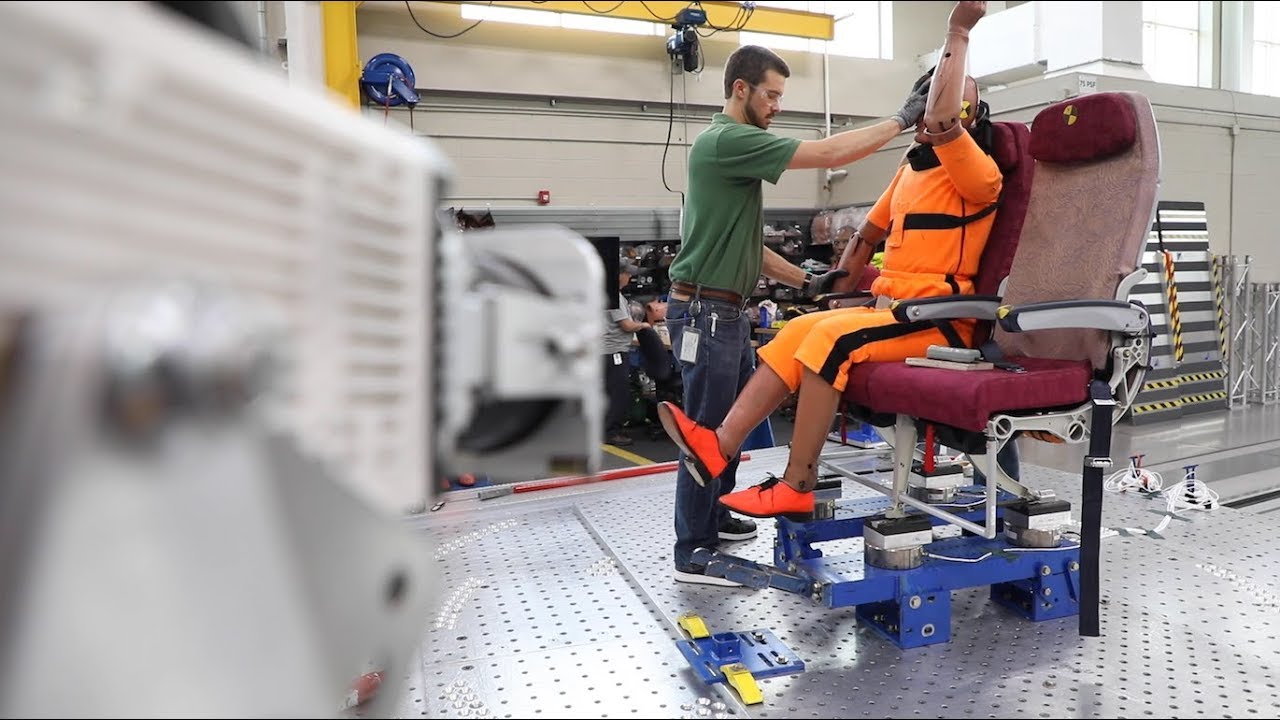
Engineering design sits at the intersection of creativity, science, and practical problem-solving. Instead of focusing only on how machines, products, or systems work, you learn how to imagine, model, test, improve, and communicate solutions that people can actually use. That combination makes the major appealing if you enjoy both technical subjects and hands-on creation, but it also raises an important question: is an engineering design degree the right investment for your goals?
This review examines what you study, how the learning experience works, which careers are available, and the expected starting salary in the US for engineering design majors. You'll also compare the major with mechanical engineering, industrial design, and other related programs. Because engineering design programs vary significantly by college, this guide evaluates the major itself rather than promising one identical curriculum or career outcome. Your school's accreditation, facilities, internships, faculty expertise, and industry connections will still matter enormously.
Engineering Design Major At A Glance
Engineering design is an interdisciplinary college major that teaches you to develop physical products, engineered systems, prototypes, and technical solutions. Depending on the school, the program may be housed in an engineering college, design department, or a combined school of engineering and design.
You typically study mathematics, physics, computer-aided design, materials, manufacturing, programming, human-centered design, and project management. Rather than treating these subjects as isolated requirements, many programs combine them in studio courses and team projects.
| Category | What you can generally expect |
|---|---|
| Degree type | Usually a Bachelor of Science, Bachelor of Engineering, or Bachelor of Design |
| Typical length | Four years full time |
| Academic emphasis | Design process, engineering analysis, prototyping, and communication |
| Common tools | CAD software, simulation programs, 3D printers, CNC equipment, electronics platforms |
| Learning style | Lectures plus labs, studios, critiques, and collaborative projects |
| Common careers | Product designer, design engineer, systems designer, manufacturing designer, UX engineer |
| Best fit | Students who want technical depth without giving up creative and user-focused work |
The major is not simply "engineering with drawing." You'll be expected to justify design decisions with evidence, calculations, testing, and constraints such as cost, safety, sustainability, and manufacturability. At the same time, it usually offers more creative latitude than a narrowly specialized engineering curriculum.
A key limitation is consistency. One college may emphasize consumer products and physical prototyping, while another focuses on robotics, sustainable systems, or digital fabrication. Read course descriptions carefully before applying.
What Do Engineering Design Majors Study?
Your first year will often resemble the foundation of other engineering programs. Expect college algebra or calculus, physics, chemistry, computing, technical communication, and introductory design. These courses help you understand both the language of engineering and the workflow designers use to turn an idea into a working solution.
As you progress, you may encounter:
- Computer-aided design: Creating accurate 2D drawings and 3D models, assemblies, and technical documentation.
- Engineering materials: Comparing metals, polymers, composites, ceramics, and other materials based on strength, cost, weight, and environmental impact.
- Mechanics and electronics: Analyzing forces, motion, circuits, sensors, motors, and controls.
- Manufacturing processes: Learning how products are cut, molded, printed, machined, assembled, and inspected.
- Human-centered design: Studying user research, ergonomics, accessibility, and behavior.
- Prototyping and testing: Building rough and refined versions, collecting performance data, and revising the design.
- Sustainability and life-cycle thinking: Considering energy use, repairability, waste, sourcing, and end-of-life disposal.
- Design communication: Presenting concepts through sketches, renderings, models, reports, and demonstrations.
Some programs also include coding, data visualization, mechatronics, virtual reality, entrepreneurship, or biomedical design. You might design an assistive device, improve a household product, create a robotic mechanism, or develop a sustainable packaging system.
The most important shift is from "What can I make?" to "What problem is worth solving, for whom, and under which constraints?" That mindset separates professional engineering design from hobbyist invention.
How We Evaluate The Major
To judge whether engineering design is worth pursuing, you should look beyond the attractiveness of project photos or a modern makerspace. A strong evaluation considers educational quality, career flexibility, affordability, and your personal working style.
We use six criteria:
- Technical foundation: Does the program include enough mathematics, science, mechanics, computing, and engineering analysis to support complex work?
- Design practice: Do you repeatedly move from research and requirements to concepts, prototypes, testing, and refinement?
- Portfolio value: Will you graduate with documented projects that demonstrate your process rather than just polished final images?
- Career access: Does the college offer internships, co-ops, employer partnerships, career coaching, and alumni connections?
- Professional portability: Can your skills transfer among product development, manufacturing, technology, consulting, and systems work?
- Return on investment: Do likely career opportunities justify tuition, living costs, software expenses, and the time required?
You should also investigate accreditation and graduate outcomes. Accreditation does not guarantee employment, but it can signal that a program meets established educational standards and may matter for certain engineering pathways or future licensure plans.
Facilities deserve scrutiny, too. Ask whether undergraduates, not only graduate students, can use fabrication labs, electronics benches, machine shops, testing equipment, and industry-standard software. A beautiful facility is less valuable if access is limited or projects remain purely conceptual.
Finally, evaluate evidence. Request internship statistics, sample senior projects, course syllabi, and information about graduates' first jobs. Marketing language is useful for generating interest: measurable outcomes are better for making a decision.
Curriculum, Projects, And Learning Experience
Engineering design is usually more project-heavy than students expect. You won't spend every week quietly completing problem sets. A typical project may require you to interview users, define requirements, sketch alternatives, create CAD models, build a prototype, test it, revise the design, calculate costs, and present your conclusions.
That process can be energizing, and messy. A prototype may break hours before a demonstration. A component may be unavailable. Your team may discover that the feature users requested is too expensive to manufacture. Learning to respond to those setbacks is part of the curriculum, not a sign that you've failed.
What a typical project cycle looks like
- Identify a problem and research the people affected.
- Translate observations into measurable design requirements.
- Generate several possible concepts instead of committing to the first idea.
- Select an approach using criteria such as performance, cost, safety, and usability.
- Model and prototype the concept.
- Test it against real or simulated requirements.
- Document what changed and why.
Teamwork is unavoidable. You may collaborate with mechanical, electrical, software, business, or design students. This mirrors real product development, but it also means your grade can depend partly on communication and project management.
Look for programs that balance freedom with technical rigor. Open-ended projects are valuable, yet you also need structured instruction in tolerances, testing methods, engineering ethics, and manufacturing constraints. Programs that offer internships or cooperative education can add an especially useful bridge between classroom prototypes and production-ready products. Engineering colleges often frame this blend as education designed around real-world impact: for example, engineering education focused on impact reflects the kind of applied orientation you should look for when comparing schools.
Skills You Build And How They Apply
The strongest reason to consider engineering design is the unusual combination of technical, creative, and interpersonal skills you develop. You learn enough engineering to understand why a design works, enough design to improve how it serves people, and enough communication to persuade others to support it.
Core technical skills
- CAD modeling, drawings, assemblies, and design documentation
- Basic simulation, measurement, testing, and data interpretation
- Materials selection and manufacturing awareness
- Electronics, sensors, mechanisms, or programming, depending on the program
- Cost estimation, requirements definition, and design-for-manufacture thinking
Professional skills
- User interviews and observational research
- Brainstorming and concept evaluation
- Visual and technical communication
- Collaboration across specialties
- Scheduling, prioritization, and presentation
- Iterative problem-solving under uncertainty
These skills apply well beyond traditional product design. A graduate might improve a medical device, develop consumer electronics, create industrial equipment, design sustainable packaging, support robotics, or help a manufacturer reduce assembly time. The same workflow can also transfer to service design and digital products, although you may need additional training in software, user experience, or data.
Your portfolio will often matter nearly as much as your transcript. Employers want to see the problem, your role, alternatives you rejected, evidence from testing, and the final result. A glossy rendering without process can look like decoration. A modest project with clear reasoning can demonstrate professional maturity.
The major also teaches a valuable habit: treating criticism as information. Design reviews can feel personal at first, but learning to defend decisions, accept useful challenges, and revise quickly is a career advantage.
Job Opportunities For Engineering Design Majors
Job Opportunities for Engineering Design Majors are broad, but your first job title may not literally contain the words "engineering design." Employers often recruit graduates into product development, manufacturing, mechanical design, user experience, technical sales, or project coordination roles.
Potential paths include:
| Career path | Typical work |
|---|---|
| Product or design engineer | Develop and refine physical products, components, and assemblies |
| Mechanical designer | Produce CAD models, drawings, layouts, and technical documentation |
| Industrial or product designer | Shape product form, usability, appearance, and user experience |
| Manufacturing or process engineer | Improve production methods, quality, efficiency, and tooling |
| Systems or mechatronics designer | Integrate mechanical, electrical, software, and control elements |
| Prototype or fabrication specialist | Build, test, troubleshoot, and iterate early-stage concepts |
| UX or interaction designer | Design how people interact with digital or connected products |
| Technical project coordinator | Organize requirements, schedules, suppliers, testing, and teams |
| Design researcher | Study users, contexts, and unmet needs to guide development |
Industries include medical technology, transportation, consumer goods, aerospace, robotics, energy, construction products, manufacturing, and consulting. Startups may value your ability to work across boundaries: larger employers may place you on a specialized design or engineering team.
Your opportunities improve when you pair the degree with internships, relevant software skills, an organized portfolio, and practical experience making something work. Professional certifications can help in some CAD or project-management niches, but they don't replace evidence of good judgment.
Graduate school may be useful if you want advanced human-computer interaction, biomechanics, architecture, engineering analysis, or research. It is not automatically necessary for entry-level product development. Before enrolling, compare actual job postings in your target industry and identify the tools, degree types, and experience employers repeatedly request.
Expected Starting Salary In The US For Engineering Design Majors
The Expected starting Salary in the US for Engineering Design Majors varies too much for one guaranteed number. Your title, location, industry, internship history, technical skills, and degree type all influence the offer. A graduate entering mechanical or product engineering may receive a different offer from one entering industrial design, manufacturing support, or UX.
As a practical planning estimate, many entry-level engineering-design-related roles may fall roughly in the $55,000–$80,000 range, while highly competitive industries and locations can exceed that range. Roles centered more heavily on industrial design or general design support may begin lower: engineering roles requiring stronger analysis, programming, or regulated-industry knowledge may begin higher. These are planning ranges, not a promise or a substitute for current salary data.
| Factor | Potential effect on starting pay |
|---|---|
| Internship or co-op experience | Often improves competitiveness and may lead directly to an offer |
| CAD and simulation ability | Helps qualify you for technical design positions |
| Programming or controls | Can expand access to robotics, automation, and connected-product roles |
| Industry | Aerospace, medical devices, energy, and advanced manufacturing may pay differently from small consumer brands |
| Location | Major technology and manufacturing hubs often offer higher salaries but also higher living costs |
| Portfolio quality | Demonstrates practical ability when your professional history is short |
| Degree and accreditation | May matter for engineering-specific responsibilities and advancement |
Don't evaluate compensation by salary alone. Benefits, relocation assistance, overtime expectations, mentoring, tuition support, and the chance to work on meaningful products affect the value of a first role. A slightly lower offer with excellent training can outperform a higher offer that leaves you doing repetitive drafting with no growth.
For your own estimate, collect at least 20 recent job postings, separate titles by function, and compare the requirements with your skills. Treat salary websites as directional because self-reported data and small samples can distort averages.
Pros And Cons Of Studying Engineering Design
Advantages
- You combine creativity with technical reasoning. You can sketch possibilities while also asking whether they are safe, affordable, and manufacturable.
- Your projects create tangible evidence. A prototype, test report, or portfolio case study gives employers something concrete to evaluate.
- The skills are transferable. You can move among products, manufacturing, robotics, sustainability, medical technology, and related fields.
- You learn to work across disciplines. That experience resembles the collaboration required in professional development teams.
- The work can feel meaningful. Designing an accessible tool or safer product connects technical decisions with real human outcomes.
- You may have multiple career directions. The major does not lock you into one industry as tightly as some specialized programs.
Disadvantages
- The degree can be difficult to explain. Some employers understand traditional engineering titles more readily than interdisciplinary ones.
- Program quality varies widely. A weak curriculum may prioritize visual presentation while neglecting math, testing, and manufacturing.
- Project work consumes time. Materials, team meetings, critiques, and prototype failures can make the workload unpredictable.
- You may need extra specialization. Certain engineering, software, or regulated roles require deeper study than the major provides.
- Facilities and software can be expensive. Even when tuition covers access, personal equipment or materials may add costs.
- Entry-level pay is not uniform. A design-focused degree does not guarantee the salary associated with every engineering occupation.
The major is strongest when your college clearly defines its technical outcomes and connects design education to employers. It is riskier when the program sounds exciting but cannot show graduate results, internship access, or a serious foundation in engineering principles.
Engineering Design Compared With Related Majors
Engineering design overlaps with several established majors, but the differences affect your coursework and career options.
| Major | Main emphasis | Choose it if you want… |
|---|---|---|
| Engineering design | Integrated design, prototyping, technical problem-solving, and user needs | A broad product-development education |
| Mechanical engineering | Mathematics, mechanics, thermodynamics, systems, and analysis | Deeper traditional engineering preparation |
| Industrial design | Form, ergonomics, aesthetics, materials, and user experience | Stronger emphasis on product appearance and interaction |
| Manufacturing engineering | Processes, quality, automation, production, and efficiency | To improve how products are made at scale |
| Electrical engineering | Circuits, electronics, signals, power, and embedded systems | To specialize in electrical and computing hardware |
| Biomedical engineering | Engineering applied to biology, health, and medical devices | To work closely with healthcare technologies |
| Architecture | Built environments, structures, space, and professional design practice | To design buildings and physical environments |
Mechanical engineering usually gives you greater depth in analysis and may be the safer choice if you want conventional engineering roles, advanced simulation, or a straightforward path toward engineering licensure. Industrial design may be better if your strongest interests are form, visual language, ergonomics, and user experience.
Engineering design can be the middle ground: more technical than many industrial design programs and more user-centered and exploratory than traditional engineering. That flexibility is its appeal, but it can also make your specialization less obvious.
When comparing colleges, inspect required courses rather than relying on major names. Two programs called engineering design may differ more than engineering design and mechanical engineering at different schools. A curriculum with calculus, physics, mechanics, materials, CAD, manufacturing, testing, and substantial design studios is generally more versatile than one built mostly around introductory creativity courses.
Who Should Major In Engineering Design?
Engineering design may suit you if you enjoy asking both "How does this work?" and "How could this be better for the person using it?" You should be comfortable with iteration: the first concept is rarely the final one, and feedback is a normal part of the work.
You're a promising fit if you:
- Like building, modifying, drawing, modeling, or testing things
- Can tolerate mathematics and science even if they aren't your favorite subjects
- Want a career involving physical products, systems, or applied technology
- Enjoy explaining ideas visually and verbally
- Work well on teams with different specialties
- Are willing to develop a portfolio alongside your coursework
- Care about usability, accessibility, sustainability, cost, and safety, not just appearance
You may want another major if you strongly dislike open-ended projects, group work, hands-on experimentation, or revising your ideas. If you already know you want advanced structural analysis, power systems, chemical processes, or software algorithms, a more specialized engineering program may provide better preparation.
Before committing, take three practical steps. First, review the required courses for at least three colleges. Second, speak with current students about workload, lab access, internships, and graduate outcomes. Third, try a small project, such as designing a simple device, modeling a part, or improving an everyday object, and document your reasoning.
Why Major in Engineering Design? The best answer is not that it sounds creative or versatile. You should choose it because you want to turn human needs into tested, workable solutions and are prepared to build the technical foundation that makes those solutions credible. With the right program and a purposeful portfolio, the major can be a flexible launch point into product development, engineering, manufacturing, and emerging technology. It's worth pursuing when the curriculum, cost, and career evidence align with your goals.
Engineering Design College Major - Frequently Asked Questions
What do you typically study in an engineering design college major?
You study mathematics, physics, computer-aided design (CAD), materials, manufacturing, programming, human-centered design, and project management, often integrated through studio courses and team projects to develop practical design solutions.
How does engineering design differ from mechanical engineering or industrial design?
Engineering design balances technical problem-solving with creativity and user needs, offering more creative freedom than traditional mechanical engineering and more technical depth than industrial design, making it a flexible middle ground for product development.
What career opportunities can I expect with an engineering design degree?
Graduates can pursue roles like product designer, design engineer, systems designer, manufacturing designer, or UX engineer in industries such as medical technology, transportation, robotics, and consumer goods, often supported by internships and portfolio experience.
What is the typical starting salary range for engineering design majors in the US?
Entry-level salaries generally range from $55,000 to $80,000 depending on role, location, industry, and skills, with engineering roles requiring stronger analysis or programming often on the higher end.
How important is a portfolio for engineering design students when seeking jobs?
A documented portfolio showcasing your design process, problem-solving, and testing results is crucial, as employers value demonstrated practical ability alongside your academic transcript.
Can I use skills from an engineering design degree in fields beyond traditional product design?
Yes, skills in prototyping, user research, and interdisciplinary collaboration are applicable to areas like robotics, sustainable packaging, medical device improvement, and digital product design, sometimes requiring additional training.