Choosing an ecology college major means choosing to study how living organisms interact with one another and with their environment, and then applying that knowledge to real problems such as habitat loss, climate change, pollution, and declining biodiversity. It can be a rewarding path if you like science, fieldwork, data, and meaningful environmental work. It can also be less straightforward than majors that lead directly to a single licensed profession.
This review explains what you'll study, which skills you'll build, how to evaluate an ecology program, and what careers may follow. It also examines salary expectations, graduate school, related majors, and the practical question behind every college decision: is an ecology degree worth your time and money? Salary figures and employment references are based primarily on data from the U.S. Bureau of Labor Statistics, but your results will depend heavily on location, experience, specialization, and education level.
Ecology Major At A Glance: What Students Study
An ecology major focuses on relationships among organisms, populations, communities, and ecosystems. You may study a forest, wetland, river, grassland, coastal zone, or even an urban environment. The central question is often simple to ask but difficult to answer: how do natural systems work, and what happens when conditions change?
Most programs combine biology with chemistry, mathematics, geology, environmental science, and statistics. You'll learn about evolution, energy flow, nutrient cycles, species interactions, conservation, and human impacts on ecosystems. Many departments also offer concentrations in areas such as wildlife ecology, marine biology, restoration ecology, conservation biology, environmental policy, or ecological modeling.
Your learning may take place in several settings:
- Classrooms and laboratories: You'll examine specimens, conduct experiments, and learn scientific methods.
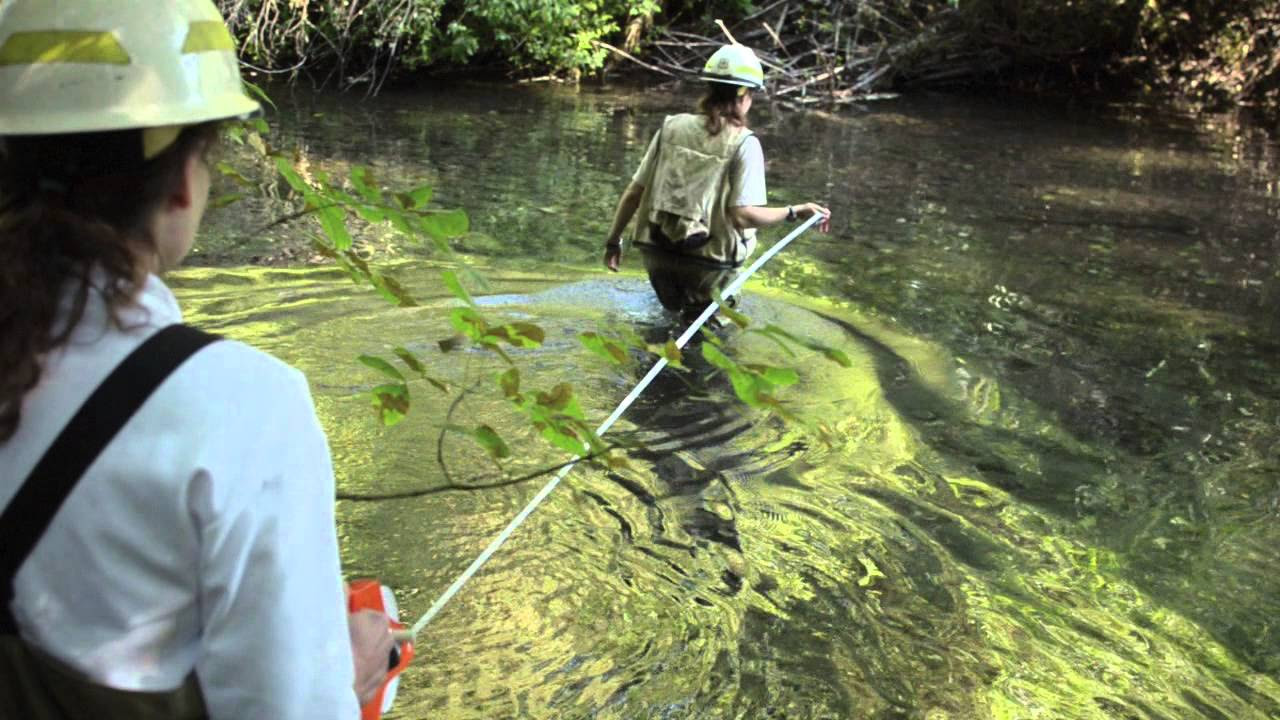
- Field sites: You might measure vegetation, track animals, collect water samples, or survey biodiversity.
- Computing environments: Geographic information systems (GIS), spreadsheets, databases, and statistical software are increasingly important.
- Community and professional settings: Internships may place you with parks, environmental consultants, nonprofits, or government agencies.
Ecology is usually offered as a biology, environmental science, or natural resources degree. That difference matters. A biology department may emphasize cellular and organismal science, while a natural resources program may devote more time to land management, forestry, fisheries, or public policy. Review each curriculum rather than assuming every ecology major is alike.
Core Courses, Skills, and Academic Requirements
Your first year will commonly include general biology, general chemistry, college mathematics, writing, and introductory environmental science. More advanced coursework may include ecology, evolution, genetics, organismal biology, microbiology, physics, and biochemistry. Depending on the program, you may also take soil science, hydrology, climatology, conservation biology, population ecology, or environmental law.
Statistics is one of the most valuable, and sometimes most underestimated, parts of the degree. Ecologists rarely make strong claims from observations alone. They design sampling plans, analyze uncertainty, compare populations, and interpret trends. Courses in biostatistics, experimental design, R, or quantitative methods can make you much more employable.
Useful technical skills include:
- Field identification of plants, animals, or other organisms
- Sampling, monitoring, and laboratory procedures
- Data analysis using R, Python, Excel, or similar tools
- GIS and remote sensing
- Scientific writing and technical reporting
- Public speaking, collaboration, and project management
- Safe operation in outdoor and sometimes physically demanding conditions
Some colleges require calculus, physics, or organic chemistry: others make them optional or concentration-specific. Check prerequisites before enrolling, especially if you might pursue graduate school. A senior thesis, capstone, research project, or field course can be a major advantage because it gives you evidence of what you can actually do, not just a list of completed classes.
How Ecology Programs Should Be Evaluated
The title of a degree tells you less than its curriculum, faculty, facilities, and connections to employers. When comparing programs, look for an ecology major that offers both scientific depth and practical experience.
Start with the required courses. Does the program include statistics, GIS, experimental design, and data management? Are there advanced ecology electives, or is the degree mostly broad introductory science? If you already know that you're interested in wildlife, marine systems, restoration, or climate, check whether the college has relevant courses and faculty expertise.
Then investigate learning opportunities beyond lectures:
- Field access: Are forests, wetlands, rivers, farms, coastlines, or research stations nearby?
- Research participation: Can undergraduates work with professors or join funded projects?
- Internships: Does the department actively place students with agencies, parks, consulting firms, or nonprofits?
- Equipment and software: Are GIS labs, molecular facilities, boats, monitoring tools, or computing resources available?
- Career outcomes: Ask where recent graduates work and how many continue to graduate school.
- Class size and advising: You'll benefit from instructors who know your goals and can write informed recommendations.
Cost deserves equal attention. Compare total net price, not just tuition, and consider whether the college's location provides affordable access to field experience. A lower-cost program with strong internships may be a better investment than a prestigious program that leaves you with substantial debt and little practical experience. Explore scholarship opportunities through StudentScholarships.org while comparing offers.
Why Major In Ecology: Benefits and Personal Fit
The strongest answer to "Why major in ecology?" is not simply that you care about the environment. You should also enjoy the process of investigating environmental questions. Ecology requires patience, careful observation, comfort with uncertainty, and a willingness to revise your conclusions when the data disagrees with your expectations.
The major may fit you well if you enjoy:
- Biology and natural history
- Outdoor work as well as computer-based analysis
- Solving open-ended problems
- Working across disciplines
- Connecting science to conservation or public decisions
- Long-term projects where results may take months or years
One benefit is variety. You can move between field research, environmental consulting, education, government, nonprofit work, and data analysis. You may work with wildlife one season and habitat restoration or environmental compliance the next. The work can also feel tangible: your monitoring may guide a restoration plan, inform a protected-area decision, or help identify a threatened population.
Ecology also develops transferable skills. Employers value people who can collect reliable information, recognize patterns, explain technical findings, and work with different stakeholders. Those abilities apply beyond traditional environmental jobs.
Still, passion alone is not a career plan. Before choosing the major, speak with an ecologist, shadow a field technician, or volunteer with a local conservation organization. A weekend collecting data in rain, heat, or insects can reveal more about your fit than an attractive course catalog.
Challenges And Potential Drawbacks Of An Ecology Major
Ecology is meaningful work, but it is not always an easy or high-paying career immediately after college. Entry-level roles can be competitive, particularly in popular locations and in wildlife research. Many graduates begin with seasonal, grant-funded, temporary, or part-time positions before obtaining permanent employment.
Fieldwork can involve early mornings, travel, rough terrain, extreme weather, insects, repetitive sampling, and physically demanding equipment. Laboratory and office roles have their own realities: detailed documentation, long data-cleaning sessions, grant deadlines, and extensive computer time. The romantic image of spending every day outdoors is rarely accurate.
You may also need more education than you initially expect. A bachelor's degree can qualify you for technician, monitoring, education, and some consulting positions. But, research leadership, university teaching, advanced policy analysis, and many specialized roles often favor candidates with a master's degree or doctorate. Graduate school brings time and opportunity costs, so you should not treat it as an automatic next step.
Pay varies widely by sector. Government and university jobs may offer stability and benefits but modest starting wages. Private consulting can provide more opportunities and potentially higher earnings, although deadlines and travel may be demanding. Nonprofit work may be personally fulfilling while offering fewer resources.
The practical response is to build flexibility early: learn statistics and GIS, gain experience with more than one ecosystem, develop writing skills, and maintain a realistic budget. Ecology becomes a riskier choice when you graduate with heavy debt, no internship, and no quantitative or technical specialty.
Career Paths And Job Opportunities For Ecology Majors
Job opportunities for ecology majors span public agencies, private companies, universities, nonprofits, and community organizations. Common entry-level titles include biological technician, environmental technician, field technician, conservation technician, research assistant, and restoration technician.
Potential career directions include:
| Career path | Typical work | Common preparation |
|---|---|---|
| Environmental consulting | Surveys, compliance reports, permitting, and impact assessments | Bachelor's degree, field skills, GIS, technical writing |
| Wildlife or fisheries management | Population monitoring, habitat planning, and species management | Ecology or natural resources coursework: agency experience |
| Conservation and restoration | Invasive-species control, habitat restoration, and land stewardship | Field experience, plant identification, project skills |
| Government science | Monitoring, regulation support, public-land management | Degree plus internships: specialized roles may require graduate study |
| Research | Experiments, data collection, modeling, and publications | Research experience: master's or Ph.D. for advancement |
| Environmental education | Interpretation, outreach, and curriculum development | Communication skills and experience with the public |
| GIS and ecological data | Mapping, remote sensing, databases, and spatial analysis | GIS coursework, portfolio, and programming or statistics |
The BLS occupational outlook for zoologists and wildlife biologists is a useful benchmark, but it does not represent every ecology graduate. Some graduates become environmental scientists, whose work may include pollution control and regulatory compliance: others enter sustainability, agriculture, urban planning, or environmental communication.
Your first job may not contain the word "ecologist." Search broadly and read duties carefully. A GIS assistant, water-quality technician, or restoration crew member can provide more relevant experience than a prestigious-sounding role with little responsibility.
Expected Starting Salary In The US For Ecology Majors
There is no single Expected starting Salary in the US for Ecology Majors because "ecology major" is an education category, not one occupation. Location, employer, seasonal status, technical skills, and education can change your first offer substantially.
As a broad expectation, many bachelor's-level ecology graduates enter technician, assistant, education, or junior environmental roles in roughly the $38,000–$55,000 range. Some seasonal positions fall below that range, while specialized consulting, GIS, or data-focused roles in expensive metropolitan areas may exceed it. These are practical planning estimates, not a guaranteed national salary.
For official benchmarks, compare occupations rather than relying on degree-level salary claims. The BLS reports wage and outlook information for environmental scientists and specialists, zoologists and wildlife biologists, and related life-science careers. Their median wages include experienced workers, so they should not be confused with starting pay.
Your earning potential improves when you can demonstrate scarce, useful skills. GIS, R, Python, remote sensing, environmental permitting, wetland delineation, statistical modeling, and strong technical writing can distinguish you from applicants with similar degrees. A master's degree may improve access to specialist roles, but it does not automatically produce a strong return on investment.
Before accepting an offer, compare hourly pay, season length, overtime, travel reimbursement, health insurance, retirement benefits, and relocation costs. A $45,000 year-round job may be more valuable than a $50,000 seasonal position with several unpaid months.
Graduate School, Internships, And Career Preparation
Internships are among the best ways to test ecology as a career and make your first job search easier. Look at state wildlife agencies, national parks, environmental consulting companies, university labs, conservation nonprofits, museums, botanical gardens, and local watershed groups. Paid experience is ideal, but a carefully chosen volunteer role can still build references and portfolio material.
Try to graduate with evidence of your abilities. Your portfolio might include a GIS map, a short technical report, a species-monitoring protocol, a data analysis, a poster presentation, or a restoration plan. Keep a record of equipment, software, methods, and responsibilities while the details are fresh.
Graduate school makes sense when it supports a specific goal. A master's degree may help you specialize in conservation planning, fisheries, ecology, environmental policy, or quantitative analysis. A doctorate is generally intended for independent research, university careers, or advanced scientific leadership. Talk with current graduate students about funding, teaching requirements, completion rates, and typical career outcomes before applying.
During college, focus on a practical sequence:
- Take statistics and GIS seriously rather than treating them as side requirements.
- Join a research lab or field project by your second year if possible.
- Build relationships with professors and supervisors who can recommend you.
- Apply early for seasonal jobs: many recruit months before the field season.
- Practice explaining your work to non-scientists.
- Track scholarships, fellowships, and paid training opportunities.
Networking does not have to mean awkward self-promotion. Ask professionals what they do on an ordinary Tuesday and which skills they wish new hires already had. Their answers can reshape your course choices.
Ecology Compared With Related College Majors
Ecology overlaps with several majors, but the differences can affect your coursework and job options.
| Major | Main emphasis | May suit you if you want to… |
|---|---|---|
| Ecology | Organisms, ecosystems, and environmental interactions | Study natural systems and conduct field or quantitative research |
| Environmental science | Science applied to pollution, resources, and human impacts | Combine biology, chemistry, policy, and problem-solving |
| Environmental studies | Social, political, ethical, and communication dimensions | Work on sustainability, advocacy, policy, or education |
| Wildlife biology | Animals, populations, habitat, and management | Focus on wildlife research or agency management |
| Natural resources | Managed forests, fisheries, land, and water resources | Work in resource planning and stewardship |
| Biology | Broad study of living systems, often including cellular science | Keep options open for health, research, or graduate school |
If you want medical or laboratory careers, a general biology major may provide better prerequisites and flexibility. If your interest is environmental regulation or sustainability, environmental science or environmental studies may be a closer match. If you already know you want wildlife management, a natural resources or wildlife biology program may offer more targeted training.
There is no universally superior option. Compare the actual required courses, internship access, faculty research, and employer relationships. You can also combine fields through a major-minor combination, for example, ecology with GIS, statistics, computer science, public policy, or communications. In many cases, the complementary skill matters as much as the major's title.
Frequently Asked Questions About Ecology College Majors
What does an ecology college major typically study?
An ecology major focuses on the relationships among organisms and their environments, covering topics like evolution, energy flow, nutrient cycles, species interactions, conservation, and human impacts on ecosystems through biology, chemistry, math, and environmental science courses.
What skills will I develop while majoring in ecology?
Students build skills in field identification, sampling, data analysis using tools like R or GIS, scientific writing, public speaking, and project management, along with technical abilities for safe outdoor work and laboratory procedures.
How can I evaluate which ecology program is right for me?
Look for programs offering strong scientific depth and practical experience, including courses in statistics, GIS, experimental design, access to field sites, internships, research opportunities, modern equipment, and strong career advising.
What career options are available after earning an ecology degree?
Ecology graduates can work as technicians, environmental consultants, wildlife or fisheries managers, restoration specialists, government scientists, researchers, educators, or GIS specialists in public agencies, private firms, nonprofits, or academia.
What is the expected starting salary for ecology majors in the US?
Starting salaries generally range from $38,000 to $55,000, depending on location, employer, experience, and specialization; roles with advanced skills like GIS or statistical modeling may offer higher pay.
Is pursuing graduate school necessary for an ecology major?
While a bachelor's degree qualifies you for many entry-level roles, advanced positions in research, university teaching, or specialized policy work often require a master's or doctoral degree, so graduate school depends on your career goals.