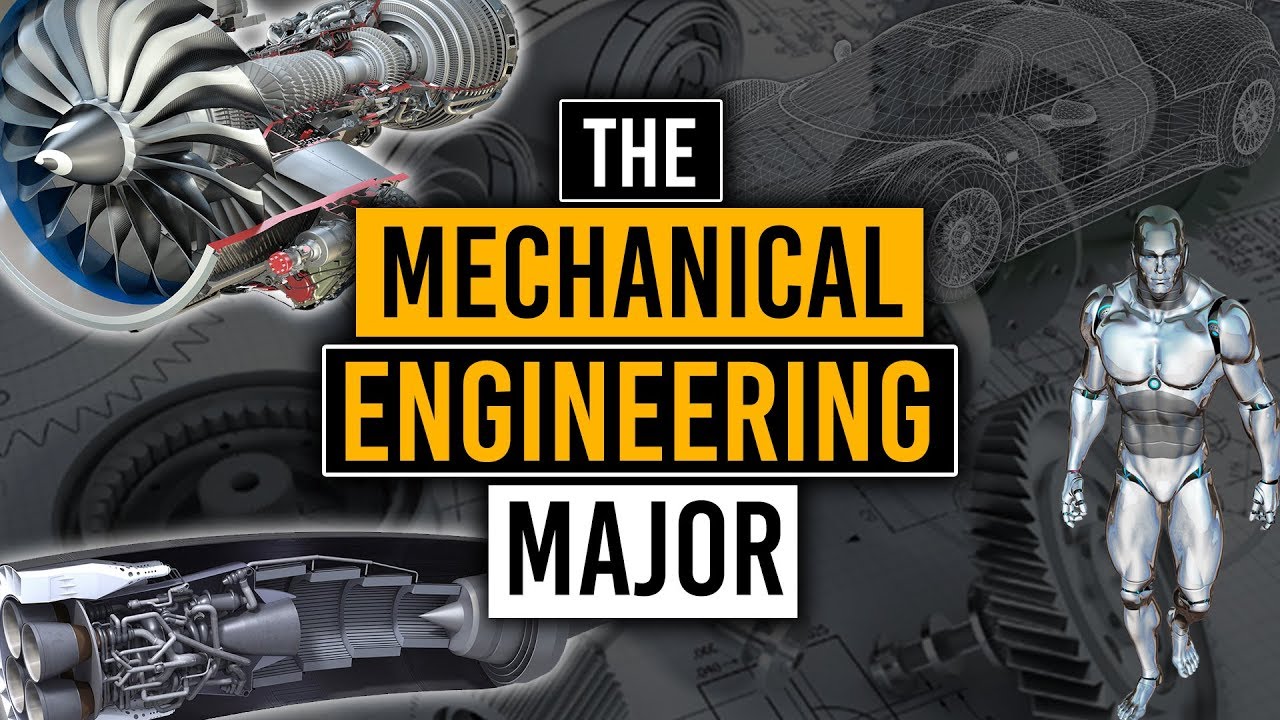
Mechanical engineers research, design, develop, manufacture, and test tools, engines, machines, and other mechanical devices. Mechanical engineering is one of the broadest engineering disciplines. Engineers in this discipline work on power-producing machines such as electric generators, internal combustion engines, and steam and gas turbines. They also work on power-using machines such as refrigeration and air-conditioning equipment, machine tools, material-handling systems, elevators and escalators, industrial production equipment, and robots used in manufacturing. Some mechanical engineers design tools that other engineers need for their work. In addition, mechanical engineers work in manufacturing or agriculture production, maintenance, or technical sales; many become administrators or managers.
Work Environment
Mechanical engineers held about 299,200 jobs in 2020. The largest employers of mechanical engineers were as follows:
- Architectural, engineering, and related services - 21%
- Machinery manufacturing - 14%
- Transportation equipment manufacturing - 12%
- Computer and electronic product manufacturing - 8%
- Scientific research and development services - 5%
Mechanical engineers generally work in offices. They may occasionally visit worksites where a problem or piece of equipment needs their personal attention. In most settings, they work with other engineers, engineering technicians, and other professionals as part of a team.
Work Schedules
Most mechanical engineers work full time and some work more than 40 hours a week.
Education & Training Required
A bachelor's degree in engineering is required for almost all entry-level engineering jobs. College graduates with a degree in a natural science or mathematics occasionally may qualify for some engineering jobs, especially in specialties that are in high demand. Most engineering degrees are granted in electrical and electronics engineering, mechanical engineering, and civil engineering. However, engineers trained in one branch may work in related branches. For example, many aerospace engineers have training in mechanical engineering. This flexibility allows employers to meet staffing needs in new technologies and specialties in which engineers may be in short supply. It also allows engineers to shift to fields with better employment prospects or to those which more closely match their interests.
Most engineering programs involve a concentration of study in an engineering specialty, along with courses in both mathematics and the physical and life sciences. Many programs also include courses in general engineering. A design course, sometimes accompanied by a computer or laboratory class or both, is part of the curriculum of most programs. Often, general courses not directly related to engineering, such as those in the social sciences or humanities, also are required.
In addition to the standard engineering degree, many colleges offer 2-year or 4-year degree programs in engineering technology. These programs, which usually include various hands-on laboratory classes that focus on current issues in the application of engineering principles, prepare students for practical design and production work, rather than for jobs that require more theoretical and scientific knowledge. Graduates of 4-year technology programs may get jobs similar to those obtained by graduates with a bachelor's degree in engineering. Engineering technology graduates, however, are not qualified to register as professional engineers under the same terms as graduates with degrees in engineering. Some employers regard technology program graduates as having skills between those of a technician and an engineer.
Graduate training is essential for engineering faculty positions and some research and development programs, but is not required for the majority of entry-level engineering jobs. Many experienced engineers obtain graduate degrees in engineering or business administration to learn new technology and broaden their education. Numerous high-level executives in government and industry began their careers as engineers.
The Accreditation Board for Engineering and Technology (ABET) accredits college and university programs in engineering and engineering technology. ABET accreditation is based on a program's faculty, curriculum, and facilities; the achievement of a program's students; program improvements; and institutional commitment to specific principles of quality and ethics. Graduation from an ABET-accredited program may be required for engineers who need to be licensed.
Although most institutions offer programs in the major branches of engineering, only a few offer programs in the smaller specialties. Also, programs with the same title may vary in content. For example, some programs emphasize industrial practices, preparing students for a job in industry, whereas others are more theoretical and are designed to prepare students for graduate work. Therefore, students should investigate curricula and check accreditations carefully before selecting a college.
Admissions requirements for undergraduate engineering schools include a solid background in mathematics (algebra, geometry, trigonometry, and calculus) and science (biology, chemistry, and physics), in addition to courses in English, social studies, and humanities. Bachelor's degree programs in engineering typically are designed to last 4 years, but many students find that it takes between 4 and 5 years to complete their studies. In a typical 4-year college curriculum, the first 2 years are spent studying mathematics, basic sciences, introductory engineering, humanities, and social sciences. In the last 2 years, most courses are in engineering, usually with a concentration in one specialty. Some programs offer a general engineering curriculum; students then specialize on the job or in graduate school.
Some engineering schools have agreements with 2-year colleges whereby the college provides the initial engineering education and the engineering school automatically admits students for their last 2 years. In addition, a few engineering schools have arrangements that allow students who spend 3 years in a liberal arts college studying preengineering subjects and 2 years in an engineering school studying core subjects to receive a bachelor's degree from each school. Some colleges and universities offer 5-year master's degree programs. Some 5-year or even 6-year cooperative plans combine classroom study with practical work, permitting students to gain valuable experience and to finance part of their education.
Certifications Needed
All 50 States and the District of Columbia require licensure for engineers who offer their services directly to the public. Engineers who are licensed are called professional engineers (PEs). This licensure generally requires a degree from an ABET-accredited engineering program, 4 years of relevant work experience, and completion of a State examination. Recent graduates can start the licensing process by taking the examination in two stages. The initial Fundamentals of Engineering (FE) examination can be taken upon graduation. Engineers who pass this examination commonly are called engineers in training (EITs) or engineer interns (EIs). After acquiring suitable work experience, EITs can take the second examination, called the Principles and Practice of Engineering exam. Several States have imposed mandatory continuing education requirements for relicensure. Most States recognize licensure from other States, provided that the manner in which the initial license was obtained meets or exceeds their own licensure requirements. Many civil, mechanical, and chemical engineers are licensed PEs. Independently of licensure, various certification programs are offered by professional organizations to demonstrate competency in specific fields of engineering.
Other Skills Required
Engineers should be creative, inquisitive, analytical, and detail oriented. They should be able to work as part of a team and to communicate well, both orally and in writing. Communication abilities are becoming increasingly important as engineers interact more frequently with specialists in a wide range of fields outside engineering.
Engineers who work for the Federal Government usually must be U.S. citizens. Some engineers, particularly nuclear engineers and aerospace and other engineers working for defense contractors, may need to hold a security clearance.
How to Advance
Beginning engineering graduates usually work under the supervision of experienced engineers and, in large companies, also may receive formal classroom or seminar-type training. As new engineers gain knowledge and experience, they are assigned more difficult projects with greater independence to develop designs, solve problems, and make decisions. Engineers may advance to become technical specialists or to supervise a staff or team of engineers and technicians. Some eventually may become engineering managers or enter other managerial or sales jobs. In sales, an engineering background enables them to discuss a product's technical aspects and assist in product planning, installation, and use.
Numerous professional certifications for engineers exist and may be beneficial for advancement to senior technical or managerial positions. Many certification programs are offered by the professional societies listed as sources of additional information for engineering specialties at the end of this statement.
Job Outlook
Employment of mechanical engineers is projected to grow 7 percent from 2020 to 2030, about as fast as the average for all occupations.
About 20,200 openings for mechanical engineers are projected each year, on average, over the decade. Many of those openings are expected to result from the need to replace workers who transfer to different occupations or exit the labor force, such as to retire.
Employment
Mechanical engineers work in many industries and on many types of projects. As a result, employment growth for these workers will vary by industry.
As manufacturing processes incorporate more complex automation machinery, mechanical engineers are expected to be needed to help plan for and design this equipment. In automotive manufacturing, these engineers will play a key role in improving the range and performance of hybrid and electric cars. However, employment declines in some industries may temper overall employment growth of mechanical engineers.
Earnings
The median annual wage for mechanical engineers was $95,300 in May 2021. The median wage is the wage at which half the workers in an occupation earned more than that amount and half earned less. The lowest 10 percent earned less than $60,750, and the highest 10 percent earned more than $136,210.
In May 2021, the median annual wages for mechanical engineers in the top industries in which they worked were as follows:
- Scientific research and development services - $102,050
- Computer and electronic product manufacturing - $99,640
- Architectural, engineering, and related services - $97,090
- Transportation equipment manufacturing - $97,000
- Machinery manufacturing - $79,770
Most mechanical engineers work full time and some work more than 40 hours a week.