

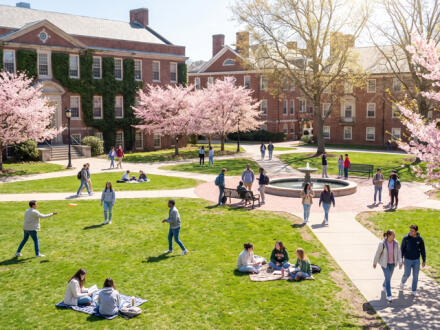
Paying for college can feel like trying to fill a swimming pool with a garden hose. Tuition, fees, books, housing, and transportation add up fast. The College Board reports that average published tuition and fees at public four-year in-state schools run into the thousands before a student buys a single textbook.
That's why students and families often look first for Southampton County, Virginia scholarships. Local awards usually come with one huge advantage: smaller applicant pools. A student from Courtland, Capron, Boykins, Newsoms, or Ivor may face far less competition in a county, regional, or Virginia-based scholarship than in a national contest with 10,000 applicants.
This guide breaks the search into 12 practical moves. It covers Southampton County Scholarships for High School Students, options for undergrads and graduate students, scholarships for STEM students, scholarships for women, and workforce programs that don't require a four-year degree.
The goal is simple. Help students find money they actually have a shot at winning.
A strong scholarship plan often mixes local awards, Virginia-wide programs, school-based aid, and special-eligibility funds. Even a $500 award can cover books for a semester. Three $1,000 awards can cut a community college bill in a real, visible way.
Students who treat scholarships like a weekly habit, not a last-minute scramble, usually get better results. The sections below show where to look, what to ask for, and how to stay organized without turning the process into a second full-time job.
1. Start With Southampton County Scholarships For High School Students
Students should begin with Southampton County Scholarships for High School Students because local awards are often the easiest place to compete well. A county-level scholarship might draw 25 to 150 applicants, while a national scholarship can draw 5,000 or more.
High school seniors should first make a list of every local group connected to their life. That includes:
- churches
n- booster clubs
- farm bureaus
- rescue squads
- alumni groups
- civic clubs like Rotary, Lions, and Ruritan
- employer-sponsored funds
- memorial scholarships
A student who played school sports should also review programs like the VHSL scholarship options. Athletic participation, leadership, and academic standing often matter as much as test scores.
A strong local search starts with precise questions:
- Is the scholarship only for Southampton County residents?
- Is it only for seniors?
- Does it require a minimum GPA such as 2.5, 3.0, or 3.5?
- Does it prefer students entering certain majors?
For example, a senior with a 3.4 GPA, 62 service hours, and band participation may be a stronger fit for a local memorial award than for a national merit contest. That fit matters. Local committees often know the schools, the teachers, and the county itself, which can work in a student's favor.
2. Check School Counseling Offices And Local High School Award Lists
School counseling offices are still one of the best scholarship sources around. They usually hold award lists, deadline calendars, past winner examples, and application packets that never show up in a broad search engine result.
This matters because many local scholarships stay low-profile on purpose. A donor may only want applicants from one high school, one graduating class, or one county. That can shrink the pool fast.
Students should ask counselors for three specific items:
- the current local scholarship packet
- last season's award list
- a calendar of deadlines by month
If a school posts a scholarship bulletin, students should read it every week. Missing one deadline by 24 hours means a student's GPA, volunteer hours, and essay quality suddenly don't matter.
Counselors may also point students toward career or specialty awards, such as the focused driver scholarship, if the fit makes sense.
A practical example: if one high school releases 18 local awards and a student applies to only 4, that student leaves 14 real chances untouched. Even if each award averages $750, that ignored list could represent $10,500 in possible aid. That's enough to cover a large part of a first-semester bill at many community colleges.
3. Explore Southampton County Scholarships For Undergraduate Students
Students already in college should not assume the scholarship hunt is over. In fact, Southampton County Scholarships for Undergraduate Students can open up after the first semester, when a student has a real college GPA, a declared major, and campus involvement to show.
Undergraduates should search in four directions at once:
- hometown and county awards
- college departmental scholarships
- transfer scholarships
- field-specific Virginia scholarships
Many students forget that hometown eligibility often stays active after graduation from high school. If they still live in Southampton County, or if the fund supports county graduates, they may still qualify.
Students planning a lower-cost route should review programs like the community college pathway awards. A pathway plan can make a big difference when a student completes general education courses first and transfers later.
A concrete scenario helps. Suppose a student attends community college for two years at $4,200 per year in tuition and fees, then transfers. If scholarships cover $1,500 each year, that student trims $3,000 before the transfer even happens.
Undergrads should also rework their application story. A strong college application can mention:
- semester GPA, such as 3.6
- campus jobs, such as 12 hours per week
- professor-led research
- tutoring, mentoring, or club leadership
That kind of detail beats a vague statement every time.
4. Look For Southampton County Scholarships For Graduate Students
Graduate students often get overlooked in scholarship conversations, but they shouldn't. Southampton County Scholarships for Graduate Students do exist through professional associations, school departments, memorial funds, and career-shortage programs.
The smartest move is to search by profession, not just by location. Graduate-level funding often follows fields like education, nursing, counseling, public administration, and library science.
For example, students entering nursing education can study options like the nurse educator scholarship program. Specialized awards matter because graduate tuition can climb fast, especially once fees, licensure exams, and clinical requirements get added.
A graduate student should ask:
- Does the program support part-time enrollment?
- Is service in Virginia required after graduation?
- Does the award cover tuition only, or books and fees too?
A clear example: a master's student taking 9 credits per term might pay several thousand dollars in tuition alone. A single $2,000 award can cover a chunk of that bill or offset books, licensing, and travel to required field placements.
Graduate applicants also need sharper recommendation letters. A professor who can say, "She completed a 28-page research review and led 3 peer workshops," writes a better letter than someone who only says, "She was a good student." Specific proof wins.
5. Prioritize Southampton County Scholarships For STEM Students
Students interested in science, technology, engineering, or math should put Southampton County Scholarships for STEM Students high on the list. STEM scholarships often come from industry groups, technical associations, and workforce-focused foundations that want to fill real labor gaps.
Virginia employers continue to need workers in areas like engineering technology, data systems, construction management, surveying, and health sciences. That creates scholarship openings for students with the right course path.
Students should search by exact field, not just "STEM." Better search terms include:
- civil engineering
- computer science
- biology
- surveying
- welding technology
- agriscience
A student interested in land measurement and mapping might fit the surveyors trust award. That kind of niche match is gold. Fewer students apply because fewer students know the field exists.
Numbers matter here. The Bureau of Labor Statistics has long shown that many STEM occupations pay above the national median wage. That makes even a modest $1,000 scholarship more valuable, because it helps a student enter a field with stronger income potential.
A good STEM application should include hard evidence:
- algebra, chemistry, or coding grades
- robotics or science fair projects
- internship hours
- teacher comments on problem-solving
A vague "I love science" essay is forgettable. "He built a soil-moisture sensor for a school garden using a $38 microcontroller kit" is not.
6. Search For Southampton County Scholarships For Women
Women should search for awards built around leadership, service, career advancement, or underrepresented fields. That includes Southampton County Scholarships for Women and Virginia-based programs that support women in agriculture, business, healthcare, education, and STEM.
This search works best when students combine identity-based and field-based filters. A woman studying engineering, for example, may qualify through gender, major, academic performance, and regional residence all at once.
Good places to look include:
- women's clubs
- memorial funds honoring local female educators
- healthcare associations
- alumni groups
- professional groups tied to teaching, law, or public service
Students should also look for scholarships tied to family circumstances. A strong example is the Kids' Chance of Virginia awards, which support students affected by a parent's workplace injury or death. That type of eligibility can apply to women and men, but many families never realize they qualify.
Concrete details improve these applications. Instead of writing, "She likes helping others," an essay should say, "She organized a diaper drive that collected 412 items in 11 days."
Women applying in male-heavy fields should not downplay that angle. A student who is one of 3 girls in a 22-student welding class or one of 5 women in a coding club has a story with real weight. Scholarship committees remember specifics like that.
7. Review Community Foundation, Civic, And Memorial Scholarship Funds
Community foundations and civic groups are often the quiet engines behind local aid. They collect donor money, manage endowments, and award scholarships with very specific rules.
For Southampton County students, this matters because a single foundation can host dozens of funds under one roof. Some honor teachers. Some support first-generation students. Some focus on one town, one school, or one career path.
A strong place to look is the community foundation scholarship list. These collections often include memorial awards with smaller applicant pools and narrower criteria.
Students should pay attention to phrases like:
- resident of Southampton County
- graduate of a named high school
- pursuing healthcare or education
- demonstrated financial need
- community service of 50 hours or more
Local memorial funds can be surprisingly specific. One scholarship may favor students entering teaching. Another may prefer volunteers from a rescue squad family. Another may give first consideration to agriculture students.
That specificity is good news. If a fund receives 37 applications instead of 1,200, a student's odds improve right away.
A useful habit is to build a spreadsheet with five columns: award name, amount, eligibility, materials, deadline. Ten minutes of organizing can prevent missed documents and duplicate work later.
8. Target Career, Trade, And Workforce Development Scholarships
Not every student wants a four-year campus with dorms and lecture halls. And they don't need to. Career, trade, and workforce scholarships can support fast, practical paths into strong-paying jobs.
Southampton County students should search for awards tied to:
- welding
- HVAC
- electrical work
- building trades
- commercial driving
- public safety
- healthcare support roles
Construction-related students may find a fit in the Tidewater AGC awards. Trade scholarships often connect directly to employer demand, which makes them especially useful for students who want to move into paid work quickly.
A student entering a 9-month welding or HVAC program should still apply just as aggressively as a future university student. A $1,200 scholarship might cover tools, boots, certification fees, or a large share of tuition.
The numbers can be eye-opening. Some certificate programs cost less than one semester at a four-year school. If a student stacks a $750 local award, a $1,000 trade scholarship, and employer support for books, the training bill can drop fast.
Families should also ask local employers one direct question: Do you sponsor students entering this field? Many small firms do, especially when they need reliable workers and want to hire locally.
9. Use Virginia-Wide And Regional Awards That Accept Southampton County Applicants
Students should not stop at county lines. Some of the best opportunities for Southampton County residents are Virginia-wide or regional awards that accept applicants from across the state.
This is where scale helps. A statewide scholarship may offer larger amounts, such as $1,000 to $5,000, while still keeping competition lower than a national program.
Students can widen the search by using filters like:
- Virginia resident
- rural student
- first-generation student
- public service interest
- specific major
Students entering criminal justice or related public service fields may fit options such as the sheriffs' institute awards. Regional programs can also support students who plan to work in Virginia after graduation.
The free matching tools on student scholarship listings can help students sort through wider pools without spending hours opening random pages that don't match their profile.
A simple numbers example: if a student applies to 6 local scholarships and 6 Virginia-wide scholarships, that doubles the opportunity set from 6 to 12. If only 2 awards come through at $1,500 each, that's $3,000 earned from a broader search radius.
Students from rural counties should not assume big-state programs favor urban applicants. Many funds actively want geographic spread and community representation.
10. Focus On Need-Based Scholarships, Merit Awards, And Special Eligibility Programs
The smartest scholarship search mixes three categories: need-based aid, merit scholarships, and special eligibility programs. Students who chase only one type usually miss money they could have won.
Need-based scholarships often rely on FAFSA data or a school's financial aid review. Federal Student Aid notes that the FAFSA can open the door to grants, loans, and campus aid, not just federal programs. That means students should file it early and accurately.
Merit scholarships can reward:
- GPA
- class rank
- test scores when required
- leadership
- artistic skill
- athletic participation
Special eligibility programs may focus on family background, volunteer service, military connection, disability status, or career interest. For students served by participating schools, GRASP last-dollar awards can be worth a close look.
A student with a 3.8 GPA and financial need should apply to both merit and need-based awards. A student with a 2.9 GPA but 180 volunteer hours and a parent in a qualifying profession may still be very competitive for special-category aid.
This is not one lane. It's three lanes at once.
A practical approach is to tag each scholarship in a spreadsheet as N, M, or S. If the list shows 14 merit awards but only 2 need-based ones, the student knows where to widen the search next.
11. Build A Strong Application Package With Essays, Recommendations, And Activity Lists
A weak application can waste a perfect scholarship match. Students need a package that is clear, specific, and easy for a review committee to score.
The best applications usually include three things:
- a focused essay
- strong recommendation letters
- a detailed activity list
Essays should use real numbers and scenes. "He worked 18 hours each week at a grocery store while taking 4 AP classes" is stronger than "He worked hard." A committee can picture the first one.
Recommendation letters should come from adults who know the student's work well. A counselor, teacher, coach, supervisor, or pastor can help, but only if they can speak in detail. Students should give each recommender at least 14 days, plus a resume and the scholarship prompt.
Activity lists should include:
- dates
- leadership roles
- service hours
- awards
- job duties
A sharp example beats a long vague list. "Treasurer, Beta Club, managed $1,240 fundraiser budget" says more than "member of clubs."
Students should also proof everything out loud. Reading an essay aloud catches missing words, awkward sentences, and repeated phrases. Even one typo in the opening line can make the application feel rushed.
For students using free platforms, a profile with saved activities and short essays can cut repeat work to under 2 minutes for some applications, which makes consistency much easier.
12. Use Free Scholarship Search Platforms And Track Deadlines Carefully
A free platform can save students hours if they use it well. The key is not signing up and forgetting it. The key is building a system.
Students should choose a free scholarship platform, complete the profile fully, and then track every deadline in one place. A phone calendar works. A spreadsheet works. A wall planner works too. What matters is using one system, not five half-finished ones.
A solid tracking setup includes:
- scholarship name
- amount
- deadline
- essay required or not
- transcript needed or not
- recommendation status
- submission date
Students using Studentscholarships.org can benefit from quicker matching and simpler applications when the profile is complete. That matters because speed helps only if the match is relevant.
One practical rule works well: apply to 2 scholarships each week. In 10 weeks, that becomes 20 applications. If only 10% succeed and the average award is $1,000, that's $2,000 gained from a steady routine.
Students should also set reminders 21 days, 7 days, and 1 day before each deadline. That three-alert method cuts last-minute stress and lowers the risk of forgetting a transcript, signature, or essay upload.
Missed deadlines are the most preventable loss in the entire scholarship process.
Southampton County, Virginia Scholarship FAQs
What are Southampton County scholarships for high school students?
Southampton County scholarships for high school students are local awards with smaller applicant pools, helping students from towns like Courtland and Capron compete effectively for funds based on GPA, leadership, sports participation, or community service. These awards can cover tuition, books, or fees.
How can Southampton County undergraduates find scholarships?
Undergraduates should explore hometown awards, departmental scholarships, transfer scholarships, and Virginia field-specific programs. Continuing eligibility often applies if students still reside in Southampton County or graduated locally. Programs like the community college pathway awards also provide targeted financial support.
Are there scholarships specifically for STEM students in Southampton County?
Yes, Southampton County scholarships for STEM students target fields like engineering, computer science, biology, and construction management. These awards often come from industry groups and technical associations aiming to fill labor shortages, increasing earning potential for recipients in these fields.
What is the best strategy for applying to Southampton County scholarships?
Students should treat scholarship searching as a regular habit, applying to at least two awards weekly, using a tracking system for deadlines and requirements, and building strong applications with specific essays, detailed activity lists, and strong recommendation letters to improve winning chances.
Are there scholarships in Southampton County for women pursuing higher education?
Yes, there are scholarships for women emphasizing leadership, service, and careers in underrepresented fields like STEM, healthcare, and business. Combining filters such as gender, major, and residence increases eligibility, and scholarships may include those honoring local female educators or supporting family circumstances.
Where can Southampton County students find workforce development scholarships?
Career, trade, and workforce scholarships support students pursuing trades like welding, HVAC, electrical work, and healthcare support. Local awards like the Tidewater AGC scholarships target employer demand and can cover certification costs, tools, or tuition for shorter, practical programs.






