

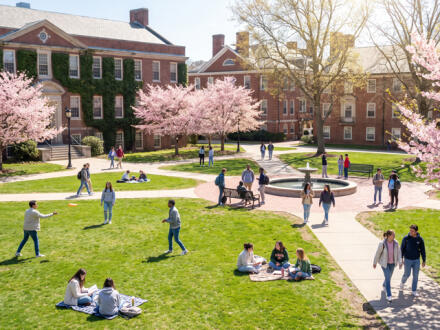
Paying for college in Montgomery County, Virginia can feel like trying to fill a bucket with a hole in the bottom. Tuition, fees, books, housing, and gas add up fast. The good news is that students here have more than one route to lower the bill.
Montgomery County, Virginia scholarships come from several places: local community groups, colleges, state programs, employers, and field-specific awards. Some fit high school seniors. Others work better for transfer students, graduate students, women, or STEM majors. And many students can combine more than one award if they plan early and track deadlines.
That matters because the cost gap is real. The Education Data Initiative reports that the average federal student loan debt per borrower is more than $38,000. Even a $1,000 scholarship can cover books and supplies for a term, and stacking 3 to 5 smaller awards can reduce borrowing in a very real way.
This guide walks through six funding paths worth real attention. It focuses on where Montgomery County Scholarships for High School Students, undergraduate aid, graduate funding, STEM support, and women-focused scholarships often show up. The goal is simple: help students spend less time guessing and more time applying for money they actually have a shot at winning.
1. Montgomery County Scholarships For High School Students
High school seniors in Montgomery County have a strong starting point because many local awards are built for them first. These scholarships often ask for transcripts, a short essay, one or two recommendations, and proof of community involvement.
For many families, this is the easiest entry point because the applicant pool is smaller than national contests. A local award with 75 applicants is a very different game from a national scholarship with 15,000 applicants.
Local Awards, Counselor Resources, And Senior-Year Deadlines
School counseling offices are still one of the best sources for Montgomery County Scholarships for High School Students. Counselors usually keep lists of local civic awards, memorial scholarships, county foundation funds, and college-sponsored opportunities tied to senior-year deadlines.
Students should start with a simple checklist:
- transcript request date
- recommendation request date
- FAFSA submission date
- essay draft deadline
- scholarship portal login list
- final submission date
A practical example helps. A student with a 3.4 GPA, 40 service hours, and part-time work at 12 hours per week may not look like a national merit finalist, but that same profile can be very competitive for local community awards.
Local and state-connected options can widen the pool. Students involved in athletics and academics may fit VHSL scholarship options. Seniors planning a lower-cost transfer route may also want GRASP last-dollar support, which can help close small remaining gaps.
The biggest mistake is timing. Many seniors wait until spring, but recommendation letters, tax documents, and essays pile up fast. Asking a teacher for a letter at least 21 days before the deadline gives them time to write something specific instead of generic.
Students should also save every essay in one folder. A 500-word personal statement about leadership on a robotics team can often be trimmed into a 300-word essay for another application. That reuse can save 2 to 3 hours per application.
2. Montgomery County Scholarships For Undergraduate Students
Undergraduate students have the widest mix of funding sources. That includes merit aid, need-based aid, departmental awards, transfer scholarships, foundation support, and career-pathway grants.
This matters because the total cost of attendance is more than tuition alone. The College Board reports that students also face bills for housing, food, books, transportation, and personal expenses. A scholarship that covers only $1,500 can still wipe out a semester's book bill and part of a meal plan.
College-Specific Aid At Virginia Tech, Radford University, And Community Colleges
Students attending Virginia Tech, Radford University, or community colleges near Montgomery County should search in layers. First comes the general financial aid office. Next comes the student's academic department. Then come alumni funds, honors programs, and transfer pathways.
Virginia Tech students should look for departmental aid tied to major, GPA, and research interest. Engineering, agriculture, business, and health-related fields often have donor-backed awards with narrower applicant pools. Radford University also offers institution-based grants and scholarships that can change once a student declares a major.
Community college students should not assume fewer options. In fact, transfer-focused aid can be one of the smartest plays for cost control. The average published tuition and fees at public two-year colleges are far below four-year private prices, according to College Board data. Starting there and transferring later can cut total borrowing by thousands.
Students using that route may benefit from community college pathway funding. Agriculture-related undergrads should also look at milk producer scholarship support if their background or field fits.
For Montgomery County Scholarships for Undergraduate Students, the strongest strategy is stacking aid from 4 buckets:
- college merit scholarships
- department or major-specific awards
- local foundation scholarships
- employer tuition help
A student who wins $2,000, $1,250, and $750 from three separate sources has already cut $4,000 from the year's bill. That can mean one less loan, fewer work hours, or a lighter payment plan.
3. Montgomery County Scholarships For Graduate Students
Graduate funding works differently from undergraduate aid. Money often comes through assistantships, fellowships, tuition waivers, stipends, and profession-specific support instead of broad local contests.
That setup can be a huge advantage. A funded graduate package can cover part or all of tuition and add a living stipend. In many programs, that is worth far more than a one-time scholarship check.
Assistantships, Department Fellowships, And Professional Program Funding
Students pursuing master's or doctoral study near Montgomery County should first ask one direct question: Is the program funded, partially funded, or self-funded? That answer changes everything.
Graduate assistantships usually fall into three lanes:
- Teaching assistantships, which may include leading labs, grading, or helping with lectures
- Research assistantships, which often support faculty projects and grant-funded work
- Administrative assistantships, which may place students in advising, student affairs, or program support roles
At large universities, assistantships can reduce tuition sharply and provide stipends that pay monthly. A stipend of $1,800 per month over 9 months equals $16,200, which is far more valuable than a small one-time award.
Professional fields also have separate funding streams. Nursing students, for example, may qualify for nurse educator scholarship support if their goals match workforce needs. Students headed into library science may find targeted help through library association awards.
For Montgomery County Scholarships for Graduate Students, timing matters even more than at the undergraduate level. Many departments make funding decisions at admission, not later. A student who applies in the final week may still get admitted but miss a fellowship pool entirely.
A concrete rule works well here: contact the department 30 to 45 days before the application deadline. Ask about assistantship openings, internal nominations, and whether a separate funding form is required. That one email can expose funding that never appears on a public scholarship page.
4. Montgomery County Scholarships For STEM Students
STEM students often have more scholarship lanes than they realize. Science, technology, engineering, math, and health-related majors line up with workforce needs, research grants, and donor priorities.
The National Science Foundation has repeatedly highlighted demand in technical fields, and employers keep funding talent pipelines because replacing trained workers is expensive. That means Montgomery County Scholarships for STEM Students can come from colleges, labs, healthcare systems, associations, and private industry.
Engineering, Computer Science, Health Science, And Research-Focused Opportunities
Engineering students should search by specialty, not only by the word "engineering." Mechanical, civil, electrical, aerospace, and biological systems programs often have different donor funds. A student with a 3.2 GPA in civil engineering and a bridge design project may fit one award, while a 3.8 GPA student in computer science with cybersecurity experience fits another.
Computer science students should highlight project proof. That means GitHub work, app builds, hackathon results, freelance coding, or cybersecurity labs. A portfolio with 3 finished projects usually says more than a vague resume line.
Health science students should also look beyond the obvious nursing bucket. Pre-med, public health, nutrition, medical lab science, and allied health programs may qualify for mission-based awards. Students interested in nursing can explore Virginia DAR nursing aid, while broad academic-achievement applicants may fit Virginia DAR scholarships.
Research-focused students should mention exact outputs when they apply:
- 120 lab hours completed
- 1 poster presentation
- 2 semesters on a faculty project
- 1 prototype or coded tool built
Those details matter because reviewers score evidence, not just intent. Saying "interested in research" is weak. Saying "completed 146 hours in a materials lab and co-presented corrosion data" is memorable.
For STEM applicants, one strong recommendation from a professor or lab supervisor often beats two generic character references. Specific comments about troubleshooting, data accuracy, and persistence carry real weight.
5. Montgomery County Scholarships For Women
Women-focused scholarships are not only about gender. Many of them reward leadership, service, academic persistence, first-generation progress, and commitment to underrepresented fields.
That is especially relevant in STEM. Data from the National Center for Education Statistics has shown that representation still varies sharply by field, with women less represented in some engineering and computing tracks than in health-related majors. Scholarship committees often try to close that gap with targeted awards.
Women-In-Leadership, STEM, And Community-Service Scholarship Options
Students searching for Montgomery County Scholarships for Women should divide the search into 3 practical buckets: leadership, field of study, and service. That makes the process much less random.
Leadership awards often go to applicants who can show action, not just membership. Serving as team captain, club officer, peer mentor, or event organizer is stronger than listing 7 clubs with no role attached.
STEM awards for women usually reward persistence and proof of interest. A student who spent 80 hours building a science fair project, tutoring algebra twice a week, or leading a coding club has a clearer story than someone who simply says she likes math.
Service scholarships value local impact. Think food drives, literacy tutoring, animal shelter shifts, church outreach, or caregiving. Even 2 hours each Saturday over a school year adds up to more than 70 hours of service.
Women applying for local or regional aid may find foundation-based opportunities useful, including community foundation scholarship pools. Applicants with strong service records may also fit youth-focused Virginia awards.
A good women-focused application usually includes one concrete story. For example, a student who repaired 14 used laptops for middle school students tells a sharper story than one who says she "cares about technology access." Scholarship readers remember the second-by-second details: the cracked screens, the missing chargers, the first successful boot-up.
6. Community, Foundation, And Employer-Sponsored Scholarships In Montgomery County, Virginia
Some of the most practical money comes from the least flashy sources. Local foundations, county organizations, fairs, cooperatives, and employers often give awards that attract fewer applicants than national scholarship websites.
That smaller pool matters. If an employer-sponsored award receives 28 applications and a national contest receives 12,000, the odds are not even close.
How To Find Renewable Scholarships And Stack Multiple Awards
Students should pay special attention to renewable scholarships. A one-time $1,500 award is helpful. But a renewable $1,500 scholarship over 4 years is worth $6,000, assuming the student keeps the GPA and enrollment rules.
Strong local options often sit inside county or regional foundation systems. Students from Montgomery County should watch local community awards, including county community foundation scholarships, as well as niche local programs such as fair association scholarships.
Employer-sponsored aid is another smart path. Hospitals, banks, manufacturers, school systems, and public safety groups may support employees or their dependents. Some awards target specific majors like business, healthcare, education, or criminal justice.
To stack awards well, students should build a simple spreadsheet with these columns:
- award name
- amount
- renewable or one-time
- GPA requirement
- residency rule
- essay requirement
- deadline
- whether it reduces other aid
That last line matters. Some colleges allow outside scholarships to lower loans first. Others may reduce institutional grants. Students should ask the financial aid office exactly how outside awards are applied.
A realistic stacking example looks like this:
- $2,000 local foundation scholarship
- $1,000 employer-dependent award
- $750 field-specific scholarship
- $500 civic club scholarship
That total is $4,250. For some students, that covers a semester of tuition at a community college or a large share of housing and books at a public university. Small awards are not small when they travel in a pack.
Montgomery County, Virginia Scholarships - Frequently Asked Questions
What types of scholarships are available for high school students in Montgomery County, Virginia?
High school students in Montgomery County can apply for local community awards, memorial scholarships, and those offered by local foundations and colleges. These typically require transcripts, essays, recommendations, and proof of community involvement, with fewer applicants than national contests.
How can undergraduate students in Montgomery County find scholarship opportunities?
Undergraduates should explore college merit aid, departmental scholarships, local foundation awards, and employer tuition assistance. At schools like Virginia Tech and Radford University, funding often depends on major and GPA, while community college transfer scholarships provide great cost-saving options.
What should graduate students in Montgomery County know about securing scholarships?
Graduate scholarships often come as assistantships, fellowships, or tuition waivers rather than traditional awards. Students should inquire early with their departments about funded programs and assistantship openings to maximize chances of receiving tuition relief and stipends.
Are there specific scholarships for STEM students in Montgomery County?
Yes, STEM scholarships target majors such as engineering, computer science, and health sciences. Applicants benefit from highlighting project work, research experience, and specific accomplishments to strengthen applications for specialized awards supporting technical fields.
What options exist for women seeking scholarships in Montgomery County?
Women can apply for scholarships focused on leadership, community service, and STEM fields. These awards often prioritize demonstrated impact, persistence, and underrepresented disciplines, rewarding concrete achievements and involvement beyond gender alone.
How can students combine multiple Montgomery County scholarships effectively?
Students should track award details including amount, renewal terms, GPA and residency requirements, and how outside scholarships affect other aid. Stacking awards from local foundations, employers, and field-specific funds can substantially reduce college expenses and loan needs.






