

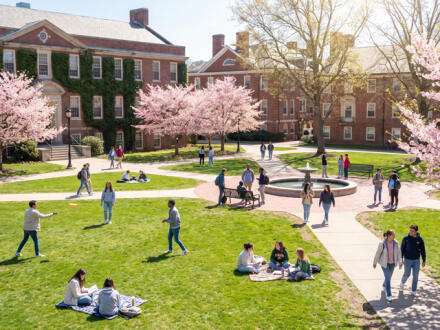
College costs hit hard, especially when tuition, books, housing, and gas all pile up at once. For students in Batesville, Sardis, Como, Pope, Crenshaw, and nearby Panola County communities, scholarships can cut that bill fast if they know where to look and when to apply.
The good news is simple: Panola County, Mississippi scholarships are not limited to valedictorians or star athletes. Local awards often go to students with solid grades, volunteer hours, church involvement, FFA experience, career plans, or strong personal stories. A student who wins 4 scholarships worth $750 each trims $3,000 off the year's cost. That can cover books, lab fees, or a chunk of housing.
This guide breaks the process into 10 practical moves. It covers local school sources, county-level opportunities, Mississippi statewide awards, women-focused and STEM options, and free scholarship-match tools. It also shows how students can prepare essays, recommendation letters, transcripts, and activity lists before deadlines hit.
For high school seniors, current undergrads, and graduate students, the smartest strategy is not waiting for one big award. It is building a list of small and midsize scholarships that fit local ties and applying early, often, and carefully.
1. Start With Panola County Scholarships For High School Students
Panola County Scholarships for High School Students should be the first stop because local pools are usually smaller. Fewer applicants often means better odds than a large national scholarship with 10,000-plus entries.
High school students in Panola County should begin with the scholarships tied to their current school, county residency, and nearby community groups. A senior with a 3.2 GPA, 40 service hours, and one club membership may be more competitive locally than they realize.
Good places to start include:
- senior award packets from the high school office
- local bank and credit union scholarships
- church and youth-group awards
- booster club and alumni association funds
- county business scholarships
Students should also look at Mississippi-specific listings that already favor residents. For example, the MML high school award can fit students interested in public service and local government.
A strong approach is simple:
- make a spreadsheet with scholarship name, amount, deadline, and requirements
- rank each award by effort versus payout
- apply first to scholarships requiring material already on hand
If a student applies to 8 local scholarships and wins only 2 awards worth $1,000 each, that still removes $2,000 from the bill. That is why local-first searching works.
2. Look First At School Counselor And District-Based Award Lists
School counselors often hold the most useful scholarship list in the building. They usually know which awards repeat every year, which groups prefer local students, and which applications past winners completed well.
District-based lists matter because they often include awards that never show up on giant scholarship sites. A counselor may have a document with 25 to 60 local and regional scholarships, including memorial awards and one-time donor funds.
Students should ask for:
- the current senior scholarship list
- district email announcements
- scholarship bulletin board photos or PDFs
- past ceremony programs that name recurring awards
Counselors can also flag niche awards based on activities. A student in athletics, student government, agriculture, or music may qualify for options outside the obvious academic bucket. For example, a student involved in tennis might fit the Mississippi Tennis award.
This is also where deadlines become real. Many local scholarships close within a 4- to 8-week window in the spring semester. Students who wait until the final week usually scramble for signatures and transcripts.
A practical move is meeting the counselor twice:
- once to collect the full list
- once again 14 days later to review best-fit options
That short follow-up can turn a messy pile of forms into 6 or 7 serious applications.
3. Search Community Foundations, Civic Clubs, And Local Memorial Funds
Some of the best local money hides in plain sight. Community foundations, Rotary clubs, Lions clubs, chambers of commerce, civic groups, and memorial funds often offer awards from $500 to $2,500.
These scholarships usually care about community roots. They may ask whether the student lives in Panola County, attended a county school, plans to return home after college, or served through church, 4-H, or local volunteer work.
Common places to search include:
- local library bulletin boards
- county newspaper scholarship announcements
- funeral memorial funds with education grants
- electric co-op or utility customer scholarships
- Farm Bureau and cattle association awards
Students with agricultural backgrounds should pay close attention to Mississippi industry groups. The cattlemen and cattlewomen scholarship is the kind of targeted award that may fit a student with livestock, ranch, or ag leadership experience.
Memorial funds can be especially overlooked. A fund created in one person's memory may receive only 12 applications, not 1,200. That difference matters.
Students should search using exact phrase combinations such as:
- "Panola County memorial scholarship"
- "Batesville civic club scholarship"
- "Mississippi foundation student award"
One careful 30-minute search session per week can uncover local scholarships that never make it onto big national lists.
4. Prioritize Panola County Scholarships For Undergraduate Students
Current college students should not assume the scholarship search ends after freshman year. Panola County Scholarships for Undergraduate Students can be easier to win because many classmates stop applying once they get on campus.
Undergraduate students should search by major, class standing, transfer status, and hometown. A student from Panola County attending a Mississippi university may qualify for both campus-based aid and hometown scholarships at the same time.
Useful categories include:
- departmental scholarships for majors like nursing, education, or business
- transfer student awards
- county-resident scholarships
- need-based foundation grants
- alumni chapter awards
Students can borrow ideas from scholarship models outside Mississippi too. The Platte County scholarship shows how county-based awards often focus on residents with college goals, and similar filters help students spot local-fit scholarships faster.
A strong undergraduate search plan uses three lists:
- hometown scholarships
- college department scholarships
- statewide Mississippi awards
That method keeps students from relying on one source. A sophomore who wins one $1,500 hometown award and one $2,000 department scholarship cuts $3,500 from the year's cost.
They should reapply every term if rules allow. Many students lose money simply because they assume last year's "no" means this year will be another no.
5. Don’t Overlook Panola County Scholarships For Graduate Students
Graduate students often think scholarships are mostly for freshmen. That is a costly mistake. Panola County Scholarships for Graduate Students exist through professional groups, campus departments, nonprofits, and field-specific associations.
Graduate applicants usually have a smaller competition pool. A scholarship for counseling, teaching, nursing, social work, or public administration might draw 20 to 80 applicants, not thousands.
Graduate students should focus on:
- professional association scholarships
- research or thesis support awards
- teaching and clinical field grants
- local service-based funds for future community leaders
- employer tuition assistance combined with scholarships
A Panola County student heading into law, education, or public-service work may find value in awards like the Selfless Act of Giving scholarship, which fits students who can tell a strong service-centered story.
Graduate applications often depend on clearer goals. A solid statement might explain exactly how a $2,000 award will cover one 3-credit course, textbooks, and travel to a required practicum site.
They should also ask recommenders who can speak to advanced work, not just character. A professor who supervised a 25-page capstone, or a manager who watched the student lead 12 staff trainings, gives sharper proof than a generic letter.
For graduate students, precision wins.
6. Target Panola County Scholarships For STEM Students
Panola County Scholarships for STEM Students deserve special attention because science, technology, engineering, and math majors often face extra costs. Labs, software, calculators, certification fees, and course materials can add $400 to $1,800 in a term.
That is why STEM students should search with both local and field-specific terms. A student from Panola County studying biology, computer science, engineering technology, or agricultural science may qualify through hometown residency and academic focus.
Smart keyword combinations include:
- Panola County STEM scholarship
- Mississippi engineering scholarship
- women in science Mississippi award
- agriculture technology student scholarship
Students should also search industry-linked groups. Farm, engineering, utility, healthcare, and manufacturing organizations often support future workers in those pipelines. The Jackson County FB scholarship is a useful example of how agricultural organizations back students in practical, career-linked fields.
A good STEM application should show evidence, not just interest. Strong proof includes:
- 3 science fair entries
- 60 coding hours on a personal project
- 1 robotics season
- 2 semesters as a peer tutor
Students should also explain the end goal clearly. "She wants to study mechanical engineering" is weak. "She wants to earn an engineering degree and work in water systems that serve rural counties" is much stronger.
Specificity helps scholarship readers remember the applicant.
7. Explore Panola County Scholarships For Women
Panola County Scholarships for Women can open doors through academic, leadership, community-service, career-field, and nonprofit programs. Some are designed specifically for women. Others strongly prefer applicants entering fields where women remain underrepresented.
Students should not assume these awards are only for perfect resumes. A strong application may come from a student who balanced school, caregiving, part-time work, and volunteering for 6 hours each month.
Local Categories To Check
Women-focused scholarships often appear in these local and regional categories:
- women's civic organizations
- business and professional women's clubs
- healthcare auxiliaries
- church women's ministries
- education and nursing associations
- STEM and leadership programs
Students should also search scholarships connected to agriculture and local leadership, especially in Mississippi. Even awards not labeled "for women" may still be a strong fit when the applicant's story is compelling. The Amador County Farm Bureau example shows how local and agricultural groups often support students with community roots and clear plans.
A strong women-focused application usually highlights:
- leadership shown in real settings
- obstacles handled with maturity
- a career goal with local impact
For example, a Panola County student planning to become a nurse practitioner and return to a rural clinic has a clear, memorable path. That kind of practical story often lands better than a vague "I want to help people."
8. Use Mississippi Statewide Awards That Accept Panola County Applicants
Local scholarships matter, but students should not stop there. Mississippi statewide awards can multiply the options fast, and many accept any eligible student from Panola County.
This is where students expand beyond county borders while still keeping a geographic edge. A statewide pool is bigger than a school-only pool, but it is still narrower than a national contest with 50,000 applicants.
Students should search by:
- major
n- GPA range
- service background
- career interest
- county residency within Mississippi
- membership in clubs or associations
Free search tools can speed this up. On a broad scholarship database, students can filter by state, field, and award type instead of hunting one page at a time.
This statewide layer matters because many students under-apply. A student might submit 3 local applications and stop, when a better target is 12 to 20 total applications across local and statewide options.
They should also watch university financial aid pages once admitted. Many colleges bundle institutional scholarships with donor awards and department funds. Offices such as financial aid and scholarships show how universities organize grants, aid, and scholarship access in one place.
The best approach is stacking categories. If a student qualifies as a Panola County resident, Mississippi resident, first-generation student, and biology major, that is not one lane. It is 4 search lanes.
9. Build A Strong Application Package Before Deadlines Open
Students save time and submit better work when they prepare the full package early. Waiting until the deadline week leads to rushed essays, missing transcripts, and weak recommendation letters.
A clean application package can cut submission time from 90 minutes to 20 minutes per scholarship. That matters when a student plans to apply for 15 awards.
What To Prepare In Advance
Students should gather these items before deadlines open:
- a master resume with activities, jobs, leadership, and service hours
- an unofficial transcript and a way to request an official one
- 2 to 3 recommendation writers
- a general essay of 500 to 650 words
- a shorter personal statement of 150 to 250 words
- a list of honors, clubs, and dates
- FAFSA or financial need details if required
They should also track proof points. Instead of writing "he volunteered a lot," the resume should say "he completed 87 volunteer hours through church food drives and youth sports." Numbers stick.
A good system is using one folder with subfolders for:
- essays
- transcripts
- recommendation letters
- submitted applications
- follow-up notes
Students should ask for recommendation letters at least 21 days ahead. That gives teachers and professors enough time to write something specific instead of a rushed paragraph.
Preparation turns scholarship season from panic into routine.
10. Use Free Scholarship-Match Platforms To Find More Local-Fit Awards Fast
Free scholarship-match platforms help students widen the net without wasting hours. That matters for busy students balancing school, work, sports, and family responsibilities.
A good platform saves time by sorting awards based on profile details like state, grade level, major, GPA, and interests. On Studentscholarships.org, students can build a profile and often complete easy applications in under 2 minutes for select opportunities, which makes high-volume applying more realistic.
The main benefit is speed. Instead of opening 40 browser tabs, students can review matches in one place and focus on the awards that fit Panola County ties, Mississippi residency, and academic plans.
Students should still stay selective. The best method is:
- complete the profile fully
- filter for Mississippi and degree level
- save top matches first
- apply to closest-fit scholarships before broad ones
- review new matches weekly for 15 minutes
They can also use matched results to spot patterns. If a student keeps matching with education, agriculture, women's leadership, or STEM awards, that pattern tells them which essays to refine first.
Free platforms work best as a multiplier, not a replacement. The strongest scholarship plan mixes:
- local Panola County opportunities
- Mississippi statewide awards
- campus-based aid
- scholarship-match tools
That mix gives students both depth and reach.
Panola County, Mississippi Scholarships: Frequently Asked Questions
What types of Panola County scholarships are available for high school students?
High school students in Panola County can find scholarships based on school affiliation, county residency, clubs, volunteer work, and local businesses. Awards often value solid grades, service hours, and community involvement rather than just high academic honors or athletics. Starting locally can improve chances.
How can students find local scholarship opportunities in Panola County?
Students should consult their school counselors for updated lists, check local bank and business scholarships, attend to county-based awards, and explore civic clubs and memorial funds. Regularly searching community resources like libraries and newspapers also reveals lesser-known scholarships.
Are there scholarships specifically for STEM students in Panola County?
Yes, Panola County offers STEM scholarships for majors in science, technology, engineering, and math. These awards may cover extra expenses such as lab fees or certification costs and emphasize proven experience and clear career goals in STEM fields.
Can undergraduate and graduate students from Panola County access scholarships?
Absolutely. Undergraduate students should explore departmental, transfer, and need-based awards alongside hometown scholarships. Graduate students can tap into professional, research, and service-based scholarships tailored for careers like counseling, nursing, teaching, and public administration.
What strategies help build strong Panola County scholarship applications?
Preparing application materials early—such as resumes, transcripts, essays, and recommendation letters—reduces last-minute stress. Organizing documents and requesting recommendations at least three weeks in advance improves quality and submission efficiency.
How do free scholarship-match platforms assist Panola County students?
These platforms help students quickly identify relevant scholarships by filtering profiles based on residence, major, GPA, and interests. They allow focusing on best-fit Panola County and Mississippi awards, multiplying chances while saving time applying to numerous scholarships.









