

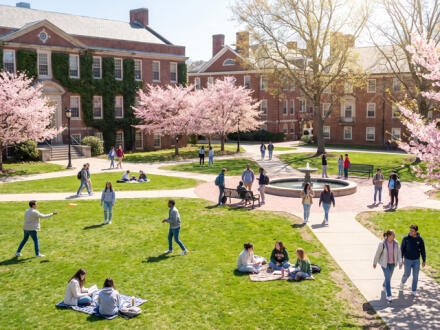
College costs can feel heavy fast. Tuition, books, housing, fees, and gas for the drive home can pile up long before a student even buys the first notebook.
For students in Vanceburg and across Lewis County, Kentucky scholarships can cut that bill in real ways. A single $1,500 award might cover textbooks for two semesters. Stack three awards, and that could remove $4,500 from the balance before federal aid even kicks in.
This guide breaks the search into 10 practical funding paths. It covers Lewis County Scholarships for High School Students, options for undergrads and graduate students, STEM and trade school funding, women-focused awards, state grants, and gap-filling need-based aid.
The goal is simple: help students find money they can actually apply for, not just broad advice. Some scholarships are local. Some are Kentucky-wide. Some come directly from colleges and can stack with county or private awards.
A smart search usually mixes all three.
Students who use organized scholarship platforms often save time because they can sort by state, major, and eligibility in one place. Instead of hunting across 25 separate websites, they can build a list, track deadlines, and send applications in short bursts over a few weeks.
Below are 10 funding paths Lewis County students should check first if they want a shorter bill and fewer student loans.
1. Lewis County Scholarships For High School Students Planning Their First Degree
Seniors have one big advantage: they qualify for the widest pool of first-time college scholarships. Local banks, farm groups, civic clubs, churches, and memorial funds often focus on graduating high school students before they look at current college students.
A Lewis County senior with a 3.4 GPA, 22 ACT score, and 40 volunteer hours may not look "elite" on paper, but that profile can still be very competitive for county-level awards. Local committees often care more about community ties, reliability, and future plans than perfect scores.
Students should start with these sources:
- High school counseling offices
- Local employers and utility cooperatives
- County Farm Bureau branches
- 4-H and FFA contacts
- Regional community foundations
Agriculture-related families should pay close attention to programs like the Young Farmer award and broader county farm aid. Those programs can line up well for students studying ag business, animal science, mechanics, or education.
A simple first-degree scholarship plan often looks like this:
- Apply to 8 local scholarships
- Apply to 5 Kentucky-wide scholarships
- Apply to 3 college-specific scholarships
That gives a student 16 shots at funding. Even if only 3 awards come through at $1,000 each, that is still $3,000 off the bill.
2. Lewis County Scholarships For Undergraduate Students Already Enrolled In College
Many students stop searching after freshman year. That's a mistake. Lewis County Scholarships for Undergraduate Students can be easier to win because the applicant pool often gets smaller after the first year.
A sophomore nursing student who kept a 3.2 college GPA and completed 120 clinical volunteer hours may now qualify for awards that were not open in high school. Colleges, professional groups, and private foundations often want proof that a student can persist in college-level work.
Undergraduate students should focus on:
- Departmental scholarships within their major
- Transfer student awards
- County and regional scholarships that renew annually
- Profession-specific awards for nursing, education, agriculture, or business
For students who want a faster search process, broad scholarship directories like the scholarship listings can help filter by major, state, and enrollment level. That matters when a student is balancing 15 credit hours, a part-time job, and a commute.
One practical tactic works well: reuse a strong base application. A student can keep one master file with:
- A 500-word personal statement
- A 150-word short answer
- An activities list with exact hours
- Unofficial transcript and resume
That setup can cut 2 to 3 hours from each new application cycle. For undergrads already paying tuition bills, saved time matters almost as much as saved money.
3. Lewis County Scholarships For Graduate Students Seeking Advanced Degrees
Graduate students have fewer scholarships than first-year undergrads, but the awards are often more focused. Lewis County Scholarships for Graduate Students usually connect to service fields, health care, education, or shortage-area careers.
A Lewis County student entering a counseling, social work, or education graduate program may find funding through state-backed service scholarships, graduate assistantships, and field-specific foundations. Even a $2,500 award can cover licensing exam fees, books, and part of one semester's tuition.
Graduate students should search in four places first:
- Their program department
- Kentucky professional associations
- Employer tuition support programs
- Service-based scholarship programs with work commitments
Students planning to teach should review the teacher scholarship program. It fits well for future educators who may return to rural districts where hiring can be tough.
A good graduate funding stack might include:
- $3,000 departmental award
- $2,000 private scholarship
- $5,000 assistantship stipend
That total reaches $10,000 before loans.
Graduate applicants also need sharper essays. Committees usually want a clear answer to one question: How will this degree serve a real need? A strong answer might mention Lewis County classrooms, health care access, or the shortage of licensed specialists within a 30- to 50-mile drive.
4. Lewis County Scholarships For STEM Students Pursuing High-Demand Careers
STEM students often have a strong funding case because employers and states need more workers in technical fields. That includes nursing, computer science, engineering, math, environmental science, and health technology.
For Lewis County students, the strongest angle is often high-demand rural service. A student studying electrical engineering, nursing, or information systems can show how that skill meets a visible need close to home. That is more convincing than a vague "love of science" essay.
Good STEM scholarship signals include:
- A 3.5 GPA in math and lab classes
- Dual-credit or AP science coursework
- Robotics, coding, HOSA, or science fair activity
- Clear career plans tied to workforce demand
Women interested in technical or rural utility fields may find value in WIRE scholarships. Health-track students should also watch for profession-based funds, especially in nursing and allied health.
The U.S. Bureau of Labor Statistics continues to report strong demand in several technical occupations, and registered nurses alone account for a very large national workforce. For a Lewis County student, that translates into practical scholarship language: "This degree leads to a field with steady openings and local impact."
One useful example: if a student wins $1,250 from a local scholarship, $2,000 from a STEM foundation, and $3,000 in college merit aid, that $6,250 might cover tuition at a community college for a full academic year plus required lab fees.
5. Lewis County Scholarships For Women Building Academic And Professional Opportunities
Women-focused scholarships can be a smart lane, not a narrow one. Many support leadership, service, first-generation college attendance, community involvement, and career growth in fields where women are still underrepresented.
That makes them relevant for future nurses, teachers, engineers, entrepreneurs, and public service workers from Lewis County. A student with a 3.1 GPA, 60 volunteer hours, and a part-time job may still stand out if her essay shows grit and a clear plan.
Strong places to look include:
- Women's leadership funds
- Rural community organizations
- Utility and cooperative groups
- Career-specific associations
Students should consider options like Women Leading Kentucky and, for eligible rural applicants, Kentucky WIRE support. Those awards can fit students who combine academics with service and long work hours.
A strong women-focused essay usually does three things:
- Names one barrier clearly
- Shows one measurable result
- Connects college to one future impact
Example: "She worked 18 hours per week at a grocery store, cared for two younger siblings after school, and still raised her GPA from 2.9 to 3.6." That kind of detail sticks. It feels real because it is real.
For many Lewis County Scholarships for Women, the deciding factor is not perfection. It is momentum.
6. Local Community Foundation And County-Based Scholarship Programs To Check First
Local money should come first on the list. It usually has smaller applicant pools and stronger odds than national scholarships with 5,000 applicants.
A county or regional award with 45 applicants and 3 winners gives a student a far better shot than a national sweepstakes-style scholarship with one winner. That difference matters.
Students in Lewis County should ask about:
- County education foundations
- Regional community foundations
- Hospital auxiliaries
- Credit unions and local banks
- Rotary, Lions, and church-sponsored awards
Regional foundation databases can surface awards students would never find through a basic search. One example is the Central Kentucky community listings, which show how many funds are grouped under one umbrella.
Students involved in fairs, agriculture, or livestock projects may also match specialized awards such as the youth horse and fairs scholarship. That kind of niche scholarship often gets overlooked by students who assume "my activity is too specific."
A simple local search plan works well:
- Ask the school counselor for the latest county list.
- Ask two teachers about memorial scholarships.
- Call three local organizations directly.
- Search by county plus major plus activity.
That four-step process can uncover 6 to 12 extra applications in less than one week.
7. Kentucky State Scholarships And Grants That Lewis County Students Should Not Miss
State aid is too important to ignore. Lewis County students should treat Kentucky grants and scholarships as the base layer under every local application.
The first name most students should know is the Kentucky Educational Excellence Scholarship. KEES rewards academic performance in high school, and for eligible students it can follow them into college. That means grades earned before graduation can keep paying later.
Students should also search for:
- Need-based state grants
- Teacher shortage-area programs
- Health profession scholarships
- Career-targeted aid tied to public service
At the University of Kentucky, the official financial aid office explains that students can combine scholarships, grants, loans, and work-study into one aid package. That stacking idea matters for Lewis County families comparing final net cost instead of just sticker price.
A realistic state-aid example might look like this:
- $2,000 state scholarship
- $1,500 local scholarship
- $3,698 federal Pell Grant
That adds up to $7,198 before federal loans.
Students should file aid forms early, keep GPA records clean, and watch enrollment rules. Missing one deadline can cost more than a month of part-time wages.
8. College-Specific Institutional Scholarships That Can Stack With Local Aid
Institutional aid is one of the biggest missed chances in the whole process. Many colleges offer scholarships funded directly by the school, its alumni, or academic departments.
These awards often stack with Lewis County scholarships. So a student might bring in $2,000 local money and still add $4,000 in campus aid from the college itself.
Good targets include:
- Automatic merit awards
- Competitive freshman scholarships
- Transfer scholarships
- Department awards after enrollment
- Residence-based or regional student awards
Lewis County students planning careers in nursing, education, or health fields should compare school-level offers carefully. A college that costs $3,500 more on paper may become the cheaper option after scholarships stack.
Students pursuing nursing can also pair institutional offers with outside options like Kentucky Nurses Foundation aid. That mix works especially well when a program has clinical fees, uniforms, testing charges, and commuting costs.
How To Find Automatic Merit Awards
Automatic merit awards are the easiest money to miss because some students never realize they exist. These scholarships often require no separate essay if the student applies for admission by a stated deadline.
Students should search each college website for:
- "freshman merit"
- "automatic scholarship"
- "transfer merit"
- "GPA and test score grid"
A common setup might award $1,000 for a 3.0 GPA, $3,000 for a 3.5 GPA, and $5,000 for a 3.8 GPA. Even when test scores are optional, grades still drive many institutional offers.
9. Career, Technical, And Workforce Scholarships For Trade School And Certificate Students
Not every student in Lewis County is chasing a four-year degree. That is fine. Workforce scholarships can support welding, CDL training, HVAC, electrical work, cosmetology, medical assisting, and other certificate paths.
These programs often lead to faster income. A student who completes a 9-month certificate can enter paid work much sooner than someone who spends four years in school before earning a first full-time paycheck.
Students should search for aid from:
- Technical colleges
- Apprenticeship partners
- Workforce boards
- Industry associations
- Local employers with hiring shortages
Agriculture and youth leadership students may also line up with programs such as the Kentucky Youth award, especially if their training connects to rural community service or workforce needs.
A concrete example helps: suppose a welding certificate costs $6,800 total. If a student wins two $1,000 scholarships and receives $2,500 in grant aid, the remaining bill drops to $2,300. That is a much lighter amount to pay through savings, part-time work, or a small payment plan.
Trade students should not assume scholarships are only for straight-A students. In many workforce programs, attendance, instructor recommendations, and a clear job plan matter just as much as GPA.
10. Need-Based Aid Options That Can Fill Gaps After Scholarships
Even strong scholarship winners often face a remaining balance. That is where need-based aid matters most.
Need-based aid can include:
- Federal Pell Grants
- State need-based grants
- Federal work-study
- Subsidized loans
- Emergency completion funds from colleges
A Lewis County student might win $5,000 in scholarships and still owe $4,200 after tuition, books, and housing are counted. Need-based aid can close that gap without forcing the student to put every charge on a high-interest credit card.
Students comparing health-related paths should also look at profession-focused aid such as the Kentucky Optometry scholarship when it fits their field and state residency rules.
How To Combine FAFSA-Based Aid With Scholarships
The smartest approach is stacking, not choosing one source over another. FAFSA-based aid and scholarships usually work together, though colleges may adjust parts of a package depending on total aid.
A clean stacking example looks like this:
- $3,698 Pell Grant
- $2,000 state grant
- $2,500 local scholarships
- $1,500 work-study eligibility
That package totals $9,698.
Students should file the FAFSA early, answer verification requests fast, and ask the financial aid office one direct question: Will outside scholarships reduce loans first, or reduce grant aid? The answer can change which college ends up cheapest.
Lewis County, Kentucky Scholarships: Frequently Asked Questions
What types of scholarships are available for Lewis County high school students?
Lewis County high school seniors can apply for local scholarships from banks, farm bureaus, civic clubs, and churches, as well as broader Kentucky-wide scholarships and college-specific awards. Programs like the Young Farmer scholarship support agriculture students specifically.
How can undergraduate students from Lewis County find scholarships?
Undergraduate students should explore departmental scholarships in their majors, transfer student awards, and county scholarships that renew annually. Using scholarship directories helps filter by state, major, and enrollment for efficient searching.
Are there scholarship opportunities for graduate students in Lewis County?
Yes, graduate students pursuing service fields like education, social work, or healthcare can access state-backed service scholarships, graduate assistantships, and awards from professional associations, such as the Kentucky Higher Education Teacher Scholarship Program.
What STEM scholarships are available to Lewis County students?
STEM students may qualify for scholarships targeting nursing, engineering, computer science, or health technology. Programs like Kentucky WIRE support women in rural electrification fields, and local awards often favor candidates addressing rural workforce needs.
How can women from Lewis County access scholarships supporting academic and professional growth?
Women can apply for scholarships emphasizing leadership, community service, and career development, such as the Women Leading Kentucky Scholarships and Kentucky WIRE Scholarships, which reward determination, service, and progress in underrepresented fields.
What local resources provide scholarships to Lewis County students?
Students should check with county education foundations, regional community foundations, credit unions, local banks, and organizations like Rotary or Lions Clubs. Programs like the Central Kentucky Community Foundation Scholarships often offer specialized awards matching students’ activities.




