

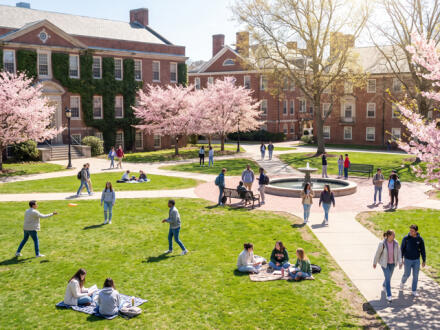
College bills can hit hard. Tuition, housing, books, and fees can turn a dream school into a stressful math problem fast.
For students searching for Clay County, Arkansas scholarships, the good news is simple: they do not need to rely on one big award. The smartest approach is usually to stack several smaller and mid-sized scholarships from local groups, Arkansas programs, colleges, and field-specific funds.
That matters because costs are real. The Education Data Initiative reports that the average in-state public college student pays thousands of dollars per year in total expenses once tuition, fees, supplies, and living costs are included. Even a $500 local award can cover books for a semester, and a $3,000 award can shrink a loan balance in a very noticeable way.
Students in Clay County have more paths than they may think. High school seniors can start with community and school-based awards. Undergraduates can mix institutional aid with outside scholarships. Graduate students, STEM majors, and women can all widen the search with targeted funding pools.
This guide breaks down the best scholarship paths for Clay County, Arkansas students in plain language. It shows where to look, what to prioritize, and how to build a stronger application plan without wasting hours on dead-end searches.
1. Clay County Scholarships for High School Students: Start Local and Apply Early
For many families, Clay County Scholarships for High School Students are the best place to begin. Local awards often have smaller applicant pools than national contests, which means the odds can be better.
A student in Piggott, Rector, or Corning may find scholarships through the high school counseling office, local banks, electric cooperatives, farm organizations, civic clubs, and memorial funds. In a small-area competition, 40 applicants for a $1,000 award is a very different contest than 4,000 applicants for the same amount online.
Timing matters more than most seniors realize. Many local scholarships open between late fall and early spring, and missing one deadline by 24 hours can mean waiting a full academic cycle. Students who begin collecting transcripts, activity lists, and recommendation letters at least 8 to 10 weeks early usually submit calmer, cleaner applications.
A useful rule is this:
- Apply local first
- Track every deadline in one spreadsheet
- Reuse strong essay parts carefully
- Ask for letters before the rush
Students who want a wider list of Arkansas-based options can also sort through programs such as the Arkansas Promise route and the Arkansas Academic Challenge path, both of which can matter for students with financial need or strong academic records.
Eligibility Priorities and Common Local Sources
Local committees often use very direct screening rules. They may care less about polished buzzwords and more about whether the student actually fits the mission of the award.
Common priorities include:
- Residency in Clay County or attendance at a Clay County high school
- Minimum GPA, often 2.5, 3.0, or 3.5
- Financial need, sometimes verified through FAFSA data
- Community service hours, such as 50 or 100 documented hours
- Career goals, especially teaching, nursing, agriculture, or trades
- Parent or student connection to a club, employer, union, or industry
Typical local sources include:
- Community foundations
- Rotary or Lions clubs
- Regional hospitals
- Credit unions and local banks
- Farm bureaus and cattle groups
- Church scholarships
- High school alumni memorial funds
One practical example: a student with a 3.4 GPA, 72 volunteer hours, and plans to study nursing might qualify for three separate small awards instead of one large one. A $750 civic scholarship, a $1,000 hospital auxiliary award, and a $500 memorial scholarship add up to $2,250. That can cover a meal plan deposit, books, and part of housing.
For broader Arkansas-based community funding, students can sort options through the Arkansas Community Foundation page.
2. Clay County Scholarships for Undergraduate Students: Focus on Colleges, Foundations, and Need-Based Aid
Once a student is enrolled in college, the scholarship hunt should shift. Clay County Scholarships for Undergraduate Students are still useful, but college-based aid becomes a much bigger piece of the picture.
Many undergraduates make one mistake: they stop applying after freshman year. That leaves money on the table. Departments, private foundations, transfer scholarships, campus leadership awards, and major-specific grants often open after a student already has one or two semesters completed.
Institutional aid can be especially strong. Universities may award funds for GPA, leadership, honors participation, service, or program enrollment. At the same time, outside scholarships can reduce borrowing if a school allows them to stack with existing aid.
Good places for undergraduates to search include:
- The college financial aid office
- Department scholarship pages
- Arkansas nonprofit foundations
- Employer tuition support
- Regional professional associations
- Free scholarship databases like the tools on Student Scholarships
For students considering public universities in the state, programs like the UA Chancellor's community award or the UALR CLC option can be worth tracking closely.
A clear budget check helps here. If a college bill is $9,400 after grants, then two outside scholarships of $1,500 each cut that gap to $6,400. That is not abstract. That is $3,000 less to borrow, earn, or ask family to cover.
How To Combine Institutional and Outside Scholarships
The best way to combine awards is to think in layers. One scholarship rarely solves everything. Four or five awards often do.
A smart stacking plan looks like this:
- Start with FAFSA-based aid. Pell Grants, state grants, and need-based campus aid can form the base.
- Add merit aid from the college. GPA, test scores, leadership, or transfer performance can bring in another layer.
- Apply for department scholarships. Nursing, business, education, agriculture, and engineering departments often reserve money for current students.
- Bring in outside scholarships. Local and private awards can reduce direct costs like books, housing, and fees.
- Confirm the school's displacement policy. Some colleges reduce loans first. Others reduce grants or work-study.
Students should email financial aid offices and ask one plain question: "If an outside scholarship is added, what part of the package changes first?" That answer can save hours and protect value.
A useful example: a sophomore receives $4,500 in grants, $2,000 in merit aid, and $2,200 in outside scholarships. If the school reduces loans first, the student comes out ahead. If the school cuts grant aid instead, the outside award may not help as much. Getting this answer before accepting awards is a very smart move.
3. Clay County Scholarships for Graduate Students: Look Beyond Traditional Freshman Awards
Graduate students are often overlooked in scholarship conversations, but they should not be. Clay County Scholarships for Graduate Students can come from professional groups, university departments, assistantships, healthcare systems, and regional service programs.
The key difference is this: graduate funding is usually more specialized. A master's student in counseling, a nursing student, or someone entering rural healthcare may qualify for money tied to service needs or workforce shortages.
That is especially relevant in Arkansas. Programs tied to public service, teaching, and rural health can line up well with the needs of smaller communities. A student willing to work in an underserved area after graduation may have access to stronger funding than a student who only searches broad scholarship sites.
Graduate students should prioritize:
- Department fellowships
- Teaching assistantships
- Research assistantships
- Employer reimbursement plans
- Field-specific association scholarships
- Rural service scholarships
One example is the Arkansas Rural Health Scholarship, which fits students pursuing health-related work connected to rural communities.
A concrete payoff matters here. If a graduate student receives a $6,000 assistantship and a $2,500 external award, that is $8,500 in support. For many part-time master's students, that can cover a large share of annual tuition.
Graduate Funding Options Worth Prioritizing
Graduate students should not spend all their energy on generic scholarship lists. They usually get better results from targeted funding tied to the exact degree.
The strongest categories often include:
- Assistantships: These may provide tuition support plus a stipend. A 10-hour or 20-hour weekly assignment can be worth several thousand dollars.
- Licensure-shortage fields: Counseling, social work, speech pathology, and education often have workforce-based aid.
- Healthcare commitments: Nursing, public health, and rural medicine frequently offer funding tied to post-graduation service.
- Employer-sponsored education: School districts, hospitals, and government agencies sometimes reimburse part of tuition for employees.
- Professional associations: Small field associations may offer $500 to $2,500 awards with modest applicant pools.
A graduate student in education, for example, might combine a campus assistantship, a district reimbursement plan, and a state-based scholarship. That stack can cut debt far faster than chasing one flashy national prize.
The bigger point is simple: graduate applicants should search by degree + profession + service area. That is usually more productive than searching by the word "scholarship" alone.
4. Clay County Scholarships for STEM Students: Target High-Demand Career Fields
Students planning to study science, technology, engineering, or math should search with purpose. Clay County Scholarships for STEM Students often connect to workforce demand, and that gives these students a real edge.
Arkansas employers need graduates in nursing, computer science, engineering support, data systems, advanced manufacturing, and agricultural technology. Scholarships tied to these fields may come from colleges, utility companies, manufacturers, state programs, and private foundations.
This matters because STEM degrees can carry extra costs. Lab fees, required software, calculators, licensing exams, and equipment can add hundreds or even thousands of dollars to a yearly budget. A scholarship that covers "only" $1,200 may still wipe out a semester's books and lab costs.
Strong STEM search terms include:
- Biology scholarship Arkansas
- Engineering scholarship Arkansas
- Computer science scholarship Arkansas
- Nursing rural scholarship Arkansas
- Women in STEM scholarship Arkansas
Students attending Arkansas State or similar institutions may also want to watch campus-based opportunities such as the A-State Scholar award. A student with a 3.8 GPA, ACT math strength, and robotics or FFA experience often has a sharper scholarship profile than they realize.
Best STEM Scholarship Categories for Arkansas Students
The best STEM scholarship categories are the ones linked to clear labor needs. That is where funders often put real money.
Top categories to prioritize are:
- Healthcare STEM: Nursing, medical lab science, radiologic science, and allied health are strong because rural staffing shortages remain a real issue.
- Engineering and manufacturing: Mechanical, civil, electrical, and industrial tracks often connect to employer demand.
- Computer and data fields: Cybersecurity, software development, IT systems, and analytics keep growing across public and private sectors.
- Agricultural science and ag tech: For students in Clay County, this one is especially practical. Precision agriculture, animal science, and environmental systems tie directly to regional industry.
- Women and underrepresented groups in STEM: These awards can open extra pools that many students miss.
One useful example: a student majoring in agricultural engineering could apply for general academic aid, STEM-specific aid, agricultural foundation awards, and county-based scholarships at the same time. If each source averages $1,000 to $2,000, four successful applications can produce $4,000 to $8,000.
Students with agriculture ties should also keep an eye on options like the Cattlemen's foundation awards, especially when career goals connect to livestock, ag business, or rural industry.
5. Clay County Scholarships for Women: Expand Your Search With Demographic-Specific Awards
For many applicants, Clay County Scholarships for Women are a missed opportunity. Women can apply not only for general local and academic scholarships, but also for awards tied to leadership, first-generation status, public service, business, healthcare, education, and STEM.
This is where search strategy matters. A woman from Clay County might qualify for five different scholarship categories at once:
- Local residency awards
- Major-specific awards
- Need-based aid
- Leadership scholarships
- Women-focused scholarships
That overlap is powerful. It can turn one student profile into multiple chances at funding.
Women pursuing healthcare, teaching, and science often find the largest number of targeted awards. But business, trades, agriculture, and entrepreneurship should not be ignored. Some private organizations actively try to increase female participation in fields where women are still underrepresented.
A concrete example helps: a student entering computer science with a 3.6 GPA, 120 volunteer hours, and student council experience could reasonably apply for 12 to 20 scholarships across local, academic, women-focused, and STEM categories. Even a 20% win rate on 15 applications equals 3 awards.
Where Women in Clay County Can Find Extra Opportunities
Women in Clay County can widen the search by looking beyond county-only labels. The best extra opportunities often sit in state, campus, and industry-specific pools.
Strong places to look include:
- Campus women's leadership programs
- Professional groups in healthcare, education, accounting, and engineering
- Foundations focused on first-generation or low-income students
- Employer-sponsored scholarships through hospitals, banks, or local businesses
- Associations that support women in STEM or public service
Students should also read eligibility lines closely. Some awards do not say "for women" in the title, but they give preference to female applicants in a certain field or county type.
At the campus level, leadership-based options such as the Beyond Boundaries award can be relevant for students with strong service and campus involvement.
A good application file for women-focused scholarships often includes:
- A resume with exact hours and leadership roles
- One essay on goals and barriers overcome
- One recommender who can speak to initiative
- GPA documentation
- FAFSA information if need is considered
The students who do best here usually apply across categories, not inside one narrow box.
6. Regional and Arkansas-Wide Scholarships Clay County Residents Should Not Ignore
County-level awards are only one piece of the puzzle. Clay County students should also search regional and Arkansas-wide scholarships because those pools can be larger, better funded, and renewed for multiple years.
Statewide scholarships matter because Arkansas students often stay in-state for college. That makes them eligible for programs tied to residency, public university enrollment, academic performance, and need.
A few categories stand out:
- State merit scholarships
- Need-based state aid
- University-specific scholarships
- Industry-based Arkansas foundations
- Regional employer and service awards
Students interested in Arkansas State may want to compare campus options like the ASTATE Leadership award and the ASTATE Pride award. These are good reminders that one university may offer several scholarship tracks instead of just one.
Regional scholarships can also support majors that fit eastern Arkansas job patterns, including education, healthcare, agriculture, logistics, building trades, hospitality, and business. For students whose goals line up with these sectors, a regional award may fit better than a generic national contest.
One practical tip: students should search by county, neighboring counties, university name, intended major, and Arkansas residency. That five-part search method often uncovers awards hidden on college pages or association sites.
And renewal rules matter. A renewable $2,000 scholarship over four years is worth $8,000 total. That beats a one-time $3,000 award, even if the first number looks smaller.
7. Scholarship Application Strategies That Help Clay County Students Stand Out
Strong students lose scholarships every year because their applications feel vague. The winning applications are usually specific, clean, and easy to trust.
That matters for every group in this guide, whether they are looking for Clay County Scholarships for High School Students, Clay County Scholarships for Undergraduate Students, or more targeted options like Clay County Scholarships for STEM Students. Reviewers often read dozens or hundreds of files. A clear application helps them say yes faster.
The strongest strategies are not fancy. They are consistent.
Build a simple application system
Students should keep one folder with:
- Master resume
- Unofficial transcript
- Activity list with exact hours
- Test scores if required
- FAFSA confirmation
- Two essay versions
- Three recommenders with contact details
This system can cut application time sharply. If a student spends 90 minutes building the master file once, they may save 20 to 30 minutes per application across 10 applications.
Use exact details in essays
Specific beats general every time. "They volunteered a lot" is weak. "They logged 86 hours at a church pantry and sorted 1,200 canned goods during the holiday drive" is strong.
A solid scholarship essay often includes:
- One clear goal
- One challenge with a real example
- One reason the major matters
- One connection to future service or work
Match the essay to the donor
If the scholarship comes from an agriculture group, a student should mention ag experience when it is real. If the scholarship supports leadership, the essay should show leadership with numbers, actions, and results.
For example, "they raised FFA membership from 18 to 27 students in one year" is much more memorable than "they were active in clubs."
Ask for recommendation letters early
The best letters are detailed. Teachers and counselors need time to write those.
Students should ask at least 3 to 4 weeks before the deadline and provide:
- Resume
- Scholarship details
- Deadline date
- Career goals
- One reminder of work done in class or activities
Proofread like a reviewer
A student should read every application out loud once. That catches missing words, repeated sentences, and awkward phrasing fast.
They should also check:
- Correct scholarship name
- Correct college name
- Exact word count limit
- Required attachments
- Signature fields
A common error is reusing an essay and forgetting to change the scholarship name. One mistake like that can sink an otherwise strong application.
Use free search tools without wasting time
Search tools help most when students filter hard. Grade level, state, major, and personal background can shrink a messy list into usable matches.
Platforms built for fast discovery, including StudentScholarships.org, can save time because many listings are sorted by fit and application details. For a student balancing school, sports, and a part-time job, saving even 2 hours per week during scholarship season makes a difference.
Apply wider than feels comfortable
A lot of students stop at five applications. That is usually too few.
A better target is:
- High school seniors: 15 to 25 applications
- Current college students: 10 to 20 applications
- Graduate students: 8 to 15 targeted applications
If a student wins 4 out of 20 applications at an average of $1,250 each, that is $5,000 earned. That kind of total can change where they enroll, how many hours they work, or how much debt they carry.
Clay County, Arkansas Scholarships - Frequently Asked Questions
What are the best starting points for high school students seeking Clay County scholarships?
High school students in Clay County should begin with local awards through school counseling offices, community foundations, and clubs like Rotary or Lions. Applying early and tracking deadlines increases chances, while programs like the Arkansas Promise Scholarship offer broader state options.
How can undergraduate students in Clay County maximize their scholarship opportunities?
Undergraduates should combine FAFSA-based aid, college merit scholarships, department-specific awards, and outside scholarships. Checking the school's policy on how outside scholarships affect financial aid is crucial for maximizing benefits, especially at public institutions like the University of Arkansas.
What types of scholarships are available for graduate students from Clay County?
Graduate students can access funding through department fellowships, assistantships, employer tuition reimbursements, and scholarships tied to workforce shortages in fields like counseling and rural health, such as the Arkansas Rural Health Scholarship.
Which scholarships should STEM students from Clay County target to best support their education?
STEM students should prioritize scholarships tied to in-demand fields like nursing, engineering, computer science, agricultural technology, and women in STEM awards. These often come from colleges, utility companies, and state programs aligned with Arkansas labor needs.
Are there specific scholarships available for women in Clay County?
Yes, women can apply for specialized awards related to leadership, STEM, healthcare, education, and first-generation status. Combining local, academic, and women-focused scholarships broadens opportunities, including programs like the Beyond Boundaries Scholarship.
Why is applying to multiple scholarships important for students in Clay County?
Applying broadly—15 to 25 applications for high school seniors and 10 to 20 for college students—increases the chances of winning multiple awards. Stacking several smaller scholarships can significantly reduce education costs and debt.




