

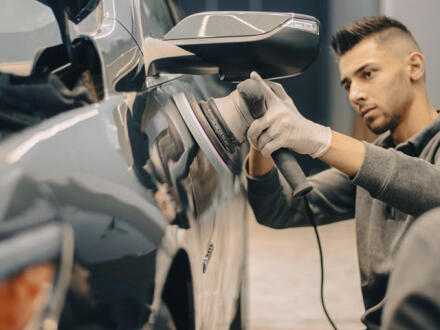
Motorcycle mechanic school in Hawaii can be a smart move for students who like hands-on work, engines, and a career path that leads to the shop floor faster than a four-year degree. But training still costs real money. Tuition, tools, safety gear, transportation, and test fees can add up fast, even at a community college or short-term trade program.
That's why Hawaii motorcycle mechanic scholarships matter. A student might piece together aid from state grants, federal aid, local foundations, dealership help, and industry awards instead of relying on one big scholarship. In a realistic example, a student with $4,200 in tuition, $950 in tools, and $600 in books and fees would need $5,750 before even counting gas or bus fare.
This guide breaks down 11 funding options that can help high school students, first-year students, college students, and even university students in related fields. It covers direct aid like Pell Grants, school-based opportunities, local Hawaii foundation awards, and employer-sponsored tuition help. It also points out where Hawaii Motorcycle Mechanic Scholarships for High School Students, Hawaii Motorcycle Mechanic Scholarships for College, and Hawaii Motorcycle Mechanic Scholarships for University may overlap.
The goal is simple: help students find money they can actually apply for, understand who qualifies, and build a plan that makes training affordable.
1. Hawaii Promise Scholarship For Community College Motorcycle And Powersports Students
The Hawaii Promise Scholarship is often the first funding source to check for community college students. It is a last-dollar scholarship, which means it helps cover direct education costs that remain after other grants and scholarships are applied.
For a motorcycle or powersports student taking classes through a Hawaii community college pathway, that can be a big deal. If tuition and fees total $3,180 and other grants cover $2,400, Hawaii Promise may help with the remaining $780.
Students should pay attention to a few basics:
- They usually need to attend an eligible Hawaii public community college.
- They need to complete the FAFSA.
- Enrollment status and satisfactory academic progress usually matter.
This option works especially well for students who want low debt. A student who lives at home on Oahu and keeps commuting costs to $85 per month can stretch this aid much further than someone borrowing for every expense.
It also pairs well with other local awards. That makes it a strong starting point for students comparing Hawaii Motorcycle Mechanic Scholarships for College with broader state aid.
One practical tip: ask the financial aid office whether a motorcycle, diesel, transportation, or related technology track fits within an eligible community college program. Program names vary, but the funding path may still apply.
2. FAFSA-Based Pell Grants And Federal Aid For Hawaii Motorcycle Mechanic Students
For many students, the FAFSA opens the biggest door. It can lead to Pell Grants, federal work-study, and federal student loans. Unlike a loan, Pell money does not have to be repaid if the student meets the rules.
This matters because a motorcycle mechanic student may need more than tuition covered. A realistic school-year budget might include:
- $3,600 for tuition and mandatory fees
- $1,100 for tools
- $420 for books
- $960 for transportation at $80 per month
That total reaches $6,080 quickly.
Students should file early and use accurate tax and household information. Federal aid formulas look at family income, household size, and enrollment. A student taking at least half-time credits may qualify for more aid options than someone taking one evening class.
Federal aid is especially useful because it can stack with Hawaii motorcycle mechanic scholarships. It also helps first-generation students who do not have family money set aside for trade school.
One more point: students should confirm that the school is properly authorized. Hawaii's post-secondary authorization system is a useful check when a student is comparing private trade schools with public options.
If a student only does one thing this month, filing the FAFSA is probably it. Missing that form can mean leaving thousands of dollars untouched.
3. Hawaii Motorcycle Mechanic Scholarships For High School Students Entering Trade Programs
Hawaii Motorcycle Mechanic Scholarships for High School Students often come from broader career, community, or STEM funds rather than a scholarship with "motorcycle mechanic" in the title. That sounds annoying, but it actually expands the list.
A high school senior planning to enter a trade program should look at awards tied to:
- technical education
- workforce training
- STEM pathways
- local service organizations
- credit unions and community foundations
For example, a student with a 3.2 GPA, 140 volunteer hours, and a clear plan to enter a transportation technology program can be competitive even without perfect grades. Judges often like a direct story: why engines, why this school, and what job the student wants after training.
Students interested in technical or STEM-connected routes may find useful local options through AFCEA Hawaii STEM aid. Community-based applicants may also look at Hawaii Korean Chamber support when their background and eligibility line up.
A strong application usually includes 3 pieces:
- A short essay with a specific career goal.
- One teacher or counselor recommendation.
- Proof of school or program acceptance.
High school students should start early. Waiting until graduation month turns a manageable list of 8 to 10 applications into a scramble.
4. Hawaii Motorcycle Mechanic Scholarships For First-Year Students Starting Technical Training
Hawaii Motorcycle Mechanic Scholarships for first-year students are worth special attention because many awards are designed to help students make the jump from "accepted" to "actually enrolled." That first semester is when deposits, tools, and books hit hardest.
A first-year student might face this bill before classes even settle in:
- $250 enrollment deposit
- $875 starter tool kit
- $310 books and online materials
- $145 protective boots and gloves
That is $1,580 up front.
First-year scholarships often reward readiness more than experience. A student does not need to have rebuilt a full engine in a garage since age 12. Schools and donors usually want proof that the student will show up, finish training, and move into a job.
Good ways to stand out include:
- keeping attendance strong in senior year
- writing a clear budget
- explaining transportation plans
- showing interest in internships or part-time shop work
This is also where a free scholarship search tool can save time. A student comparing multiple local and national awards can sort options faster through the broader scholarship listings rather than hunting one by one.
For first-year applicants, simple beats fancy. A clean application submitted 10 days early usually wins over a brilliant essay uploaded 11 minutes before the deadline.
5. Scholarships Through Honolulu Community College And Other Hawaii Trade Pathways
Honolulu Community College is one of the first schools many students consider for transportation and skilled-trade training in Hawaii. Even if a student's exact focus is motorcycle repair, related programs in automotive, diesel, or other mechanical systems can lead to overlapping aid.
The main advantage is cost. Community college tuition can be far lower than private trade school pricing. If one path costs $4,100 for the term and another costs $11,800, the cheaper option changes the whole funding plan.
Students should ask schools about these funding buckets:
- department scholarships
n- campus foundation awards
- emergency grants
- tool or book assistance
- transportation support
Some students also qualify for broader campus-linked awards, including education association scholarships when their family or eligibility background fits.
Another smart move is to ask whether a related program can still support a motorcycle career. A student who trains first in small engine, automotive, or electrical diagnosis may still build the exact skills dealerships want. Modern motorcycles use fuel injection, sensors, charging systems, and software-based diagnostics. Those cross over.
One concrete example: a student who cuts tuition by $5,000, wins $1,200 in local aid, and keeps part-time wages at 15 hours per week can reduce borrowing almost to zero. That's a strong trade-school setup.
6. Hawaii Motorcycle Mechanic Scholarships For College Students Seeking Career-Focused Aid
Hawaii Motorcycle Mechanic Scholarships for College students often reward progress. Once a student has finished one term, donors can see grades, attendance, and whether the student sticks with the plan.
That can make second-round applications stronger than first-round ones. A student who earned a 3.4 GPA across 12 credits and logged 96 internship hours in a repair shop has much more to write about than a brand-new applicant.
Career-focused aid often values practical steps such as:
- ASE prep or related technical study
- work experience in a shop
- instructor recommendations
- a clear plan for dealership, independent repair, or fleet work
College students should also reapply every cycle. Too many students assume a "no" from one semester means no forever. In reality, some scholarship pools shrink or grow based on donor funding, and the applicant group changes each round.
Students with ties to local employers, union families, educators, or civic groups should also search outside transportation-specific awards. A scholarship does not need the word "mechanic" in the title to pay for mechanic training.
One practical scenario: a student who wins two $750 awards and keeps $2,000 in Pell support can cover books, tools, and exam fees without adding a private loan. That is why college students should treat scholarship hunting like a scheduled class, not a once-a-year event.
7. Hawaii Motorcycle Mechanic Scholarships For University Students In Related Automotive Or Engineering Fields
Hawaii Motorcycle Mechanic Scholarships for University students are less direct, but they still matter. Some students start in engineering, applied technology, or another university program and later move toward motorcycle systems, diagnostics, fabrication, or powersports business roles.
A university student in mechanical or electrical study may be a fit for scholarships that support technical talent, especially when the student can connect classroom theory to shop work. Think of a student designing a charging-system test rig, then using it to diagnose real stator faults on bikes.
Concrete examples help here. A student who spent 60 hours on a capstone project involving sensors, battery load, or drivetrain stress can frame that work for motorcycle applications. A GPA of 3.5 plus a practical project often reads better than a vague "passion for machines."
Students should look for scholarships tied to:
- STEM achievement
- engineering departments
- applied research
- local business groups
- workforce development
Applicants who fit the criteria may find options through state FCU scholarship info or other local awards that support higher education more broadly.
This route will not fit everyone. But for students who want to blend hands-on repair with design, diagnostics, or management, university funding can support a motorcycle-related path in a less obvious way.
8. Hawaii Motorcycle Mechanic Association Scholarships And Industry-Sponsored Awards
Hawaii Motorcycle Mechanic Association Scholarships may be harder to find under that exact name, but industry-sponsored money absolutely exists. Students should think wider: dealer groups, powersports businesses, aftermarket brands, regional trade groups, and transportation associations.
These awards often favor students who already show up like entry-level professionals. A student with 1 part-time shop job, 2 instructor references, and 1 clean portfolio of repair photos may stand out more than someone with only a generic essay.
Industry awards can help with more than tuition. Some cover:
- $500 tool stipends
- certification fees
- uniforms
- travel for training
- paid work placement
Examples Of Associations, Dealer Groups, And Trade Organizations To Check
Students searching for Hawaii Motorcycle Mechanic Association Scholarships should look at several layers of the trade.
Start with these:
- local motorcycle dealerships and powersports dealers
- statewide automotive associations
- chamber of commerce scholarships with technical training flexibility
- OEM training programs from motorcycle brands
- independent repair networks
Even groups outside motorcycles can overlap. For example, students in technical pathways may find adjacent support through land surveyors association aid when scholarship rules allow career-focused study in applied technical fields.
The key is asking specific questions. Instead of "Do you have scholarships?" a student should ask, "Do you offer tool grants, tuition reimbursement, or paid apprentice training up to $1,000?" That usually gets a better answer.
9. National Motorcycle And Automotive Technician Scholarships Open To Hawaii Residents
National scholarships can be a huge help because Hawaii students are not limited to island-based money. Many automotive and technician awards accept applicants from any state as long as they attend an eligible program.
This matters because the pool gets much bigger. A student might apply to 4 local awards and 9 national awards, tripling the number of chances without changing career goals.
National technician scholarships often focus on:
- transportation technology
- collision, diesel, or automotive repair
- tool support
- certification readiness
- employer partnership training
Even when an award says "automotive," students should not assume motorcycles are excluded. If the school teaches engine diagnosis, electrical systems, brakes, drivetrains, and service procedures, the overlap can be strong. The student just needs to explain it clearly.
A strong national application usually includes numbers. For example: 180 hours helping in a family garage, 12 hours per week at a parts counter, or a personal rebuild completed over 7 weekends. Those details make the application real.
Students should also watch eligibility rules closely. Some national funds require full-time enrollment, a minimum GPA such as 2.5 or 3.0, or attendance at an approved school. One missed rule can waste an otherwise solid application.
10. Employer-Sponsored Tuition Assistance From Dealerships, Repair Shops, And Apprenticeships
Employer help is one of the most overlooked funding options. A dealership or repair shop may not advertise it as a scholarship, but tuition reimbursement, tool help, and paid training hours can reduce school costs just as much.
A common setup looks like this:
- the student works 12 to 20 hours per week
- the shop reimburses $1,000 to $3,000 after successful course completion
- the student agrees to stay for 6 to 12 months after training
That arrangement can beat a small one-time award, especially for students who want job experience right away.
This option also helps with the "no experience" problem. A student may start with cleaning, parts handling, battery checks, and basic services, then move into more technical work after classes begin. In six months, that student has both income and stronger scholarship essays.
Good places to ask include:
- motorcycle dealerships
- powersports retailers
- independent repair shops
- fleet maintenance employers
- apprenticeship-style training programs
Students should ask direct questions about money, hours, and conditions. "Is there written tuition support up to $2,500, and when is it paid?" is much better than a vague conversation at the service counter.
For students who learn best by doing, this may be the most practical path on the list.
11. Local Hawaii Foundation Scholarships That Can Be Used For Motorcycle Mechanic Training
Local foundations are often the best source for flexible aid. They may support career education, technical certificates, first-generation students, or residents from a specific island or community. That flexibility is perfect for motorcycle mechanic training.
A student should not skip a foundation award just because the title sounds broad. Broad can be good. It means the money might be used for tuition, tools, books, or even transportation. A $1,500 local scholarship can cover a starter tool set plus registration fees in one shot.
Useful Hawaii options may include community-based funds such as community foundation awards. Some students may also fit smaller local programs like HEA scholarship options, depending on family or school ties.
When students apply, they should match the essay to the donor's purpose. If the fund supports local workforce growth, the essay should mention practical goals like:
- staying in Hawaii after training
- working at a neighborhood shop
- serving island transportation needs
- building a small repair business later
Specifics matter. "They plan to earn the certificate, complete 200 shop hours, and work toward lead technician duties within 3 years" sounds much stronger than "they love motorcycles."
For many applicants, local foundation money is what closes the final gap.
Frequently Asked Questions About Hawaii Motorcycle Mechanic Scholarships
What types of scholarships are available for motorcycle mechanic students in Hawaii?
Hawaii offers diverse scholarship options including state-funded aid like the Hawaii Promise Scholarship, federal Pell Grants through FAFSA, local foundation awards, employer-sponsored tuition assistance, and industry-sponsored scholarships tailored for motorcycle mechanic training.
How can high school students in Hawaii find motorcycle mechanic scholarships?
High school students should explore scholarships tied to technical education, workforce training, STEM pathways, and community organizations. Applying early with a clear career goal, recommendations, and acceptance proof improves eligibility. Programs like AFCEA Hawaii STEM and Hawaii Korean Chamber offer relevant support.
Why is filing the FAFSA important for Hawaii motorcycle mechanic students?
FAFSA filing opens access to Pell Grants, federal work-study, and student loans, which can cover tuition, tools, books, and transportation costs. It often forms the foundation of a funding plan and complements other Hawaii motorcycle mechanic scholarships to minimize debt.
Can university students studying engineering or automotive fields qualify for motorcycle mechanic scholarships in Hawaii?
Yes, university students in related fields may access scholarships focused on STEM achievement and applied research. Completing practical projects or internships linking theory to motorcycle systems strengthens applications for these broader scholarships supporting technical talent.
How does employer-sponsored tuition assistance work for motorcycle mechanic students in Hawaii?
Many dealerships and repair shops offer tuition reimbursement, tool stipends, or paid training. Students typically work part-time and receive financial support after course completion, often agreeing to remain employed for a set period, making this a practical funding source combined with hands-on experience.
Are there national scholarships that Hawaii motorcycle mechanic students can apply for?
Yes, national scholarships for automotive and technician training accept Hawaii residents attending eligible programs. These awards often cover transportation technology, tool support, and certification fees, expanding funding opportunities beyond local options.







