

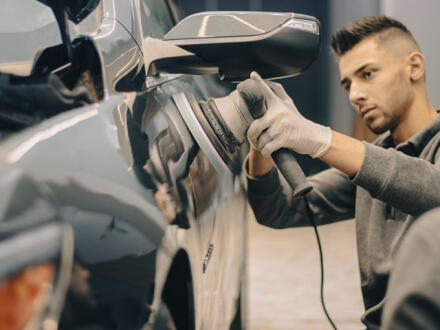
Paying for auto body school can feel expensive fast. Tuition, tools, PPE, books, and transportation can push a short training program well past what many families expect.
For students looking into Kentucky collision repair scholarships, the good news is simple: money can come from more than one place. They can piece together scholarships, state aid, school grants, employer help, and local awards to lower out-of-pocket cost.
That matters in a field with real demand. Collision repair shops need trained technicians who can work with steel, aluminum, paint systems, ADAS calibrations, and estimating software. A student who finds even 3 to 5 smaller awards worth $500 to $2,000 each can cut a big chunk off the cost of training.
This list covers 12 practical funding paths for high school students, first-year students, college students, and university students in Kentucky. Some options are industry-specific. Others are broader scholarships that can still support collision repair education when the rules allow tuition, fees, or tools.
The goal is not just to name awards. It is to show where students should look, what each funding path usually supports, and how they can stack aid without wasting time on weak applications. A smart search often beats a wide search. One focused afternoon can uncover a school grant, a local scholarship, and a state award that work together.
1. Kentucky Collision Repair Association Scholarships For Industry-Focused Students
Students should start with trade groups because they often fund the exact skills collision shops need. Kentucky Collision Repair Association Scholarships or similar industry-backed awards usually favor applicants who want a direct path into the repair field.
These scholarships often look for:
- Enrollment in collision repair, auto body, refinishing, or a related program
- A clear career goal in the industry
- Instructor or employer recommendations
- Proof of hands-on interest, such as shop classes or part-time work
A strong application sounds specific. A student who says, "They rebuilt a dented quarter panel, mixed basecoat, and spent 18 hours learning sanding and masking," stands out more than someone who only says they like cars.
Industry associations may also offer more than cash. They sometimes connect students with:
- Shop tours
- Mentor technicians
- Tool support
- Local employers hiring apprentices
That extra access can matter. A scholarship worth $1,000 plus a shop introduction can beat a larger award with no career value.
Students should ask three direct questions before applying: Who can apply? What expenses are covered? When is the deadline? Those answers keep them from spending two hours on an award meant for another trade or another state.
2. Kentucky Collision Repair Scholarships For High School Students Exploring Auto Body Careers
Kentucky Collision Repair Scholarships for High School Students matter because early applicants often face less competition than seniors chasing broad national aid. Shops, community groups, and technical programs like to support students who show interest before graduation.
A high school student can build a solid application with concrete proof, such as:
- Automotive or welding class enrollment
- SkillsUSA participation
- Job shadow hours at a local body shop
- A teacher recommendation from a shop or CTE instructor
One student with 42 job-shadow hours and a short portfolio of before-and-after repair photos will usually look more serious than a student with vague plans.
Broader Kentucky awards can also free up money for collision repair training. Merit-based state aid, including the Kentucky Educational Excellence Scholarship, can reduce tuition pressure if the student qualifies after high school. Youth-focused programs like the Kentucky Youth Scholarship may also fit students with strong local involvement.
What high school applicants should collect early
- A resume with grades, attendance, and activities
- Photos of class projects
- A list of 3 references
- A simple career statement of 150 to 250 words
That folder saves time later. It also makes last-minute scholarship deadlines much easier to handle.
3. Kentucky Collision Repair Scholarships For First-Year Students Starting Technical Training
Kentucky Collision Repair Scholarships for first-year students are especially useful because the first term often hits hardest. Students may need tuition, lab fees, a paint suit, gloves, hand tools, and safety glasses all at once.
A first-year student should look for awards that support transition into technical school. Many committees like applicants who can explain why they chose collision repair instead of a general automotive path.
Good first-year essays often mention real tasks, such as:
- Panel prep and filler work
- MIG welding basics
- Refinishing safety procedures
- Damage estimating software
That level of detail shows commitment. It is stronger than saying they want to "work on cars."
Students should also ask schools whether scholarships can be used for tool kits that cost $600 to $1,500. Some aid covers only tuition, while other awards allow broader educational expenses.
A practical first-year funding stack
A first-year student might combine:
- A $750 local civic scholarship
- A $1,000 program scholarship
- Pell Grant eligibility, if qualified
- Employer reimbursement from a part-time shop job
That stack can cover the first semester without heavy borrowing.
This is also the stage where timing matters most. Many students wait until classes start. That is often too late. The best move is to apply 60 to 90 days before the program begins, when school funds are less picked over.
4. Kentucky Collision Repair Scholarships For College Students In Auto Body And Refinishing Programs
For students already enrolled, Kentucky Collision Repair Scholarships for College can come from departments, donor funds, workforce programs, and local businesses that want trained techs nearby. College students usually have an advantage: they can show grades, attendance, and shop performance from an actual program.
That evidence matters. A student with a 3.4 GPA, perfect lab attendance, and an instructor note about careful spray-gun setup gives a committee something measurable.
What college applicants should highlight
- Refinish lab performance
- Frame or structural repair coursework
- I-CAR or ASE student progress, if available
- Work-study or part-time shop experience
- Plans to stay in Kentucky after training
Some scholarships favor persistence. If a student struggled in the first term but improved from a 2.6 to a 3.3 GPA, that story can work well when explained clearly.
Students should also look beyond "collision repair" in the title. Awards for transportation, skilled trades, or technical education may still apply if the rules allow career and technical students.
College students who need a broader search can use platforms that group many smaller awards in one place. On Students Scholarships listings, students can sort through statewide and niche opportunities without jumping across dozens of websites.
And they should reapply. Many awards are not one-and-done. A student who applies in fall and spring can double their chances.
5. Kentucky Collision Repair Scholarships For University Students Pursuing Related Degrees
Not every future collision professional stays in a shop-only program. Kentucky Collision Repair Scholarships for University students can help those studying fields tied to the industry, such as business management, supply chain, engineering technology, occupational safety, or insurance claims.
This path makes sense for students who want roles like:
- Collision center manager
- Insurance appraiser
- OEM field representative
- Parts operations specialist
- Technical trainer
A university student should connect the degree to the collision field in direct language. For example, a business major could explain how estimating, cycle time, and parts margins affect repair profitability. A safety student could discuss respirator compliance or paint-booth procedures.
Concrete numbers help. If a collision center processes 110 repair orders per month, small changes in supplement handling or parts returns can affect thousands of dollars in revenue.
Women and underrepresented students should also watch for leadership-based funding that is not trade-specific but still usable for related study. Programs like the Women Leading Kentucky scholarships may fit students moving toward management or industry leadership.
This funding path is less obvious, but it is real. Students do not need every scholarship to say "auto body" if their coursework clearly supports a collision repair career.
6. Community And Technical College Awards That Support Collision Repair Training In Kentucky
Kentucky students in collision repair often train at community and technical colleges first. That makes campus aid one of the most practical options on this list.
Many schools offer awards based on:
- Program enrollment
- Financial need
- GPA or attendance
- County residency
- Donor restrictions tied to trades
A college financial aid office can often identify 3 to 8 separate aid pools that never appear in a general web search. Some are small, like $500 book awards. Others cover a larger share of tuition.
Why this path works so well
Community and technical colleges usually understand the real cost of hands-on programs. They know students may need lab fees, steel-toe boots, sanding blocks, or paint materials, not just classroom tuition.
Students should ask the department chair one blunt question: Are there scholarships specific to transportation, auto body, or skilled trades that are not advertised widely? That question can uncover donor funds sitting in a campus office.
Local youth-oriented programs can also complement school aid. A student from central Kentucky might find an extra award through the KCF Youth Scholarship if the eligibility rules line up with their school plans.
The key is simple. Campus aid is usually easier to match, easier to verify, and faster to use than a random national scholarship with 5,000 applicants.
7. National Collision Repair Scholarships Kentucky Students Should Not Overlook
National awards deserve attention because they can be larger than local scholarships. Some industry scholarships reach $2,500, $5,000, or more, especially when backed by foundations, manufacturers, or national trade groups.
Kentucky students should search national programs tied to:
- Collision repair education
- Automotive refinish training
- Skilled trades careers
- Transportation technology
- Technician development
These scholarships usually want strong proof that the student will finish training and work in the field. That proof can include attendance, transcripts, an instructor letter, and a short personal statement.
How to compete better for national awards
Students should make the essay feel real. Mention one repair scenario, one shop lesson, and one career goal. A line like "They spent 14 Saturdays helping a family friend prep bumper covers and learned how small dust contamination ruins a finish" sounds believable.
National applications also punish sloppiness. A missing signature or generic essay can knock out a good candidate fast.
Students should keep a reusable packet with:
- Transcript PDF
- Resume
- One master essay
- Headshot, if requested
- 2 recommendation letters
National scholarships take more effort, but the payoff can be worth it. One well-written application can cover a full semester of tools and fees that local aid does not touch.
8. OEM, Dealership, And Industry Partner Scholarships For Collision Repair Students
Automakers, dealership groups, paint brands, tool companies, and collision networks sometimes fund future technicians because they need talent. This category is easy to miss, yet it can be one of the best fits for serious students.
These awards often support students interested in:
- Brand-specific repair procedures
- Certified shop work
- Refinish systems
- Estimating platforms
- ADAS and calibration-related training
A dealership group may value students who want to stay local after graduation. A paint supplier may care more about refinishing interest and lab performance.
What makes an OEM-style application stronger
Students should show they understand modern collision work. Shops do not only pull dents and spray paint. They deal with sensors, scan procedures, material differences, and manufacturer repair standards.
That matters because vehicle technology is rising fast. The Insurance Institute for Highway Safety has documented broad growth in crash-avoidance features, which means repair work now connects more often to cameras, radar, and calibration steps. Students who can explain that shift sound far more prepared than students using old shop stereotypes.
Employer-linked funding can also come with a job path. A $1,500 scholarship plus a paid internship at $16 per hour may beat a larger award with no work connection.
Students should ask local dealerships and MSOs one question: Do you sponsor students in collision or refinish training? Many never advertise it widely.
9. Workforce Grants And Skilled Trades Aid That Can Supplement Scholarship Funding
Scholarships are only one part of the money picture. Workforce grants and trade-focused aid can fill gaps that scholarships leave behind.
This matters because many collision students still face costs after awards are applied. A student might receive $2,000 in scholarships and still owe for tools, commuting, and lab fees.
Common supplemental funding sources include:
- Workforce development grants
- WIOA-related training assistance, if eligible
- State need-based aid
- Employer tuition help
- Emergency completion grants from schools
Why supplement money matters
A small grant can protect a student from dropping out over one bill. For example, a $400 emergency lab-fee grant can keep someone enrolled through finals week.
Students should also look at state-level academic aid if they qualify. Merit-linked options like the KEES scholarship page can pair with technical training costs, depending on school and eligibility rules.
Another smart move is to ask whether aid can cover required equipment. Some programs include a starter tool package. Others expect students to buy everything themselves.
The big idea is stacking. A workforce grant does not replace scholarships. It adds to them, lowers borrowing, and gives students breathing room when a surprise cost shows up two weeks before the term ends.
10. Local Foundation And Community Scholarships Kentucky Collision Repair Students Can Stack
Local money is often the most overlooked money. Yet community foundations, hospital funds, civic groups, county scholarships, and regional donor programs can be easier to win than a giant national competition.
These scholarships may be based on:
- County residence
- High school attended
- Volunteer service
- Financial need
- First-generation college status
A local applicant pool might be 40 students, not 4,000. That changes the odds right away.
Good Kentucky examples to search early
Students in regional service areas should review options like the Central Kentucky Community Foundation awards or community-based aid such as the King's Daughters scholarships when the eligibility rules fit.
These awards may not mention collision repair at all. That is okay. If the rules support certificate, diploma, or degree-seeking students, the money can still help pay for school.
Students should build a local list with:
- Their county name
- Their high school name
- "Community foundation"
- "Technical scholarship"
- "Trade school"
That simple search pattern often finds small awards worth $500 to $2,500. Stack three of those, and a student can cover books, tools, and a chunk of tuition without touching a loan.
11. School-Specific Financial Aid Opportunities At Kentucky Auto Body And Trade Programs
Every school handles aid a little differently. That is why school-specific financial aid deserves its own category.
Some Kentucky auto body and trade programs offer funding through:
- Department scholarships
n- Foundation scholarships
- Tuition waivers
- Equipment grants
- Completion awards for students close to graduating
A student should not assume the financial aid office tells the whole story in one meeting. Program coordinators, instructors, and campus foundations may each control separate funding.
Questions students should ask the school directly
- Are there awards only for collision or transportation students?
- Are there tool vouchers for first-term students?
- Can aid cover certification testing fees?
- Is there emergency money for attendance-related setbacks?
- How many students received department aid last cycle?
That last question matters. If a program says 11 of 28 students received department funding, the opportunity is clearly real.
Students balancing school with work may also qualify for mission-based local awards if their background fits. For example, safety or community responsibility themes sometimes overlap with scholarships like the distracted driving scholarship.
The strongest move is to ask early, ask twice, and ask different offices. School money is often hidden in plain sight.
12. Scholarship Search Strategies That Help Kentucky Collision Repair Students Find More Awards
The best scholarship search is not the widest one. It is the one that cuts out junk and keeps only likely matches.
Students looking for Kentucky Collision Repair Scholarships for High School Students, Kentucky Collision Repair Scholarships for College, or Kentucky Collision Repair Scholarships for University should search in layers.
A simple search system that works
- Start with the school. Ask the financial aid office and program chair for department awards.
- Search local. Use county, city, and community foundation terms.
- Search industry. Add phrases like collision repair, auto body, refinish, skilled trades, and technician.
- Search broad Kentucky aid. Include state and youth scholarship programs.
- Track everything. Use a spreadsheet with award amount, deadline, essay needs, and status.
A student who submits 12 strong applications usually does better than one who sends 40 rushed applications.
Small tactics that raise success odds
- Reuse a master essay, then customize 20 to 25 percent for each award
- Keep file names clean and professional
- Ask for recommendations 3 weeks before the deadline
- Apply to awards under $1,500: they add up fast
- Save every essay answer in one folder
Consistency wins here. Students who spend 45 minutes twice a week on scholarships often beat students who wait for one stressful Saturday right before deadlines.
Kentucky Collision Repair Scholarships - Frequently Asked Questions
What types of scholarships are available for Kentucky students pursuing collision repair training?
Kentucky offers several scholarship types for collision repair students, including industry association awards like the Kentucky Collision Repair Association Scholarships, local foundation scholarships, state merit aid such as the Kentucky Educational Excellence Scholarship, college department funds, and national industry scholarships.
How can high school students in Kentucky increase their chances of receiving collision repair scholarships?
High school students can improve scholarship success by demonstrating hands-on experience through shop classes, job shadows, SkillsUSA participation, teacher recommendations, and compiling a strong application folder with grades, references, and a clear career statement.
Are there scholarships specifically for first-year collision repair students in Kentucky?
Yes, first-year students can find scholarships aimed at easing the initial expenses of technical training, including tuition, tools, and safety equipment. Combining local civic awards, program-specific scholarships, Pell Grants, and employer help often forms an effective funding stack.
Can college and university students in Kentucky receive scholarships for collision repair or related fields?
Absolutely. College students can apply for scholarships based on their academic performance, lab attendance, and work experience in collision repair programs. University students studying related disciplines like business or safety can also find leadership and industry-related scholarships, including opportunities like the Women Leading Kentucky Scholarships.
What are some effective strategies for Kentucky collision repair students to find and apply for scholarships?
Students should focus their search by starting with their school’s financial aid office and program chairs, then move on to local community foundations and industry-specific organizations. Keeping a detailed tracking spreadsheet and customizing application essays improves their chances. Applying early and consistently to multiple awards is crucial.
Do local scholarships in Kentucky benefit collision repair students?
Yes, local community foundations, civic groups, and county-specific scholarships often have smaller applicant pools, increasing the chance of winning awards. Exploring opportunities like the Central Kentucky Community Foundation Scholarships and the King’s Daughters Scholarships can help cover tuition, tools, and supplies.




