

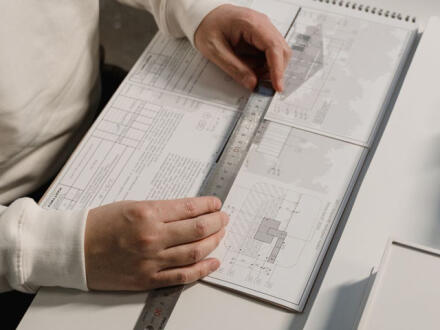
Students who want to study drafting, architecture, engineering technology, or 3D modeling often face the same problem first: CAD software and college bills add up fast. A single Autodesk certification exam can cost more than $150, and annual tuition at many New Jersey colleges runs into the thousands before books, lab fees, and a laptop enter the picture.
That is why New Jersey Computer-Aided Design Scholarships matter. They can reduce tuition, cover tools, and make it easier for students to stay focused on studio work instead of extra shifts at a part-time job. For a student building floor plans at 11:30 p.m. on a borrowed laptop, even a $1,000 award can mean one less loan or one full semester of software access.
This list breaks down 10 practical funding paths for high school seniors, first-year students, community college learners, and university applicants in New Jersey. It covers local scholarships, state aid, merit awards, professional association funding, and employer-backed options that fit CAD-related fields.
The goal is simple. Help students find money that actually matches how CAD education works. That means looking beyond "general scholarships" and focusing on awards tied to design portfolios, technical programs, construction careers, engineering plans, and architecture coursework. Students who apply across several of these categories often have a better shot than students who chase one big award and stop there.
1. New Jersey Computer-Aided Design Scholarships For High School Students
High school seniors have more CAD funding options than most people think. The best time to start is before graduation, while grades, CTE projects, and teacher recommendations are easy to collect.
Students in drafting, engineering graphics, architecture, or design classes should look first at New Jersey awards that favor local applicants. A good example is the New Jersey Little Suburban Achievers scholarship, which gives New Jersey students another in-state option to stack with bigger awards.
Many high school applicants also qualify for school-linked awards through counselors, booster clubs, and district education foundations. The trick is to match the application to CAD work, not just grades.
Strong evidence includes:
- A portfolio with 4 to 8 pieces
- A drafting or architecture class transcript
- Skills in AutoCAD, Revit, SketchUp, or SolidWorks
- A short essay that explains a career goal such as civil drafting or interior design
Students should also ask whether a general award can support a CAD pathway. The New Jersey Education Association scholarships may not be CAD-specific, but they can still help students entering technical or design-related college programs.
A practical benchmark helps here: if a student applies to 12 scholarships with a 15% success rate, that can still produce 1 or 2 wins. For many families, that means $1,000 to $3,000 in real relief before the first tuition bill lands.
2. County And Community Foundation Scholarships For Aspiring CAD Majors In New Jersey
County and community foundation awards are often the most overlooked money on the table. They may not say "CAD" in the title, but they often support local students in architecture, engineering, design technology, and skilled trades.
One useful example is the Community Foundation of New Jersey scholarships. These kinds of funds usually care about residency, financial need, community service, and school plans. A CAD student from Essex, Bergen, or Middlesex County can often fit the profile if the application clearly connects technical design skills to a career path.
Students should search by:
- County name
- Town or city name
- "Education foundation"
- "Community foundation scholarship"
- "STEM" or "engineering" plus local area
This funding path works because local donors tend to back students they can picture helping the area later. A future building designer who wants to work on safer schools, accessible housing, or infrastructure repair tells a stronger story than a generic "I like computers" essay.
A concrete example: a student who designed a 620-square-foot tiny home model for a class project can describe material layout, ADA-friendly door width, and energy-efficient window placement. That sounds real because it is real.
For many local foundations, awards range from $500 to $5,000. Those numbers matter. A $2,500 local scholarship can cover a full semester of books, fees, and software for a community college student better than a flashy national contest with 20,000 applicants.
3. Career And Technical Education Awards For Drafting, Design, And Engineering Students
Career and Technical Education funding is a natural fit for CAD students. If a student learned design through a CTE high school, county vocational school, or pre-engineering track, that background can open doors that liberal arts applicants never see.
The New Jersey Department of Education supports career-focused pathways through state education programs, and those pathways often connect students to district awards, partner-school grants, and trade-aligned recognition.
CTE-related CAD applicants should highlight proof that they can do technical work, not just talk about it. Useful proof includes:
- OSHA training cards
- Autodesk or SolidWorks certifications
- SkillsUSA participation
- Engineering notebooks
- Teacher-verified lab projects
Construction-linked scholarships matter here too. The ACCNJ Foundation scholarships can be relevant for students moving toward construction management, drafting, estimating, and design support roles.
A portfolio beats vague enthusiasm. A student who can show a 12-sheet drafting set, a dimensioned floor plan, or a Revit model of a small commercial space is already speaking the language of employers and scholarship committees.
One strong application formula is simple:
- Name the technical program.
- Show one project with measurements and software used.
- Connect the project to a job path.
- Explain the cost barrier.
That structure works because it turns "I need help paying for school" into "I built this, I know where I'm headed, and this award keeps me on track."
4. New Jersey Computer-Aided Design Scholarships For First-Year Students
First-year students sit in a useful middle spot. They already have college acceptance or enrollment, but they are still early enough to apply for freshman awards, general entrance scholarships, and field-related funding.
That makes New Jersey Computer-Aided Design Scholarships for first-year students especially valuable. Students can combine campus aid with outside scholarships before sophomore-year costs rise.
A key state-backed route is the New Jersey Educational Opportunity Fund. EOF supports eligible students with financial need at participating colleges and can provide grant aid plus academic support. For a first-year CAD student adjusting to studio deadlines and math requirements, that support can matter as much as the dollar amount.
Another point many families miss: first-year students should reapply even after winning one award. Scholarship money is not usually automatic after term one.
Good first-year application materials include:
- A final high school transcript
- Acceptance letter or proof of enrollment
- FAFSA-based aid information
- A short portfolio with school or personal work
- One recommendation from a technical teacher
Concrete cost example: if first-semester books and software run $1,180, and a student wins a $1,000 outside scholarship, the gap drops to $180. That changes whether they buy the required laptop now or keep limping along with an old machine that freezes during renderings.
Students who start applying again within the first 30 days of enrollment tend to keep better momentum than students who wait until spring panic sets in.
5. Merit Scholarships At New Jersey Colleges With CAD-Related Programs
Colleges in New Jersey often award merit aid before students ever touch a separate scholarship form. For CAD-related majors, that means grades, class rank, SAT or ACT scores if submitted, and portfolio strength can all affect the final package.
This category is especially important for students entering architecture, engineering technology, industrial design, interior design, or drafting-related programs. Merit aid can cut tuition every year, not just once.
Students should compare colleges on four numbers:
- Published tuition
- Average merit award
- Portfolio requirements
- Renewable scholarship rules
A college offering a $6,000 annual merit award may be a better deal than a college with lower sticker tuition but no extra aid. Over four years, that difference can reach $24,000.
CAD students should also look at design-linked outside awards that strengthen their overall funding plan. The Graphic Design scholarship may fit students whose CAD work overlaps with visual communication, layout, or digital presentation boards.
Committees like specifics. If a student improved from a 3.1 GPA to 3.8 GPA while taking pre-calculus, CAD, and physics, that upward line tells a stronger story than a flat transcript with no rigor.
One overlooked tactic: ask the admissions office whether scholarship review changes when a student submits a portfolio. At some colleges, a portfolio can help a borderline applicant move into a stronger merit bracket. That can be the difference between paying full freight and getting a meaningful tuition discount.
6. New Jersey Computer-Aided Design Scholarships For College Students
Current college students should not assume the scholarship window has closed. In fact, New Jersey Computer-Aided Design Scholarships for College can be easier to target once a student has grades, studio projects, and a declared major.
A sophomore in engineering technology or architecture now has evidence that a high school senior does not. That evidence might include a 3.4 college GPA, a measured drawing set, a fabrication lab project, or a design internship.
College students should focus on three buckets:
- Department scholarships
- Outside private scholarships
- State and need-based aid updates
Part-time students at county colleges should also look at the New Jersey Part-Time Tuition Aid Grant. That matters for students balancing work, family care, or apprenticeships with CAD classes.
Another useful angle is combining design awards with arts-based local funding. The New Brunswick Arts scholarship may suit students whose CAD work supports theater sets, exhibition design, digital modeling, or public art planning.
One practical example: a student taking 9 credits, working 24 hours per week, and paying $412 for books and printing may not look like the classic "full-time scholarship star." But that student can still be a strong candidate if the application shows persistence, skill growth, and a clear use for the money.
For college applicants, the strongest essays often answer one simple question: What project comes next if this money shows up? Committees like action, not fluff.
7. University-Based Aid For Architecture, Engineering, And Design Technology Students
University aid gets more specialized once students enter larger architecture, engineering, and design technology programs. These schools may offer college-wide scholarships, departmental awards, and alumni-funded grants for students with strong studio or lab performance.
This is where New Jersey Computer-Aided Design Scholarships for University applicants can become more field-specific. A student may not find an award labeled "CAD," but they may find money tied to architecture, civil engineering, construction technology, product design, or digital fabrication.
Typical selection factors include:
- GPA thresholds such as 3.0 or 3.5
- Portfolio review
- Faculty recommendation
- Need-based documentation
- Participation in research, design competitions, or campus organizations
The Center for Architecture Design scholarship fits neatly into this category because it connects design-focused study with architecture-related training.
Students should also ask whether awards renew automatically. Some departments require a new application every semester, while others renew as long as the student keeps a minimum GPA and full-time status.
New Jersey Computer-Aided Design Scholarships For University Applicants
University applicants should build a short scholarship file before classes start. That file should include a resume, transcript, one general essay, one portfolio PDF, and a list of deadlines.
That small system saves time. If each application takes 45 minutes, reusing polished materials across 8 applications can save about 6 hours. For a student juggling orientation, placement tests, and housing forms, that is not a small win.
Students applying to universities outside New Jersey but staying in the region can also compare metro-area opportunities like the ACEC New York scholarship program when eligibility rules allow nearby applicants or related engineering tracks.
8. New Jersey Computer-Aided Design Association Scholarships And Industry-Sponsored Awards
Professional associations can be gold for CAD students because they often support the exact fields those students want to enter. Engineering, architecture, construction, and design groups regularly fund scholarships, competitions, and education grants.
These awards may come from chapters, trade groups, software companies, or design organizations. The Vectorworks Design scholarship is a strong example of an industry-linked opportunity that rewards design skill, not just financial need.
Industry-sponsored awards often look for:
- A focused major
- Project quality
- Career intent
- Technical software skill
- Faculty or employer references
A student who submits a site plan, a BIM model, or a rendering package usually has an advantage over a student who sends a broad essay with no work samples.
Where To Find Professional Association Opportunities
Students searching for New Jersey Computer-Aided Design Association Scholarships should start with associations connected to their target job. Good categories include architecture groups, engineering councils, contractor associations, and software-sponsored design contests.
A smart search list includes:
- American Society of Civil Engineers chapters
- American Institute of Architects local components
- Construction contractor foundations
- CAD software scholarship pages
- Engineering consulting associations
One concrete benchmark: some trade associations give awards in the $1,000 to $5,000 range, while national design competitions can go much higher for winners. Even smaller awards help if they cover plotting, model materials, or a graphics-ready laptop.
The best applications here feel professional. Clean file names, a one-page resume, and images exported at readable resolution can make a student look more ready for industry from the first click.
9. National STEM And Design Scholarships That New Jersey CAD Students Can Use
New Jersey students should not stop at state lines. National scholarships can work well for CAD learners, especially those in STEM, architecture, engineering, interior design, manufacturing, or visual design programs.
These awards are often more competitive, but they also bring larger numbers. A national scholarship of $5,000 can cover a major chunk of one semester at a public institution or offset housing costs that state aid does not fully touch.
Good national targets include:
- STEM scholarships for engineering or technology majors
- Architecture and built-environment scholarships
- Design software competitions
- Scholarships from manufacturing and construction groups
- Corporate foundation awards for technical fields
Families should also keep state aid active while chasing outside money. The Higher Education Student Assistance Authority manages key New Jersey financial aid programs, and students who miss state paperwork deadlines can lose grants even if they win outside awards.
A strong national application needs sharper positioning than a local one. "I like design" is weak. "I created a 14-part assembly model for a robotics project and want to move into mechanical drafting" is much stronger.
Students using platforms such as StudentScholarships can save time by filtering for major, grade level, and award type rather than scrolling through hundreds of weak matches. If that trims a search from 180 listings to 25 relevant ones, the student has a better shot at finishing quality applications instead of abandoning the process halfway through.
10. Employer, Union, And Workforce Development Funding For CAD Training
Not every CAD student follows the standard four-year college route. Some move through employers, apprenticeships, unions, county colleges, or workforce training programs. For them, funding can come from a paycheck-connected source rather than a classic scholarship office.
This path matters because CAD skills show up in many job settings:
- Construction firms
- Manufacturing plants
- Architecture offices
- Civil engineering companies
- Utility and infrastructure contractors
Some employers reimburse tuition after a grade requirement, such as a B average in job-related courses. Others cover short-term training, certification exams, or software classes. Union and contractor association support can also help students who want drafting roles tied to field operations or estimating.
A concrete scenario makes the value obvious. If an entry-level worker earns $21 per hour and gets $2,000 in tuition reimbursement, that can cover a community college CAD sequence without adding loan debt.
Students should ask human resources or training coordinators five direct questions:
- Is tuition reimbursement available?
- Does it cover CAD or drafting classes?
- Is there a yearly dollar cap?
- Are books and exam fees included?
- Must the employee stay for a set period after payment?
Workforce development boards and county training programs can also help displaced workers or career changers. For adults returning to school, this route is often faster and more practical than chasing only freshman-style scholarships.
New Jersey Computer-Aided Design Scholarships - Frequently Asked Questions
What types of scholarships are available for New Jersey students studying Computer-Aided Design?
New Jersey students can find scholarships specifically for CAD fields through local awards like the New Jersey Little Suburban Achievers, community foundations, career and technical education funds, college merit scholarships, and industry-sponsored scholarships such as the Vectorworks Design Scholarship.
How can high school students in New Jersey qualify for CAD scholarships?
High school students should build portfolios with technical drawings, transcripts from drafting or architecture classes, and demonstrate skills in software like AutoCAD or SolidWorks. Applying to local scholarships like the New Jersey Little Suburban Achievers and school-linked awards improves their chances.
What is the role of Career and Technical Education (CTE) in securing CAD scholarships in New Jersey?
CTE programs provide pathways for CAD students by offering recognitions, certifications, and connections to awards like the ACCNJ Foundation Scholarships. Proof of technical work, such as OSHA cards or Autodesk certifications, strengthens scholarship applications.
Are there scholarships specifically for first-year CAD students in New Jersey?
Yes, first-year students can apply for scholarships like the New Jersey Educational Opportunity Fund that offer financial aid and academic support. They should submit portfolios, transcripts, and enrollment proof, and reapply yearly for continued scholarship opportunities.
How do merit scholarships work for CAD-related programs in New Jersey colleges?
Merit scholarships consider grades, test scores, portfolio quality, and can offer renewable awards. Colleges with CAD-related majors often provide merit aid that can significantly reduce tuition annually, especially if students submit strong portfolios.
Can working CAD students in New Jersey receive employer or union funding for their education?
Yes, many employers and unions offer tuition reimbursement or scholarships for CAD training. Students should inquire about coverage for CAD courses, software, exam fees, and any obligations like work tenure after funding, which is especially helpful for those balancing work and study.




