

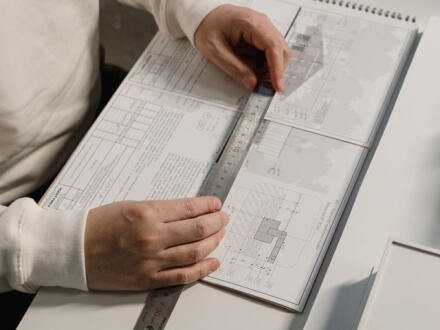
Students looking for Hawaii drafting scholarships usually run into the same problem fast: the money rarely sits in one neat bucket labeled "drafting." It's often spread across architecture, CAD, engineering technology, design, CTE, STEM, local foundation aid, and department-based awards.
That sounds annoying, but it also creates more chances to get help. A student who can show solid drafting skills, a clear academic plan, and even a small portfolio may qualify for several funding paths at once instead of only one stand-alone scholarship.
For example, a high school senior interested in residential drafting might apply for a state or community scholarship, a STEM award, a department scholarship, and a first-year institutional grant. Four applications at $1,000 each can cover $4,000 of tuition, books, tools, or software. That is real money.
This guide breaks the search into six practical paths. It covers Hawaii Drafting Association Scholarships, options for high school students, first-year students, college students, university students, and national drafting or CTE awards that Hawaii students can still use.
The goal is simple: help students find the places where drafting-related funding actually shows up, what they need to prepare, and how to stack awards without wasting time on weak applications.
1. Hawaii Drafting Association Scholarships
Students who start with Hawaii Drafting Association Scholarships should think broader than one exact scholarship title. In practice, drafting support in Hawaii can come from professional groups tied to built-environment fields such as land surveying, landscape architecture, engineering support, and technical design.
That matters because drafting sits close to several disciplines. A student using AutoCAD for site plans, construction drawings, or civil layouts may fit more than one scholarship category.
A smart first move is to build a short target list with 5 to 8 scholarships. That is enough to create real odds without turning the process into a part-time job. A student who submits 6 strong applications with a 20% hit rate could land 1 award: at $1,500 each, that already offsets a large chunk of semester costs.
Students interested in drafting for land development or site design should pay attention to the land surveyors grant. Students leaning toward design and outdoor planning may also fit the ASLA scholarship.
Eligibility For High School, First-Year, And College Applicants
Eligibility rules vary, but most drafting-friendly scholarships look for three things:
- Residency or local connection to Hawaii
- Program fit in drafting, CAD, engineering tech, architecture, design, or surveying
- Proof of follow-through through GPA, attendance, portfolio work, or recommendations
A high school applicant may qualify with a 3.0 GPA, one drafting or engineering teacher recommendation, and a clear postsecondary plan. A first-year student often needs a college acceptance plus a declared or intended major. Current college students may need completed credits, such as 12 semester hours, and evidence that they stayed in good academic standing.
A strong example looks like this: a student completes 2 CAD classes, earns a B+ average, submits 4 drawing samples, and explains a goal of becoming a civil CAD technician. That profile is much stronger than a generic essay that only says the student "likes design."
What To Prepare Before You Apply
Before applying, students should collect the same core materials once and reuse them. This alone can save 4 to 6 hours across multiple applications.
The standard packet usually includes:
- Unofficial or official transcript
- Resume with drafting classes, clubs, or work experience
- One general essay that can be adapted in 15 to 20 minutes
- 1 to 3 recommendations
- Portfolio samples, often 3 to 8 pages
For drafting, portfolio quality matters more than fancy presentation. Clean line work, readable dimensions, title blocks, and clear file naming beat flashy graphics. A simple PDF with 5 pages can work well if it includes, for example, a floor plan, an elevation, a section detail, a CAD screenshot, and one hand sketch.
Students should also keep a spreadsheet with deadlines, award amounts, and status. Even a small tracking sheet with 8 columns can prevent missed items and duplicate effort.
2. Hawaii Drafting Scholarships For High School Students
Hawaii Drafting Scholarships for High School Students often come from career and technical education routes, STEM support, and local foundation programs rather than a scholarship labeled only "drafting." That is good news. It widens the field.
High school students should focus on programs that reward potential, not just a finished college transcript. A student with two semesters of drafting, a construction class, and a basic CAD portfolio can still be competitive.
One useful path is broader community funding. Many Hawaii students sort through local opportunities through an HCF application, where a single process can connect applicants to multiple awards. Students with strong STEM interest should also review AFCEA Hawaii STEM aid, especially if their drafting work overlaps with engineering or technical programs.
A concrete example: a senior with a 3.4 GPA, 92 service hours, and a 6-page portfolio has a better shot than a student with a slightly higher GPA but no project evidence. Drafting is visual. Applications should prove that.
Best Ways To Build A Strong Drafting-Focused Application
The strongest applications show actual drafting behavior, not just interest. Students should make it easy for reviewers to picture them in a classroom, lab, or job setting.
Good application pieces include:
- Specific coursework such as architectural drafting, engineering graphics, woodworking, or geometry
- Software familiarity like AutoCAD, Revit, SketchUp, Fusion, or SolidWorks
- Project evidence such as a tiny house plan, classroom bridge model, or measured room layout
- Career intent like residential drafting, civil CAD, BIM support, or mechanical design
Numbers help. Instead of saying "they worked hard," a teacher can write that the student completed 14 drawing plates, revised 3 projects after critique, and learned dimension standards within one semester.
Students should also make the essay concrete. A better line is: "They drafted a 480-square-foot accessory dwelling layout with door swings, window schedules, and scaled dimensions." That gives a reviewer something to remember.
If the student has no formal portfolio yet, they can still build one in a weekend:
- 1 hand sketch of a room or object
- 1 dimensioned floor plan
- 1 simple elevation
- 1 CAD screenshot with layers visible
- 1 short paragraph on what they learned
That five-piece set is enough to move from "interested" to "prepared."
3. Hawaii Drafting Scholarships For First-Year Students
Hawaii Drafting Scholarships for first-year students sit in a sweet spot. These applicants can still use senior-year achievements, but they can also add college acceptance letters, placement results, and declared program plans.
That extra proof matters. Reviewers often like first-year applicants because the student has already taken one concrete step toward training.
For drafting students, the biggest money mistake is applying only for one scholarship type. A better plan is to combine:
- Institutional merit aid
- Program or department awards
- Local Hawaii scholarships
- Private outside scholarships
A first-year student who wins a $2,000 merit grant, a $1,250 local award, and a $750 department scholarship has stacked $4,000 total without needing a single full-ride offer.
Students with Native Hawaiian background or ties to related university support systems may also want to review the OHA award if it matches their academic path and eligibility.
How To Combine Merit Aid With Program-Specific Awards
The best stacking strategy starts with the college financial aid office. Students should ask one direct question: Does this outside scholarship reduce unmet need, loans, work-study, or school grants first? The answer changes the value of every award.
Here is a simple first-year stacking model:
| Source | Example amount | Why it helps |
|---|---|---|
| Merit scholarship | $2,500 | Rewards GPA or class rank |
| Drafting/program award | $1,000 | Tied to major fit |
| Local Hawaii scholarship | $1,500 | Based on residency or community ties |
| Tool/book stipend | $500 | Covers supplies or software |
That package reaches $5,500. For many community college or public university students, that can cover a major share of tuition plus a laptop upgrade.
First-year students should also time applications well. Many miss awards because they wait until after classes start. A better sequence is:
- Apply to school
- File aid forms
- Contact the drafting, engineering, architecture, or design department
- Ask about incoming-student awards
- Submit outside scholarships before orientation
One polished email can uncover hidden funding. Departments sometimes have 2 to 5 small awards that never show up in broad scholarship searches because they are announced internally.
4. Hawaii Drafting Scholarships For College
Hawaii Drafting Scholarships for College students often reward persistence. Once a student has actual postsecondary grades, instructor references, and completed projects, the application gets easier to prove.
This group includes students in community colleges, technical programs, and transfer tracks. It also includes students who changed majors and found their fit in drafting after trying something else first.
A second-year student with 18 completed credits, a 3.2 GPA, and a portfolio showing three revised CAD projects usually looks stronger than they did as a high school senior. Now the application can show results, not just promise.
Local awards can help bridge the middle years when students are still enrolled but no longer qualify for incoming-freshman programs. Students who want a general local option can look at the Hawaii State FCU award, especially if they need help covering ongoing costs rather than just first-year expenses.
Community College And Transfer Student Opportunities
Community college students are often overlooked, which creates a real opening. Tuition may be lower, but so are available cash reserves for books, transportation, printing, plotter costs, and software subscriptions.
A drafting student at a community college might face costs like:
- $600 for books and access codes
- $900 for a laptop or upgrade
- $300 for printing, drafting supplies, and storage drives
- $1,200 for transportation over a term
That adds up to $3,000 fast, even before tuition.
Transfer students should search in two directions at once:
- Awards for current two-year students
- Awards for incoming transfer students at four-year schools
That overlap can be valuable. A student finishing an associate path in CAD or engineering technology may qualify for one final community college award and a transfer-based university scholarship.
Students should also ask whether related fields count. A person in civil engineering technology, architecture, construction management, or product design may still fit drafting-related criteria if the portfolio clearly shows drawing-based work.
One good transfer packet often includes:
- 2 faculty recommendations
- 1 updated transcript
- 5 to 7 portfolio pages
- 1 personal statement with transfer goal
- 1 resume listing software and project hours
That kind of packet can be reused across 4 or more applications with minor edits.
5. Hawaii Drafting Scholarships For University
Hawaii Drafting Scholarships for University students are often housed inside departments, not big public scholarship pages. That means students have to ask sharper questions and look in more than one office.
At the university level, drafting support may sit under architecture, engineering, environmental design, industrial technology, or digital modeling. The wording changes, but the core skill set stays familiar: technical drawing, software use, design communication, and project accuracy.
Students should also confirm that any school they consider is properly covered under Hawaii's postsecondary oversight structure through the state authorization program. That check takes minutes and helps students avoid bad surprises.
A university student can often pull funding from multiple campus pockets. For example, $1,800 from a college of engineering award plus $1,200 from a design department fund plus $500 for materials creates a useful $3,500 package.
Architecture, CAD, Engineering, And Design Departments To Check
When students search for Hawaii Drafting Scholarships for University, they should not stop at the financial aid office. The better route is to check these places one by one:
- Architecture departments
- Engineering departments
- Construction management programs
- Industrial design or digital design programs
- Career and technical education divisions
- College foundation offices
Department websites often hide small but realistic awards. Some are only $500 to $2,000, but three small wins can do more than waiting for one giant scholarship that never lands.
Students should search department pages for terms like:
- scholarship
- student award
- tuition assistance
- portfolio competition
- memorial fund
- undergraduate grant
It also helps to contact faculty directly. A short email with a transcript, intended major, and 3 sample images can lead to advice that search engines never surface.
For students balancing drafting with broader career plans, adjacent fields can matter too. Someone interested in site planning may find a fit in landscape-related funding, while a student focused on teaching technical drawing might look at the education scholarships.
If the student uses a scholarship search platform, it helps to filter by both major and skills. On scholarship search pages, drafting terms often overlap with CAD, design technology, architecture, and engineering graphics.
6. National Drafting And CTE Scholarships Hawaii Students Can Use
National awards matter because Hawaii students are not limited to local money. Many drafting-related scholarships are open across the United States, especially those tied to CTE, STEM, architecture, engineering, manufacturing, and design software skills.
That wider pool can be useful when local scholarships are small or highly competitive. Even one outside award worth $2,500 can cover a semester of books, transportation, software, and lab fees.
Students should search nationally with combinations like:
- drafting scholarship
- CAD scholarship
- CTE scholarship
- architecture student scholarship
- engineering technology scholarship
- design competition award
The best candidates for national awards usually have proof they can finish projects. A portfolio with 6 pages, one recommendation from a technical instructor, and a resume showing 40 volunteer hours or 120 work hours in a related setting already gives reviewers real evidence.
Students who need broad Hawaii-based options while also applying nationally may find additional fit through the blind students award or the exclusive Hawaii award, depending on personal eligibility and academic goals.
Where To Find Deadlines, Portfolios, And Recommendation Requirements
Students lose good scholarship chances for boring reasons. They miss deadlines, upload the wrong file, or ask for letters too late.
A clean tracking system fixes that. Each scholarship entry should list:
- Deadline date and time zone
- Award amount
- Transcript type required
- Essay length
- Portfolio page limit
- Number of recommendations
- Submission format
Even a basic spreadsheet with 7 to 10 fields can stop last-minute mistakes.
Portfolio rules also vary more than students expect. One program may want 3 images. Another may allow 10 pages. A third may ask for one PDF under 5 MB. That means students should keep a master folder with different versions ready.
Recommendation timing matters too. Asking a teacher 21 days before the due date works much better than asking 48 hours before. Strong letters usually mention measurable details such as attendance, revision habits, software growth, or project accuracy.
Students should also use tools that reduce search time. On platforms like StudentScholarships.org, filters and match tools can cut the search from 3 hours to about 45 minutes when a student already knows the major, state, and education level filters to use.
The bottom line is simple: Hawaii students looking for Hawaii Drafting Scholarships, Hawaii Drafting Scholarships for College, and Hawaii Drafting Scholarships for University should cast a wider net than the keyword suggests. Drafting money often hides in nearby categories. The students who organize early, show real project work, and apply across local plus national paths give themselves the best odds of paying less for school.
Frequently Asked Questions About Hawaii Drafting Scholarships
What types of scholarships can Hawaii drafting students apply for?
Hawaii drafting students can apply for scholarships across multiple categories including architecture, CAD, engineering technology, design, CTE, STEM, and local foundation awards. This broad scope increases opportunities beyond just scholarships labeled specifically for drafting.
How can high school students strengthen their applications for Hawaii drafting scholarships?
High school applicants should showcase specific drafting coursework, technical software skills like AutoCAD, project portfolios, and clear career goals. Including service hours and teacher recommendations with measurable achievements improves competitiveness, as seen in programs like the AFCEA Hawaii STEM Scholarships.
What is a good strategy for first-year college students seeking drafting scholarship funding in Hawaii?
First-year students should apply for multiple awards, combining institutional merit aid, program-specific scholarships, and local scholarships such as the Office of Hawaiian Affairs Scholarship. Early application and contacting relevant departments can uncover hidden opportunities and maximize total funding.
Where should university students look for Hawaii drafting scholarships?
University-level drafting scholarships are often department-specific. Students should check architecture, engineering, industrial design, and career & technical education departments. Contacting faculty directly with transcripts and portfolios can reveal internal awards not publicly listed.
Are there national drafting scholarships available for Hawaii students?
Yes, Hawaii students can apply for national drafting scholarships tied to CTE, STEM, architecture, and engineering. These awards, often competitive, can supplement local financing and cover costs like software, tools, and lab fees.
What essential materials should a student prepare before applying for drafting scholarships?
Students should compile transcripts, resumes highlighting drafting experience, a general essay adaptable for multiple applications, 1-3 recommendations, and a clear portfolio with samples like CAD drawings, floor plans, and sketches. Maintaining a tracking spreadsheet ensures deadlines and requirements are met efficiently.







