

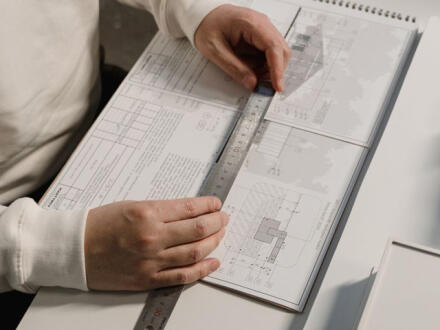
Students who want a drafting, CAD, architecture, or engineering-related education in Alaska often face the same problem fast: tuition, tools, software, books, and housing add up hard. A drafting student can easily spend hundreds on course materials alone, and that is before lab fees, transportation, or a laptop capable of running AutoCAD, Revit, or SolidWorks.
The good news is that Alaska Drafting Scholarships are not limited to one narrow award with "drafting" in the name. Many strong options support nearby pathways too, including engineering, construction, design, technical education, and career training. That wider search matters. The College Board reports that average tuition and fees at public four-year schools are in the five-figure range, while even community college students can face several thousand dollars in annual costs before living expenses.
For high school students, first-year students, and current college students, the smartest move is usually to stack opportunities. That means applying for Alaska-specific scholarships, trade and technical awards, university aid, and industry-backed programs together instead of waiting for one perfect match.
This guide breaks down five useful categories of Alaska Drafting Scholarships for High School Students, college applicants, and university students. It also shows what makes an application stronger, where local students can find solid opportunities, and how a free search platform like StudentScholarships can save time by putting multiple options in one place.
1. Alaska Drafting Scholarships For High School Students Starting Early
Students who start in high school usually have the best odds of building a strong scholarship list before deadlines pile up. For drafting students, that early start matters because portfolio work, math grades, and career-tech classes take time to build.
A good example is the Alaska Performance Scholarships, which can reward academic preparation completed before graduation. For a student who already plans to study drafting or design, that kind of award can pair well with technical or industry scholarships later.
High school students should also widen the search beyond "drafting" labels. Programs tied to engineering, construction, utilities, architecture, and applied technology often welcome students whose coursework points toward CAD and design work. In practical terms, one student with a 3.6 GPA, two years of drafting classes, and a simple Revit portfolio may look stronger than a student who waits until senior spring and submits only grades.
Eligibility Basics High School Applicants Should Check First
Before applying, students should verify the rules on residency, grade level, GPA, and intended major. A scholarship that looks perfect can become a dead end if it requires Alaska residency for a full year, enrollment in a specific program, or full-time attendance.
The most common eligibility checkpoints are:
- Alaska residency or proof of local ties
- Minimum GPA, often 2.5 to 3.5
- Enrollment in a career, technical, engineering, or design-related field
- High school transcript with math, science, or CTE coursework
- A short essay, recommendation, or activity list
Students interested in drafting should pay special attention to major language. Some awards say "engineering" or "construction management," but they still fit someone planning to study civil drafting, architectural drafting, or CAD technology.
The Alaska Curiosity Scholarship is a good reminder that not every useful award is tied to one job title. A student with a clear plan, strong grades, and thoughtful writing can still compete well even when the scholarship description is broader.
How To Build A Strong Early Application In Drafting And Design
A strong early application usually combines evidence of skill with evidence of follow-through. Scholarship reviewers want more than "I like design." They want proof that the student has spent time drawing plans, solving technical problems, or learning software.
A simple but effective packet can include:
- A one-page resume with drafting, robotics, shop, STEM, or construction activities
- Three to five portfolio samples, such as floor plans, hand sketches, 3D models, or CAD screenshots
- One focused essay explaining the career goal
- One recommendation from a math, shop, art, engineering, or CTE teacher
That portfolio does not need to be flashy. Even four labeled pages showing a bedroom floor plan, a dimensioned object drawing, a small SketchUp model, and a class project can make a student look serious.
Students can also strengthen applications by showing measurable effort. Examples help: 48 volunteer hours with a Habitat build, two semesters in drafting, or first place in a school design challenge says more than broad enthusiasm. For students searching widely, StudentScholarships can simplify the process by putting Alaska-focused awards and career guidance in one spot instead of making students hunt through scattered pages.
2. Alaska Drafting Scholarships For First-Year Students Entering College
First-year students are in a useful middle zone. They may still qualify for recent-high-school awards, but they can also access campus-based scholarships once they commit to a college or technical program. That makes Alaska Drafting Scholarships for first-year students especially worth chasing.
This stage is also when costs become more real. A student may need tuition money, but also software subscriptions, a graphics-capable laptop, plotting fees, and transportation. For some drafting tracks, the gear bill alone can run from $800 to $1,800, depending on hardware and course requirements.
Students entering engineering-adjacent drafting programs should look at scholarships connected to technical fields, even when the award title does not say CAD. The EMC Engineering Scholarship fits that strategy well because it sits close to the same skills pipeline: math, design, systems thinking, and technical training.
Another smart move is to ask the financial aid office how scholarships stack with grants and departmental aid. Both the UAA financial aid office and campus program advisors can help students understand deadlines, packaging, and whether separate forms are needed after admission.
What First-Year Students Need In Their Scholarship Packet
A first-year scholarship packet should look clean, complete, and specific. Reviewers often read dozens or hundreds of applications, so small details matter more than students expect.
At minimum, most first-year students should prepare:
- Final high school transcript or dual-enrollment record
- Proof of college admission or intended enrollment
- FAFSA confirmation if the scholarship uses need-based review
- Resume with work, clubs, CTE classes, and volunteer hours
- One to two recommendation letters
- A targeted essay tied to drafting, design, or technical goals
The essay is where many applications either wake up or go flat. A strong one uses specifics: "They drafted a 620-square-foot cabin plan in class and learned why poor dimensions create job-site confusion" is much stronger than "They love architecture."
First-year students should also explain why drafting fits their path. Maybe they want to move from CAD into civil engineering. Maybe they enjoy turning rough field measurements into precise plans. Maybe they grew up around construction and want to reduce drawing errors that waste material.
Concrete numbers help. If a student worked 18 hours per week, kept a 3.4 GPA, and finished six dual-credit math credits, that tells a full story fast.
For students who may also qualify for broader Alaska aid, the Alaska Housing Finance Corporation Education Scholarship can be worth reviewing, especially when housing and education costs intersect in a real family budget.
3. Alaska Drafting Scholarships For College Students In Technical And Career Programs
Students in certificate, associate, and applied technology programs are often a strong fit for Alaska Drafting Scholarships for College because their training leads directly to workforce roles. These students are not just studying theory. They are learning to produce drawings, read plans, model systems, and support real construction or engineering work.
That practical angle matters to scholarship committees. Industry-backed awards often like applicants who can explain where their training leads. A student who says they plan to become a civil CAD technician, an architectural drafter, or a mechanical design assistant sounds concrete and employable.
Technical-program students should also remember that local employers have a stake in this pipeline. The U.S. Bureau of Labor Statistics notes that drafters use software to convert designs from engineers and architects into technical drawings, which makes CAD skills directly tied to job readiness. In plain terms, a student who can produce accurate layers, dimensions, and revision notes is learning work that shops and firms actually need.
For Alaska students with construction-related interests, the AGC Alaska Scholarships deserve attention because drafting often supports the same building and infrastructure ecosystem.
Best Options For Community College And Transfer Students
Community college students should search in three directions at once:
- Program-based scholarships through the school or department
- Alaska industry scholarships linked to engineering, construction, utilities, or design
- Transfer scholarships for students moving into a bachelor's program later
This matters because transfer students often miss money simply by assuming they are "between categories." In reality, a student earning an associate degree in drafting may qualify for technical scholarships now and university scholarships later.
The strongest community college applicants usually show one of these profiles:
- They completed 15 to 30 credits with steady grades
- They can point to one internship, one campus project, or one paid technical job
- They have a clear transfer plan into architecture, civil engineering, or construction management
Portfolio evidence helps here too. A transfer student who includes five sheets of annotated CAD work can stand out against applicants who submit only transcripts.
Another useful angle is employer relevance. If a student's project involved a site layout, framing details, or utility drafting, they should say so directly. Reviewers like to see a line between classwork and real use.
Students who plan to transfer should keep every syllabus, project file, and transcript organized. That paper trail can save hours of rework when applying for scholarships, admissions, and credit evaluations all at once.
4. Alaska Drafting Scholarships For University Students In Architecture, Engineering, And CAD Pathways
University students often find the best drafting-related opportunities by searching one level wider than the word "drafting." Many scholarships support architecture, engineering, interior design, construction, surveying, or building science, and drafting students often sit right inside that mix.
This is where Alaska Drafting Scholarships for University students become less about the job title and more about the academic pathway. A student in architectural engineering technology with heavy CAD coursework may be just as competitive as a student in a named drafting program.
Larger schools can also stack aid in multiple layers. A student may combine state aid, need-based aid, a departmental scholarship, and one private or industry award. At a public university, that can turn a painful bill into something workable. Even a $1,500 award can cover software, books, and a month or two of housing rather than disappearing into a bigger tuition balance.
The Alaska Engineering Education Foundation Scholarships are especially relevant for students whose drafting work supports engineering training. They sit close to the same academic pipeline and can make sense for students building toward technical design roles.
How Program Choice Can Affect Scholarship Eligibility
Program choice changes eligibility more than many students realize. A student enrolled in architecture may qualify for a different pool than a student in civil engineering technology, even if both use the same CAD lab.
Common program categories that may connect to drafting scholarships include:
- Architecture and architectural studies
- Civil, mechanical, or structural engineering pathways
- Construction management and building sciences
- Engineering technology or design technology
- Surveying, mapping, and related applied fields
Students should compare scholarship wording against the exact major listed on their transcript. One missing keyword can create confusion.
For example, if a student studies "engineering technology" but spends 12 credit hours in CAD-heavy classes, they should state that clearly in the essay or resume. If they switched majors from fine arts to architecture after discovering digital modeling, that shift is worth explaining too.
University departments may also have internal rules. Some require full-time enrollment, others require a declared major, and some reserve awards for upper-division students. That means a sophomore with 45 credits completed may qualify for options a new student cannot access yet.
Students should ask three direct questions before applying:
- Is the scholarship based on major, department, or career goal?
- Does it require full-time status or a certain credit load?
- Can students in related programs still apply?
Ways University Students Can Stand Out With Portfolios And Projects
At the university level, the portfolio becomes a real separator. Grades still matter, but reviewers often remember the student who showed precise work and explained it well.
A useful university portfolio for drafting-related awards can include:
- Plan sets or excerpts with dimensions and notes
- Before-and-after revisions showing problem solving
- 3D models rendered from class or internship work
- Team projects with a clear note about the student's role
- Photos from field measurements or site visits tied to a final drawing
The best portfolios are not always the prettiest ones. They are the clearest ones.
For example, a student might show a stair detail that failed code review at first, then explain how they corrected riser height, headroom, and annotation issues. That story shows skill growth. A committee can picture that student working in a real office.
Students should also quantify project experience when possible. "They modeled a 2,400-square-foot community center in Revit" or "They redlined 17 sheet revisions during an internship" sounds more credible than generic project talk.
If the student has work tied to construction or infrastructure, the AGC Alaska Scholarships mindset is useful even beyond that single award: committees tend to respond well when students connect drawings to actual jobs, schedules, and materials.
Just one caution: every portfolio piece should be labeled. A reviewer should know in 10 seconds what they are looking at, what software was used, and what the student contributed.
5. Alaska Drafting Association Scholarships And Industry-Focused Awards To Watch
Some of the most useful funding opportunities sit outside the obvious college scholarship list. Local professional groups, trade associations, employer-backed funds, and Alaska industry organizations may support students in drafting, design, engineering support, or construction-adjacent fields.
That matters because drafting is tied to several industries at once. A student might produce telecom layouts, housing plans, utility maps, structural details, or shop drawings. So the smart search for Alaska Drafting Association Scholarships includes more than one lane.
Professional and industry scholarships can also be less crowded than broad national awards. A local program with 40 applicants is often a better bet than a national award with 4,000 applicants. The money may be smaller, but the odds can be much better.
Where To Find Local Professional Scholarships And Annual Opportunities
Students should search for local opportunities in predictable places instead of waiting for a counselor to hand them a list. Good drafting-related leads often come from:
- State engineering and construction associations
- University department pages
- Community foundation listings
- Employer-sponsored education funds
- Trade groups tied to utilities, housing, or infrastructure
A few Alaska examples show how broad this category can be. The Alaska Telecom Association Scholarship may connect with students interested in infrastructure and technical systems. The Alaska Village Electric Cooperative Educational Scholarships can also matter for students whose long-term goals involve utility design, rural projects, or technical service careers.
Students should build a small tracking sheet with:
- Scholarship name
- Deadline
- Amount
- GPA rule
- Required essay length
- Recommendation count
- Whether a portfolio is allowed
That sheet prevents a common mistake: sending the same weak essay everywhere. A better move is to adjust each application by 15 to 20 percent so it matches the sponsor. If the award comes from a housing-related group, the student can mention residential plans, code reading, or community design. If it comes from a utility group, they can highlight precision, safety, and system drawings.
StudentScholarships is especially useful here because it brings scattered scholarship listings into one searchable place. For students juggling classes, work, and family, cutting even 2 hours per week from the search process can mean one more completed application instead of another missed deadline.
Frequently Asked Questions about Alaska Drafting Scholarships
What types of scholarships are available for drafting students in Alaska?
Alaska Drafting Scholarships include awards for high school students, first-year college students, and those in technical or university drafting programs. They cover related fields like engineering, construction, CAD, and architecture, offering diverse options beyond just drafting-named scholarships.
How can high school students improve their chances of winning a drafting scholarship?
Starting early helps. High school students should build a strong portfolio with drafting samples, maintain good math and science grades, participate in career-tech classes, and submit targeted essays and recommendation letters to strengthen their scholarship applications.
Are there scholarships specifically for first-year college students studying drafting or related fields in Alaska?
Yes, first-year students can apply for scholarships like the EMC Engineering Scholarship and Alaska Housing Finance Corporation Education Scholarship. They should prepare comprehensive packets including transcripts, admission proof, resumes, and focused essays showing their drafting-related goals.
What should college students in technical drafting programs focus on for scholarship applications?
They should highlight workforce readiness by showing practical skills such as CAD projects, internships, or job experience. Scholarships like the AGC Alaska Scholarships favor applicants with clear career goals in civil CAD, architectural drafting, or mechanical design roles.
Can university students in architecture or engineering qualify for drafting scholarships?
Absolutely. Many university scholarships support architecture, engineering, construction management, and design technology students. A strong portfolio, clear academic focus, and demonstrating connections between coursework and real projects improve scholarship chances.
Where can students find industry and association scholarships related to drafting in Alaska?
Students should explore opportunities from state engineering and construction associations, community foundations, and trade groups like the Alaska Telecom Association or Alaska Village Electric Cooperative. These tend to have fewer applicants and align well with drafting-related careers.






