

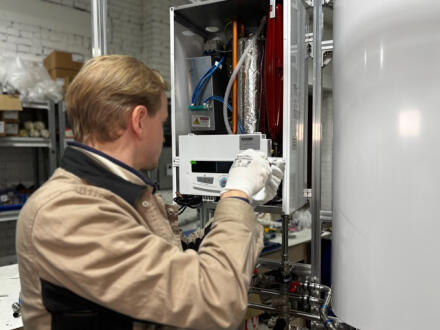
HVAC training can lead to steady work, but the bill can hit hard before the first paycheck arrives. In North Carolina, a one-year diploma or a two-year associate path can cost anywhere from about $2,500 to more than $9,000 in tuition and fees at public schools, before tools, books, gauges, boots, and test fees are added.
That's why students looking for North Carolina HVAC scholarships should not stop at one search box or one school office. Money for heating, ventilation, air conditioning, and refrigeration training can come from community colleges, local foundations, employers, workforce boards, military benefits, and need-based aid.
For high school seniors, current college students, and adults switching careers, the best plan is usually a stack. A student might combine a $500 local scholarship, a $2,000 foundation award, a grant that covers tuition, and an employer who pays back another $1,200 after the first semester.
This list breaks down 11 practical places to look. It covers North Carolina HVAC Scholarships for High School Students, options for two-year colleges, funding for university students in related technical majors, and industry-backed awards that many applicants miss. The goal is simple: help students lower trade school costs without wasting weeks on dead ends.
1. Community College HVAC Scholarships Across North Carolina
Community colleges are the most common starting point for HVAC training in the state, and they are often the cheapest. Many HVAC diploma and A.A.S. students start with campus financial aid offices because these schools bundle institutional scholarships, emergency grants, and foundation awards in one place.
A strong example is the NC Community College Scholarship Program, which can matter a lot for students entering short-term or two-year technical tracks. Even a $750 to $2,000 award can cover books, EPA exam fees, and basic hand tools.
Students should also ask each college about program-specific support. HVAC departments sometimes know about funds that never appear on big scholarship sites.
Useful questions to ask:
- Is there a scholarship just for skilled trades students?
- Does the college foundation support HVAC, electrical, or industrial systems majors?
- Can Pell, state aid, and foundation money be stacked?
- Are there completion grants for the last 6 to 12 credit hours?
A practical example: a student taking 64 credit hours in an HVAC technology associate program may cut costs by applying for general campus aid first, then adding department-level support. On some campuses, that combined package can reduce the out-of-pocket bill by more than half.
2. North Carolina HVAC Scholarships For High School Students
Students do not need to wait until college starts. Some of the best North Carolina HVAC Scholarships for High School Students are open while they are still seniors, especially if they plan to enroll in a trade, technical, or community college program right after graduation.
Local scholarships often have smaller applicant pools than national awards. That matters. A county-based award with 40 applicants gives much better odds than a national fund with 4,000 applicants.
Regional options can include county or service-area programs such as North Carolina Triangle Area Scholarships and the Sharma Family Scholarship Fund, which is tied to eligible students from Tier 1 counties. Those place-based awards can be a strong fit for seniors headed into skilled trades.
High school students should build a short application calendar with:
- transcript request date
- FAFSA submission date
- recommendation letter deadline
- final scholarship upload date
A concrete example helps: a senior who applies to 8 local scholarships at $500 each is chasing $4,000 total. That can cover one full term at a lower-cost community college HVAC program, plus books and safety gear.
3. First-Year Student Awards For New HVAC Program Entrants
The first semester is where many students get stuck. They can handle tuition on paper, then extra costs show up fast: $180 for books, $220 for tools, $90 for work boots, $50 for safety glasses and gloves, and lab fees on top.
That is why North Carolina HVAC Scholarships for first-year students matter so much. New entrants should look for awards aimed at first-time students, recent high school graduates, and first-semester technical majors.
Two useful pages to watch are the HVAC Hero Scholarship and the Jeff Adams Commitment To Excellence HVAC Scholarship. These are especially relevant because they speak directly to HVAC students rather than college students in general.
First-year applicants usually improve their odds when they show three things:
- clear career intent in HVAC or refrigeration
- proof of enrollment or acceptance into a program
- a short essay with a real story, such as fixing window units with a parent or working summer maintenance jobs
A simple essay can beat a fancy one. A student who explains how a broken heat pump left a household without cooling for 6 days shows purpose and urgency. Scholarship readers remember specific details like that.
4. North Carolina HVAC Scholarships For College Students In Two-Year Programs
Students already enrolled in an associate or diploma track still have plenty of options. In fact, some aid only opens after a student finishes the first term and proves they can handle labs, attendance, and grades.
For North Carolina HVAC Scholarships for College students, the best targets are continuation awards, college foundation scholarships, and state-linked assistance. The NC Education Lottery Scholarship often enters the conversation because it supports qualifying students at eligible colleges and can reduce a semester bill by hundreds of dollars.
Current HVAC students should update their applications with actual program progress. That means listing completed classes such as:
- refrigeration fundamentals
- electrical systems
- heat pump service
- load calculations
A student with a 3.1 GPA, 18 completed credit hours, and perfect lab attendance often looks stronger than a new applicant with no track record. They can also mention hands-on milestones, like recovering refrigerant properly, brazing copper lines without leaks, or passing EPA Section 608 prep tests.
And they should ask instructors for references. HVAC faculty often know which students show up early, stay late, and help others wire contactors correctly. That kind of detail carries weight.
5. North Carolina HVAC Scholarships For University Students In Related Technical Fields
Not every future HVAC professional stays in a trade-only track. Some move into construction management, mechanical engineering technology, facilities management, energy systems, or building science. Those students should still search for North Carolina HVAC Scholarships for University paths, even if the award does not say "HVAC" in the title.
University aid offices often combine merit aid, need-based aid, and departmental support. At large campuses, students can compare grants, work-study, and scholarship options through central aid pages such as financial aid offices, then dig into college-specific awards after admission.
The numbers can be meaningful. A 3-credit lab course in a technical major may require extra materials, software access, and transportation costs, so a $1,500 departmental scholarship can prevent a student from dropping a course load from 15 credits to 9.
Students in related majors should search with adjacent terms too:
- HVACR
- building systems
- energy management
- mechanical systems
- facilities technology
A practical example: a student studying building systems who wants to design commercial climate control projects still fits the HVAC pipeline. Scholarship committees usually understand that connection when the essay explains it clearly.
6. North Carolina HVAC Association Scholarships And Industry Foundation Awards
Trade associations and industry foundations are some of the most useful places to search because they want more people entering the field. HVAC employers across the state need techs, installers, service helpers, and controls specialists, so these groups often back scholarships to grow the workforce.
This category includes North Carolina HVAC Association Scholarships, national HVAC foundation awards, and grants from groups tied to contracting, home performance, or skilled trades education. A single trade-backed award may range from $1,000 to $5,000, which can cover a big share of a community college program.
Students should not ignore smaller industry funds either. An award with only 25 qualified applicants can beat a broader scholarship with 2,500 applicants.
Where To Look For Association-Based Opportunities In North Carolina
Students should search in layers rather than guessing one perfect keyword. Good places to look include:
- state HVAC and mechanical contractor associations
- local chapters tied to refrigeration or building trades
- supplier and distributor foundations
- national groups that allow North Carolina applicants
A smart move is to pair association searches with free matching tools on platforms like StudentScholarships.org, where a student can also sort nearby options such as the Community Foundation of Western North Carolina Scholarships. Regional foundations sometimes support technical and career-focused education even when the award title sounds broad.
The strongest applications usually mention real field goals, like becoming a residential service tech in 24 months or earning EPA certification before the second term ends.
7. Employer-Sponsored HVAC Scholarships, Apprenticeships, And Tuition Reimbursement
Some of the best funding does not come before school. It comes after a student starts working. HVAC contractors, facility service companies, and large mechanical firms sometimes pay for part of tuition if the student agrees to work a set number of hours or stays employed for a minimum period.
This route can cut debt fast. For example, a shop might offer $1,000 per semester, reimburse 100% of EPA exam fees, or cover textbooks after 90 days of employment.
Students should ask local employers four direct questions:
- Do they sponsor apprentices or helpers in school?
- Do they reimburse tuition after passing grades?
- Do they pay for certifications and license prep?
- Is there a work commitment after the award?
A realistic example: a student works 20 hours a week as an install helper, earns hourly pay, and gets $2,400 a year in tuition support. That combination can make school possible without full-time borrowing.
This option also gives something scholarships cannot always provide: field experience. A student who has already changed capacitors, cleaned condenser coils, and ridden along on no-cooling calls enters the classroom with a big advantage.
8. Local Workforce Grants And Skilled Trades Funding Programs
Workforce programs are a major piece of the puzzle, especially for adults changing jobs and students with financial need. Local workforce boards, American Job Center partners, and short-term training funds sometimes cover tuition for high-demand trades, including HVAC.
Because HVAC sits close to construction, maintenance, and energy work, it often lines up well with local labor needs. In practical terms, that can mean help with:
- tuition
- books
- tools
- transportation
- testing fees
Some grants are worth several thousand dollars. Even a modest training award of $3,200 can wipe out a certificate bill at many public colleges.
Students in rural counties should also look at place-based programs with workforce or economic development goals. The Golden LEAF Scholarship Program is one example students often compare when they are from eligible communities and want career-focused education.
This section matters because grant money is usually better than loans. It does not need to be repaid, and it can arrive faster than private scholarship decisions if the student has the right paperwork ready. A folder with an acceptance letter, income details, ID, and class schedule can save 2 to 3 weeks of back-and-forth.
9. Scholarships For Underserved, Low-Income, And First-Generation Trade Students
Many students assume HVAC funding is only about grades. It is not. A lot of aid is built around need, background, geography, and access to education. That makes this category one of the most important on the list.
Students from low-income households, first-generation college families, and underrepresented groups should look for state, nonprofit, and community awards that support access. A good example is the North Carolina Hispanic College Fund, which can matter for eligible students planning postsecondary education in the state.
Applications in this category usually ask for details such as:
- household income range
- parent education history
- county of residence
- intended school or major
A concrete case: if a student's family income is $38,000, the student will be the first in the household to attend college, and the program tuition is $4,800, then even one $1,000 need-based award changes the picture fast.
Students should also tell the true story behind the numbers. Working 28 hours a week, caring for younger siblings, or commuting 42 miles to class says more than a generic line about "overcoming challenges." Specifics help committees understand need.
10. Military, Veteran, And Dependent Education Benefits For HVAC Training
Military-connected students should not overlook this path. Veterans, active-duty service members, reservists, and dependents may qualify for education benefits that work very well with HVAC training because many programs are short, hands-on, and tied to direct employment.
Depending on eligibility, benefits may cover tuition, fees, housing support, and books. For a student in a technical program, that can be the difference between training full time and stretching the same certificate across two years.
The key is to verify three details early:
- whether the HVAC program is approved for the benefit
- how many credit or clock hours the benefit covers
- whether benefits can be combined with state or school aid
A practical example: a veteran using education benefits may have tuition mostly covered, then use a campus scholarship for $600 in tools and protective gear. That keeps loan use close to zero.
Dependents should also ask about state-based scholarships and campus awards tied to military families. These awards are sometimes smaller, around $500 to $2,500, but they stack well with federal or service-related support. In a trade program with a short timeline, stacking is the whole game.
11. School-Specific HVAC Financial Aid Packages Worth Comparing
Two schools can advertise similar HVAC tuition and still leave students with very different final costs. One might offer a $1,200 foundation grant, bus passes, and a tool voucher. Another might list lower tuition but little extra aid.
That is why students should compare complete school packages, not just sticker price. A side-by-side review should include:
- tuition and mandatory fees
- books and lab costs
- tool requirements
- graduation rate for the program
- job placement support
- scholarship office responsiveness
School-specific packages can also include broad awards that HVAC students are fully eligible to use. For example, some students may fit regional or statewide scholarships like North Carolina's Aubrey Lee Brooks Scholarships, depending on the school and personal profile.
A useful rule is to request the net cost for one full term. If School A costs $3,900 after aid and School B costs $5,100, the choice is clearer than comparing published tuition alone.
This is also where StudentScholarships.org can save time. Instead of hunting page by page, students can filter options, find matches quickly, and often finish simple applications in under 2 minutes.
North Carolina HVAC Scholarships: Common Questions
What types of North Carolina HVAC scholarships are available for new students?
New HVAC students in North Carolina can find scholarships aimed specifically at first-year entrants, such as the HVAC Hero Scholarship and the Jeff Adams Commitment To Excellence HVAC Scholarship, which help cover tuition and essential materials for their initial semester.
How can high school seniors in North Carolina apply for HVAC scholarships?
High school seniors should target local and regional awards like the North Carolina Triangle Area Scholarships and the Sharma Family Scholarship Fund, submit transcripts and recommendation letters on time, and apply to multiple scholarships to increase their chances of funding HVAC training.
Are there scholarships available for HVAC students enrolled in community colleges in North Carolina?
Yes, community colleges often offer institutional and program-specific scholarships bundled through their financial aid offices, including the NC Community College Scholarship Program and other foundation awards that can reduce tuition and fees for HVAC students.
Can military veterans and their dependents receive financial aid for HVAC training in North Carolina?
Veterans, active-duty members, reservists, and dependents may qualify for education benefits that cover tuition, fees, and books for approved HVAC programs. These benefits can often be combined with state or campus scholarships to further reduce costs.
What options exist for North Carolina HVAC students seeking funding through their employers?
Some HVAC contractors and firms offer tuition reimbursement, apprenticeships, and certifications support if students commit to work hours or employment terms, enabling students to earn income while helping pay for schooling and certification fees.
How can students find scholarships tailored for underserved or low-income HVAC students in North Carolina?
Underserved students can apply for need-based awards such as the North Carolina Hispanic College Fund and other nonprofit scholarships that consider household income, first-generation status, and community factors to provide financial assistance for trade education.






