

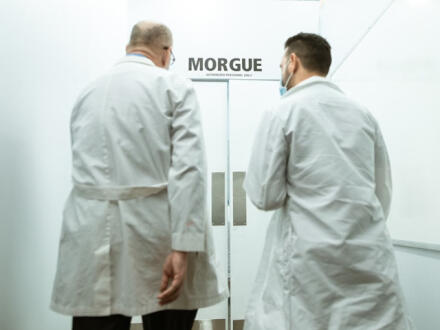
Paying for funeral service school can feel heavy before classes even start. Tuition, books, lab fees, transportation, uniforms, and licensing costs add up fast. For a South Carolina student, the total bill can easily reach $12,000 to $40,000+ depending on the school path, commute, and how much aid lands early.
That's why South Carolina Mortuary Science Scholarships matter so much. They can shrink out-of-pocket costs, reduce loan pressure, and give students more room to focus on anatomy, restorative art, ethics, and clinical training instead of worrying about rent or gas money.
This guide breaks the search into 10 practical funding lanes. It covers association awards, high school planning scholarships, first-year aid, college and university options, need-based grants, employer tuition help, and search tactics that save real time. It also points out where students can stack awards, which deadlines usually move first, and what application details help a file stand out.
The goal is simple: help high school students, college students, and future funeral service professionals find money faster and miss fewer opportunities. Some awards are built for mortuary science students specifically. Others are broader South Carolina scholarships that can still cut the cost of a mortuary science degree in a big way.
1. South Carolina Mortuary Science Association Scholarships To Prioritize First
Association-based aid should usually sit at the top of the list. These awards are the closest match to the field, so they often draw smaller applicant pools than broad state scholarships. That improves the odds for students who already show clear interest in funeral service.
The first place many students should look is the South Carolina Mortuary Science Association Scholarships category. If a student finds a state or regional funeral-service group award, that application often carries more weight than a random general essay contest because the reviewers already understand the profession.
A smart first step is reviewing the MCA South Carolina scholarship. It is not mortuary-specific, but it shows how state association scholarships are structured and how South Carolina organizations often define eligibility, deadlines, and supporting documents.
Students should prioritize association awards because they often reward:
- Career intent in funeral service
- Community reputation and service hours
- Academic consistency, even if GPA is not perfect
- Professional conduct, including recommendation quality
A practical example: a student with a 3.1 GPA, 120 volunteer hours, and part-time funeral home exposure may look average in a national pool but quite strong in a profession-focused pool.
For South Carolina Mortuary Science Scholarships for College students, association applications deserve early attention because they can often be stacked with school aid, grants, and employer support.
2. Mortuary Science Scholarships For High School Students Planning Ahead In South Carolina
Students do not need to wait until college acceptance day to start funding the path. In many cases, the strongest applicants begin in high school by building a file that shows service, career interest, and follow-through.
That matters because South Carolina Mortuary Science Scholarships for High School Students are often indirect. They may come through health career groups, local community foundations, memorial organizations, or general merit programs that later support funeral service study.
One useful example is the SC HOSA scholarship program. HOSA participation signals commitment to a care-centered profession, and funeral service schools often value that same service mindset. A student who competed in health science events, logged 40 clinical volunteer hours, and served as a chapter officer can tell a much stronger story than someone who simply says they "want to help people."
High school students should start with these moves:
- Keep GPA transcripts clean from the first semester
- Track volunteer hours in exact numbers, not estimates
- Ask for one recommendation from a science or health teacher
- Write a short career statement about funeral service interest
- Save proof of leadership, honors, and work experience
A concrete edge: students who prepare a scholarship folder before senior fall often save 5 to 8 hours during peak deadline season. That time can be used to revise essays instead of hunting for old activity dates.
Planning ahead also helps with South Carolina Mortuary Science Scholarships for first-year students, because many of the same documents carry forward.
3. South Carolina Mortuary Science Scholarships For First-Year Students Entering College
The first year is often the most expensive shock point. Students face deposits, tuition bills, textbooks, supplies, and sometimes a move. That is why South Carolina Mortuary Science Scholarships for first-year students deserve a separate search.
The key here is timing. Many first-year awards are based on high school performance, admission status, and FAFSA completion. If a student waits until classes begin, some of the easiest money is already gone.
A useful state option is the South Carolina Hope Scholarship. It is not exclusive to funeral service, but it can still reduce first-year costs for eligible students attending qualifying institutions. Even a $2,800-level award can cover books, scrubs, commuting fuel, and several fees rather than forcing a student to put those costs on a credit card.
First-year applicants should focus on three funding buckets:
- Automatic merit aid tied to GPA and test history
- Department or program nominations after admission
- State scholarships and grants linked to residency and enrollment
A realistic scenario: a student receives a first-year state scholarship, a campus foundation award, and $600 from a local civic group. Those three pieces together may erase the entire first semester book-and-fee burden.
Students searching South Carolina Mortuary Science Scholarships for College should treat the first year as a sprint. The earlier the file is complete, the more stackable aid options stay open.
4. College-Based Mortuary Science Scholarships In South Carolina
College-based scholarships are often missed because students assume the financial aid office will automatically consider them for everything. That is not always true. Some campus awards require a separate portal, department form, or short essay.
For mortuary science students, the best campus opportunities usually come from:
- Institutional foundation scholarships
- Health-science division awards
- Workforce or technical college grants
- Program-specific retention scholarships
Students attending a South Carolina college should ask three precise questions: How many internal scholarships require a separate application? What is the priority deadline? Can outside scholarships reduce unmet need without cutting school aid?
Those details matter. On some campuses, missing one internal deadline can mean losing access to 10 or more donor-funded awards in a single cycle.
For students comparing broad scholarships while staying focused on funeral service, the Christmas Visionary scholarship is an example of a South Carolina-based award that may help cover general education or living costs. It is not tied to mortuary science, but that is exactly the point: smart students mix field-specific money with broader in-state funding.
A strong tactic is to ask admissions, the financial aid office, and the academic department the same question separately. That often surfaces different answers. One office may mention tuition grants, another may know about emergency funds, and a department chair may point to a donor award worth $1,000 to $2,500 that never appears in a general search.
5. University Scholarships That Can Help Mortuary Science Students Reduce Total Costs
University scholarships matter even when a student's final goal is a mortuary science credential. Some students complete prerequisites, transfer coursework, or combine funeral-service education with broader studies in biology, business, psychology, or communications.
That makes South Carolina Mortuary Science Scholarships for University students part of the bigger funding picture. A university award that lowers housing or core-course costs can free up money for specialized training later.
One major state option is the South Carolina LIFE Scholarship Program. For eligible students at a four-year public institution, the award amount can reach several thousand dollars per academic year, which can make a real dent in tuition and mandatory fees.
Students exploring university aid should also review campus financial aid systems. The University of South Carolina's financial aid office outlines institutional scholarships, grants, loans, and student-employment pathways in one place, which helps students understand how merit and need-based aid fit together.
The strongest university strategy usually includes:
- One state scholarship application path
- One institutional scholarship portal
- One departmental inquiry
- One outside scholarship search list
A student who layers those four channels can build a stronger package than someone who only submits FAFSA. Even a $3,000 university scholarship can equal roughly 100 to 150 hours of part-time work, depending on pay rate, and that can protect study time during difficult science-heavy terms.
6. Funeral Service And Mortuary Science Association Awards Beyond South Carolina
Students should not limit the search to state borders. Funeral service organizations, cemetery associations, memorial foundations, and national employers often sponsor awards that South Carolina residents can use.
This section matters because profession-linked national scholarships can be less random than general essay contests. Reviewers usually want to support students who understand the field, respect grieving families, and can handle the emotional weight of the work.
A strong example on the search side is the Service Corporation Mortuary Science Scholarship. Employer-backed or industry-backed awards like this can be especially useful because they align with real workforce demand.
When students look beyond South Carolina, they should search these terms:
- funeral service scholarship
- mortuary science scholarship
- embalming student award
- cemetery association scholarship
- funeral home tuition assistance
A practical example: if a student applies to 4 state-level awards and 6 national field-related awards, that doubles exposure without forcing 10 totally unrelated essays. The same career statement can often be adapted in 20 to 30 minutes per application.
The best non-South Carolina awards usually ask for proof of enrollment, career goals, references, and a short essay on service. Students who already have funeral home observation hours or grief-support volunteer work stand out fast in this category.
7. Need-Based Grants And State Aid That Can Supplement Scholarship Awards
Scholarships get most of the attention, but grants often do the quiet heavy lifting. Need-based aid can fill the gap after merit awards land, especially for students with modest family income or major living expenses.
For South Carolina residents, the South Carolina Need-Based Grant Program is one of the most important places to start. It is designed for eligible in-state students with demonstrated financial need, and it can work alongside scholarships instead of replacing them outright.
That stack matters. A student might receive:
- $2,800 in merit aid
- $2,500 in need-based grant funds
- $1,000 from an outside scholarship
That total reaches $6,300, which can cover a large share of tuition at some two-year or technical pathways before federal loans even enter the picture.
Students should also remember that need-based aid depends heavily on speed and paperwork accuracy. An incorrect Social Security number, missing tax information, or an unsigned form can delay the file for weeks. That delay can cost money if limited campus funds run out.
For families, the simplest rule is this: file FAFSA early, answer requests fast, and keep screenshots of every submission. A student who answers a verification request within 48 hours often stays in line for packaging much better than one who waits two weeks.
South Carolina Mortuary Science Scholarships work best when paired with grants, not treated as the only money source.
8. Employer-Sponsored And Funeral Home Tuition Assistance Opportunities
Some of the most practical funding never appears in a scholarship database. Local funeral homes, cremation providers, cemetery groups, and larger death-care employers may help pay tuition in exchange for work commitments, internships, or future employment.
This route is especially useful for students who are already working part-time in visitation support, transport, office help, or grounds services. A funeral home owner who has watched someone show up on time for 9 straight months may be more willing to invest than an outside donor reading a single essay.
Employer support can take several forms:
- Direct tuition reimbursement after each term
- Front-end tuition assistance with employment agreement terms
- Paid internships that offset living costs
- Book, uniform, or licensing fee support
Career changers should also keep an eye on options like the Second Career scholarship. While not funeral-service specific, it fits students returning to school after time in another field, which is common in mortuary science.
A concrete scenario: a student works 15 hours per week at a local funeral home, earns wages for transportation and groceries, and receives $1,500 per semester in tuition support after passing courses. Over four terms, that equals $6,000 in direct education help.
The ask should be simple and specific. Students should request a short meeting, explain the program cost, show enrollment plans, and ask whether the employer offers reimbursement, sponsorship, or a work-to-tuition arrangement.
9. Scholarships For Underrepresented, First-Generation, And Community-Service-Minded Students
Some students have strong stories that go beyond GPA. First-generation students, underrepresented students, adult learners, and applicants with serious community service records may qualify for scholarships that fit them better than a field-only award.
This matters in mortuary science because funeral service is rooted in trust, care, and community presence. A student who spent 180 hours helping at a hospice fundraiser, church outreach pantry, or grief-support nonprofit can make a compelling case for future service in end-of-life care.
Students should search for scholarships tied to:
- First-generation college attendance
- Rural South Carolina residency
- Volunteer service or faith-based outreach
- Leadership in underserved communities
- Nontraditional or returning-student status
These broader awards can support South Carolina Mortuary Science Scholarships for College and university pathways by covering living costs that major-specific scholarships do not always touch. Rent, gas, child care, and food are often the real barriers.
A useful mindset shift: the scholarship search is not only about "mortuary science" as a keyword. It is about identity, service, place, hardship, and contribution. A student from a small county who worked 22 hours per week, cared for a younger sibling, and still held a 3.4 GPA has a strong profile when the application frames those facts clearly.
Application Materials That Strengthen Your Scholarship Profile
Strong applications usually look specific, not flashy. Reviewers notice clean detail.
Students should include:
- A resume with exact numbers such as 126 volunteer hours or 18 months of work experience
- A focused essay that explains why funeral service fits their values
- One academic reference and one character or employer reference
- A transcript that shows trend lines, not just the final GPA
- Proof of leadership, even if it was small-scale
A good essay often uses one real scene. For example, a student might describe helping a grieving family at a church meal service for 3 hours after a funeral and realizing how much calm logistics matter in grief. That image sticks.
10. Scholarship Search Strategies For Finding South Carolina Mortuary Science Scholarships Faster
A scattered search wastes time. Students often open 17 tabs, forget passwords, miss deadlines, and end up rewriting the same paragraph over and over. A simple system fixes that.
The fastest way to find South Carolina Mortuary Science Scholarships is to search in layers instead of one giant sweep. Start with field-specific terms, then add South Carolina-only results, then broaden to first-generation, need-based, employer, and local foundation opportunities.
A practical weekly system looks like this:
- Spend 20 minutes searching new matches
- Spend 20 minutes updating a deadline tracker
- Spend 20 minutes revising one essay block
- Spend 10 minutes requesting or confirming references
That is 70 minutes per week. Over eight weeks, a student builds nearly 9 hours and 20 minutes of organized scholarship work without burnout.
Students can also mix in broader South Carolina awards such as the Archibald Rutledge scholarship when eligibility fits. Even if the award is not tied to funeral service, it can still reduce total education costs.
The best search terms to rotate include:
- South Carolina Mortuary Science Scholarships for High School Students
- South Carolina Mortuary Science Scholarships for first-year students
- South Carolina Mortuary Science Scholarships for College
- South Carolina Mortuary Science Scholarships for University
- South Carolina Mortuary Science Association Scholarships
Students who track results in one spreadsheet usually miss fewer deadlines than students who rely on memory.
How To Use StudentScholarships.org To Organize Matches And Deadlines
A platform works best when the student treats it like a dashboard, not just a search bar. On StudentScholarships.org, students can sort opportunities, review eligibility faster, and build a repeatable application routine.
A simple method is to create three buckets:
- Apply now, deadlines within 30 days
- Needs documents, waiting on transcript, FAFSA, or references
- Stretch options, competitive awards worth extra essay effort
That system cuts decision fatigue. Instead of staring at 40 listings, the student only asks, "Which 3 are due first?"
The site is also helpful because many applications can be completed quickly once core documents are ready. If a student stores one resume, one main essay, one short bio, and transcript copies in a folder, some applications take under 2 minutes to start and submit. That is a big difference from rebuilding every file from scratch.
For students balancing classes, work, and family, speed matters almost as much as the scholarship amount.
Frequently Asked Questions about South Carolina Mortuary Science Scholarships
What types of scholarships are available specifically for mortuary science students in South Carolina?
South Carolina offers field-specific awards through the South Carolina Mortuary Science Association, including scholarships that prioritize career intent, community service, and professional conduct. These are often more tailored and have smaller applicant pools, improving chances for funeral service students.
How can high school students in South Carolina prepare for mortuary science scholarships?
High school students should maintain strong GPA transcripts, accumulate documented volunteer hours, secure recommendations from science or health teachers, and draft clear career statements about funeral service. Programs like the SC HOSA Scholarship reward demonstrated health care commitment and leadership roles ahead of college.
What first-year scholarships can South Carolina students entering mortuary science programs apply for?
First-year students should apply early for aid like the South Carolina Hope Scholarship and other merit and state grants, which can cover tuition, books, and fees. Completing FAFSA promptly and submitting required documents quickly increases eligibility for stackable aid sources during these costly initial terms.
Are university scholarships available for students pursuing mortuary science in South Carolina?
Yes, students can access institutional scholarships, health science awards, and workforce grants at South Carolina universities. The South Carolina LIFE Scholarship Program is a notable example, providing substantial tuition help to qualifying students attending public four-year colleges.
Can South Carolina funeral homes or employers assist with mortuary science tuition costs?
Many local funeral homes and industry employers offer tuition reimbursement, paid internships, or tuition assistance in exchange for work commitments. Such employer-sponsored programs can significantly offset expenses while giving students valuable practical experience.
How do need-based grants complement South Carolina mortuary science scholarships?
Need-based grants like the South Carolina Need-Based Grant Program provide financial aid to in-state students with demonstrated need, supplementing merit scholarships. Filing FAFSA early and promptly responding to verification requests ensures access to these additional funds, reducing the overall cost of education.




