

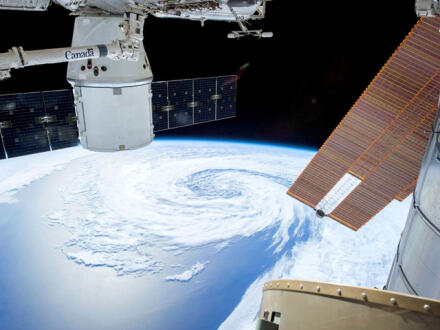
Students who want to study weather, climate, air pollution, or Earth systems often assume they need to chase only a few big-name meteorology awards. That's not true. California atmospheric science scholarships come from several places: high schools, colleges, university departments, state aid programs, science societies, research labs, and local foundations.
That matters because the price gap is real. At California public colleges, students can face thousands of dollars per year in tuition, fees, books, transit, housing, and lab costs. Even a modest $1,000 award can cover textbooks, software, field gear, or a quarter of a meal plan. Stack three or four smaller awards, and the math changes fast.
For students searching for California Atmospheric Science Scholarships for High School Students, California Atmospheric Science Scholarships for first-year students, or California Atmospheric Science Scholarships for College, the best move is not a single application. It is a funding mix.
This guide breaks that mix into 8 practical paths. Each one explains who usually qualifies, what strong applications look like, and where atmospheric science students in California can find better-fit money. The goal is simple: help students spend less, apply smarter, and stop overlooking scholarships that are sitting just outside the obvious meteorology list.
1. California Atmospheric Science Scholarships For High School Students
High school seniors are often the best-positioned applicants for early scholarship money because they can apply before the first tuition bill lands. In California, that can mean school-based STEM awards, community foundation scholarships, chapter scholarships, and environment-focused programs that welcome students interested in weather, climate, wildfire smoke, water cycles, or remote sensing.
A strong target range is 8 to 15 applications during senior year. Students who submit only 2 or 3 usually depend too much on luck. Students who spread applications across local, STEM, and atmospheric science-adjacent awards usually do better.
Good starting points include regional and California-focused scholarships that are not limited to meteorology majors but still fit the field. A student planning to study atmospheric science can often make a solid case through environmental work, physics coursework, or data projects. Options such as the Charles William Carter Memorial award and the Better Together STEM program can fit students building a broader science funding plan.
Students should also look at practical costs. A $750 local award might cover a laptop battery replacement, graphing software, and two lab manuals. That is not flashy, but it is real money.
What Counts As Atmospheric Science Experience In A High School Application
Admissions and scholarship readers do not expect a 17-year-old to have published climate research. They do expect evidence of interest. Atmospheric science experience can be wider than students think.
Examples that count:
- Tracking rainfall, temperature, or AQI data for 30 to 90 days
- Science fair projects on heat islands, drought, clouds, or wildfire smoke
- Robotics or coding projects using weather data sets
- Volunteer work tied to conservation, water, or emergency preparedness
- AP Environmental Science, physics, calculus, GIS, or earth science coursework
- Weather club leadership, even if the club has only 12 members
A great application turns activity into impact. Instead of writing "she likes weather," a student can write: "She logged daily PM2.5 and temperature readings for 63 days and compared them with school attendance during smoke events." That sounds focused, curious, and useful.
For California Atmospheric Science Scholarships for High School Students, that kind of concrete example often matters more than a perfect major title.
2. California Atmospheric Science Scholarships For First-Year Students
First-year students sit in an odd spot. They are no longer applying only as high school seniors, but they may not yet have college grades, research, or department ties. That makes California Atmospheric Science Scholarships for first-year students especially competitive.
The fix is simple: apply to awards that value intended major, STEM promise, and transition readiness. Many scholarship committees want proof that a student can start strong in college, not proof that they already have a long research resume.
A freshman budget can shift quickly with a few targeted wins. One $2,500 scholarship can cover a semester of fees at some public campuses. Another $1,200 award can handle books, transit, and a used tablet for mapping labs.
Good first-year candidates often combine:
- High school GPA and course rigor
- FAFSA or state aid completion
- A short major statement tied to weather or climate goals
- Early college involvement in a science club or seminar
- One concrete service or leadership example
Students with broad STEM interests should not ignore scholarships outside strict meteorology labels. Programs like the Conduct Science award can still fit if the essay clearly connects lab curiosity, data analysis, and atmospheric science goals.
Common Eligibility Rules For Incoming Freshmen In California
Incoming freshman rules are usually repetitive, which helps. If students build one clean application packet, they can reuse 70% to 80% of it across several scholarships.
Common eligibility rules include:
- California residency or graduation from a California high school
- Enrollment in at least 6 or 12 units
- Minimum GPA, often 3.0 to 3.5
- U.S. citizenship, permanent residency, or other qualifying status for some programs
- Declared or intended STEM-related major
- A deadline between November and April
The biggest mistake is missing "small print" rules. For example, one award may require enrollment at a four-year campus, while another allows a transfer route through community college. Another may want a recommendation from a math or science teacher only.
Students who use a scholarship tracking sheet with 6 columns, deadline, amount, GPA, essay, recommendation, transcript, usually cut last-minute errors fast. That kind of system is boring. It also works.
3. California Atmospheric Science Scholarships For College Students At Community Colleges And Four-Year Schools
This is where the search opens up. California Atmospheric Science Scholarships for College students are not limited to "meteorology" in the title. Community college students, transfer students, and four-year students can compete for environmental, engineering, sustainability, geoscience, aviation, agriculture, and public-service awards that connect directly to atmospheric science.
California's community college system serves more than 100 campuses, which makes transfer pathways a major funding route. A student studying physics, math, computer science, GIS, or environmental studies at a community college can build a strong atmospheric science profile before transferring.
That wider lens matters because atmospheric science overlaps with:
- Air quality and pollution modeling
- Drought and water planning
- Wildfire smoke forecasting
- Satellite and radar data analysis
- Climate risk and emergency management
Students in those lanes may fit awards such as the ERC Eco scholarship or the ACEC California scholarship, especially when their coursework leans toward environmental systems, engineering, or applied science.
A transfer student can write a very strong essay with a simple structure: problem, project, plan. Example: "He grew up in the Central Valley, measured ozone alerts during summer heat, and wants to use atmospheric data to improve public health warnings." That is specific. It also sounds like a person with direction.
At four-year schools, continuing students should search by college, major cluster, honors program, undergraduate research office, and alumni foundation. A student who applies only through the financial aid office can miss 10 or more smaller campus awards in one term.
4. California Atmospheric Science Scholarships For University Students Through Department And Campus Aid
For juniors, seniors, and graduate-bound undergraduates, California Atmospheric Science Scholarships for University students often come from inside the campus itself. This money is less visible than national scholarships, but it is often a better fit.
Department aid can sit in several offices:
- Earth and atmospheric sciences departments
- physics or geophysics departments
- environmental science programs
- undergraduate research offices
- honors colleges
- alumni or donor-funded campus foundations
Some campuses auto-match students after one general scholarship application. Others require separate department forms. Either way, students should email their department early and ask three direct questions: What scholarships exist, when do they open, and whether one application covers multiple funds.
The reason this works is simple. Department reviewers understand the field. They know that a student who coded a 40-hour Python weather visualization project may be more promising than a student with a generic volunteer list.
Students should also search for field-adjacent awards, especially if their atmospheric path includes aviation, remote sensing, or environmental operations. In certain cases, a program like the California Flight Training scholarship can make sense for students connecting aviation meteorology with weather interpretation and safety.
Campus aid can be surprisingly practical. One university department may offer $500 book grants. Another may award $3,000 research stipends. Another may fund travel to a conference or field station. Those smaller pieces often keep students in the major when schedules get crowded and part-time work starts eating lab time.
5. California Atmospheric Science Association Scholarships And Other Professional Society Awards
Professional societies are one of the smartest places to look because they reward students who already sound like future scientists. That does not mean students need a published paper. It means they should show curiosity, service, and a clear reason for choosing weather or climate work.
For California Atmospheric Science Association Scholarships, students should think beyond a single statewide search term. Local chapters, regional professional groups, and discipline-based associations may fund meteorology, climate science, hydrology, air quality, environmental policy, or science communication.
Regional chapter scholarships can be especially useful because the applicant pools are smaller. Two good examples are the San Francisco chapter award and the Southern California chapter award. A student from those areas may compete against dozens of applicants rather than hundreds.
Professional society applications usually reward a few things over and over:
- Evidence of science interest beyond class
- Clear career goals
- Faculty or teacher recommendations with detail
- Communication skills, especially in short essays
- Membership or participation, when required
A solid essay might mention how a student used NOAA radar loops for 18 storm events or compared neighborhood heat readings from 4 different blocks. Specifics make a committee trust the story.
National Meteorology And Climate Scholarships California Students Can Use
California students should not limit themselves to California-only awards. National meteorology and climate scholarships can stack with state and campus funding, and some are among the best-known opportunities in the field.
The American Meteorological Society is an obvious place to start, and students can explore the AMS named scholarship application as part of a wider plan. Students should also watch for climate, hydrology, geoscience, and environmental policy awards from national associations.
A useful rule: if the scholarship supports any of these topics, it may fit atmospheric science.
- Meteorology
- climate science
- geoscience
- environmental engineering
- hydrology
- air quality
- Earth systems modeling
National applications tend to ask for stronger essays and cleaner resumes. But the payoff can be bigger too, sometimes $2,000 to $10,000. Students who already have one professor, one project, and one focused career story are usually ready to compete.
6. Need-Based California Aid That Can Support Atmospheric Science Degrees
Merit scholarships get attention, but need-based aid often does more of the heavy lifting. For many students, the largest funding source for an atmospheric science degree is not a specialty scholarship. It is the mix of federal aid, California state aid, grants, work-study, and campus need-based support.
That is why every student should treat FAFSA or the California Dream Act application as a scholarship task, not just a form. Missing that step can block access to thousands of dollars.
The federal Pell Grant can award eligible students up to $7,395 for one academic year, based on U.S. Department of Education limits. For California residents, Cal Grant and the Middle Class Scholarship can add more, depending on income, school type, and enrollment. Students who wait until the last minute often lose access to campus-based aid with limited pools.
Need-based support also works well with outside awards. A student might combine:
- $7,395 in Pell Grant funds
- a Cal Grant package
- $1,500 in departmental aid
- $2,000 in local scholarships
- a 10-hour-per-week campus job
That stack can change whether a student needs private loans.
Students using broad scholarship databases should sort for California residency, STEM major, need-based awards, and transfer eligibility. A platform with quick filters can save real time: for example, students browsing scholarship listings can compare a larger mix of local and subject-based options instead of waiting for a counselor to mention them.
For atmospheric science students, this section is not glamorous. But it is often the section that pays the biggest bill.
7. Research, Internship, And Summer Program Funding For Atmospheric Science Students
Some of the best funding does not show up under the word "scholarship" at all. It appears as a research stipend, paid internship, summer bridge award, or conference travel grant. For atmospheric science students, those options can be just as valuable because they add both money and field experience.
A summer research stipend of $4,000 may cover rent and food while giving a student hands-on work with climate data, air sensors, coding, or forecasting tools. A paid internship at $18 per hour for 20 hours a week can out-earn many small scholarships while strengthening the next application.
Students should search in several places:
- Undergraduate research offices
- NOAA-related or climate-adjacent programs
- faculty lab pages
- REU-style summer research programs
- local air quality districts
- water agencies and environmental nonprofits
Application materials for these programs are slightly different. Committees often care more about project fit than generic leadership language. A student who can explain a 12-week plan for aerosol analysis or heat-risk mapping will stand out faster.
This path also has a compounding effect. One summer project can lead to:
- a stronger resume
- one faculty recommender
- a poster presentation
- a conference stipend
- better odds at later scholarships
That is why students should treat funded research as both income and evidence. In atmospheric science, a chart, code notebook, or field observation log can say more than a polished but vague essay.
8. Local STEM Foundations And Regional Scholarships That Atmospheric Science Students Should Not Overlook
Local money is easy to ignore because it looks small. That is a mistake. A regional scholarship worth $500 to $2,500 can have far fewer applicants than a national award, and several local wins can stack into one semester's expenses.
Atmospheric science students should search in concentric circles: hometown, county, regional California foundation, utility company, employer-sponsored STEM fund, and local education nonprofits. Students connected to wildfire, agriculture, drought, public health, aviation, or infrastructure themes often have a strong regional story.
Useful examples include local or California-rooted awards such as the Southern California Edison scholarship and regionally focused education funds tied to community service, STEM, or public benefit. A student from an inland heat-prone area, for instance, can write a compelling essay about 110-degree summer afternoons, ozone alerts, and school sports cancellations. That picture feels real because it is real.
Students should also ask three local groups directly:
- Community foundations
- electric or water utilities
- regional professional associations
Those groups often support students entering fields that help California solve weather-related problems. And atmospheric science clearly fits that description.
Search Filters And Application Strategies That Uncover Better-Fit Awards
Search strategy matters almost as much as writing quality. Students who search only "meteorology scholarship California" will miss too many matches. Better-fit awards usually appear when they combine field terms with problem terms.
Try search filters and tags like these:
- atmospheric science
- climate science
- environmental data
- air quality
- hydrology
- sustainability
- wildfire smoke
- GIS
- transfer student
- first-generation
- county or city name
A smart application system can raise output fast. One student might build a base packet with:
- a 500-word personal statement
- a 150-word short answer on career goals
- a one-page resume
- unofficial transcripts
- 2 recommendation requests sent at least 21 days early
Then they can customize 20% of each application to match the sponsor. That is where the real edge is.
Students should also rank scholarships by fit, not just dollar amount. A $1,000 local STEM award with 40 applicants may be a better bet than a $10,000 national award with 2,000 applicants. Better odds are still worth money.
California Atmospheric Science Scholarships FAQs
What are common sources of California atmospheric science scholarships for students?
California atmospheric science scholarships come from high schools, colleges, university departments, state aid programs, science societies, research labs, and local foundations, offering a range of funding opportunities for students interested in weather, climate, or Earth systems.
How can high school students strengthen their applications for California atmospheric science scholarships?
High school applicants should submit 8 to 15 applications across local, STEM, and atmospheric science-related awards, highlighting evidence of interest like tracking weather data, science fair projects, or environmental volunteer work to demonstrate focused curiosity and impact.
What eligibility criteria are common for California atmospheric science scholarships for first-year college students?
Typical requirements include California residency or graduation from a California high school, enrollment in a minimum of 6 to 12 units, a GPA around 3.0 to 3.5, U.S. citizenship or qualifying status, a declared or intended STEM major, and meeting specific application deadlines.
Why should college atmospheric science students consider applying for department and campus scholarships?
University department and campus scholarships are often less visible but better aligned with students’ academic paths, offering support such as research stipends, book grants, or conference travel funds tailored to Earth, environmental, or atmospheric science programs.
What types of need-based financial aid support atmospheric science degrees in California?
Need-based aid includes federal Pell Grants, California’s Cal Grant, the Middle Class Scholarship, campus grants, work-study, and other grants, which can form the largest part of funding for many students pursuing atmospheric science degrees.
How can atmospheric science students find scholarships beyond meteorology-specific awards?
Students should expand searches using keywords like climate science, environmental data, air quality, hydrology, and sustainability, and apply for scholarships in related fields such as environmental engineering or public health, increasing their chances of finding fitting awards.







