

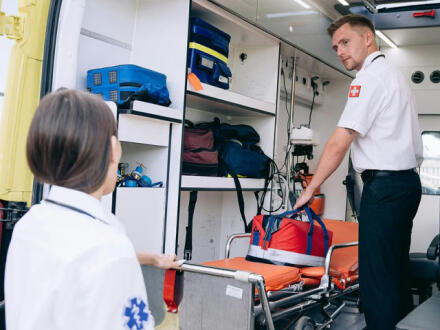
Paramedic training in Hawaii can get expensive fast. Tuition, lab fees, uniforms, books, background checks, CPR cards, and clinical travel can push the total cost well past what many students expect. A single semester can feel manageable on paper, then one drug handbook, one stethoscope, and one ferry flight later, the budget starts wobbling.
That is why Hawaii Paramedicine Scholarships matter so much. For students who want to work on an ambulance, move into emergency care, or build toward a larger health career, the right funding mix can shave off thousands of dollars. And it usually is a mix, not one magic award. A student might stack a local scholarship worth $1,500, a workforce grant worth $4,000, and employer tuition aid that covers another 50%.
This list breaks down 10 practical funding paths for high school students, first-year students, community college students, university students, and future EMS professionals across the islands. It also points out where students can verify deadlines, how service commitments can increase total aid, and which national scholarships are still worth a shot from Hawaii.
For students sorting through options, platforms such as StudentScholarships.org can simplify the search by putting multiple opportunities in one place instead of forcing them to open 27 browser tabs and guess which awards are still active.
1. Hawaii Paramedicine Scholarships for High School Students
Students do not need to wait until college to start funding a paramedic path. Many Hawaii Paramedicine Scholarships for High School Students come from broader education, STEM, and community scholarship pools that can later support pre-health or emergency medical training.
A strong place to start is local scholarship programs that already serve Hawaii seniors. For example, the AFCEA Hawaii STEM Scholarships can fit students who frame paramedicine as a science and public service path. A student with a 3.4 GPA, 80 volunteer hours, and one CPR certification already has a more compelling application than he or she may think.
High school students should focus on three things:
- Academic consistency, even if the GPA is not perfect
- Service hours, especially with hospitals, lifeguard programs, or community health events
- Clear career goals, such as becoming an EMT first and a paramedic after
Concrete numbers help. Instead of writing "I like helping people," a better line is: "They completed 112 volunteer hours at a community clinic and want to serve on Maui's emergency response system."
Students should also ask school counselors about island-specific awards. Some smaller scholarships only get 20 to 60 applicants, which gives better odds than national programs that draw 5,000 or more.
2. Hawaii Paramedicine Scholarships for First-Year Students
The first year after high school is often when students lose track of funding. They assume scholarships were only for seniors, then get hit with a tuition bill that includes fees, transportation, and course materials. That makes Hawaii Paramedicine Scholarships for first-year students especially important.
First-year applicants should target awards that accept current undergraduates, not just incoming freshmen. The Hawaii State FCU Scholarship is one example of a local option students can review while building a wider aid list.
A smart first-year funding plan usually includes:
- 1 campus scholarship
- 2 to 4 local community scholarships
- 1 workforce or employer-linked program
- FAFSA-based aid, if eligible
Many paramedic students underestimate small awards. But four scholarships worth $1,250 each equal $5,000. That can cover a large share of tuition at a two-year program or pay for books, scrubs, immunizations, and exam fees.
For this stage, the best applications are specific. If a student earned a B in anatomy, worked 18 hours per week, and still completed 36 ride-along hours, that tells a stronger story than generic ambition alone.
3. Hawaii Paramedicine Scholarships for College Students at Community and Two-Year Programs
Community and two-year colleges are often the most practical on-ramp for paramedic education. That is why Hawaii Paramedicine Scholarships for College students should be a top priority for anyone planning an EMS career without taking on heavy debt.
At this level, students should look for scholarships tied to financial need, academic persistence, and local residency. The Hawaii Community Foundation scholarships matter because they can open access to multiple donor-funded awards through one application route.
The cost math here is worth spelling out. If tuition and fees total $6,800, books and equipment add $1,150, and commuting adds $1,920 across two semesters, the working total becomes $9,870. That number surprises a lot of students.
Community college students should build a file with:
- Unofficial transcripts
- One polished resume
- A 300- to 500-word career statement
- Proof of FAFSA submission, if required
- One instructor and one supervisor reference
And students with a disability should not skip specialized aid. The Hawaii Association of the Blind College Scholarships show how identity-based awards can support broader college access, including allied health tracks.
Even one award worth $2,000 can offset lab fees and certification costs that often block students from staying enrolled.
4. Hawaii Paramedicine Scholarships for University Students Pursuing Advanced Health Pathways
Some students use paramedicine as a direct career goal. Others use it as part of a larger route into nursing, public health, emergency management, or physician assistant studies. For them, Hawaii Paramedicine Scholarships for University students can support the bigger health-care ladder.
University applicants should frame paramedicine as advanced clinical preparation. A student who wants field experience before graduate training can present EMS as a hands-on path that builds rapid assessment, trauma response, and patient communication skills.
The Office of Hawaiian Affairs scholarship is a useful example for eligible students seeking support within a Hawaii-centered educational path. For some applicants, combining identity-based aid with campus awards can reduce annual out-of-pocket costs by $3,000 to $8,000.
University students should highlight measurable experience, such as:
- 240 clinical hours in emergency settings
- 2 semesters of anatomy and physiology
- 1 leadership role in a campus health club
- 40 to 100 volunteer hours in community response or outreach
This matters because scholarship reviewers want proof of follow-through. Saying "they want to help" is easy. Showing 2 years of sustained service is much harder, and much more convincing.
5. Hawaii Paramedicine Association Scholarships and Other EMS Organization Awards
Professional groups are easy to overlook, but they can be one of the cleanest fits for future paramedics. Hawaii Paramedicine Association Scholarships and awards from EMS groups, foundations, and public safety organizations often favor students who already show commitment to emergency care.
These awards may ask for proof of EMS interest, current enrollment, or a service record. A student who has completed 24 ride-along hours, holds CPR and First Aid cards, and can explain why field medicine fits island communities will usually stand out more than a generic pre-med applicant.
Students should search beyond scholarship databases too. EMS associations, ambulance councils, trauma foundations, and local public safety nonprofits sometimes post smaller awards worth $500 to $2,500. Those smaller awards can be less crowded and more practical.
When writing applications, students should include details like:
- The number of hours spent shadowing EMS crews
- The island or rural area they hope to serve
- The exact credential they want next, such as EMT or paramedic
- A short patient-care or volunteer story that shows maturity
Where To Confirm Eligibility, Deadlines, and Application Cycles
Students should always verify award details with the source before spending 3 hours on essays. Scholarship pages can change, especially when funding depends on donor cycles or organization budgets.
A simple checklist helps:
- Confirm residency rules
- Confirm minimum GPA, such as 2.5 or 3.0
- Confirm whether the award is for certificate, associate, or bachelor's study
- Confirm whether students need FAFSA on file
- Confirm the deadline in Hawaii time, not mainland time
For state oversight of legitimate postsecondary providers, students can use the Hawaii Post-secondary Education Authorization Program when they need to verify whether a school falls under state authorization rules.
6. Local Ambulance Services, Fire Departments, and Hospital-Backed Tuition Aid
Not every funding path is called a scholarship. Some of the best options come from employers who need trained people badly enough to help pay for school. In Hawaii, that can include ambulance services, fire departments, and hospital-linked workforce programs.
This route works well because it ties money to a real staffing need. If an employer offers 50% tuition reimbursement up to $4,000, plus paid clinical shifts after certification, that deal may beat a standalone scholarship worth $1,500.
Students should ask local agencies direct questions:
- Do they fund EMT training first, then paramedic school later?
- Is reimbursement paid each term or after course completion?
- Is there a minimum grade, such as C or B?
- Is there a service requirement of 12 months or 24 months?
Hospital systems may also support workers moving into emergency care roles. A unit clerk, transporter, or CNA already inside a hospital can sometimes access internal education funds that outside applicants never hear about.
This path is especially useful for students who need income now. Working 20 to 32 hours per week in a health setting while getting tuition support can reduce both borrowing and the awkward scramble for extra cash halfway through the term.
7. Hawaii Healthcare Workforce Grants for Shortage Areas and Rural Service
Workforce grants can be a big win for future paramedics willing to serve where the need is highest. Hawaii has persistent health access gaps across rural and neighbor island communities, so shortage-area funding can be more generous than standard scholarships.
These programs may support tuition, fees, books, or training costs in exchange for work in an approved area. A grant worth $6,000 tied to a service agreement can change the math fast, especially for students who already plan to stay on the island where they train.
Students should look for language tied to:
- Rural service
- Healthcare shortages
- Workforce development
- Public service retention
A student from Molokai, Lanai, or a remote part of Hawaii Island can make a strong case by explaining local response times, transport barriers, and why locally trained clinicians tend to stay longer. That kind of place-based argument is concrete. It also fits what funders often want.
How Service Commitments Can Increase Total Funding
Service commitments can raise total aid because the funder gets something valuable back: a trained worker in a hard-to-fill role. Instead of one $2,000 scholarship, a student might secure $2,000 in upfront aid plus $5,000 in employer repayment after 18 months of service.
But students need to read the fine print. Important details include:
- The exact number of months owed
- Whether part-time service counts
- What happens if they relocate
- Whether repayment is required if they leave early
For students who already plan to live and work in Hawaii, this trade can be very favorable.
8. Native Hawaiian, Island Community, and Region-Specific Scholarship Opportunities
Region-specific funding can be one of the strongest categories for Hawaii students because it shrinks the applicant pool. Instead of competing against students from all 50 states, they may compete within one island, one ancestry group, or one community network.
The Hawaii Korean Chamber scholarships show how community-based awards can support education goals that include healthcare. The Exclusive Hawaii Scholarship is another example students can review while building a broader list.
Students should also ask about awards tied to:
- Native Hawaiian heritage
- Specific islands or towns
- Family membership in civic groups
- Religious or cultural organizations
- Parent employment or union affiliation
These scholarships may range from $500 to $5,000. A student who wins three local awards at $1,000 each can cover books, uniforms, and equipment without borrowing.
The key is specificity. If an applicant grew up in Hilo, volunteered at 14 community events, and wants to return as a paramedic, that story lands harder than a generic statewide essay. Local committees often recognize local commitment when they read it.
9. Military, Veteran, and Public Service Education Benefits for Future Paramedics
Military-connected students have funding options that many civilians never see. That includes active-duty members, reservists, veterans, and sometimes spouses or dependents. For future paramedics, those benefits can cover a large share of training costs.
The most obvious path is GI Bill funding for approved education programs. Depending on eligibility, students may receive tuition support, housing money, and book assistance. Even a book stipend of $1,000 changes the pressure on a tight semester budget.
Public service families should also search targeted local awards. The Hawaii Education Association scholarships are not paramedic-specific, but they show how affiliation-based programs can support a student's broader healthcare education plan.
Military-connected applicants should gather:
- DD214 or service documentation, if applicable
- School approval status for benefit use
- Program cost sheets with exact tuition and fee totals
- A backup scholarship list in case benefits do not cover equipment or travel
This category matters because paramedic training often includes expenses outside basic tuition. Boots, trauma shears, immunizations, and testing fees can easily add $800 to $1,600. Benefits plus local scholarships can fill that gap.
10. National EMS and Allied Health Scholarships Hawaii Students Should Not Overlook
Local funding should come first, but students should not stop there. National EMS and allied health scholarships can still be worth the time, especially for students with strong grades, leadership, or a service record.
This is where students can widen the net. Allied health funds sometimes accept applicants in emergency medical tracks, public safety programs, or pre-hospital care pathways. A well-built application package can be reused across 8 to 12 scholarships with only light edits.
National applications are more competitive, so the details matter. Students should include numbers such as:
- 3.6 GPA
- 180 volunteer hours
- 2 leadership positions
- 1 patient-care certification pathway already started
They should also be careful not to skip broad Hawaii scholarship databases while chasing national money. A local listing with 45 applicants can offer better odds than a national award with 7,000 applications.
One practical move is to organize everything in one folder: transcript, resume, personal statement, financial need statement, and two recommendation letters. That can cut application time from 90 minutes to 20 minutes per scholarship. For students using scholarship search tools, that speed makes a real difference.
Hawaii Paramedicine Scholarships: Frequently Asked Questions
What are Hawaii paramedicine scholarships and who can apply?
Hawaii paramedicine scholarships help fund education for students pursuing careers as EMTs or paramedics across all education levels, including high school seniors, community college, and university students. Applicants often need to show academic performance, volunteer service, and clear EMS career goals.
How can high school students qualify for paramedicine scholarships in Hawaii?
High school students should maintain good academic consistency, complete volunteer hours in health-related settings, and express clear goals like becoming EMTs first. Scholarships like AFCEA Hawaii STEM Scholarships offer early support for preparing emergency care careers.
What funding options exist for first-year paramedic students in Hawaii?
First-year students can access campus scholarships, multiple local awards such as the Hawaii State FCU Scholarship, workforce grants, and FAFSA aid. Combining smaller scholarships totaling $5,000 can cover significant tuition and fees.
Are there scholarships linked to EMS organizations in Hawaii?
Yes, the Hawaii Paramedicine Association and local EMS groups provide awards favoring students with EMS commitments, CPR certification, and ride-along experience. These awards often ask for proof of enrollment and EMS interest and may range from $500 to $2,500.
How do service commitments affect scholarship funding for paramedic students in Hawaii?
Scholarships or grants tied to service commitments in rural or shortage areas can increase total aid—adding thousands more in exchange for working in designated communities. Students must review service length and repayment policies carefully for these agreements.
Where can students find official scholarship applications specific to Hawaii paramedicine?
Students can apply through platforms featuring specialized scholarships such as the Scholarship Application - Hawaii Community Foundation Scholarships and the Office of Hawaiian Affairs Scholarship, which support various EMS education paths.







