

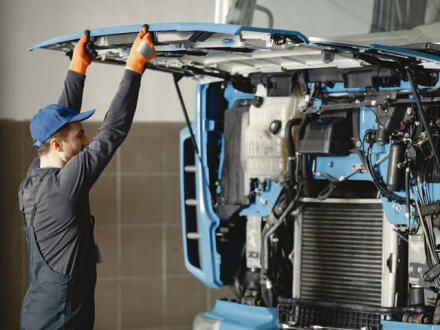
Training to become a diesel mechanic is practical, hands-on, and often faster than a four-year route. But tools, tuition, fees, safety gear, and transportation can still add up fast. At many public colleges in New York, one semester of tuition and fees can run into the thousands, and career programs may add costs for boots, books, and lab supplies.
That's why New York diesel mechanics scholarships matter. They can lower out-of-pocket costs, reduce borrowing, and make it easier for students to finish a program without working every extra shift they can find. For a student commuting from Buffalo, Syracuse, or the Hudson Valley, even a $1,500 award can cover textbooks, fuel, and part of a tool set.
The good news is that diesel funding does not come from just one place. Students may qualify through state grants, community colleges, universities, high school career programs, employers, trade groups, and national technician awards. In many cases, these funding sources can stack.
This guide breaks down 10 realistic funding paths for students who want diesel training in New York. It covers options for high school seniors, college students, first-year trade students, and adult learners changing careers. The goal is simple: help students find more money, miss fewer deadlines, and make school feel a lot more possible.
1. New York State Workforce And Skilled Trades Grants For Diesel Training
State workforce money is often the first place students should look, even though many skip it. New York supports career education through public aid programs, workforce offices, and approved training funding that can apply to diesel technology, heavy equipment repair, or related transportation programs.
A strong starting point is the state higher education system and public aid structure outlined by the state higher education office. That matters because approved schools and approved programs are often the gatekeepers for grant eligibility.
Students should pay close attention to these funding paths:
- State tuition aid for eligible residents attending approved colleges
- Workforce development grants tied to local labor demand
- One-stop career center funding for displaced workers or adults changing fields
- Short-term training support through county or regional workforce boards
Diesel repair remains linked to essential industries like freight, transit, construction, and school transportation. That gives students a useful angle when writing applications. A diesel tech is not just fixing engines. They are keeping buses running, keeping food deliveries moving, and keeping snowplows ready.
A concrete example helps. If a student's tuition bill is $6,800 and a state or workforce grant covers $3,000, that can cut the remaining balance by 44% before scholarships even enter the picture. That is a real dent, not pocket change.
Students should ask two direct questions at the financial aid office: Is this diesel program aid-eligible? and Can workforce funding stack with scholarships? Those two questions can save weeks of guesswork.
2. Community College Awards For New York Diesel Mechanics Scholarships For College
Community colleges are one of the best places to find New York Diesel Mechanics Scholarships for College because they usually combine lower tuition with campus-based aid. Many students focus only on federal aid forms and miss smaller institutional awards worth $500 to $2,500.
That smaller range still matters. Three awards of $1,000 each can cover a semester of books, lab fees, and basic tools at many schools. And community colleges often know which local donors want to support students in transportation, automotive, or equipment repair programs.
Students should search four campus sources:
- Foundation scholarships funded by local donors
- Department awards tied to automotive or diesel faculty
- County-based scholarships for residents
- Transfer and persistence awards for students who stay enrolled
Regional foundations can help too. In northern parts of the state, the community foundation awards may fit students attending a nearby public college or training program.
This is also where a free scholarship platform can save time. On Studentscholarships.org, a student can sort through local and regional opportunities instead of digging through dozens of college pages one by one. If an application takes under 2 minutes, that speed adds up when a student is applying to 12 or 15 awards.
One useful tactic is simple: ask the department chair for three scholarships from the last cycle that had fewer than 20 applicants. Low-competition awards often have better odds than large statewide programs.
3. SUNY And University Funding Options For New York Diesel Mechanics Scholarships For University
When students hear "university funding," they often assume it applies only to traditional academic majors. That is not always true. Some university systems support applied technology, transportation, engineering-adjacent study, or transfer pathways that can still help students pursuing diesel or heavy equipment careers.
For New York Diesel Mechanics Scholarships for University seekers, the key is to think beyond the program title. A diesel student may qualify through scholarships connected to engineering technology, workforce readiness, transportation systems, or environmental equipment maintenance.
One major statewide option is the Excelsior award page. Families meeting income rules may be able to reduce tuition costs at public institutions by a significant amount.
Students should also check related university-based awards such as the ACEC New York program, especially when their coursework overlaps with infrastructure, mechanical systems, or construction support.
A practical example: a student transferring after an associate degree may combine:
- $2,000 in campus foundation aid
- $1,500 in an outside trade scholarship
- tuition help from a statewide public program
That stack can turn a scary bill into a manageable one.
Students should not self-reject because their major is hands-on. Financial aid offices classify programs in more ways than students expect. If the school offers transportation technology, equipment systems, or related industrial training, it is worth asking for a full scholarship list, not just the default page.
4. New York Diesel Mechanics Scholarships For High School Students
High school students have more scholarship options than they think, especially if they already know they want a skilled-trades path. New York Diesel Mechanics Scholarships for High School Students can come from local school foundations, career and technical education programs, labor groups, memorial awards, and regional employers.
The timing matters. Many of these awards open while students are still seniors, and some close before graduation. A student who waits until summer can miss half the field.
Strong applications usually include:
- attendance in a shop, transportation, or mechanics program
- a teacher recommendation from a CTE or science instructor
- proof of enrollment in a trade or college program
- a short essay with a specific career goal
Students with family hardship or workplace injury history may also qualify for specialized aid such as the Kids' Chance New York awards. That type of funding is not diesel-specific, but it can still help pay for a diesel program.
A concrete scenario: a senior wins a $750 local booster scholarship, a $1,250 technical education award, and a $2,000 employer-backed scholarship. That is $4,000 before the first day of class.
Counselors and shop instructors often know which awards have gone unclaimed before. Students should ask that question directly. It is one of the fastest ways to find low-visibility funding.
Where CTE, BOCES, And Dual-Enrollment Awards Can Add Extra Funding
Career and technical education pipelines matter a lot here. BOCES centers and dual-enrollment programs often keep students connected to employers, local advisory boards, and trade competitions. Those networks can lead to scholarships that never show up in a broad web search.
For example, a student who completes diesel-related coursework, earns strong attendance marks, and places well in a skills competition may become a top nominee for local awards. Some BOCES-linked scholarships are small, often $500 to $1,000, but they stack well.
Students should ask CTE staff for these exact items:
- the scholarship list from the last school cycle
- deadlines for local trade and memorial awards
- employer partners that sponsor seniors
- any tool vouchers or tuition offsets linked to placement
Even dual-enrollment credits can help indirectly. If a student enters college with 6 credits already earned, that may shave one class off the first-term bill.
5. New York Diesel Mechanics Scholarships For First-Year Students Starting Trade Programs
The first term is where many students hit the biggest cash squeeze. Tuition lands first. Then books. Then work boots, safety glasses, and maybe a starter tool list. That is why New York Diesel Mechanics Scholarships for first-year students deserve their own search strategy.
First-year students should focus on awards that value momentum more than long academic history. Many programs know brand-new trade students will not have a college GPA yet. They may look instead at attendance, recommendation letters, work ethic, and enrollment in a diesel or heavy equipment pathway.
Good places to search include:
- institutional first-year scholarships
- local community foundation awards
- career starter grants from workforce groups
- scholarships linked to transportation and public safety
One useful niche option is the school transportation scholarship. Students entering diesel, fleet maintenance, or transportation support fields may find that these adjacent awards fit better than broad "trade school" searches.
A realistic first-term budget tells the story. If a new student faces $4,200 in tuition and fees, $640 for books, $185 for boots, and $120 for safety gear, a single $2,000 scholarship covers almost 39% of that $5,145 total.
The best move is to apply before classes start and again after the first grading period. Some schools release new money once they know which first-year students actually showed up, stayed enrolled, and passed their initial classes.
6. Employer-Sponsored Scholarships From Trucking, Fleet, And Heavy Equipment Companies
Employer-sponsored aid is one of the smartest paths for diesel students because it can lead to both tuition help and a job interview. Truck fleets, transit contractors, bus companies, equipment dealers, and construction firms all need technicians. Some would rather pay a student $1,500 now than lose months searching for a qualified hire later.
These awards may appear under scholarship, reimbursement, apprenticeship support, or tuition assistance. The name changes. The purpose stays the same: build a pipeline of techs.
Students should look for employers that offer:
- scholarships tied to a work commitment after training
- paid internships during school breaks
- tool allowances for new technicians
- reimbursement after passing courses or certifications
Construction and equipment fields can be especially useful. The AGC diesel scholarships show the kind of trade-linked funding that can fit students heading toward heavy equipment or diesel service work.
There is a second benefit here: employer contact. A student who meets a service manager during the scholarship process already has a foot in the door. That can matter more than another generic online application.
A solid example is a local fleet offering $2,500 in tuition help plus a summer internship at $19 per hour for 10 weeks. At 40 hours per week, that internship alone brings in $7,600 before taxes. The scholarship is only part of the value.
Students should always ask whether accepting the award includes a post-graduation work agreement. Sometimes that is a great deal. Sometimes it is too restrictive.
7. New York Diesel Mechanics Association Scholarships And Other Trade Group Awards
Trade associations are easy to overlook because students do not always know the organizations exist. But New York Diesel Mechanics Association Scholarships and related trade group awards can be a strong fit because they are created by people who actually understand the field.
These groups often support students entering diesel repair, construction equipment maintenance, trucking service, transportation operations, or related skilled trades. Awards may come from state chapters, memorial funds, equipment councils, union groups, or contractor associations.
One example is the AGC New York scholarship program, which shows how trade-connected groups fund students preparing for construction and equipment careers.
Trade group awards usually care about fit. They want applicants who can clearly explain:
- why diesel work matters to them
- what kind of equipment they want to work on
- how they plan to use the training locally
- whether they have shop, farm, fleet, or construction experience
That makes the essay easier to write. A student can describe changing fuel filters on a family truck, helping maintain a landscaping fleet, or diagnosing a no-start issue in cold weather. Specific details beat polished fluff every time.
A focused trade association award worth $1,500 with 60 applicants often gives better odds than a broad scholarship worth the same amount with 1,200 applicants.
How To Check Membership Rules, Sponsorship Requirements, And Local Chapter Deadlines
Before applying, students should read the fine print slowly. Some trade awards require a parent, guardian, employer, or school sponsor to have a connection to the association. Others are open to any student in a qualifying program.
A simple checklist helps:
- Membership rule: Is student membership required, optional, or not needed?
- Program rule: Does the student need to study diesel specifically, or will heavy equipment or automotive diesel count?
- Residency rule: Is the award statewide, regional, or chapter-based?
- Deadline rule: Is the deadline fixed, rolling, or tied to a school nomination?
Students should also ask whether recommendation letters must come from a chapter member. Missing one sponsorship detail can knock out an otherwise strong application.
8. National Diesel Technician Scholarships That New York Students Can Use Locally
Not every good diesel scholarship is based in New York. National awards can still be used by New York students if their school, certificate program, or training provider meets the rules. That makes this category worth real attention.
National technician scholarships often come from foundations, industry suppliers, transportation groups, and equipment organizations. They may support diesel technology, collision repair, truck maintenance, heavy equipment, or broader technical education.
The trick is to read for overlap. A scholarship does not need the exact phrase "New York diesel mechanic" to be useful. If it supports diesel training at an accredited or approved school, it may work just fine.
Good national targets usually include:
- technician education foundations
- aftermarket industry awards
- transportation safety scholarships
- equipment dealer and manufacturer funds
Students can also cast a slightly wider net through broad New York listings such as the New York Pass award, which may help cover education costs even though it is not trade-specific.
A practical example: a student wins one national award for $2,000 and one local award for $1,000. That $3,000 may cover a full semester at a lower-cost public program.
National applications often ask for polished essays and transcripts, so students should reuse material smartly. A core essay with 250 words about career goals can be adapted into 5 or 6 separate applications with small edits, saving several hours.
9. Need-Based Financial Aid That Can Stack With Diesel Mechanic Scholarships
Scholarships are great, but they should not be the only plan. Need-based aid can stack with outside awards and often does the heavy lifting on tuition first. That gives students more freedom to use scholarship money for tools, transportation, and living costs.
The biggest mistake is assuming a diesel student only needs scholarship sites. In reality, a complete funding package often mixes:
- federal need-based aid
- state tuition support
- campus grants
- private scholarships
- employer help
This matters because stacking changes the math. If a student gets $3,500 in need-based grant aid and then adds $2,000 in scholarships, that is $5,500 total support. For a commuter student with a $7,200 annual school bill, the remaining gap drops to $1,700.
Some students should also look into broad-purpose New York awards with special eligibility rules, such as the postal managers scholarship or the women in communications award when family, identity, or program details make them eligible. A scholarship does not have to say diesel to pay for diesel school.
Students need to ask one key financial aid question: Will this outside scholarship reduce loans, work-study, or grant aid first? The answer changes the real value of the award.
For low-income students, filing aid forms early can be worth more than writing one extra essay. Deadlines matter that much.
10. Smarter Scholarship Search Tactics To Find More New York Diesel Mechanics Funding
A better scholarship search is usually not about searching harder. It is about searching with better filters. Students who type the same broad phrase into a search bar every week miss local, adjacent, and low-competition awards.
The most effective method is to search by category, geography, and connection.
Search by category
Students should use terms beyond "diesel mechanic scholarship." Good alternatives include:
- heavy equipment technician scholarship
- transportation technology award
- fleet maintenance scholarship
- construction equipment scholarship
- skilled trades scholarship in New York
That wider net often reveals funding that fits diesel students even when the title does not say so.
Search by geography
County and regional searches work well. A student in Monroe County, Erie County, Oneida County, or Suffolk County may find local awards with fewer applicants than statewide programs.
A smart routine is this:
- search school foundation pages
- search community foundations
- search BOCES and CTE pages
- search local employer and trade association pages
Search by connection
Family jobs, union ties, volunteer work, employer links, and community memberships can all open doors. If a parent works in public service, transportation, construction, or a trade-linked field, that connection may matter.
Students should also use scholarship databases efficiently. On Studentscholarships.org, they can build a list, sort by state, and apply to several matches quickly rather than starting from zero each night.
A student who applies to 18 well-matched scholarships at an average of 20 minutes each spends 360 minutes total, or 6 hours. One $1,000 win turns that into a return of about $166 per hour. That is better than most part-time shifts.
New York Diesel Mechanics Scholarships - Frequently Asked Questions
What types of scholarships are available for diesel mechanic students in New York?
Students can access various scholarships from state grants, community colleges, universities, high schools, employers, and trade groups. These awards often support tuition, tools, books, and safety gear costs for diesel mechanic training.
How can first-year diesel mechanic students in New York find scholarships?
First-year students should target institutional first-year scholarships, workforce development grants, community foundation awards, and scholarships linked to transportation and public safety areas to help cover initial costs like tuition, books, and equipment.
Are there scholarships specifically for high school students pursuing diesel mechanic programs in New York?
Yes, high school students can apply for scholarships from local school foundations, career and technical education programs, labor groups, and regional employers. Applying early and providing a career goal essay can improve chances.
Can New York diesel mechanic scholarships be combined with need-based financial aid?
Yes, scholarships often stack with need-based aid like federal grants and state tuition support. This combination can significantly reduce out-of-pocket costs, covering tuition first and freeing scholarships for other expenses.
What role do employer-sponsored scholarships play for diesel mechanic students in New York?
Employer scholarships help students with tuition while building pipelines for future hires. These awards may include tuition assistance, paid internships, tool allowances, and often lead to job opportunities post-graduation.
Where can students find regional or local diesel mechanic scholarships in New York?
Students should search local school foundation pages, community foundations, BOCES and CTE programs, and employer or trade association sites. Narrow geography searches often uncover low-competition scholarships suited to diesel students.







